
Russia and Ukraine are seeking new ways to undermine their opponents’ ability and will to continue fighting. But the contest is still fundamentally unequal. Ukraine’s war effort cannot match Russia’s in scale, which is why launching attacks that inflict spectacular damage and convey a degree of strategic equivalence has become increasingly important to keeping Ukraine in the fight.
The critical question is whether audacious, headline-grabbing Ukrainian attacks can fundamentally alter the course of events amid the mounting pressures of a war of attrition against a much larger adversary. The question is particularly pressing in the maritime domain.
Ukraine’s dazzling operational military successes demonstrate the growing geographical reach of its capabilities but obscure a deteriorating strategic reality closer to home. Despite successfully degrading Russia’s naval power in the Black Sea, Ukraine remains increasingly vulnerable to Russian attacks on commercial shipping. Ukraine’s ability to impose significant costs on Russia has not necessarily translated into an ability to overcome its own structural vulnerabilities.
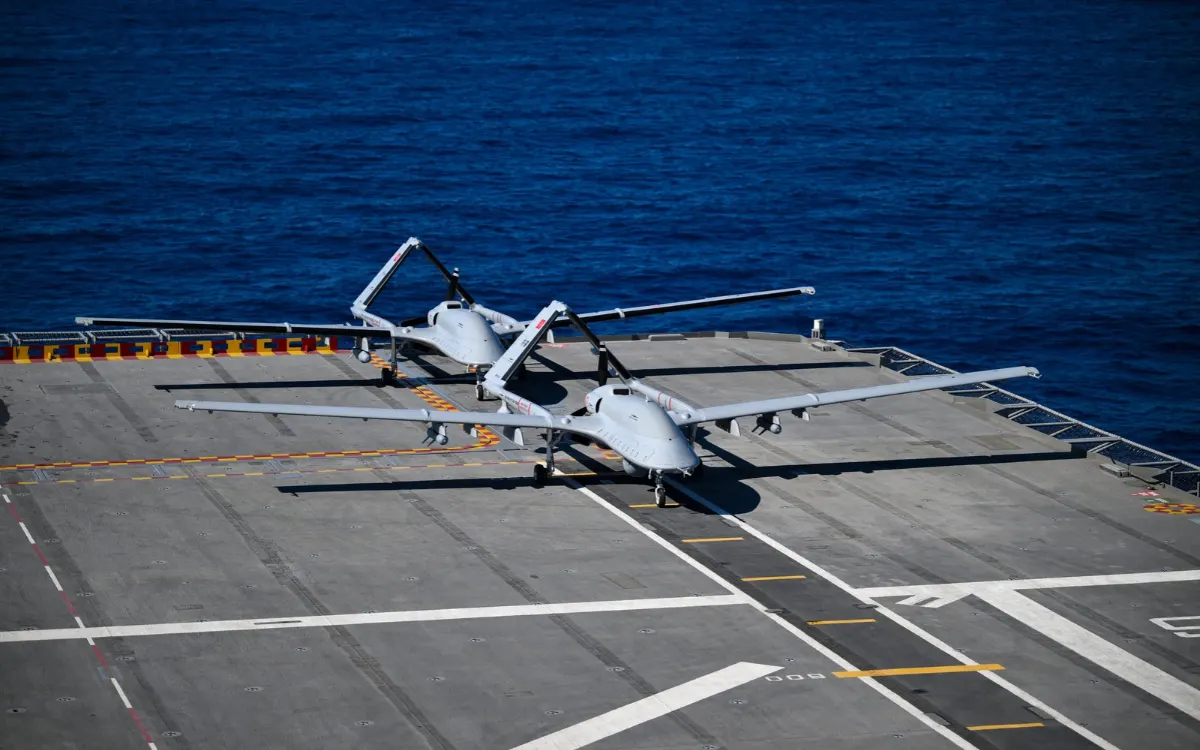
The war in the Black Sea illustrates how drones and other asymmetric capabilities are increasingly enabling states to threaten commercial shipping without establishing naval superiority, fundamentally altering the strategic calculus of maritime security for Europe and beyond.
The war in the Black Sea illustrates how drones and other asymmetric capabilities are increasingly enabling states to threaten commercial shipping without establishing naval superiority, fundamentally altering the strategic calculus of maritime security for Europe and beyond
Operational Success, Strategic Vulnerability
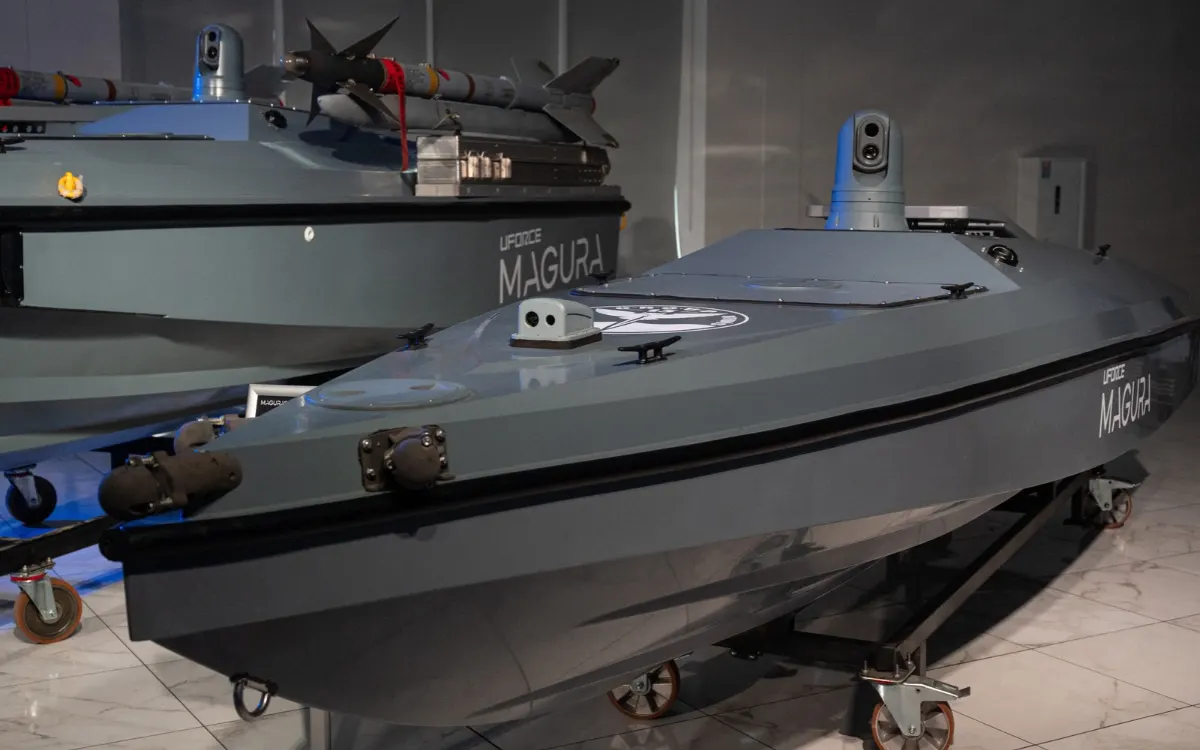
Ukraine’s expanding maritime reach was demonstrated by the reported sinking of Russia’s modern warship, the Merkury, following an attack in Benghazi, Libya, attributed to Ukrainian sea drones. Ukrainian officials subsequently described the operation as having been conducted from a vessel operating in the Mediterranean. Days earlier, a Russian cargo ship, the Sparta II, caught fire after being struck by a suspected Ukrainian drone in the Gulf of Finland, leaving it adrift and requiring assistance from Russian vessels.
The attacks increase the pressure on Russian military and commercial shipping operators, who must reassess the security of their vessels far beyond the immediate theater of war. More critically, though, in carrying out strikes across a broader geographical range, Ukraine is attempting to relieve pressure on the Black Sea, the maritime domain that matters most to its economic survival. Here, an apparent strategic paradox has emerged: despite successfully constraining Russian naval operations, Ukraine faces growing insecurity along its own maritime economic lifeline.
The war has increasingly reached into the Black Sea theater. In terms of fatalities, the Black Sea has become the most dangerous maritime space in the world. In 2026, more seafarers have been killed there than even in the Arabian Gulf and the Strait of Hormuz. According to data from the International Maritime Organization (IMO), at least 40 seafarers have been killed in the Black Sea in 2026, surpassing the 25 confirmed fatalities around the Strait of Hormuz and the Arabian Gulf. Maritime security company Ambrey has also reported nearly 600 strikes against vessels by Russian aerial drones in the Black Sea this year. This disparity illustrates a broader transformation in maritime warfare: conventional naval superiority is no longer a prerequisite for imposing substantial economic costs through attacks on commercial shipping.
The Escalating Maritime War
Despite Ukraine’s success in constraining Russian naval operations, its ability to secure commercial navigation in the Black Sea has increasingly deteriorated, making the space an increasingly dangerous shipping zone.
This has gone somewhat unnoticed by wider audiences because so much international attention has focused on the Strait of Hormuz. For Ukraine, however, the matter is existential in terms of its economic future. Starting with the March 2014 annexation of Crimea and continuing with the full-scale invasion that began in February 2022, Russia has gained control of approximately 70 percent of Ukraine’s pre-2014 coastline.
The Black Sea theater has thus become critical to the eventual outcome of the war. Alongside its sustained missile and drone attacks on Ukraine’s railway and power generation networks, Russia is also attempting to undermine Ukraine’s maritime links. Moscow’s strategy appears increasingly directed toward bringing Ukraine’s economy to a standstill, even as territorial advances in the Donbas remain slow and costly.
Ukraine’s access to the Black Sea for trade is now heavily dependent on the ports of Odesa, Chornomorsk, Pivdennyi, and Mykolaiv. By targeting commercial shipping around these ports, Russia has introduced a persistent and potentially devastating threat to Ukraine’s seaborne economic activity.
By targeting commercial shipping around these ports, Russia has introduced a persistent and potentially devastating threat to Ukraine’s seaborne economic activity
Earlier in the war, Ukraine’s maritime lifeline was the Black Sea Grain Initiative, a wartime agreement signed in July 2022 by Ukraine, Russia, Turkey, and the United Nations to enable the safe maritime export of grain, food, and fertilizer from Odesa, Chornomorsk, and Pivdennyi. But the agreement expired a year later, and Russia has shown little inclination to reinstate it, opting to intensify pressure on Ukraine. There are clear indications that this strategy is imposing costs. In September, the Joint War Committee, representing marine insurance underwriters, expanded its high-risk classification to encompass almost the entirety of the Black Sea, excluding only Romanian, Bulgarian, and Turkish territorial waters.
The consequences of the increasing militarization of the Black Sea extend beyond the immediate threat to vessels and infrastructure. Rising insurance premiums bring higher transportation costs and greater uncertainty for commercial operators, undermining the competitiveness of Ukrainian exports even when maritime corridors remain formally open.
Russia’s Strategy of Maritime Coercion
Attacks in the Black Sea are not exclusively one-sided. Early in the full-scale war, Ukraine sank Russia’s aging flagship, the Moskva. Subsequent Ukrainian successes prompted assessments that Russia had effectively been driven out of much of the Black Sea. Russian naval operations from Sevastopol in Crimea have become increasingly hazardous, while attacks around Novorossiysk have also disrupted commercial activity.
Yet the ability to deny an adversary freedom of naval maneuver is not the same as the ability to guarantee safe commercial navigation. Ukraine and Russia have both demonstrated an increasing capacity to undermine the other’s maritime security, but their respective abilities to absorb the resulting economic costs differ considerably.
Russia has numerous alternative ports and has adapted accordingly. Even if transit costs rise and journey times lengthen because of the rerouting of some of its shipping, Russia’s coastline spans much of Eurasia. In the coming years, Russia may also make greater use of Arctic shipping routes, particularly for seasonal bulk energy exports.
Ukraine, by contrast, retains access to only around 30 percent of its pre-2014 coastline. Barring substantial territorial changes, this geographical constraint will force Ukraine and Europe more generally to adapt to a highly complex maritime security environment.
Even if more Russian vessels are targeted by Ukraine globally, from the Gulf of Finland to the Mediterranean, the geographical concentration of Ukraine’s maritime infrastructure leaves it disproportionately exposed to sustained disruption.
Implications for Ukrainian and European Security
The escalation of the Black Sea war has been deeply alarming to Romania and Bulgaria, as attacks increasingly threaten shipping operating close to their territorial waters. Internationally flagged cargo vessels have been struck near the mouth of the Danube and off their coastlines, with around 20 commercial vessels reportedly struck by aerial and maritime drones off the two countries since mid-July 2026.
Since Russia’s annexation of Crimea and subsequent military buildup in the region, Romania and Bulgaria have emerged as key frontline states on NATO’s eastern flank, subject to regular airspace incursions by aerial drones. Alongside Turkey, both countries will play significant roles in determining the future of Black Sea security.
Warfare is evolving at such a pace that the key international convention regulating access to the Black Sea risks becoming increasingly disconnected from the realities of maritime conflict. Ninety years ago, the Montreux Convention was signed, affording Turkey control over passage through the Bosporus and Dardanelles straits, which link the Black Sea and the Mediterranean. It guaranteed freedom of passage for merchant vessels, subject to specified conditions, while placing significant restrictions on the naval vessels of non-Black Sea littoral states entering and remaining in the Black Sea.
The convention sought to regulate naval access and limit the militarization of the Black Sea, and it remains in force today. Its provisions, however, were conceived in an era when conventional warships were the principal instruments of maritime power.
As drones become increasingly important tools of naval combat and surveillance, the convention’s restrictions on conventional naval deployments do not necessarily address the most consequential emerging threats to commercial shipping.
Turkey’s role will therefore become increasingly important, not only as the custodian of the Montreux Convention but also as a major regional naval power whose cooperation with Romania and Bulgaria could help shape the future security architecture of the Black Sea.
Turkey’s role will therefore become increasingly important, not only as the custodian of the Montreux Convention but also as a major regional naval power whose cooperation with Romania and Bulgaria could help shape the future security architecture of the Black Sea
The Limits of Europe’s Maritime Security Posture
Urgent questions must also be posed about whether the EU’s maritime security posture is sufficient to address this rapidly developing threat environment. On November 9, European Commission President Ursula von der Leyen announced a €50 million investment to accelerate the creation of a Black Sea Maritime Security Hub. The announcement, made during a joint press conference with Romanian President Nicușor Dan in Bucharest, also underscored the time that has elapsed since the Hub was initially announced in the EU’s Black Sea Strategy, published in May 2025.
The Hub was described as seeking to “enhance maritime situational awareness and information sharing on the Black Sea,” with “real-time monitoring from space to seabed, and early warning of potential threats.” The Hub would monitor the security of critical maritime infrastructure, including submarine cables and energy infrastructure off the Romanian and Bulgarian shores. All of this is badly needed, but the Hub’s envisaged military functions are limited and primarily “linked to the need to enhance military mobility in and around the Black Sea and to facilitate dual-use infrastructure projects in EU Member States.”
In short, its principal functions concern monitoring, coordination, and infrastructure rather than the operational defense of commercial shipping. The EU’s Black Sea Strategy does not set out a dedicated framework for countering hostile drone attacks against commercial vessels. While improved maritime surveillance and early warning are essential, identifying an emerging threat is not the same as possessing the means to neutralize it.
The deteriorating maritime environment was further illustrated on November 16, when two commercial vessels sank off the Bulgarian coast in quick succession. The Somalia-flagged cargo ship Betul 8 suffered structural damage while transiting from Romania before capsizing and sinking southeast of Varna. The Liberia-flagged liquefied petroleum gas carrier Gas Husky also disappeared from radar and sank off the Bulgarian coast.
Although the causes of these incidents require clarification because attribution is contested, together they underscore the urgency of improving maritime monitoring, emergency response, and commercial shipping security across the region.
Going forward, the challenge for Europe is to develop a maritime security posture that goes beyond identifying threats and protecting critical infrastructure, addressing the increasingly persistent vulnerability of commercial navigation itself.
The Risk of No War, No Peace in the Black Sea
There is a strong possibility that no lasting peace deal will emerge to halt Russia’s war against Ukraine, that the war becomes another frozen conflict. In such an eventuality, the conflict could persist for some time, albeit at varying levels of intensity. Some normalization of Russian drone attacks on Black Sea shipping bound for or departing from Ukrainian ports would be likely—not normalization in the sense that such attacks are tolerated, but because they prove exceedingly difficult to prevent.
If this transpires, the situation may come to resemble the Strait of Hormuz. A “no-war, no-peace” scenario has emerged there in which neither Iran nor the United States acknowledges defeat, while shipping remains deeply imperiled by sea mines, attempted blockades, drone strikes, and other military actions.
With drone attacks providing a relatively inexpensive means of threatening vital shipping routes, belligerents could sustain maritime pressure for considerable periods without maintaining a conventional naval blockade.
Across both maritime theaters, a new standard of 21st-century maritime and supply-chain vulnerability is therefore emerging. The objective of maritime coercion need not be to close a shipping lane entirely. Persistent insecurity alone can alter commercial calculations, increase transportation costs, and transmit the economic consequences of regional conflicts far beyond their immediate geographical boundaries. In the long term, it can fundamentally change the map of global commerce.
Across both the Arabian Gurl and Black Sea maritime theaters, a new standard of 21st-century maritime and supply-chain vulnerability is therefore emerging
Europe’s Maritime Security Imperative
Given the acute militarization of the Black Sea and the restrictions imposed by the Montreux Convention, the prospects for a substantial, permanent deployment of non-littoral NATO naval forces remain limited. This thrusts the Romanian, Bulgarian, and Turkish navies and air forces into the front line of future Black Sea security.
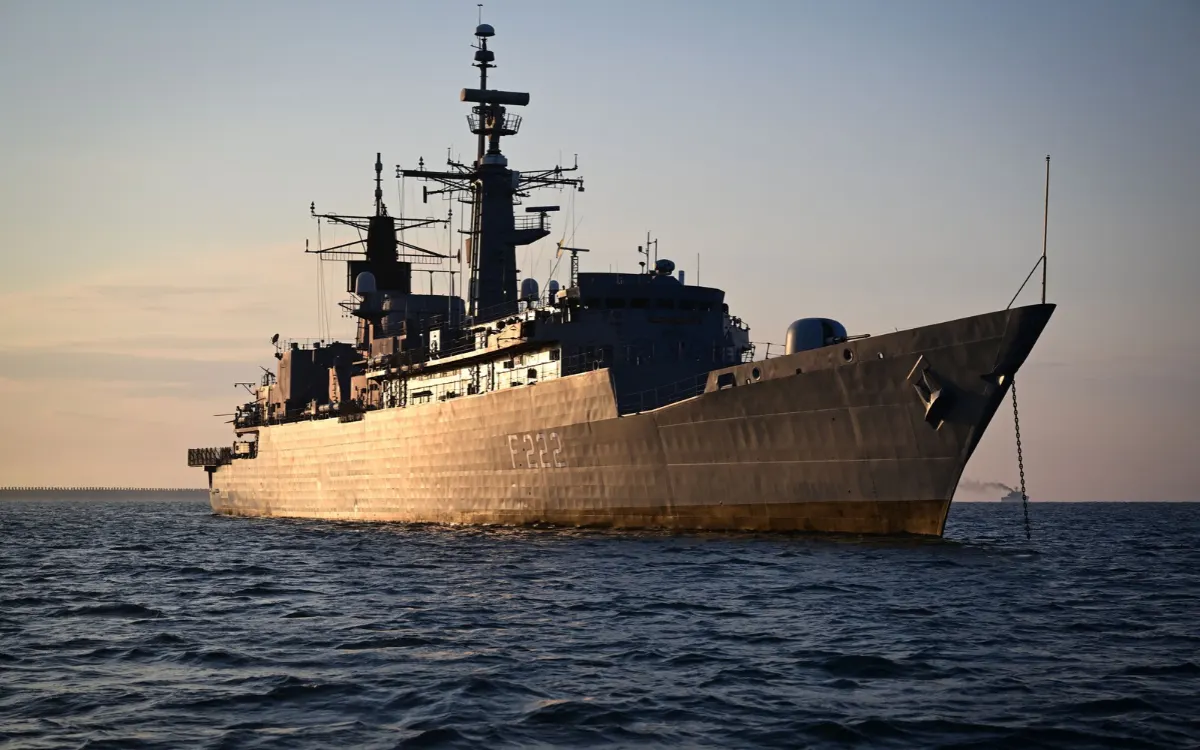
Nevertheless, these restrictions do not preclude a broader collective NATO response. Intelligence sharing, aerial surveillance, coordinated maritime monitoring, counter-drone capabilities, and support for regional allies offer potential avenues for strengthening security without requiring a permanent deployment of non-littoral warships. The question is whether NATO and the EU can develop complementary approaches capable of addressing persistent maritime threats that fall short of a direct military confrontation with Russia but nevertheless impose substantial economic and security costs on European states. It is in this gray zone that emerging methods of maritime coercion are outpacing the capacity of established security institutions to respond.
Ukraine itself currently lacks a substantial conventional navy, with no large surface warships or submarines in service. It possesses small craft and sea drones and has signed agreements with the United Kingdom and Norway to procure fast attack craft to defend its coastline and Black Sea Grain Corridor. The uncertainty remains as to whether the security environment will allow these vessels to fulfill their intended maritime security duties effectively.
The Global Costs of Maritime Insecurity
Historically, the Black Sea territories of Ukraine and Russia formed part of the so-called “breadbasket of the world,” encompassing one of the world’s major agricultural regions, with fertile soil and favorable climates for grain production. This year, grain available for export from both Ukraine and Russia has reportedly declined significantly compared with 2025.
Russia’s efforts to exert pressure on the Black Sea grain corridor mirror aspects of Iran’s strategy toward tanker traffic through the Strait of Hormuz and Arabian Gulf. Even if these strategies only partially restrict the free transit of exports, they can have global economic consequences.
The intensification of Russia’s drone war against Black Sea cargo shipping illustrates a convergence with Iranian methods of maritime coercion. Both theaters demonstrate how relatively inexpensive military capabilities can exploit the dependence of global trade on geographically concentrated shipping routes and infrastructure.
Unlike Hormuz, however, where the United States has intervened directly against Iran, the Black Sea security environment remains heavily dependent on the actions of regional powers and European security institutions. There is little prospect of a comparable U.S. naval role in securing the Black Sea, leaving Europe with greater responsibility for managing the consequences of prolonged maritime insecurity.
Ukraine’s spectacular strikes against Russian infrastructure and vessels constitute significant operational and political setbacks for Moscow. If sustained, they could eventually influence the Kremlin’s calculation of the costs and benefits of continuing the war. They could equally harden Russia’s resolve. However, they do not fundamentally alter the precarious security situation facing commercial vessels transiting the Black Sea.
The emerging strategic lesson is that the ability to destroy an adversary’s warships does not necessarily confer the ability to protect merchant vessels. As drone warfare increasingly decouples conventional naval power from commercial maritime security, the Black Sea is becoming a testing ground for a broader transformation in maritime conflict.
As drone warfare increasingly decouples conventional naval power from commercial maritime security, the Black Sea is becoming a testing ground for a broader transformation in maritime conflict
For Ukraine and Europe, the challenge is no longer simply one of contesting Russian naval power. It is one of sustaining economic connectivity in a maritime environment where neither belligerent needs to control the seas to make them dangerous to use.