
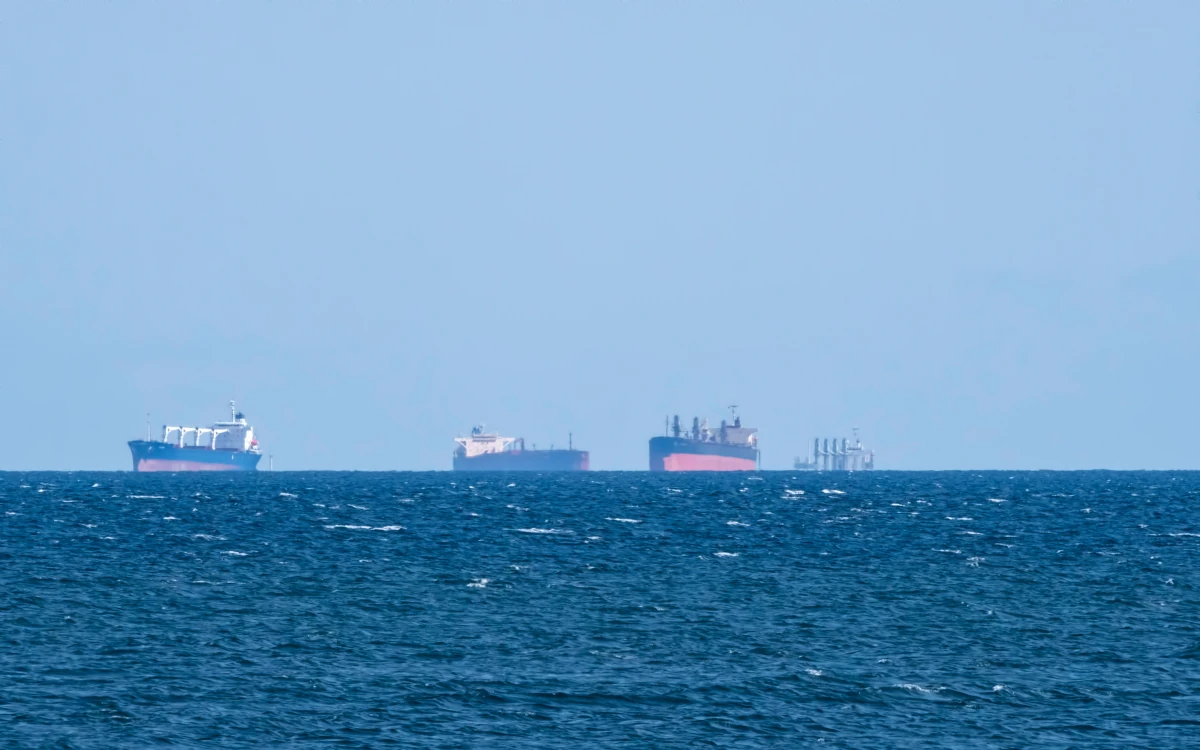
Drones hit two commercial ships in Bulgaria’s Black Sea economic zone, with one sinking and sailors reported missing, a day after a deadly incident off Romania.
The Bulgarian government said it would convene an emergency meeting on Tuesday to discuss the strikes, as rescuers searched for the missing sailors about 90 miles east of Byala.
Bulgarian Prime Minister Rumen Radev said the country would “take all necessary measures to guarantee the security of shipping in the Bulgarian economic zone,” adding that Sofia was coordinating with allies and partners.
According to specialized maritime industry media, the ship that sank was Togo-flagged, while the other vessel was Palau-flagged, with 18 crew members evacuated by a Bulgarian ferry after the strikes. Tuesday’s strikes came a day after Ukraine said a Russian drone struck a grain ship off Romania’s coast, causing it to catch fire and sink and killing two crew members. The incident highlighted the growing threat to Black Sea shipping from the Russia–Ukraine war. On October 3, a Russian strike hit a Liberian-flagged commercial vessel at a Ukrainian port in the Odesa region, killing one crew member and injuring three; four days earlier, Ukraine said Russia had struck two foreign-flagged vessels in the same region. Turkey’s Chamber of Maritime Commerce said last month that 226 civilian and commercial vessels have been attacked in the Black Sea since the start of the war, the vast majority this year.
Consecutive attacks on commercial vessels are increasing security risks for Black Sea shipping amid the expanding maritime effects of the Russia–Ukraine war. The Bulgarian and Romanian incidents are significant because they occurred in the economic zones of NATO members, although neither location falls within those countries’ territorial waters and the origin of the drones involved in Tuesday’s strikes remains under investigation. The attacks could increase pressure on Romania, Bulgaria, and other Black Sea states to strengthen maritime surveillance and protection of commercial shipping without becoming directly involved in the conflict. Repeated strikes could raise insurance and operating costs for vessels serving Ukrainian and regional ports, potentially affecting grain and other commodity flows. The October 3 attack in an Odesa port and the two incidents near Romania and Bulgaria within four days suggest the threat to commercial vessels is becoming geographically dispersed. Whether the attacks continue moving farther from Ukrainian waters will be an important indicator of the risk that the maritime dimension of the war poses to neighboring NATO states. (AFP+EIR)