
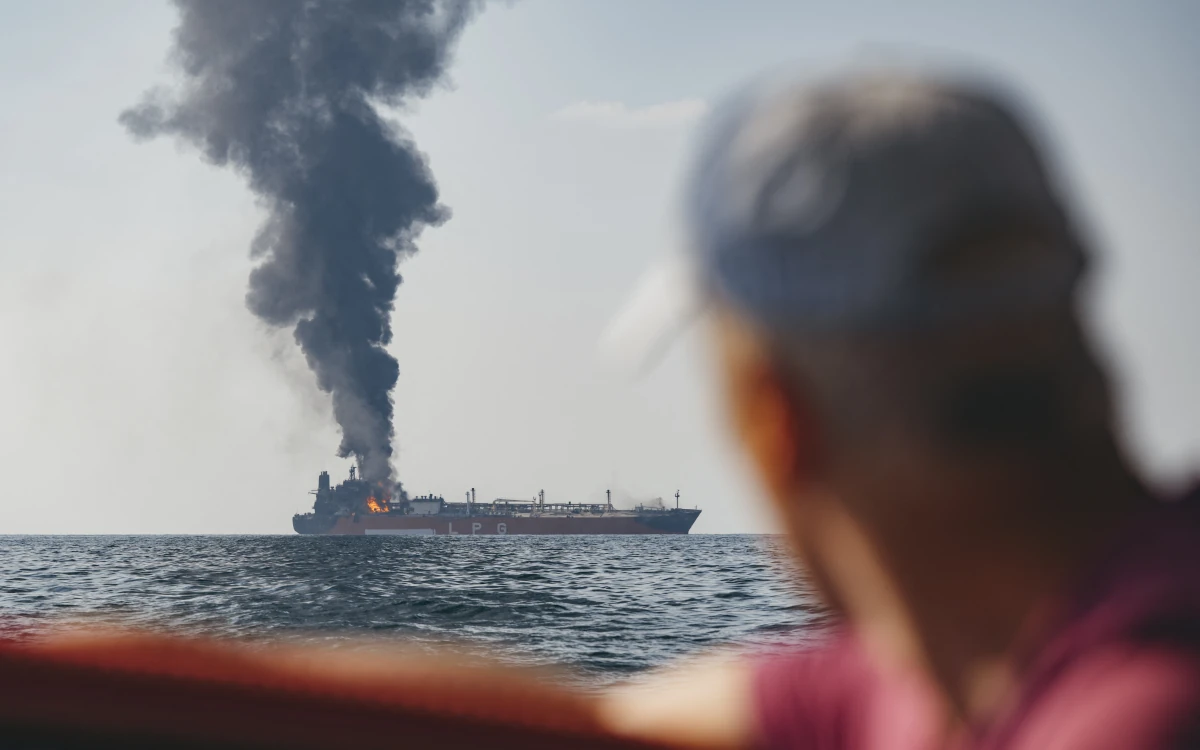
The repercussions of the regional confrontation between Iran on one side and the United States and its allies on the other are widening, with attacks extending to industrial facilities in Bahrain and commercial vessels in the Strait of Hormuz.
Manama accused Iran of striking a civilian industrial facility on Saturday, causing a fire and damage but no casualties, while the British maritime agency UKMTO said two tankers were hit in the Strait of Hormuz.
Iran’s Revolutionary Guard Corps (IRGC) said it had attacked two US Patriot air defense radar systems at two bases in Bahrain. IRGC said, “during the operation, US military positions at the Al-Riffa and Awali bases in Bahrain were targeted with missile and drone strikes”. “Two radars belonging to the US Army’s Patriot air defense systems… were struck,” it said, adding that any violation of Iranian airspace will be met with “harsh and decisive response”.
The Bahraini Interior Ministry said late Saturday, “As a result of the heinous Iranian aggression, a civilian industrial facility was targeted, causing a fire at the site. Civil Defense is working to bring the fire under control.” The ministry did not specify the location but residents said they saw smoke rising over Sitra Island, on Bahrain’s east coast, home to several industrial sites, including a refinery run by state oil company Bapco.
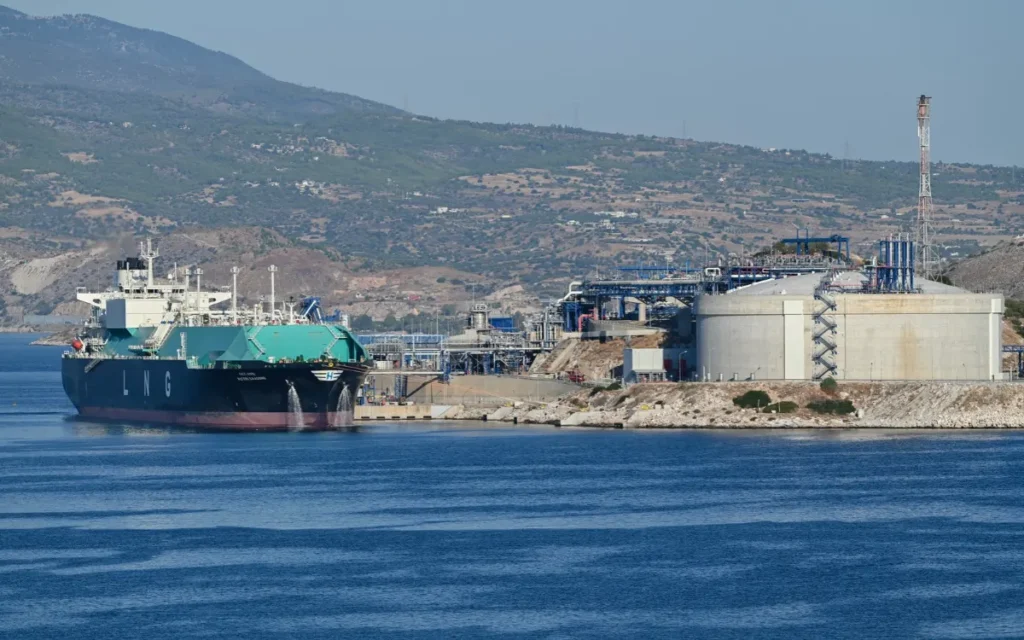
The strike coincided with security developments in the Strait of Hormuz. UKMTO said one tanker was struck by an “unknown projectile” while transiting Hormuz. “There are no reported casualties at this time,” it said, adding another tanker was hit in its engine room.
Iran’s army later reported a ship was on fire after entering a “restricted zone” and hitting a mine in the strait, without clarifying whether the vessel was one of the two tankers mentioned.
These incidents come amid Iran’s strict restrictions on navigation in the Strait of Hormuz, which is vital for oil and gas supplies, in parallel with the United States imposing a blockade on Iranian ports and its forces escorting ships as they leave the Gulf, as part of a campaign aimed at curbing Iranian trade and financial flows.
On the diplomatic front, Iranian Deputy Foreign Minister Kazem Gharibabadi said Saturday, according to Iran’s Tasnim news agency, that “we consider the economic blockade an act of war and we will take all necessary measures to lift it.”
“We have made this known to the other parties, including the mediators”, he added, saying “the United States was aware of this”. Gharibabadi added that a Qatari delegation visited Tehran the previous evening and “held two hours of talks”, without providing details.
For his part, Foreign Minister Abbas Araghchi said, “The ongoing talks in the region must be given a chance, and the blockade must be lifted rationally.” “Our position is clear: as long as Iran’s demands are not met, the discussion on the Strait of Hormuz and its opening is pointless,” he said, quoted by state TV. Iran’s demands include ending the war on all fronts, unfreezing Iranian assets, lifting oil sanctions and ending the US counter-blockade of Iranian ports.
The developments in Bahrain and the Strait of Hormuz reflect the expanding security and economic repercussions of the war, with the confrontation extending to industrial facilities and vital sea lanes. The overlap of military pressure and economic blockade is also evident in the confrontation between Washington and Tehran, at a time when the two parties’ demands are still far apart. This puts mediation efforts to the test of containing the escalation and preventing its regional expansion. (AFP+EIR)