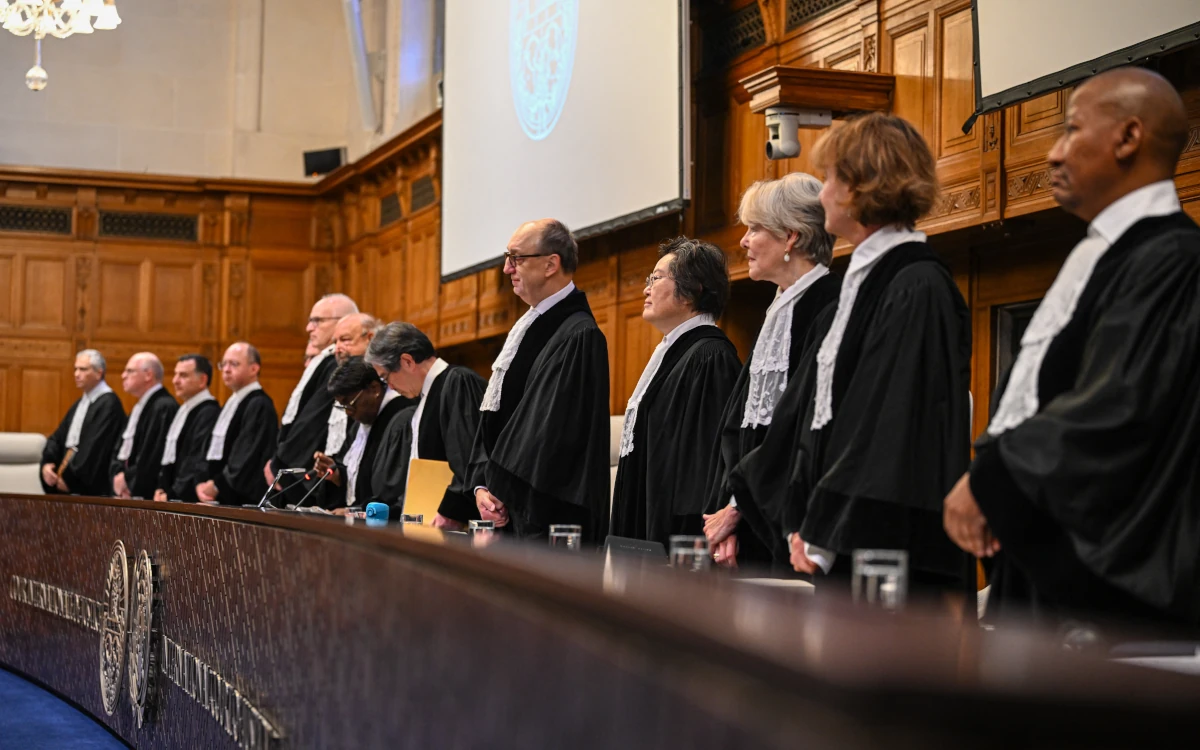
The International Court of Justice found Myanmar responsible for genocide against the Rohingya on Thursday, November 19, in a landmark judgment that could influence other international cases while highlighting the limited enforcement power of global judicial institutions. The ruling is the first time the UN’s highest court has held a state responsible for committing genocide.
By nine votes to six, the court decided that Myanmar violated the Genocide Convention during its military campaign against the predominantly Muslim Rohingya minority in Rakhine State in 2017. Judges found that security forces carried out mass killings, widespread sexual violence, attacks on fleeing civilians, and the destruction of hundreds of villages. The court concluded that the pattern of violence demonstrated an intent to destroy a substantial part of the Rohingya population.
Myanmar rejected the judgment on Friday, calling it “unfair” and claiming that its military operations had targeted armed insurgents rather than the Rohingya population. The court ordered Myanmar to investigate and prosecute perpetrators, compensate victims, and enable displaced Rohingya to return safely. More than one million Rohingya remain in neighboring Bangladesh, many in refugee camps.
The judgment could carry significance beyond Myanmar because genocide is among the most difficult crimes to establish under international law. Prosecutors must demonstrate not only that prohibited acts occurred but that they were carried out with a specific intent to destroy a protected group in whole or in part. The ICJ had previously ruled that genocide occurred at Srebrenica in 1995 but did not find the Serbian state directly responsible for committing it. Other genocide-related proceedings, including South Africa’s case against Israel over Gaza, remain before the court.
Yet such a ruling also illustrates a central weakness of the international system it represents. ICJ judgments are legally binding, but the court has no real mechanism to compel compliance. Myanmar has already rejected the decision, while prospects for large-scale Rohingya repatriation remain uncertain and unlikely. In this context, enforcement depends on political pressure from states and international institutions, meaning even landmark judgments may have limited effects.
In this sense, the Myanmar decision demonstrates both the reach and the limits of global governance. By establishing state responsibility for genocide, the ICJ has created a significant legal precedent and formally recognized the crimes suffered by the Rohingya. But if accountability, compensation, and safe return remain unrealized, the case will also sharpen a broader question: whether international institutions can retain practical authority when their most consequential decisions ultimately depend on political actors they have little power to compel. (Agencies+EIR)