
South-east Asian leaders agreed on Sunday to pursue a “calibrated engagement” with Myanmar’s post-coup government, in a gradual shift towards reopening communication channels after years of restricting its participation in the regional bloc’s meetings.
The leaders linked any restoration of Myanmar’s full political representation within ASEAN to tangible and sustainable progress in implementing the five-point consensus plan, reflecting an attempt to balance maintaining pressure on the military junta while avoiding the continued isolation of the country.
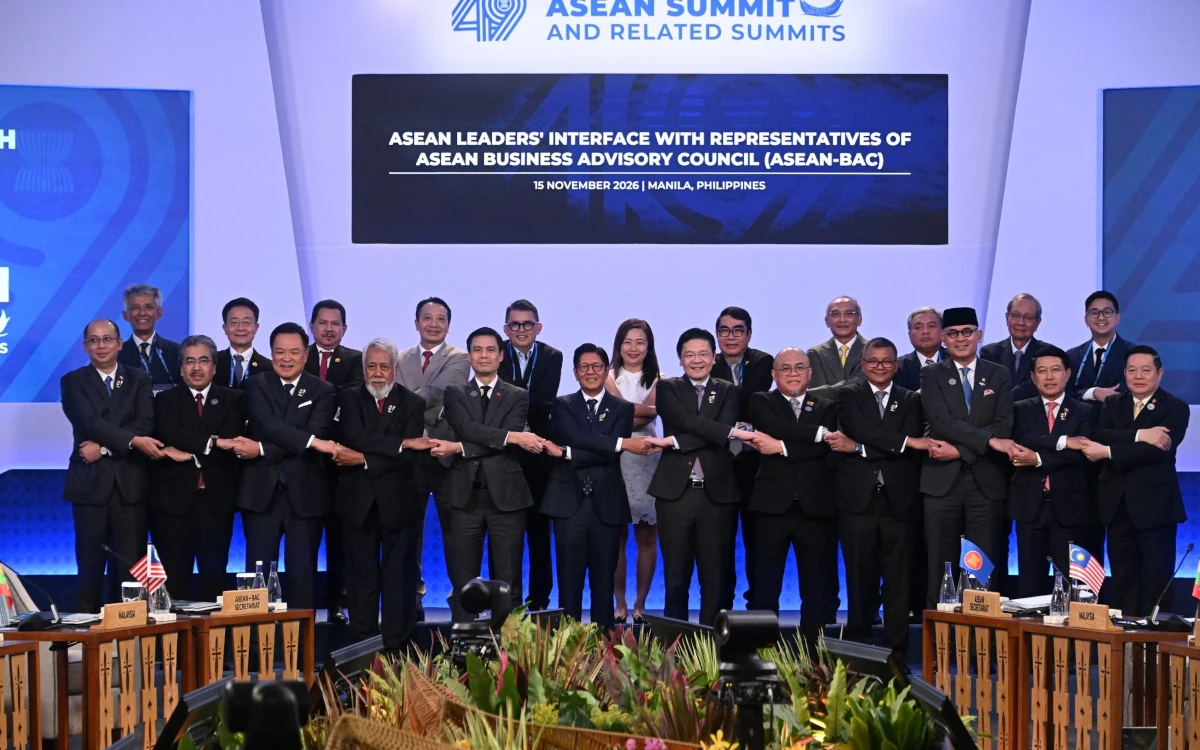
The agreement came in a joint statement issued during the ASEAN leaders‘ meeting in Manila, the capital of the Philippines, which called for “a calibrated engagement with Myanmar through a phased and progress-based approach, taking into account developments on the ground.”
“Subject to sustained and concrete progress in the implementation of the 5PC by Myanmar, ASEAN may consider the gradual restoration of Myanmar’s full political representation,” the statement said.
Myanmar is still a member of ASEAN, but it has been frozen out of high-level meetings since a military junta seized power in a coup in 2021.
This latest move comes as Thailand has been leading efforts to normalize relations with Myanmar since coup leader Min Aung Hlaing was installed as civilian president in 2026 following elections dismissed by monitors as a charade.
Bangkok has called for a “calibrated engagement” with Myanmar in an effort to implement ASEAN’s “five-point consensus” (5PC) plan aimed at ending the war between the military and a coalition of pro-democracy rebels and ethnic minority armed groups.
This push to resume engagement comes despite the stalled five-point plan, which has made little progress since its adoption nearly five years ago.
Philippine President Ferdinand Marcos noted the lack of progress in Myanmar during the ASEAN summit in May. On Sunday, in opening remarks at an ASEAN leaders’ retreat in Manila, he repeated a question he had posed to the group six months earlier: “What more can we do for Myanmar?”
“I hope our session leads to practical and forward-looking discussions on how we can further advance the implementation of the five-point consensus, make our efforts more responsive to the realities on the ground, and support a peaceful, inclusive, Myanmar-owned and Myanmar-led process,” he said.
The prospects for rapprochement with Myanmar are inextricably linked to the divergent positions of ASEAN member states. The ASEAN bloc’s rotating chair will pass at the end of 2026 from the Philippines to Singapore, a city-state analysts say opposes normalizing ties with Myanmar. In 2028, it will be the turn of Thailand, which shares a long border with Myanmar and is leading the charge for closer relations.
In this context, Thai Foreign Minister Sihasak Phuangketkeow said in Singapore on November 5th that the presence of a Myanmar representative at the negotiating table is essential for discussing policies and conveying the position of the authorities in Naypyidaw to the member states.
The adoption of “calculated engagement” indicates a trend within ASEAN toward easing the political isolation imposed on Myanmar, without officially abandoning linking its full return to ASEAN meetings to implementing the commitments of the consensus plan. However, the continued stagnation of the plan and the divergent positions of member states place clear limitations on the path to normalization, making any progress in relations contingent on actual changes on the ground. (AFP+EIR)