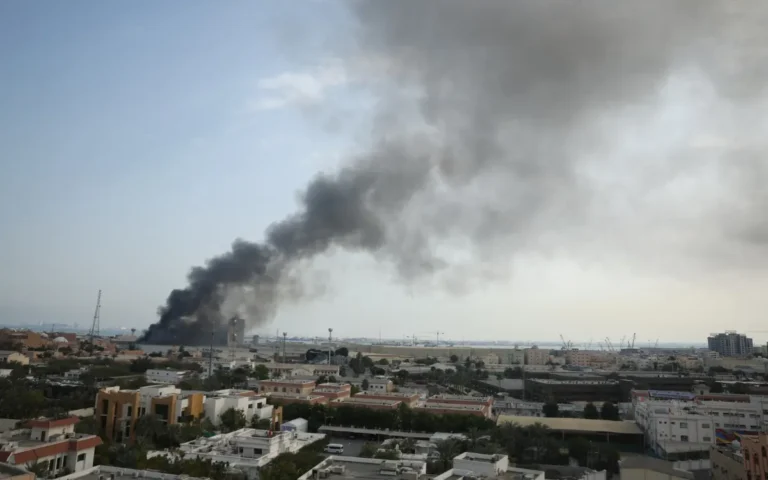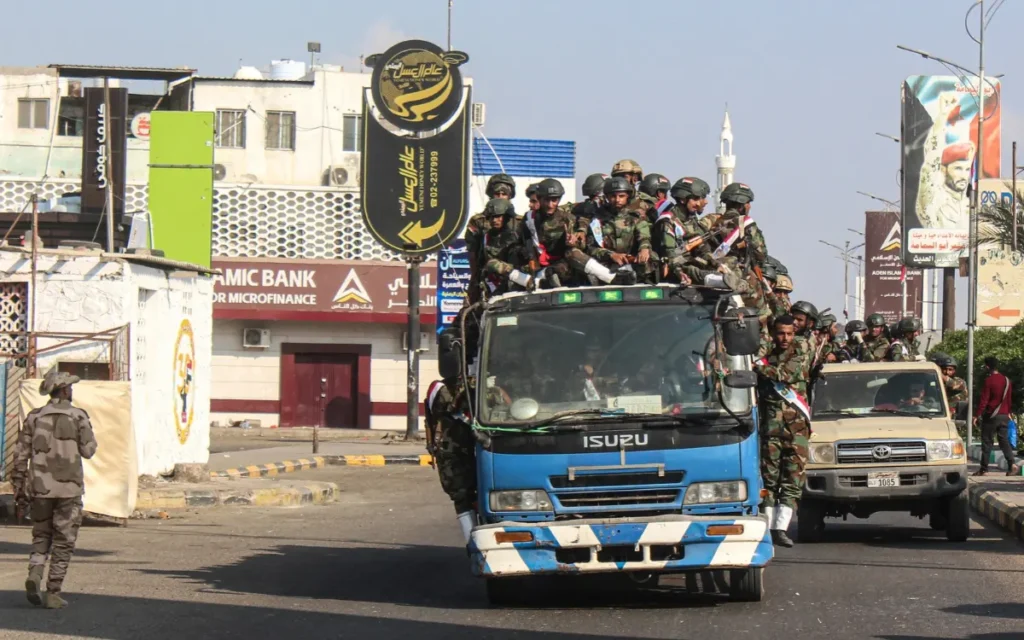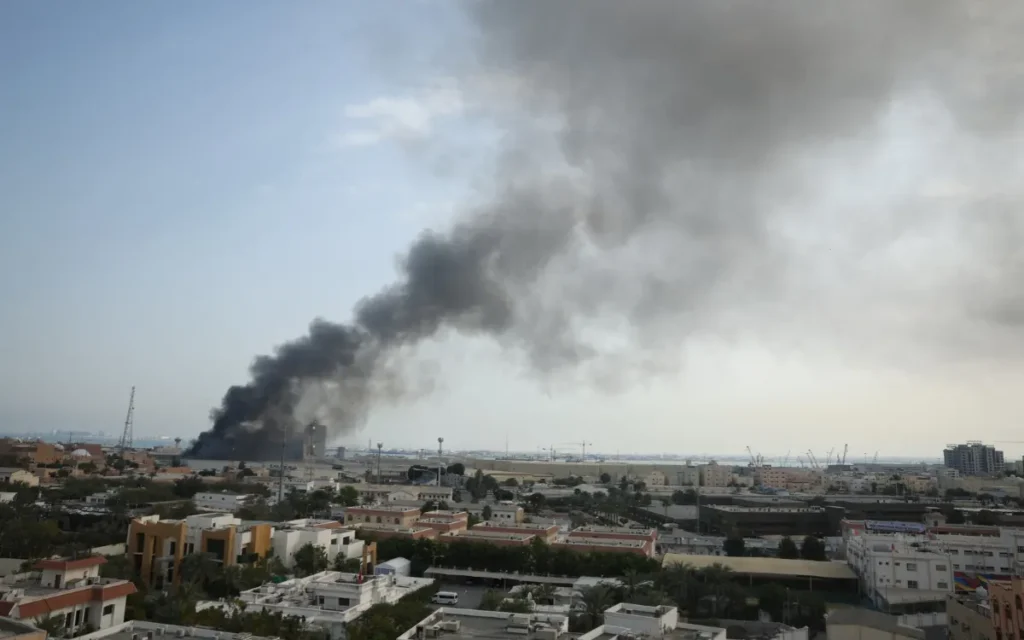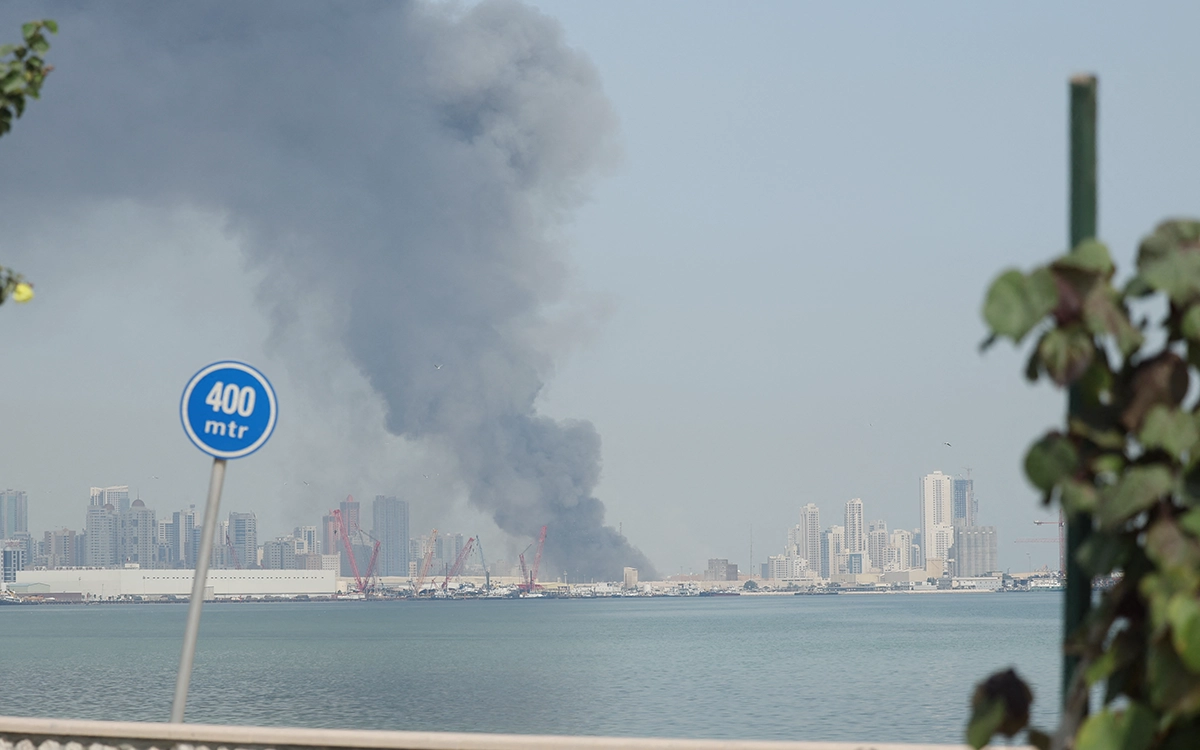
Explosions were reported in Bahrain on Sunday as Iran’s Revolutionary Guards said they had launched a drone attack on a U.S. military base in the kingdom. At the same time, Saudi Arabia announced it had intercepted two ballistic missiles fired by Yemen’s Houthis toward Riyadh, underscoring the growing security threats facing Gulf states.
Air raid sirens sounded across Bahrain, prompting authorities to issue warnings on social media urging residents to seek shelter. The alerts did not identify the source of the threat. Bahrain’s Interior Ministry called on citizens and residents to remain calm, move to the nearest safe location and follow official updates.
Iran’s Islamic Revolutionary Guard Corps (IRGC) said six drones had targeted a U.S. air defense radar system at Riffa air base in Bahrain.
The announcement followed a similar claim on Friday, when the IRGC said it had attacked a U.S. radar installation in Bahrain, marking the first such strike against a Gulf state since early September. U.S. forces confirmed that they had intercepted and shot down two drones launched by Iranian forces.
Bahrain, home to a major U.S. naval base, has been among the Gulf states most frequently targeted since the wider Middle East conflict erupted following U.S. and Israeli strikes on Iran on February 28.
Iran has since targeted vessels attempting to pass through the Strait of Hormuz, a vital shipping route that carried roughly one-fifth of the world’s energy supplies before the conflict. Washington, meanwhile, has maintained a blockade of Iranian ports.
In Saudi Arabia, the Saudi-led coalition said its air defenses had intercepted and destroyed two ballistic missiles launched by the Houthis toward Riyadh.
Coalition spokesman Turki al-Maliki said the missiles had been destroyed, following an earlier announcement that two drones had been intercepted in the kingdom’s Eastern Province. Houthi attacks on Saudi Arabia have intensified since hostilities resumed in July. In recent weeks, the group has targeted energy and transport infrastructure, military installations and Riyadh’s financial district.
The Saudi capital and its international airport have come under repeated attack. Last Sunday, a Houthi strike damaged an Aramco tower in Riyadh. Saudi authorities say attacks on the kingdom since September have killed 26 people, including 23 in strikes targeting airports. The Houthis, meanwhile, have repeatedly accused Saudi Arabia of carrying out airstrikes on areas under their control in Yemen.
According to United Nations figures, more than 1,600 people have been killed and over 300,000 displaced since a four-year ceasefire collapsed last summer.
The attacks in Bahrain and Saudi Arabia have exposed Gulf states to mounting security pressures on several fronts, threatening U.S. military facilities, critical infrastructure and major urban centers.
While Iran’s attacks on U.S.-linked targets in Bahrain are tied to its confrontation with Washington, the Houthi strikes on Saudi Arabia stem from the renewed conflict in Yemen. Both have added to the security challenges facing Washington’s regional allies.
The overlapping crises have also complicated efforts to contain the violence. With maritime traffic through the Strait of Hormuz under threat and energy infrastructure increasingly exposed to attacks, the consequences extend beyond the immediate battlefields to regional stability and global energy supplies. (AFP+EIR)