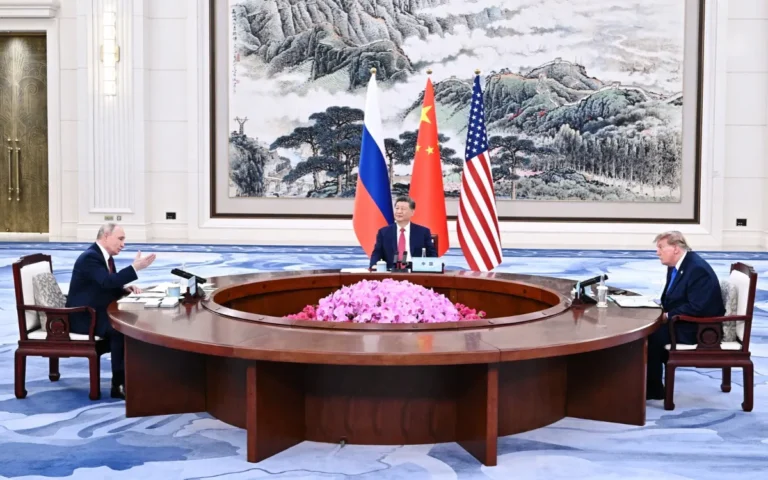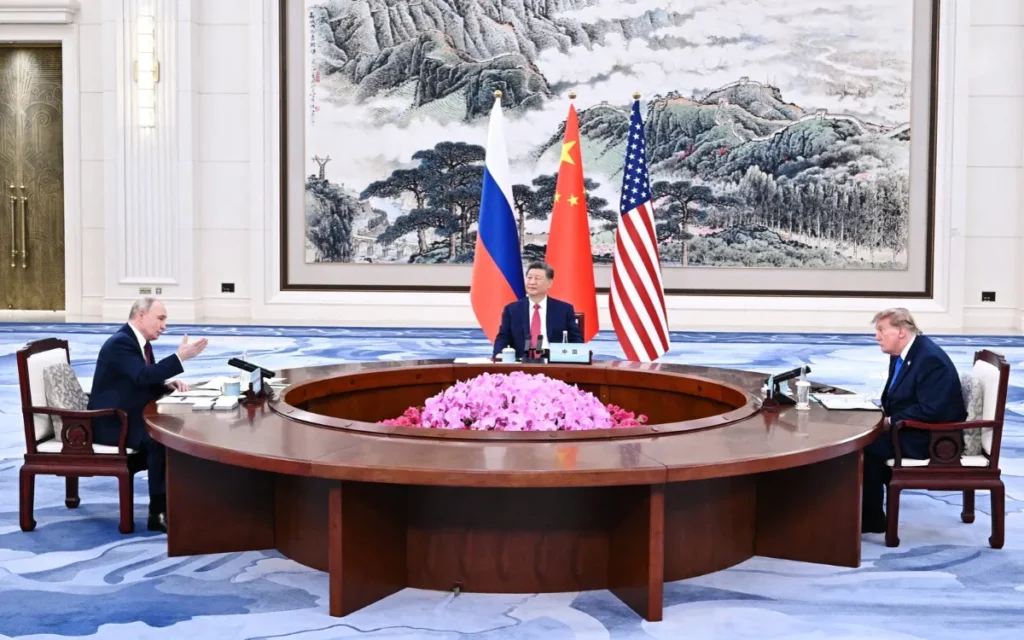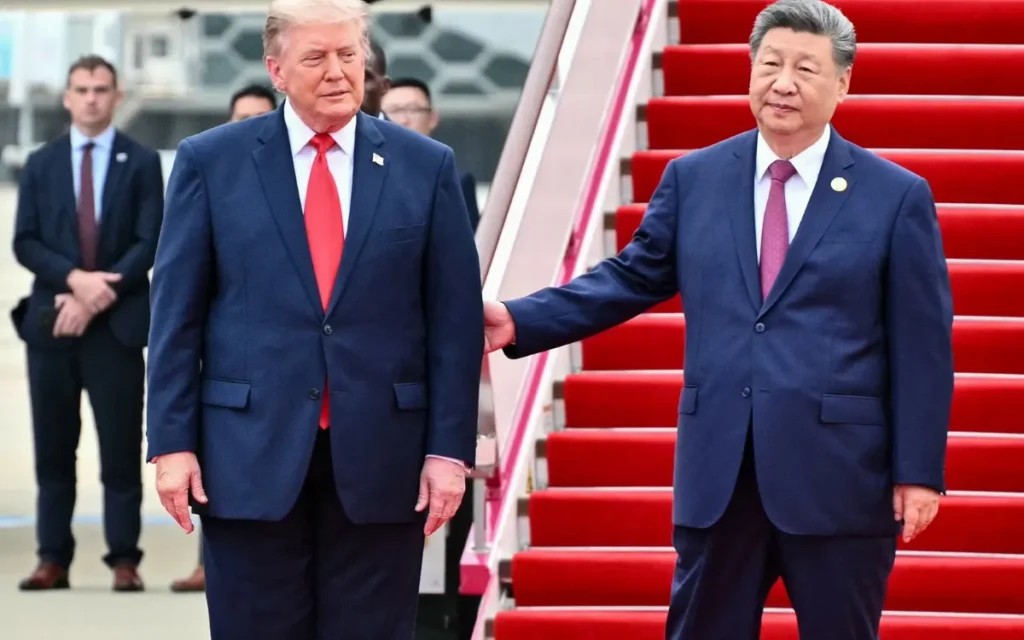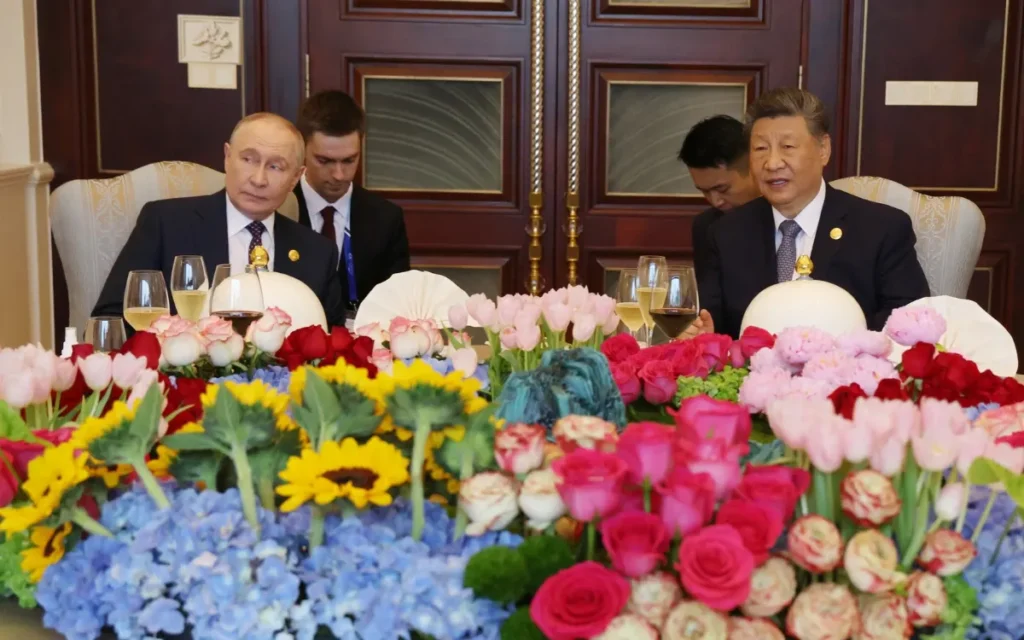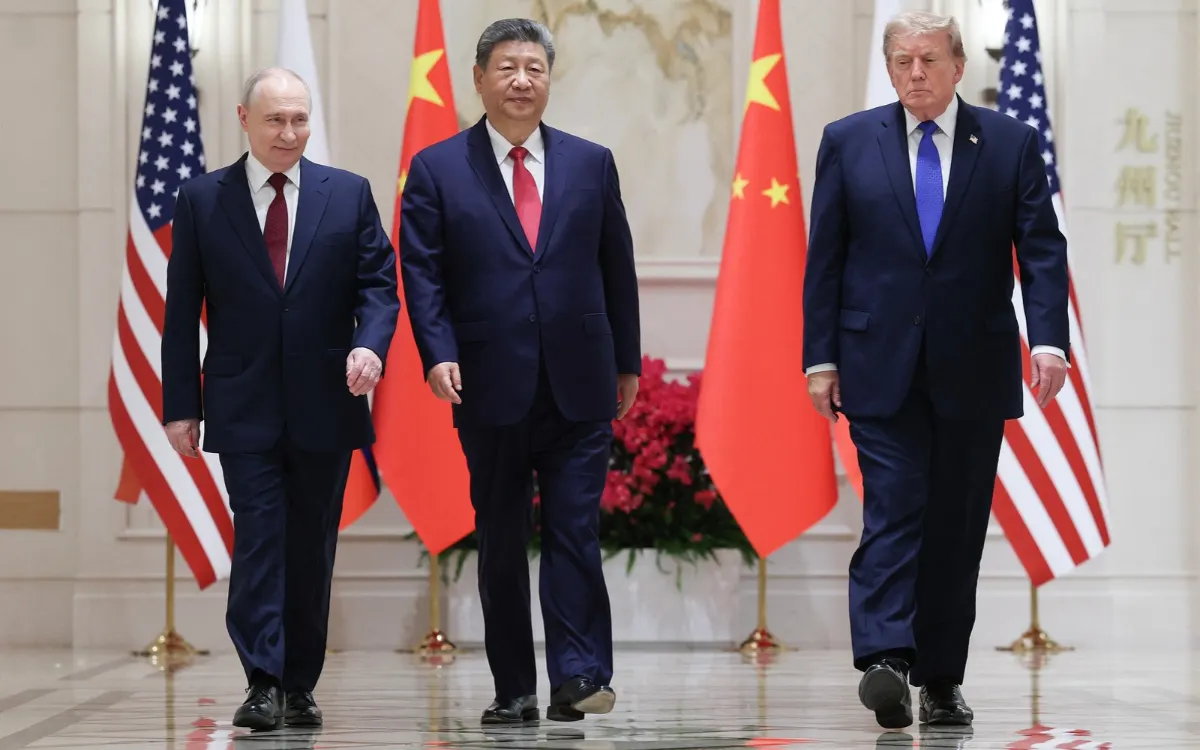
U.S. President Donald Trump, Chinese President Xi Jinping, and Russian President Vladimir Putin began an unprecedented trilateral summit in Shenzhen on Thursday, November 19, with nuclear arms reductions and the war in Ukraine emerging as central issues. The historic meeting, held on the sidelines of the Asia-Pacific Economic Cooperation summit, raises questions about whether the three powers can translate their shared calls for global stability into meaningful cooperation.
Trump said the United States, China, and Russia were uniquely placed to discuss reducing nuclear arsenals and preventing the use of nuclear weapons, while acknowledging the difficulty of reaching an agreement. The leaders also identified the Ukraine war as a subject for discussion, alongside broader questions of international security. However, their opening statements offered little indication of a concrete negotiating framework or potential commitments.
“As the world’s three largest nuclear powers by far, the United States, Russia and China are uniquely positioned to discuss how to reduce the number of nuclear weapons on Earth,” Trump said. Xi, in remarks carried by Chinese state media, declared that “a nuclear war cannot be won and must never be fought,” calling for adherence to the Nuclear Non-Proliferation Treaty and global strategic stability.
The summit comes amid uncertainty over the future of nuclear arms control following the expiration of New START, the last major treaty limiting U.S. and Russian strategic nuclear weapons. Although the three leaders expressed an interest in cooperation, their strategic priorities remain difficult to reconcile. Washington and Beijing face tensions over Taiwan and technological competition, while Russia’s war in Ukraine continues to complicate relations with the United States. Putin nevertheless said the three countries shared an interest in resolving regional conflicts, including Ukraine, and would discuss food and energy security.
The key question is whether the meeting can establish a practical process for nuclear risk reduction rather than remain a symbolic diplomatic breakthrough. Any future trilateral framework would have to reconcile the different strategic positions of the three powers, particularly China’s role in negotiations traditionally dominated by Washington and Moscow. With no specific arms-control mechanism announced in the opening statements, the summit’s longer-term significance will depend on whether the leaders can turn broad commitments into sustained negotiations. (AFP+EIR)