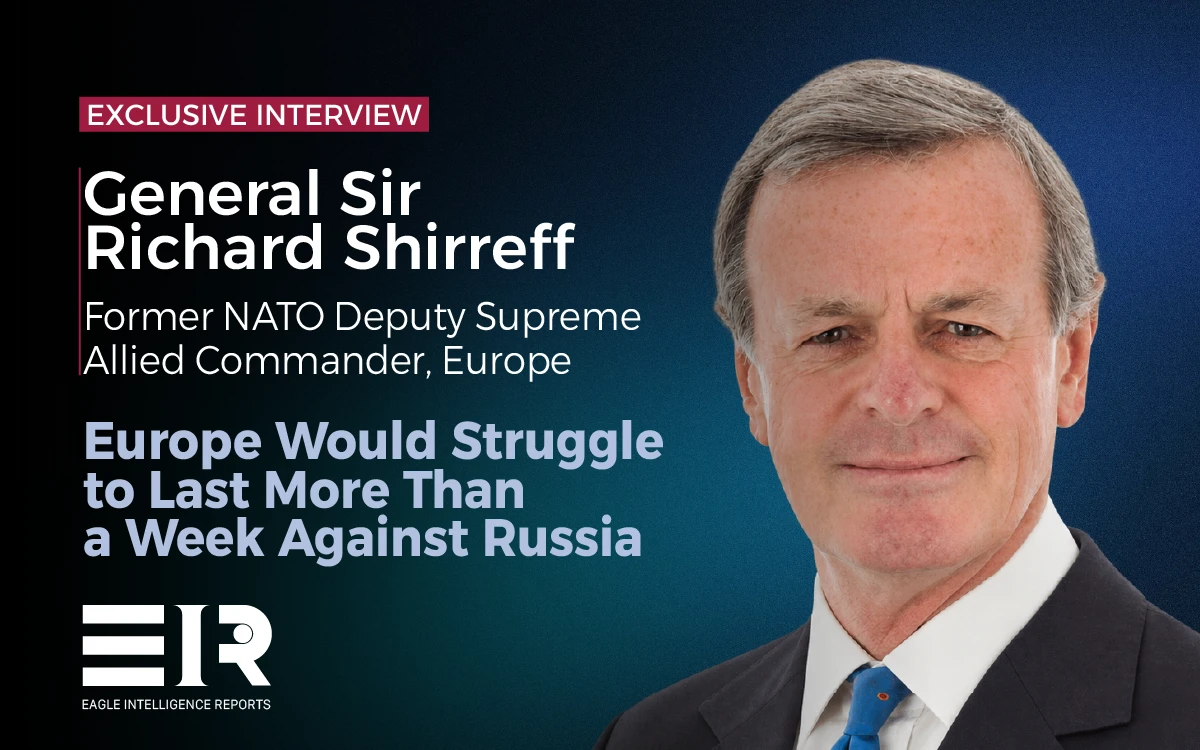
Former NATO Deputy Supreme Allied Commander Europe General Sir Richard Shirreff has warned in an exclusive interview with Eagle Intelligence Reports that Europe would struggle to sustain a conventional war with Russia beyond a week, and that the threat of war has become global.
In the second part of an exclusive interview, Shirreff said interconnected conflicts across Europe, the Middle East, and Asia could escalate into a global war. European governments, he said, remain dangerously unprepared for a prolonged confrontation with Russia.
Shirreff identified the growing cooperation between Russia, Iran, China, and North Korea as evidence that seemingly separate conflicts are becoming increasingly interconnected. He argued that Chinese support for Russia’s military-industrial capabilities, Iranian assistance to Moscow, and cooperation between Russia and Iran have created the conditions for a wider confrontation.
“We’ve got all the ingredients here,” Shirreff warned, although he stressed that a world war was not inevitable. He considered a direct U.S.–Russian confrontation unlikely under current circumstances, instead identifying a potential conflict between Washington and Beijing in the Asia-Pacific as a particularly serious danger. In this context, miscalculation, he suggested, could transform regional tensions into a much larger and protracted war.
Turning to Eastern Europe, Shirreff praised the Ukrainian military’s technological innovation and battlefield adaptation, particularly its deployment of autonomous systems, long-range precision strikes, and operations targeting Russian logistics and infrastructure. He argued that Ukraine’s experience offers important lessons for NATO militaries, which remain too heavily invested in traditional weapons systems.
However, he warned that a negotiated settlement freezing the conflict would provide Russia with an opportunity to rebuild its military capabilities rather than establish lasting peace. In his assessment, President Vladimir Putin remains committed to subordinating Ukraine and could eventually extend Russian aggression toward other European countries.
Shirreff was particularly critical of Western governments for failing to establish a coherent strategy for ending the war. He argued that European support has been sufficient to prevent Ukraine’s defeat but inadequate to enable a decisive victory.
“It’s given Ukraine enough to stave off defeat, but it hasn’t given Ukraine enough to protect itself and inflict a defeat on Russia,” he said.
According to Shirreff, a sustainable peace would require Ukraine’s allies to coordinate military, economic, and financial measures capable of imposing a strategic defeat on Russia. He accused major European governments of political weakness and excessive caution, arguing that their reluctance to provide sufficient military assistance has prolonged the conflict.
Beyond Ukraine, Shirreff has doubts about NATO’s readiness for modern high-intensity warfare. He emphasized the need to shift defense investment toward autonomous platforms, drones, intelligence and surveillance capabilities, and particularly air defense. He cited the British defense review’s proposed equipment balance of 20 percent legacy systems, 40 percent autonomous platforms, and 40 percent consumables as an example of the transformation that is ultimately required to meet the current challenge.
Financing that transition, he suggested, would require substantial private-sector investment rather than relying exclusively on government spending.
“This is a private equity war, and it’s going to be won by private equity,” he argued, highlighting the potential for investment in Ukrainian defense innovation to strengthen capabilities across NATO.
Shirreff’s starkest warning concerned Europe’s ability to sustain a major conventional conflict should it occur. He argued that European militaries lack the ammunition stockpiles, replacement capacity, and logistical resilience necessary for prolonged operations. While acknowledging that he could not provide a precise estimate, he suggested that Europe’s endurance could be measured in days rather than months.
“I think Europe would be finding it really difficult to sustain war much after about a week,” he said.
Taken together, Shirreff’s assessments portray a widening gap between Europe’s stated commitment to deterring Russia and its actual military preparedness. Lasting European security, he argued, depends not on freezing the Ukraine conflict but on defeating Russian aggression while fundamentally rebuilding NATO’s capacity to fight and sustain a modern war.
The following is the second part of Eagle Intelligence Reports’ exclusive interview with General Sir Richard Shirreff, conducted by Jonathan Sherry and Andra Maciuca.
Interview Excerpt
Jonathan Sherry:
You mentioned the First World War. Let me ask you: with crises in Europe and in the Middle East, do you think we’re approaching another world-war-type situation?
General Shirreff:
Yes. How would I define a world war? I think it would be a war in which one great power is matched up against another, and a globalized conflict. Now we have global conflict right across the world. We have a joined-up war between what is happening in Ukraine and what is happening in Iran, for example. So that is a war straddling two continents. It is a war in which Russia is not only fighting Ukraine, but Iran has been supporting Russia, and Russia has been supporting Iran in its war against America.
And the supreme irony here is that the American–Russian diesel deal is going to be putting U.S. dollars in Vladimir Putin’s bank account, which he can then use to support the Iranians with technical capabilities, which will then strike at American installations and threaten the lives of U.S. servicemen. So this is a linked war. It is also linked because China is underpinning Russian capability with at least dual-use technology and almost certainly via North Korea logistic support in terms of weaponry and ammunition. And it is supporting Iran with targeting and intelligence and the like.
So we’ve got all the ingredients here. How would you take this forward? Well, I think you’re unlikely to see America fighting Russia, frankly, because America de facto is increasingly an ally of Putin against Ukraine. But I think you could easily see China and America fighting each other at some stage because that is very much the focus. And we haven’t really talked about that. But, at some stage, I think China’s ambitions in the Asia Pacific region are going to come up against America. And the danger, of course, is miscalculation. So we’re not there yet, but this could so easily spin off and tip into it.
Jonathan Sherry: So the question is not only whether NATO is ready, but also what the war in Ukraine has revealed about the opponent that it may have to deter.
Andra Maciuca: You warned about a potential confrontation with Russia long before the full-scale invasion of Ukraine. After years of fighting, what have you had to revise in your assessment of Russian military strength, both its vulnerabilities and its ability to adapt?
General Shirreff: You’re right. I warned first in my book published in 2016 that we were facing a war with Russia and that Russia would attack Ukraine full-scale. What have we learned? Firstly, about Russia, the most important thing to learn is that the scale and extent and willingness to indulge in total brutality, which of course we saw with the Russian operations in Syria—absolute no question that Russia is prepared to engage in the total destruction of cities and destruction and massacre of civilians on a wholesale basis. We’ve seen it at Idlib. We’ve seen it at Bucha. We’ve seen it in Mariupol in Ukraine. And I think we’re going to see it again as Russia ramps up its winter offensive against Ukrainian civilians and energy installations this winter.
What we have also seen is an extraordinary scale and pace of innovation, notably from Ukraine. A war always gets rid of the linear thinkers and gives the lateral thinkers free rein. And you see this in Ukraine. What Ukraine has done in stopping the Russian advances, regaining Russian ground, and bringing maneuver back to a battlefield which has been completely dominated by trenches and drones this summer and early autumn has been utterly remarkable.
And the way the Ukrainians played this with Operation Vivaldi—the use of autonomous vehicles to disrupt, to attack Russians from behind, to create panic deep in Russian lines, and the long-range precision attacks on oil infrastructure, the effective besieging of Crimea, cutting off Crimea from the rest of Russia—has been utterly, absolutely remarkable. And Ukraine could do so much more if Europe got behind it.
These are the things, and there are huge lessons for the military for the Western and NATO militaries. Now I know they are looking at them. They’ve taken the lessons. And you look at the British Defence Review last year, which I think was a very good attempt to identify the shape and size and scale of the sort of military capabilities needed to fight Russia. But of course more needs to be done.
Andra Maciuca: What would tell you that Russia was rebuilding the capacity to threaten another European country if the war were frozen?
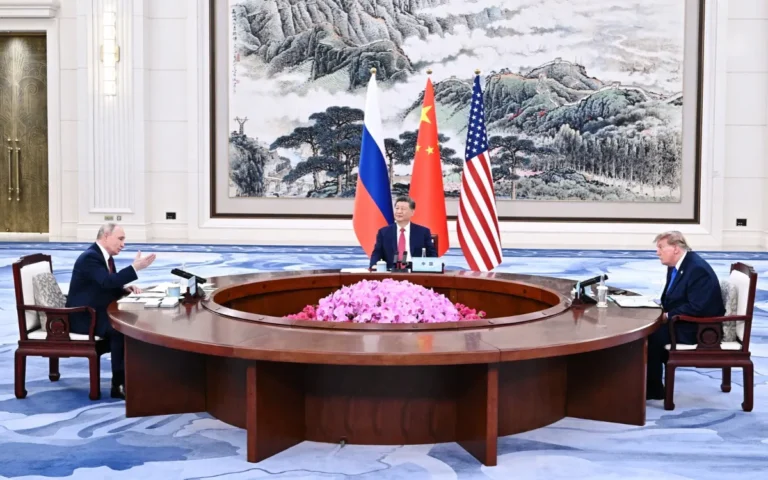
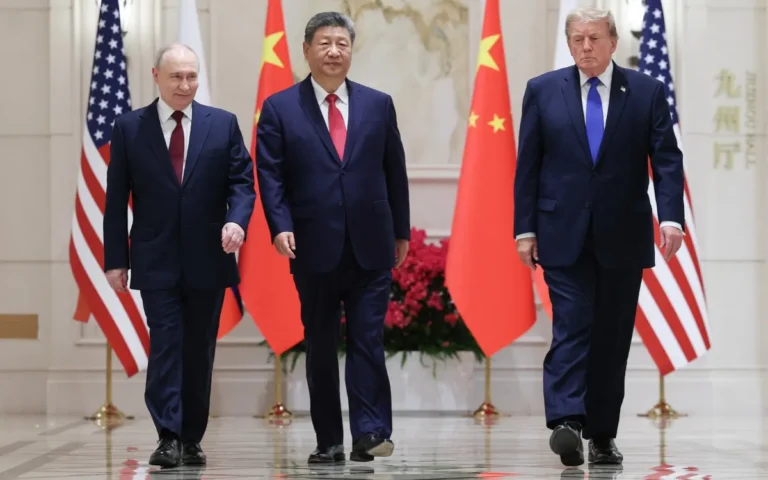
General Shirreff: Oh, I think there’s no question. If there is a frozen war, if there is the sort of deal that Trump has been trying to force on Zelensky for two years—and I note that Putin is taking advantage of his favoring by Trump to propose a summit between him, Xi, and Trump to force another deal on Ukraine—if that happens, if the war is frozen, yes, for a time, the fighting will slow down. Yes, for a time, the casualties will dwindle from the huge casualties being taken. But we have to recognize that it will not lead to a lasting ceasefire because while Putin is in power, he will never give up his intent to incorporate Ukraine into Russia as a sovereign part of Russia. Either that or certainly the eastern provinces and to render the rest of Ukraine a puppet state like Belarus.
Because we have to understand that Russia has only ever been an empire. Empire is woven into the Russian DNA. It is an imperial project. And Putin is trying to rebuild another Russian Empire. And a part of that is the subjugation of Ukraine. And if he achieves his aims in Ukraine, he will merely rest, rebuild, regenerate, and he will have another go to swallow up the rest of Ukraine, but also to attack NATO states where he has already started.
He’s already started with covert war against Romania. He’s already started—the first two obviously on his list will be Moldova and Georgia. Georgia has effectively been subjected to electoral manipulation and is in Putin’s camp now. Moldova has been threatened by it. No, no question—this is not going to lead to a lasting ceasefire if the war is frozen.
Jonathan Sherry: Western governments have provided substantial support for Ukraine, yet the desired political end state, as you know, remains contested. Did the West ever agree on a workable theory of how this war should end?
General Shirreff: No, absolutely not. The only way this war would end, the only way there’s going to be a lasting ceasefire in Ukraine is when the West—and that means Europe, NATO, and other allies supporting Ukraine like Japan, Australia, South Korea, and maybe others, but not America—recognize that the only thing that’s going to lead to a lasting ceasefire is the defeat of Russia in Ukraine. And the only way that is going to happen is if Ukraine’s allies design and execute a strategy alongside and with Ukraine to support Ukraine in the defeat of Russia.
And this is going to need a fundamental mindset shift. It’s going to need a significant ramping up of defense, not only to build up the capabilities Ukraine needs, but also to build up the capabilities to deter Russia. It’s going to need military advice. It’s going to need a number of lines of operation: there’ll be military, there’ll be financial, there’ll be economic. Because fundamentally this war is not going to end until Russia has been subjected to such a massive strategic shock—militarily, financially and economically—that Putin is terminally weakened, if not overthrown.
We are a million miles away from that. Thus far, there’s been a lot of, frankly, hypocrisy from Europe. All the talk of we’re with you all the way, we’re four-square behind you, we will never stop supporting Ukraine. And yet again and again and again, Europe has stopped short of the support needed. For example, Germany is still prevaricating over the long-range precision Taurus missiles. It hasn’t given the money. It hasn’t given the logistics—the promise of a million shells, all these things. It’s given Ukraine enough to stave off defeat, but it hasn’t given Ukraine enough to protect itself and inflict a defeat on Russia.
Jonathan Sherry: Well, let me ask you about that. This reluctance—how do you explain it?
Where, in your view, has military strategy been held back by political caution?
General Shirreff: It’s political weakness. It’s simply down to political weakness and cowardice. It is a failure. I go back to my point: it is this failure to recognize by European political leaders and statesmen—not all, I would say, but principally Western: Germany, France, Britain, Italy, Spain—to recognize the nature of the war in which they are engaged. And a complacency that just by giving Ukraine enough military aid to get by, somehow peace will prevail.
You hear it with Mark Rutte, the NATO Secretary General, “When peace prevails,” he says. Well, what do you mean by that, Secretary-General of NATO? Peace doesn’t prevail by magic. Peace only prevails when you defeat the enemy. This is not a war that is going to end with a negotiated ceasefire. As we said earlier, any form of ceasefire deal forced on Ukraine only delays the inevitable later. So you ask what stopped it? It’s political cowardice, quite simply.
Jonathan Sherry: You mentioned earlier the changing nature of the battlefield. The battlefield in Ukraine has been transformed fundamentally by drones, electronic warfare, new forms of surveillance, and also enormous ammunition consumption. What lesson is NATO learning too slowly?
General Shirreff: Oh, goodness me, where do I start? I think all the lessons too slowly. I’m a man in a hurry on this. I really feel that the only way we are going to see peace long term in Europe is when Russia recognizes that NATO is such a formidable ally, that it recognizes that it’s simply not worth the attempt to try and provoke a fight with NATO.
So where? Manpower, we talked about that. What is being done to really build the resilience of manpower needed? You don’t need armies on the scale of the First World War, of course not, given the nature of modern weaponry. But you do need a degree of mass in order to build the force you need.
It’s drone warfare. It’s autonomous vehicles. It’s the fact that still huge amounts of defense money in countries like UK and Germany are going into legacy systems such as tanks and armored infantry fighting vehicles and guns rather than into innovative systems. I’ll give you an example. The British Defence Review said last year that the balance of equipment should be 20 per cent legacy equipment, which is still needed on the battlefield. Don’t get me wrong—tanks, armored infantry, manned ships. But 40% autonomous—that means autonomous vehicles, autonomous vessels, autonomous airplanes, robot tanks, planes, and ships, and 40% consumables, drones, and artillery. If you look at the spreadsheets in current defense ministries, they haven’t begun to reflect that sort of change of need.
Jonathan Sherry: Well, as you know, these things all have costs. So which programs would you reduce or change in order to finance the capabilities that matter most now?
General Shirreff: They absolutely have cost, and before I go into the specifics of the question, I would say that the way to address those costs, the way to meet those costs, has got to—firstly, it needs innovative funding. I don’t believe this could be done by public money by raising taxes or by diverting money from welfare alone. I think it’s going to need private money. And we’re already seeing private money being deployed to invest in innovative systems, autonomous vehicles, drone warfare, and the like.
I mean, one of my straplines is this is a private equity war, and it’s going to be won by private equity investing in autonomous systems in Ukraine and then selling into the rest of NATO. But in terms of the systems, forgive me a second. In terms of assistance, it is autonomous vehicles and drone warfare and intelligence and surveillance capabilities.
It’s air defense, air defense, air defense. I can’t stress that highly enough. The fact is that UK hasn’t got the interceptor missiles, apart from on ship, that are needed, as we’re seeing from Ukraine. And you can see that with the shortage of Patriot interceptor missiles, which is meaning Ukrainian cities being subjected to constant attacks. So those are the sort of capabilities.
Andra Maciuca: How long can Europe sustain a high-intensity conventional war before ammunition and replacement capacity become the main constraint?
General Shirreff: I couldn’t give you a number of days. In the old days in the Cold War, we were expected to have 30 days of ammunition expenditure capability. Even I think you would find 30 days would be too much of a pinch. I think the reality is without really digging deep—and going back to my components of readiness: building the logistics for sustainability required for a long-term conflict—Europe is not going to be able to demonstrate its long-term capability.
But that said, of course, it’s up against a Russia that is going to be struggling unless it has had a chance to regenerate capability. And that’s not going to happen until the end of this war.
Andra Maciuca: But if you were to put a number to it, what do you think? What would be the number of days, months, until Europe runs out of supplies?
General Shirreff: Well, I think Europe would be finding it really difficult to sustain war much after about a week, if you put a number to it.