
A source tells Eagle Intelligence Reports that talks in Islamabad explored the possible deployment of Pakistani naval forces to help protect Kuwait, alongside joint exercises, training, and maintenance cooperation.
Kuwait and Pakistan have discussed the possible deployment of Pakistani naval forces to help defend the country against maritime attacks, a source familiar with the talks told Eagle Intelligence Reports, amid growing fears of a wider regional war and renewed threats to vital shipping routes.
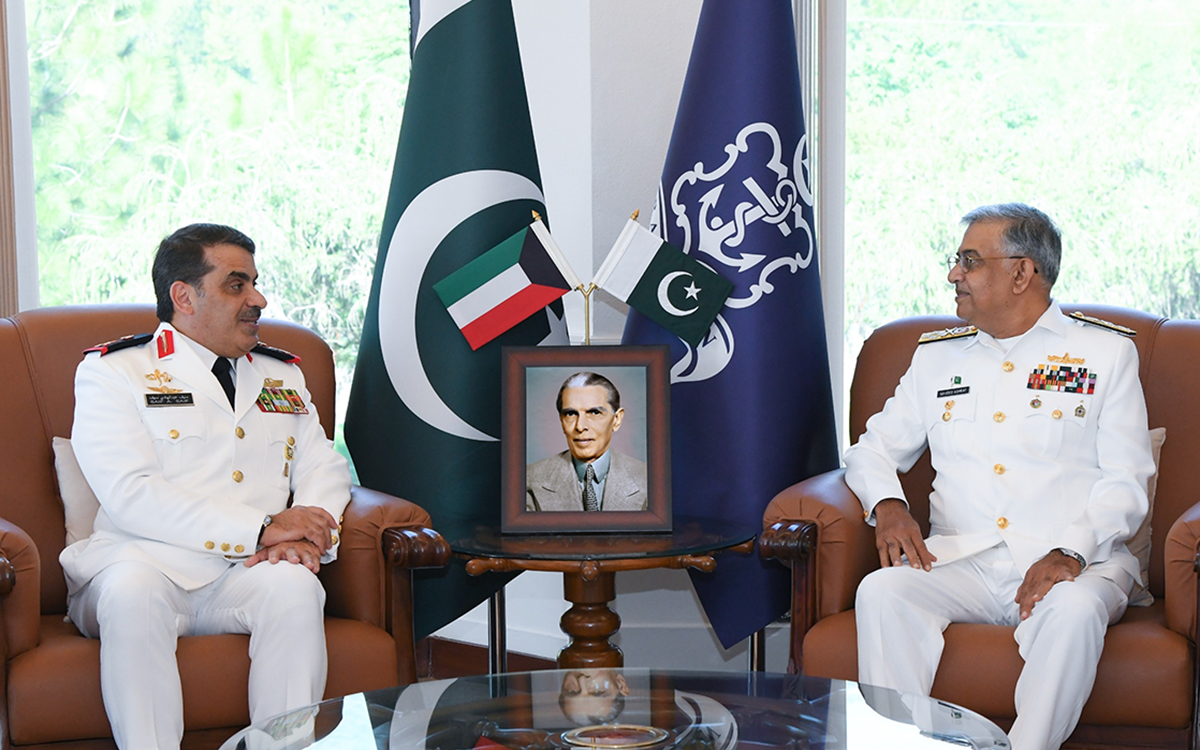
The source said the proposal was raised during a visit to Islamabad on October 27 by the commander of the Kuwaiti Naval Force, Major General Saif Abdulhadi Al-Hamlan, who met with Pakistani Defense Minister Khawaja Muhammad Asif and Chief of Naval Staff Admiral Naveed Ashraf. The discussions focused on strengthening Kuwait’s ability to respond to maritime threats and expanding military cooperation between the two countries.
The source did not specify how many Pakistani personnel could be deployed or what missions they might undertake, including whether their role would involve protecting Kuwait’s territorial waters or supporting Kuwaiti naval operations. It also remains unclear whether the two sides reached any preliminary understanding or whether the proposal remains under discussion.
According to the source, the talks also covered expanded training programs for Kuwaiti naval personnel, joint naval exercises, and technical cooperation on the maintenance of warships and onboard systems. The measures are intended to improve the Kuwaiti navy’s operational readiness and its ability to respond to emergencies.
Official statements issued by Kuwait and Pakistan following Al-Hamlan’s visit confirmed his meetings with senior Pakistani officials and referred to discussions on naval cooperation, training, and military readiness. Neither side publicly mentioned the possibility of deploying Pakistani naval forces to Kuwait.
The source linked the discussions to mounting security concerns in Kuwait as tensions persist between the United States and Israel on one side and Iran on the other, raising fears of renewed military strikes and possible retaliation against Gulf states.
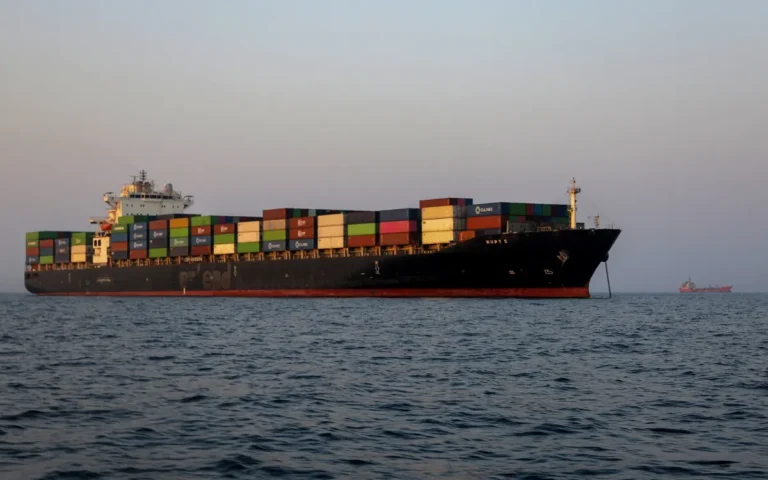
The stakes are particularly high for Kuwait, whose economy depends heavily on maritime routes for oil exports and imported goods. Any significant disruption to shipping through the Strait of Hormuz could have serious economic and security consequences for the country.
Iranian warnings intensified following the visit. On October 31, Iran’s Supreme Leader Mojtaba Khamenei called on the armed forces to prepare for an immediate response to any new attack by the United States or Israel, without geographical restrictions, according to Iranian media reports.
That same day, Iran’s Fars News Agency published a video and maps under the title “Zero Hour,” identifying Kuwait among eight countries containing sites that could potentially be targeted in the event of another attack on Iran. The maps highlighted ports, airports, energy and water facilities, and other civilian infrastructure.
Kuwait and Pakistan signed a defense cooperation protocol on August 27 covering training and capacity building, following an earlier agreement in 2023.
In July, Reuters reported that the two countries were discussing broader defense arrangements that could include a Pakistani military presence in Kuwait. A Pakistani security official said at the time that the deployment of combat forces was not under consideration.
The information obtained by Eagle Intelligence Reports, however, concerns a more specific proposal: the possible deployment of Pakistani naval forces to help protect Kuwait against maritime attacks. Neither government has publicly announced an agreement on such a deployment or disclosed any arrangements for its implementation.
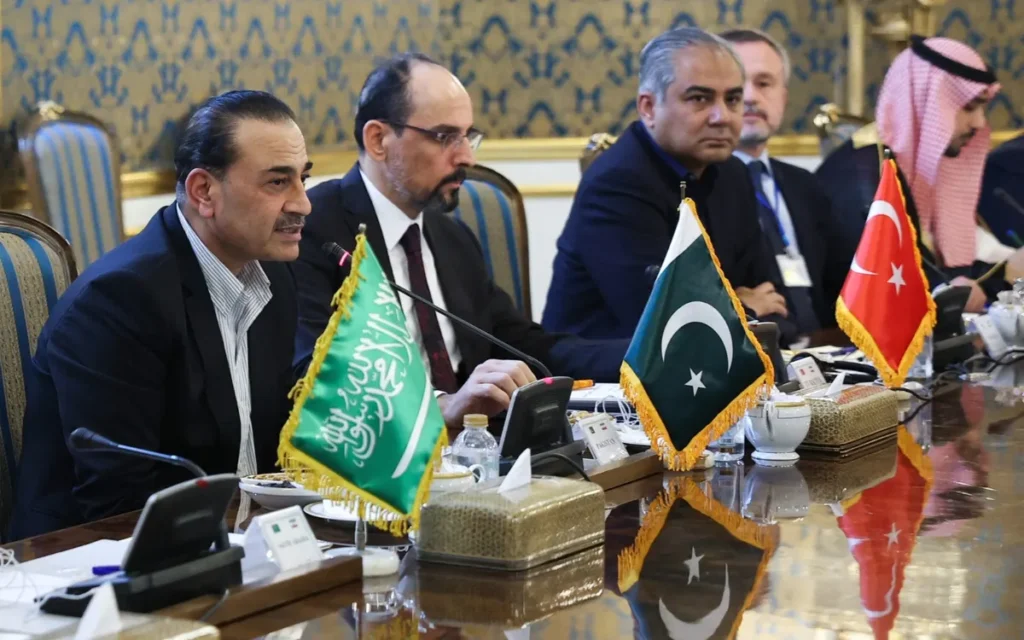
The talks also carry wider strategic significance because Pakistan is a founding member of the Makkah Defense Alliance, established in August alongside Saudi Arabia and Turkey. The pact is based on a collective defense commitment under which an attack on one of the three countries is treated as an attack on all.
Kuwait is not a member of the alliance, yet it is holding direct talks with one of its principal members over a possible Pakistani naval presence to help protect its coastline.
The discussions suggest that Kuwait is exploring bilateral security arrangements tailored to its own defense needs, potentially allowing it to draw on Pakistani military capabilities without assuming the collective defense obligations binding members of the Makkah alliance.