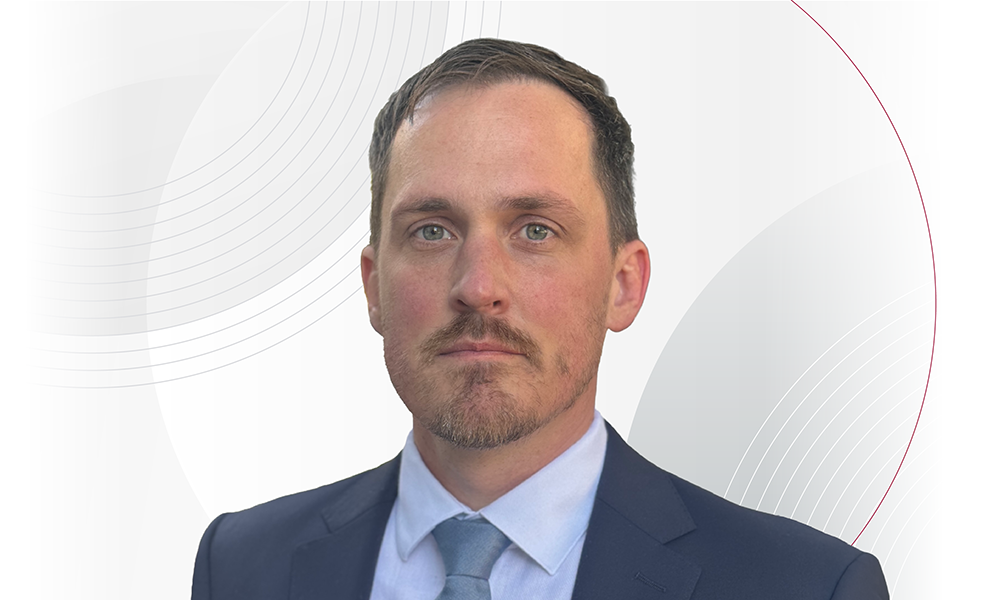

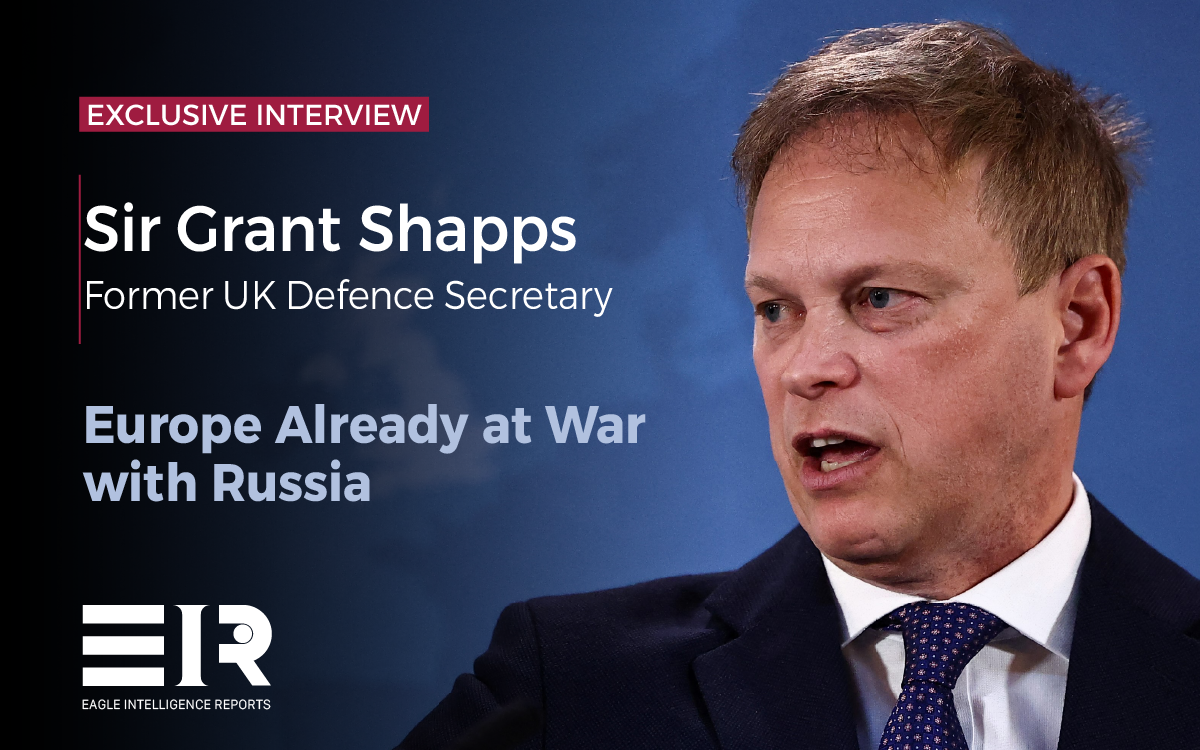
Former British Defence Secretary Grant Shapps has warned that Europe is already at war with Russia and has failed to recognize the true threat it poses. He accuses Western governments of providing Ukraine with just enough military assistance to survive rather than the support needed to defeat Moscow’s invasion.
In an exclusive interview with Eagle Intelligence Reports, Shapps said NATO has the military resources and financial capacity to sustain a prolonged confrontation with Russia, but European governments lack the political willingness to expose their populations to the costs of war. He argued that the combined military spending of Britain, France, Germany, and Poland is twice that of Russia, suggesting that deploying even a fraction of NATO’s European capabilities could give Ukraine what it needs to defeat the invasion.
Shapps questioned whether the West had ever developed a sufficiently clear strategy for Ukraine, describing military assistance as an effort to keep Kyiv on “life support” rather than deliver a decisive blow against Russian forces. He also criticized the limited response to Russia’s 2014 invasion of Crimea, arguing that it encouraged President Vladimir Putin to believe he could invade the rest of Ukraine without facing sufficient consequences.
Addressing wider security threats, Shapps pointed to links between Russia, China, Iran, and North Korea, citing Moscow’s reported assistance to the Houthis, North Korean involvement in the Ukraine war, and Chinese support for Russian weapons production. However, he cautioned against describing these interconnected developments as a new world war, noting that the countries involved also have competing interests and tensions among themselves.
On European security, Shapps credited U.S. President Donald Trump with accelerating efforts to increase European defense spending by making clear that Washington would not indefinitely shoulder the burden of protecting its allies. He said Europe has the resources to defend itself but needs time to expand military production and overcome lengthy defense procurement processes.
Shapps also emphasized Britain’s role in European security, saying the United Kingdom provides a nuclear deterrent committed to NATO and would continue to offer what he described as a defensive nuclear umbrella for Europe.
The following is the third part of Eagle Intelligence Reports’ exclusive interview with Sir Grant Shapps, conducted by Jonathan Sherry and Andra Maciuca.
Interview Excerpt
Jonathan Sherry: Well, let’s shift and talk about the situation in Europe, specifically in Eastern Europe. In January 2024, you warned that the world had moved from a post-war to a pre-war era. Nearly three years later, with everything going on in Eastern Europe and in Ukraine, are we still preparing for war, or are we already at war?
Sir Grant Shapps: I think Europe is at war. But unfortunately, Europe doesn’t realize it’s at war. And I find it extraordinary how daily political narrative just continues in Europe. I mean, they’ll obviously refer all the time to Ukraine, but if you live in this region in Europe, this is actually on our doorstep in a way that cannot and should not be ignored.
So, I do constantly want to sort of grab Europe by its collars and shake it up and down and say, “Do you not realize that this war affects us all?” It is an aggression of Putin trying to change our way of life through force. And we should be prepared to use every single asset at our disposal to stop that.
And instead, what we get is we give Ukraine just enough to remain on life support. And fortunately, the Ukrainians are incredibly resourceful and brave people. I think we should be giving them more. And it seems extraordinary to me that that speech—which is what, now, nearly two years ago—even now perhaps not everyone has realized the extent of what’s required.
Having said that, NATO has now committed to 5 percent of GDP spent on defense, with at least 3.5 percent of it directly, and the other 1.5 percent on infrastructure. Things have moved forward in some ways. I would rather see a much more proactive stance in support of Ukraine directly by Europe, though.
Andra Maciuca: On October 12, NATO unveiled its theory of victory, which is to “block, blunt, and break” a Russian attack, although it did stress that it doesn’t aim to completely defeat Russia. Would you say that the West had a clear strategy for Ukraine ever?
Sir Grant Shapps: It’s an interesting question. No, I don’t think we have had a clear enough strategy. In my view, a clearer strategy for Ukraine would have been to say, if you take the military expenditure of just four European countries—let’s say Britain, France, Germany, Poland—you have twice the entire expenditure of Russia on their military. What I’m trying to say is a minimal effort of NATO—perhaps 20 percent of its European power—would be sufficient to easily provide what’s required to Ukraine to defeat its invader, Russia. But instead, we’ve chosen to keep them on life support.
And I’m not saying that we haven’t all tried. We have. I was with the former U.S. Defense Secretary last week. And we were discussing how we built a 50-nation-plus support network, the Ukraine Defense Contact Group. And through that, we’ve gifted all manner of different equipment. But it’s sort of been, you know, here’s some old stuff that’s on the shelf that is going to time out anyway. So you might as well have it, Ukraine. You’ll be able to use it better than we can, plus some additional assistance. The UK gives 3 to 3.5 billion a year to Ukraine’s war effort.
But actually, I think if we look into our hearts and we’re honest about it, we could all be doing a bit more and being more cohesive in our support for Ukraine. And I think it’s incredibly important that we do, because otherwise the aggressor simply wins—in this case, Putin, who doesn’t think that our way of life deserves to survive. And I fundamentally disagree. I think that it should be for us to decide, not him.
Andra Maciuca: Russia has managed to support a prolonged confrontation despite heavy military and economic costs. But do you think NATO could support a similarly prolonged war with Moscow?
Sir Grant Shapps: It’s very interesting. The cost to Russia and the Russian people, for whom I feel very, very strongly, has been horrendous—more than a million men killed and wounded. Really a sausage meat machine of killing, with soldiers being sent to the front line by Putin, who doesn’t give a damn about their lives. And NATO, to answer your question directly, has more resources. I mean, we overmatch Russia, not surprisingly, because of the 30 NATO countries in Europe alone. We overmatch Russia hugely. So clearly, we could be involved and do this.
You know, in a democracy, governments rightly feel they need to bring their population with them. There have been costs—if not costs in human life, but certainly in energy costs and other things—since the war broke out. And I suppose some European countries feel that they just don’t want to expose their population to the real costs of war. And of course, in addition, the United States has made it very clear it’s Europe’s problem to fix.
So could NATO sustain it? Yes. It has the equipment. It has the budgets. It overmatches Russia many times over. Does it want to? No. Its governments think that the populations won’t really go for it, which is how we end up sending life support to Ukraine rather than the killer blow that could actually end the invasion.
Jonathan Sherry: During your time as Defense Secretary, Britain was a leading supporter of Ukraine. Did the West give Ukraine what it needed this time to win? Or did political and economic concerns hold it back?
Sir Grant Shapps: Yeah, I think the latter is true. I had a very, very clear view of this—as did Boris Johnson as Prime Minister before I was Defense Secretary—that we should do whatever it takes to defeat an incoming invader in Europe. We’ve been here before in Europe. It’s caused last century two world wars. And we should not turn a blind eye to it and just say, “Well, it’s okay. They’ve got this.” And essentially, that’s what happened in 2014, when there was so little response to the Russian invasion of Crimea that Putin then rightly surmised that maybe he could get away with invading the whole of Ukraine. I say rightly—I mean, that was his summary. In reality, it was a bit harder than the 72 hours that he thought it would take, as he’s now discovered four and a half, nearly five years later, and still hasn’t taken over Kyiv.
But this government in the United Kingdom, which has been in power for more than two years, has, in fairness, continued the original line, which is to say that it’s unacceptable to have this invasion going on in Europe. Just this week, Zelensky was at Number 10 with the current new British Prime Minister, Andy Burnham. And Burnham has been absolutely clear that we’ll be with them right to the end. And so I think on a political level, support’s still very, very high. In the United Kingdom, I’ve never met anyone who thought that we should do anything other than support Ukraine. In my own household, we had a Ukrainian family come live with us for the first year of the war, and people are generally very pro the Ukrainian people.
Jonathan Sherry: Well, let’s zoom out for a minute. Back in 2024, you warned that Britain could face conflicts with Russia, China, Iran and North Korea. With Russia reportedly helping the Houthis target ships, are these actually separate crises, or are we talking about one wider war on several different fronts?
Sir Grant Shapps: I think there is an argument that that’s the case. And you mentioned Russia helping the Houthis’ targeting. You’ve also got North Korea sending men to their deaths in Ukraine with that link with Russia. China has a variety of different roles, including, as I revealed by declassifying intelligence on one occasion, helping Russia to build its own version of the Shahed missile in Chinese factories. So, you know, there are many connected lines to all of this.
I stop short of saying this is therefore a world war against Russia, China, North Korea, and Iran. It’s not quite as simple as that. And, you know, these countries at different times have different disputes between them. Of course, the relationship between Russia and China has swapped around during our lifetimes. It used to be Russia was the predominant one. It’s now the other way around. And these things bring tensions of their own type. So it’s not quite as clear-cut as that.
And yes, there’s a lot of connectivity. And I think we typically don’t take the time to see how those dynamics are really operating. And to your question, we very much should do.
Andra Maciuca: With Trump casting doubts on U.S. security commitments, do you think Europe would be prepared to defend itself without the help of the United States? And what should Britain’s role be?
Sir Grant Shapps: I think that Trump has done what, in essence, many of us were calling for. You mentioned my speech at Lancaster House in January 2024, where I talked about having gone from a post-war to a pre-war era, and I encouraged greater expenditure in Europe on our own defense and the rest of it. Actually, Trump, in his own way, has maneuvered that situation much faster than any individual NATO defense secretary in a European country would have done on their own by literally saying to Europe, “Guys, you’re on your own. And if you don’t spend it, then we’re not supporting you.”
And that has finally woken Europe up from its post-Cold War lethargy, where we thought that we could not pay our tax euro or pound and just have Americans pay the tax dollar to protect us. And that seemed to me to be completely wrong, which is why I made that speech. Of course, we should pay for our own defense.
Now, it’s taking Europe a while to wake up to all of this—to get the military machine producing what’s required in order to support its own defense. And we all know that the procurement process for defense equipment is bizarrely and peculiarly long. And so this is not an overnight thing. But could NATO Europe do it? Yes, we can. We massively, as I’ve already discussed, overspend what Russia spends. Will we do it? Yes, I think increasingly we are likely to put our backs into this because there is no other choice. I mean, we have been left with no other choice.
And what would the United Kingdom’s position be? Well, we already are the European NATO power that provides the nuclear deterrent defense to the rest of Europe because we dedicate our nuclear deterrent to NATO under Article V. The French do not. They are the only other European nuclear power. So, the United Kingdom has a leading role in this that perhaps we don’t really talk about sufficiently, which is that we already provide that nuclear umbrella, defensive umbrella for Europe, and we certainly intend to continue to do that.