
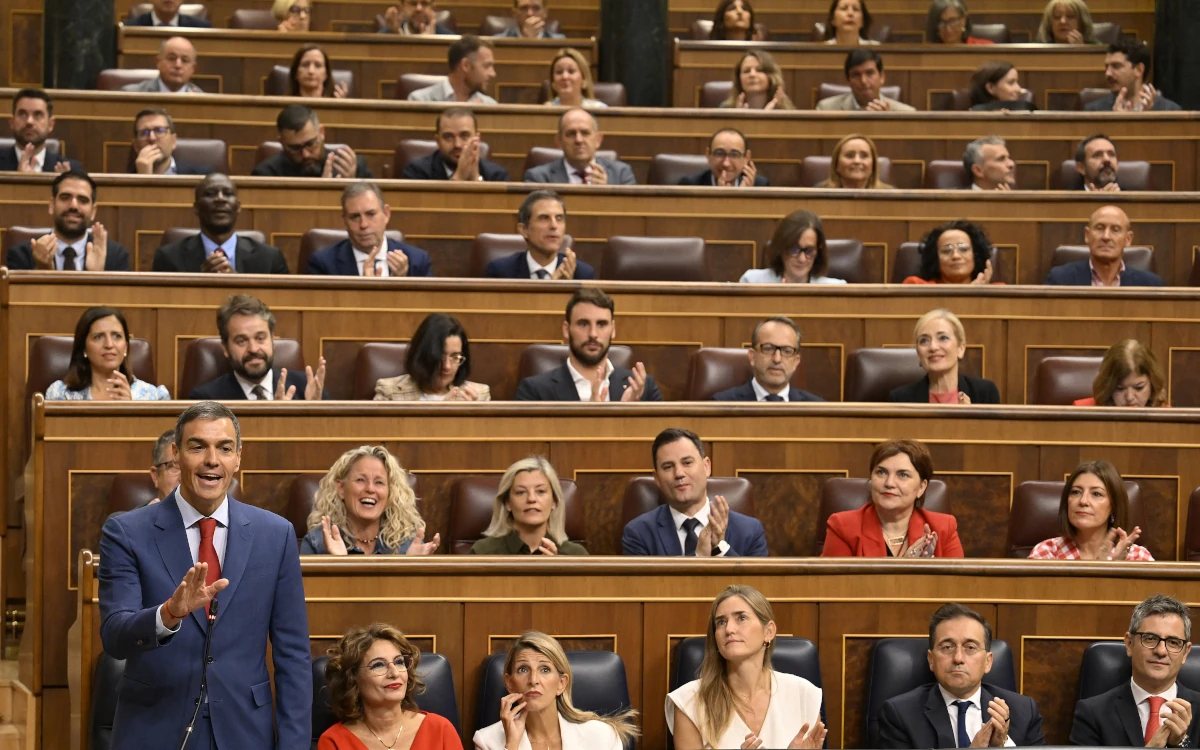
Three days after the Spanish parliament struck down his emergency housing decrees, Prime Minister Pedro Sanchez called a snap election and chose to fight it on rents. The election is a domestic quarrel over housing and the broader cost-of-living crisis, but its consequences reach far beyond Spain’s borders, from NATO’s spending battles to Europe’s migration politics. The result will also determine how far Spain remains Europe’s exception. Under Sanchez, Madrid has become NATO’s most visible dissenter and the EU’s leading defender of a liberal migration model. But since July’s mass crossing into Ceuta—one of the bloc’s two land borders with Africa—migration has been recast as a security question.
Polls favor a government led by the opposition Partido Popular (PP) and reliant on Vox, Spain’s insurgent far-right party. Such a result would quickly bring Spain closer to Washington on defense and Rome on migration. But policy would follow far more slowly, held back by budgets, courts, and the price of Vox’s support.
Sanchez’s Gamble Behind the Vote
Sanchez is betting that a housing crisis already on the streets can carry him through an early election. The eviction of Maricarmen Abascal, an 87-year-old tenant in Madrid, set off protests across Spain in September. Demonstrators set up an encampment in central Madrid, and the Tenants’ Union raised the prospect of a general strike. Maricarmen Abascal died on October 7, two days after the election call. The anger reflects housing costs that keep many young Spaniards living with their parents past 30.
Sanchez is betting that a housing crisis already on the streets can carry him through an early election
The government answered with two decrees: an eviction freeze for vulnerable households until 2030 with curbs on property funds, and automatic renewal of rental contracts. Congress rejected both, the first by 178 votes to 172. Junts, the Catalan party whose seven votes kept Sanchez in office in 2023, joined the PP and Vox in opposition. It argued that the measures would shrink housing supply. The snap election turns that defeat into a campaign theme. A survey by the CIS, the state pollster, published on October 8, found 76 percent of Spaniards backing as much state intervention in housing as necessary. Announcing the vote, Sanchez admitted mistakes and called for “a much larger progressive majority,” a sign that he is targeting disaffected supporters.
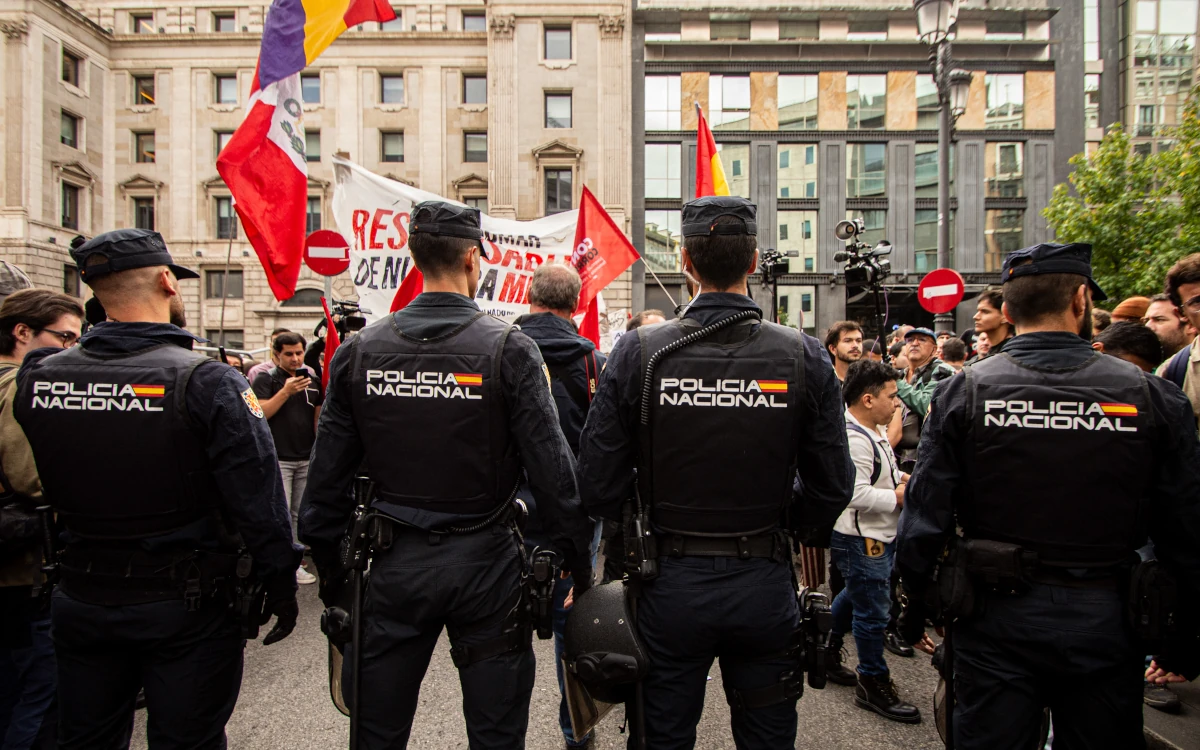
A housing campaign would also pull attention from Ceuta and from the corruption cases surrounding the Socialist Party (PSOE), the government’s weakest fronts. Alberto Núñez Feijóo, the PP leader, accused Sanchez of using housing to cover up his record. The wager has precedent. Sanchez called snap elections after a budget defeat in February 2019 and after a regional rout in May 2023, and kept power both times. But in 2023, the arithmetic still allowed a pact with Catalan and Basque parties. This time one of those partners delivered the defeat, so even a stronger Socialist vote may not restore a governing majority.
Europe’s Atlantic Dissenter
Spain’s dissent ran across four fronts: spending, bases, procurement, and Israel. At The Hague in June 2025, Madrid won what it called an exemption from the 2035 goal of 5 percent of GDP, committing instead to about 2.1 percent. The bases opened a second front. In March, Madrid refused the use of Rota and Morón for the American campaign against Iran. Trump threatened to cut off all trade with Spain. He renewed the threat at the NATO summit in Ankara in July 2026, calling Spain a “terrible partner.”
Procurement and the Middle East completed the pattern. In August 2025, the defense ministry ruled out the F-35 in favor of the Eurofighter and the European Future Combat Air System, or FCAS. Weeks later, Sanchez announced an arms embargo on Israel, which Congress approved in October over PP opposition.
At home, the dissent gave Sanchez a mobilizing theme. In March, he revived the “No to war” slogan that had dogged José María Aznar’s PP over the 2003 Iraq war, and the PSOE tied Feijóo to that legacy. Yet the dispute stayed bounded. Spain reached 2 percent of GDP in 2025, and NATO Secretary General Mark Rutte defended it at Ankara on that basis. Hours later, Trump said Spain “came back all the way,” claiming it had honored an unspecified payment request.
Madrid kept staffing the alliance’s eastern defenses throughout. Spain leads NATO’s multinational brigade in Slovakia and serves in Latvia and Romania. It has committed €1 billion in military aid to Ukraine for 2026, partly financed through Spain’s loans under SAFE, the EU’s defense lending instrument. Its dissent targeted the Trump administration’s agenda rather than the alliance’s core mission.
Madrid kept staffing NATO’s eastern defenses throughout. Its dissent targeted the Trump administration’s agenda rather than the alliance’s core mission
What Feijóo Would Change
A PP government would move fastest where change requires only executive will, and slowest where it requires money or legislation. Relations with Washington sit at the fast end. In March, Feijóo argued that a government thanked by Iran and branded a terrible ally by Washington was failing. Tone is the cheapest instrument available, and Ankara showed how readily the Trump administration rewards a gesture. Basing access is also an executive decision, but public opinion narrows it. A March survey found that 33 percent of PP voters opposed military support for the American strikes on Iran. The PP-run regional government of Andalusia, where both bases sit, urged prudence and declined to echo Feijóo. His government would probably grant access case by case, within allied or UN cover.
Defense spending moves more slowly. Spain’s 2 percent rests on its 2023 budget, rolled over for a third year in 2026 and stretched by shifting credits within the year. That method cannot fund the Hague path toward 3.5 percent of GDP for core defense. Feijóo has attacked Sanchez for committing defense funds without a vote in Congress, so his own government would struggle to do the same.
Within Europe, Feijóo would inherit the eastern deployments and Ukraine commitments that Sanchez built, leaving spending as the main variable. Spain’s standing with eastern allies, all of which committed to the 5 percent target that Madrid sidestepped, would rise or fall with the same budget.
Procurement would offer the sharpest test of alignment. The navy’s Harriers can fly until about 2032, and only the F-35B can replace them aboard the amphibious assault ship Juan Carlos I. Reopening that purchase would mark Atlantic rebalancing more clearly than any statement. The jets would, however, compete for funds committed to the Eurofighter and FCAS. Israel policy would change slowest. The arms embargo is now law, so repeal requires a parliamentary majority. Feijóo has himself called Israel’s treatment of Gaza’s civilians unacceptable. The likelier result is softer enforcement and warmer diplomacy, with repeal dependent on Vox. The overall posture would be allied in tone, cautious in operations, and continuous on the eastern flank.
Ceuta and the Migration Exception
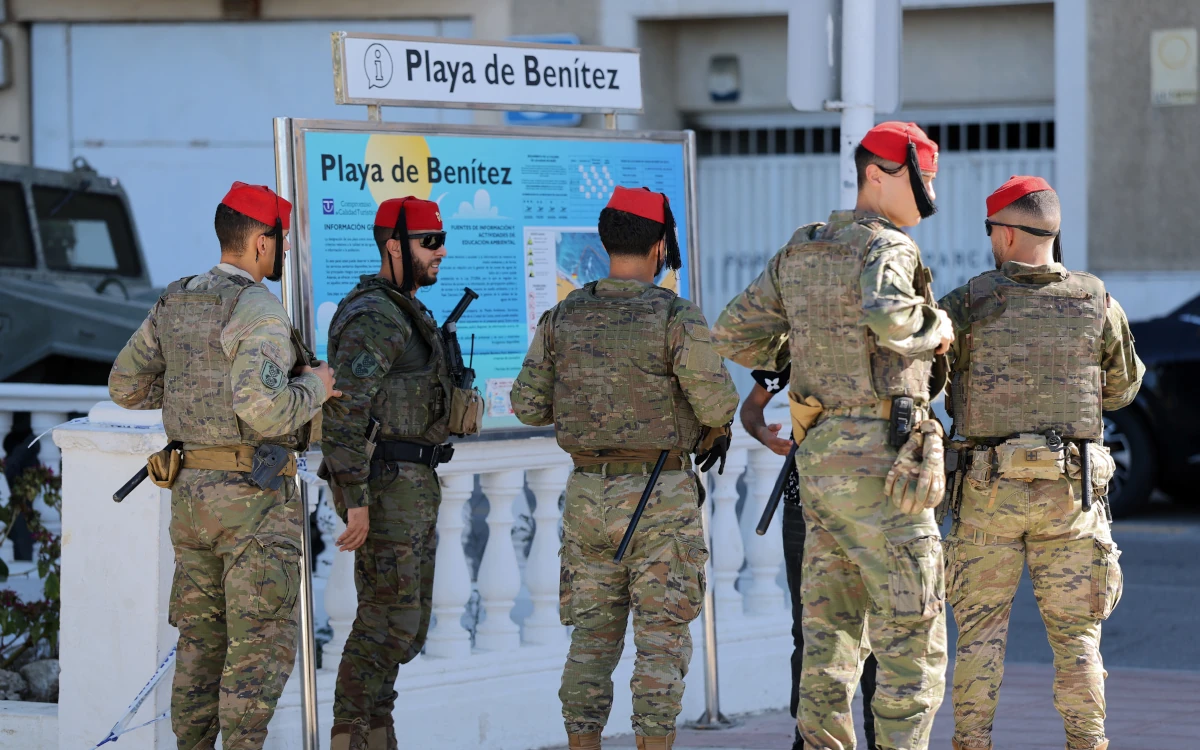
Migration is the second test, and Ceuta has already changed its terms. In April, a royal decree opened a regularization for about 500,000 undocumented migrants, with applications closing on June 30. Sanchez presented it as an answer to labor shortages and an aging population. The PP and Vox condemned it as a reward for illegal entry. On July 30 and 31, more than 70,000 people crossed from Morocco into Ceuta. The Interior Ministry initially rejected local calls for a national emergency. On August 25, the government reversed course, making the first declaration of a “situation of interest for national security” since the mechanism was created in 2015.
The declaration placed Ceuta under a single coordinating authority until December 31. Most of those who crossed had returned by early August, and only dozens reportedly reached the mainland. The security framing has outlasted the emergency itself. Italy turned the crisis into a European dispute. On August 1, Rome suspended Schengen free movement for arrivals from Spain, and Giorgia Meloni co-sponsored a letter from 22 leaders, including Germany’s Friedrich Merz, questioning Spanish migration policy. Madrid answered with reciprocal checks on arrivals from Italy. Italy has since extended its controls in 15-day steps, most recently on September 30.
The security framing has outlasted the emergency itself. Italy turned the Ceuta crisis into a European dispute
The record suggests the dispute served signaling more than security. In August, Italian officers checked more than 180,000 travelers from Spain and turned back 31. France and Portugal, the two member states that border Spain, declined to sign the letter. A Feijóo government could therefore end the standoff through political alignment at little operational cost. In Merz, a fellow member of the European People’s Party, it would find a partner in Rome’s camp. On the regularization, the main lever would be quieter than repeal. The decree grants one-year permits, which repeal would not automatically cancel. Holders must then qualify for ordinary residence, so the criteria applied from 2027 would decide how much of the program survives.
The Price of Vox
The arithmetic makes Vox the arbiter of change. Polls published in early October give the PP between 121 and 143 seats, short of the 176 needed for a majority, and Vox more than 60. Feijóo said in June that he would accept a coalition with Vox if the result required it. That would bring a far-right party into central government for the first time since the return of democracy. Santiago Abascal, Vox’s leader, set his terms within hours of the announcement: “national priority,” deregulation, and “remigration.” Vox has written versions of the first into coalition agreements in four regions, from Extremadura to Andalusia. It has broken with the PP before, quitting five regional governments in July 2024 in a dispute over relocating migrant children.
The realistic concessions lie in migration and welfare. A coalition pact would likely harden returns and border policy at Ceuta. It would extend to national policy the regional “national priority” clauses on public aid and housing, carrying Vox’s agenda into the central issue of Sanchez’s campaign. Vox could seek the interior portfolio, which would put migration enforcement in its hands.
Feijóo’s resistance is equally visible. In April, the PP voted against a Vox motion in Congress that called for “remigration” and the repatriation of all irregular migrants. The party insists that “national priority” applies only within existing law and rests on rootedness, or “arraigo,” rather than nationality. Isabel Díaz Ayuso, the PP president of the Madrid region, has said that some of its requirements in the Extremadura pact are not legal.
On security, Vox’s leverage is narrower. The party’s opening terms contain no foreign or defense demands, so the pace of Atlantic realignment would depend largely on the PP’s own constraints. The exception is money. Any budget, and with it any sustained rise in defense spending, would need Vox’s votes.
Posture Versus Substance
Every binding constraint on a PP government acts on substance, which is why its posture would outrun its policy. Morocco is the first. A leaked Spanish police report alleged “total permissiveness” by Moroccan forces at Ceuta. Rabat denies any role. Sanchez conceded that Morocco’s Gendarmerie allowed crossings for ten hours on July 30, but said there was no solid evidence that Rabat planned the entry. Feijóo has gone further, calling the episode an operation consented to by Morocco. Yet the returns that followed depended on Moroccan cooperation, which firmer words from Madrid cannot command. In August, two Moroccan ministers questioned Spain’s sovereignty over Ceuta and Melilla, a reminder that Rabat’s leverage extends beyond migration.
A warmer Atlantic posture would not offset that leverage. Ceuta falls outside the area defined in NATO’s founding treaty, so any allied commitment to the city rests on political interpretation. Spain’s most acute security problem of 2026 lies where alignment with Washington buys the least. The courts are the second constraint. On July 8, the Supreme Court restricted the immediate return of migrants who reach Ceuta or Melilla by swimming. Some Spanish officials linked the scale of the July crossing to that ruling, as did the 22 leaders’ letter. Reversing its effect would require new legislation compatible with EU asylum law, and therefore a stable majority.
Ceuta falls outside the area defined in NATO’s founding treaty. Spain’s most acute security problem of 2026 lies where alignment with Washington buys the least
Money is the third. The government’s proposed fiscal path cuts the deficit target from 2.1 percent of GDP in 2026 to 1.8 percent in 2027. Higher military outlays would compete with consolidation, a tension that would persist even if Vox supplied its votes.
Morón shows the same gap running in reverse under Sanchez. In June, three months after Madrid denied the base for the Iran campaign, the Pentagon awarded construction contracts there worth up to $400 million. The U.S. Air Force’s fiscal 2027 construction request would add nine B-52 parking spots. Access survived Sanchez’s dissent, so a change of government would alter the tenor of the relationship more than its substance.
Three Paths After the Vote
The vote could produce three outcomes, each with a different pace of change. A PP–Vox coalition would deliver the fastest shift in posture, with an early reset toward Washington and Rome, followed by slower bargaining over spending and migration law. A PP minority relying on Vox’s abstention could change Spain’s rhetoric as fast but would govern bill by bill, at a price Vox could raise each time. The third outcome is deadlock. If no candidate wins investiture within two months of the first vote, Spain would hold a repeat election, with Sanchez governing in an acting capacity into 2027. Every private poll projecting seats shows a PP–Vox majority, while the CIS still puts the PSOE first. The 2023 election, however, showed that a projected majority can vanish on election day.
A PP–Vox coalition would deliver the fastest shift in posture, with an early reset toward Washington and Rome, followed by slower bargaining over spending and migration law
The campaign will offer early signals. Vox’s price, and whether it demands ministries, program, or both, will indicate how far a coalition could pull Feijóo beyond his own positions. Moroccan conduct at Ceuta, Italy’s next Schengen decision, and Washington’s treatment of Feijóo will reveal the reception awaiting him abroad. The harder tests come later. Sanchez’s caretaker government will probably have to decide whether to extend the Ceuta declaration beyond December 31. A new government’s first year would bring the substantive choices: a 2027 budget testing whether defense spending can rise, and the expiration of the first regularization permits. Within that year, a PP-led Spain is likely to have changed how it sounds far more than what it does.