
Spain threatened Italy with “proportional” countermeasures if Rome does not lift the ban on free-travel Schengen agreement by the end of the week.
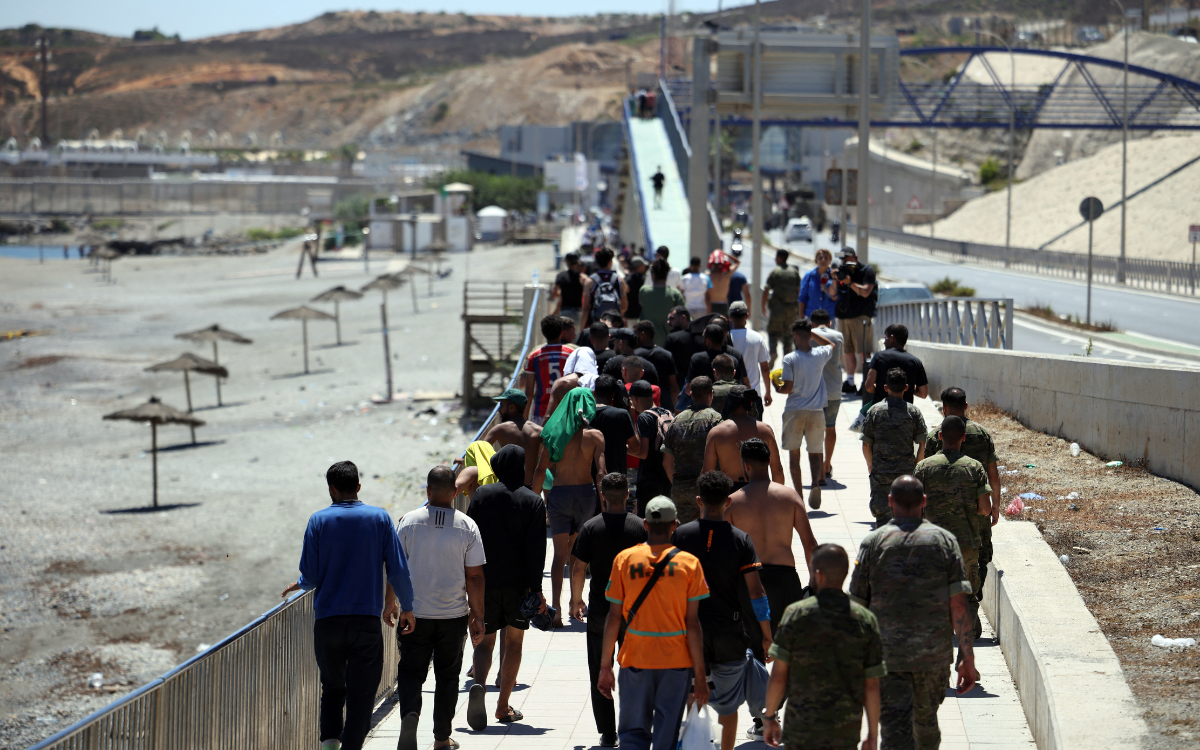
Italy imposed the ban after the mass migrant rush which saw tens of thousands of people entering Spain’s North African exclave of Ceuta from Moroccan territory. It is unclear why there were so many crossings on Thursday and Friday last week.
“We urge the government of Italy to rectify, put an end to the checks, and treat Spaniards like other European citizens. If it does not do so before the end of Sunday, August 9, Spain will be obliged to adopt proportional measures to protect the interests and dignity of its citizens,” a Spanish government statement said.
Ceuta is part of the Schengen area, but it operates under a unique, restricted legal regime. Unlike standard Schengen zones where travel is entirely open, Ceuta applies mandatory exit checks by sea or air to mainland Spain, meaning travelers must show identity documents when leaving the enclave. Entering Ceuta, even irregularly, does not grant a person the legal right to travel to the European mainland. The exclave is disputed by Spain and Morocco, which does not recognize Spanish sovereignty over it.
The incident raised questions about why Moroccan authorities did not try to stop the migrants from reaching Ceuta. In June, Spain’s Supreme Court ruled migrants stopped at sea while trying to reach Ceuta cannot be quickly returned to Morocco. Despite this, Spain’s interior minister Fernando Grande-Marlaska said this week that 70,000 out of 72,000 migrants in Ceuta returned to Morocco. The EU’s Schengen area “was in no way compromised” by the crisis, he said.
The incident comes amid mounting tensions across the European Union over migration management and the integrity of the Schengen area. Several member states have increasingly resorted to temporary internal border controls in response to migration pressures and security concerns, testing one of the EU’s core principles of free movement.
The episode also underscores how developments at the bloc’s external borders—including Spain’s North African territories and migration routes through the western Mediterranean—can rapidly trigger political and diplomatic frictions between member states. The dispute shows how migration challenges at Europe’s borders can erode trust between member states and undermine freedom of movement, a central pillar of the Union.