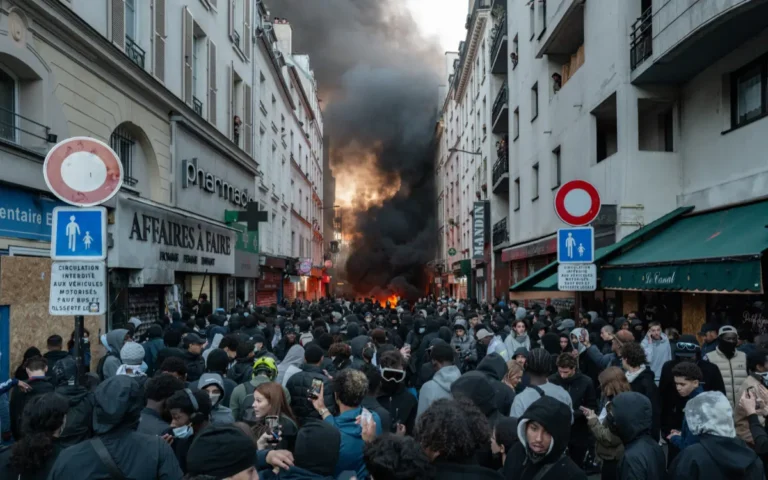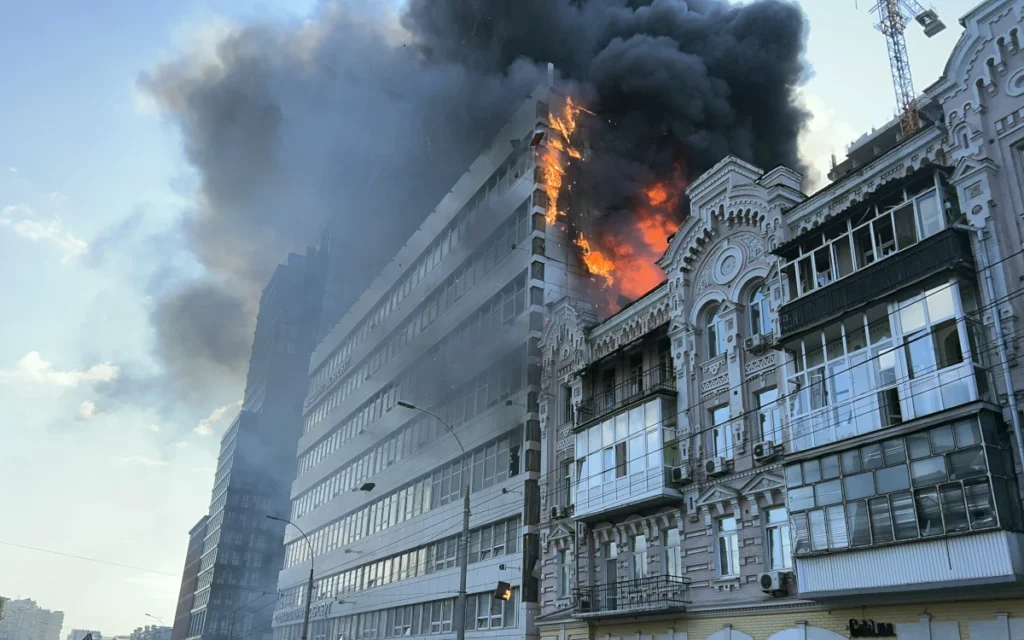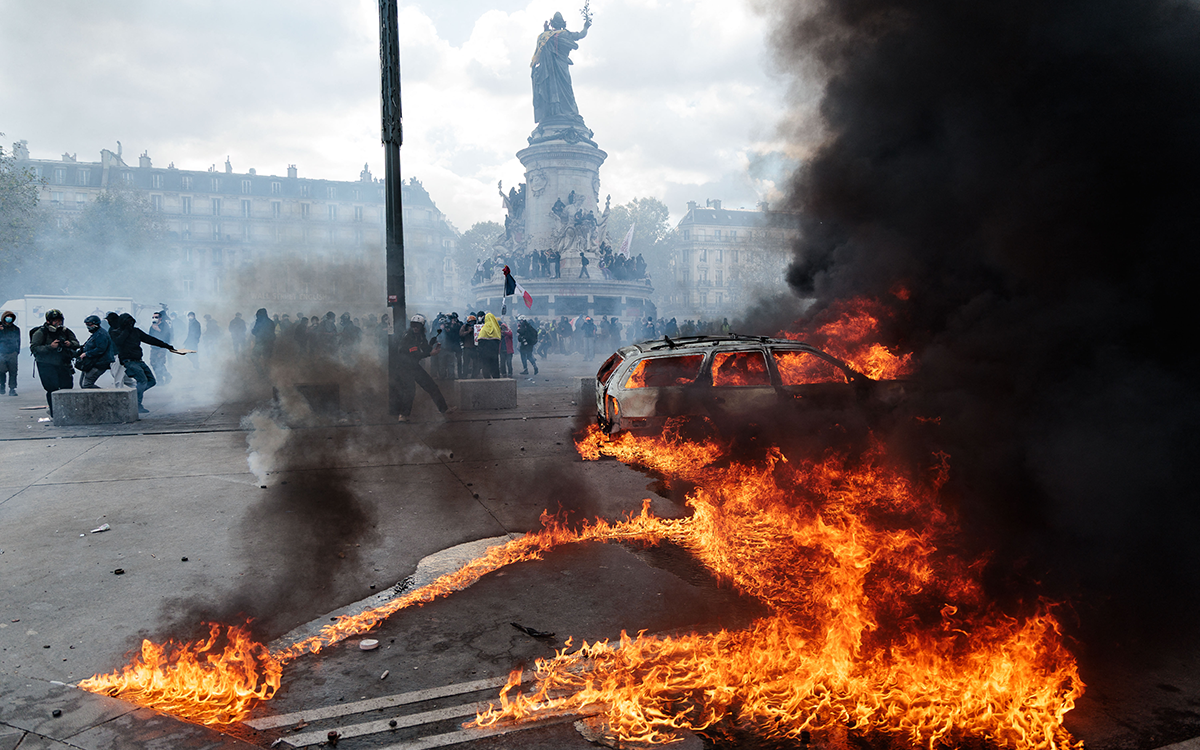
On October 17, 2026, the French interior ministry counted over half a million people marching in cities nationwide. On the margins, masked groups stormed and torched town halls and looted about 1,500 shops. The unrest exposed a broader challenge facing Europe: growing domestic resistance to economic pressures at a time when governments are seeking to strengthen their strategic autonomy and assume greater responsibility for their own security.
The pressures behind the French protests are visible across the continent. Belgian students angry over tuition fees marched in Brussels on October 17, partly inspired by France. Large crowds marched over housing and living costs in Lisbon, Milan, and Bologna. In Albania and Serbia, both candidates for EU membership, student movements have challenged their governments. Although the immediate causes differ, these movements reveal a common tension between rising public expectations and governments facing increasingly difficult economic and strategic choices.
Behind these grievances lies a shared vulnerability: governments facing mounting domestic demands must also absorb the rising costs of defense and geopolitical confrontation. For decades, American security guarantees and cheap Russian energy helped contain these costs, effectively subsidizing the European welfare state. As those advantages erode, Europe’s strategic ambitions are increasingly colliding with its own domestic political constraints.
Europe now faces three new costs at the same time: rearmament against Russia, the replacement of Russian gas, and an energy shock from the war with Iran. It must cover them through budgets that voters and lenders will accept, and the French protests mark the limits of what voters will tolerate. No other major power faces this combination. The United States exports energy and borrows in the world’s reserve currency. Russia runs a war economy, and China has expanded its military budget every year for three decades.
France is at the heart of this strategic bind. It is the EU’s only nuclear power and the leading champion of European “strategic autonomy,” the capacity to act without relying on the United States. How France manages its unrest will help decide whether Europe can become an independent power in a more competitive international system.
How France manages its unrest will help decide whether Europe can become an independent power in a more competitive international system
The Rising Cost of Security
The protesters’ grievances are rooted in a costly transition. Europe is now replacing both pillars of the post–Cold War arrangement. In 2013, only four NATO members met the alliance’s benchmark of spending two percent of GDP on defense. In 2025, allies pledged to reach five percent by 2035, and the EU passed a law to end Russian gas imports by late 2027.
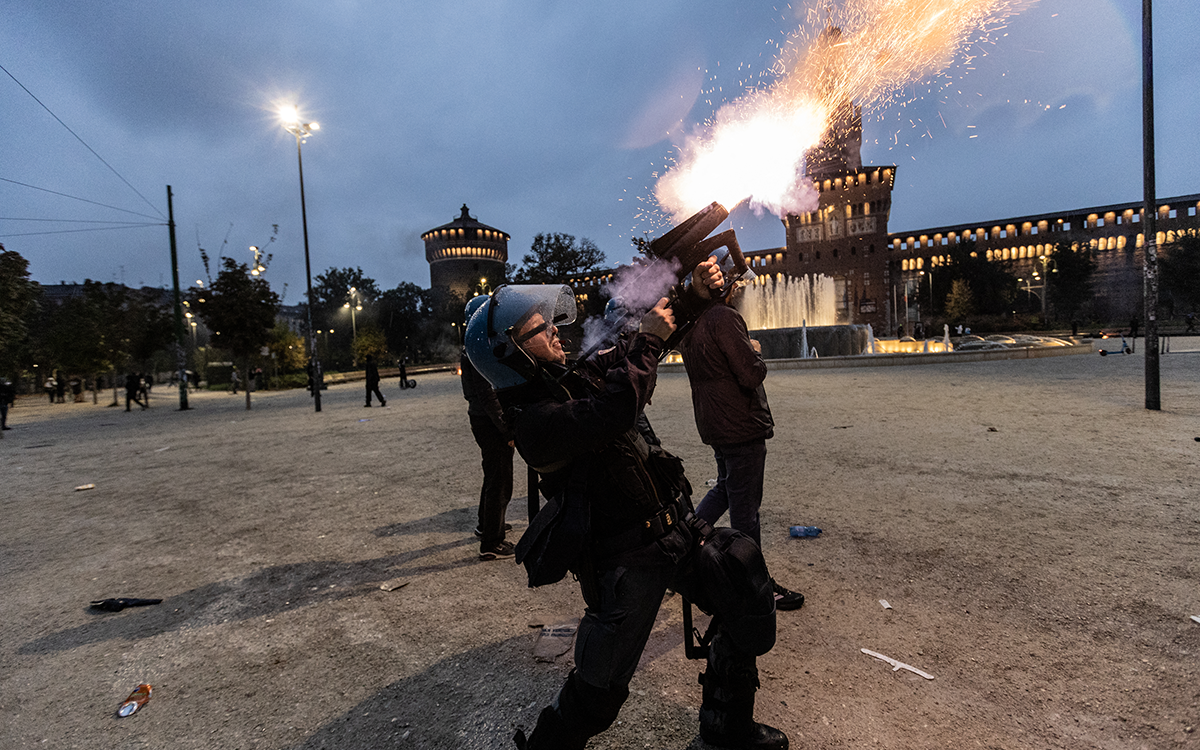
Paying for defense and for new energy supplies at the same time strains budgets already burdened by debt and aging populations. Defense spending now competes directly with pensions, schools, and hospitals, the welfare commitments on which postwar European governments built their legitimacy. Young Europeans are the most exposed, since they will carry the public debt the longest. They also face house prices that rose about 65 percent across the EU between 2015 and late 2025, according to official EU data. They form the core of the protest movements in France and elsewhere in Europe.
France as Europe’s Test Case
The French protests began in late September over crowded, crumbling schools and grew into a national movement over fuel prices and wages. A government without a parliamentary majority must find about $61 billion in savings for 2027, with public debt at 119 percent of GDP. Next year, France expects to pay its creditors about $84 billion in interest, more than the roughly $73 billion it plans to spend on its armed forces.
That ratio sums up France’s predicament. In March 2026, Macron offered seven allies a role in French nuclear exercises and the temporary deployment of French nuclear-capable forces on their soil. Leadership of that kind needs money, investor confidence, and public consent. Each concession to the protesters raises borrowing costs, and each new cut adds to the protests.
Berlin faces the opposite situation: it has room to spend. In 2025, Germany freed most of its defense spending from its constitutional cap on borrowing. It is now the largest military spender among Europe’s NATO members, at about $114 billion last year. If social pressure keeps France fiscally constrained while Germany rearms with borrowed money, military weight inside Europe is likely to shift toward Germany. That would rebalance the partnership between Paris and Berlin that has long set the EU’s direction. A Europe whose only nuclear power is also one of its most indebted states would struggle to sustain long-term defense commitments.
If social pressure keeps France fiscally constrained while Germany rearms with borrowed money, military weight inside Europe is likely to shift toward Germany
The consequences extend even beyond the balance of military spending. France’s influence in Europe rests not only on its nuclear deterrent and diplomatic ambitions but also on its ability to translate political commitments into sustained action. Persistent domestic unrest and fiscal uncertainty could weaken Paris’s capacity to finance defense initiatives and shape the bloc’s strategic direction. Germany, for its part, is among the seven allies that Paris invited into closer nuclear cooperation in March.
From French Streets to the Gulf
Energy links the protests most directly to French foreign policy. The U.S.–Israeli war with Iran, launched on February 28, 2026, disrupted shipping through the Strait of Hormuz, the channel for about a fifth of the world’s oil. Two days after the riots, Macron left on a tour of Kuwait, the United Arab Emirates, Bahrain, and Qatar. Before departing, he said the trip would help “secure our supplies” and acknowledged protesters’ concern about fuel prices. He traced those prices to a war in which France took no part.
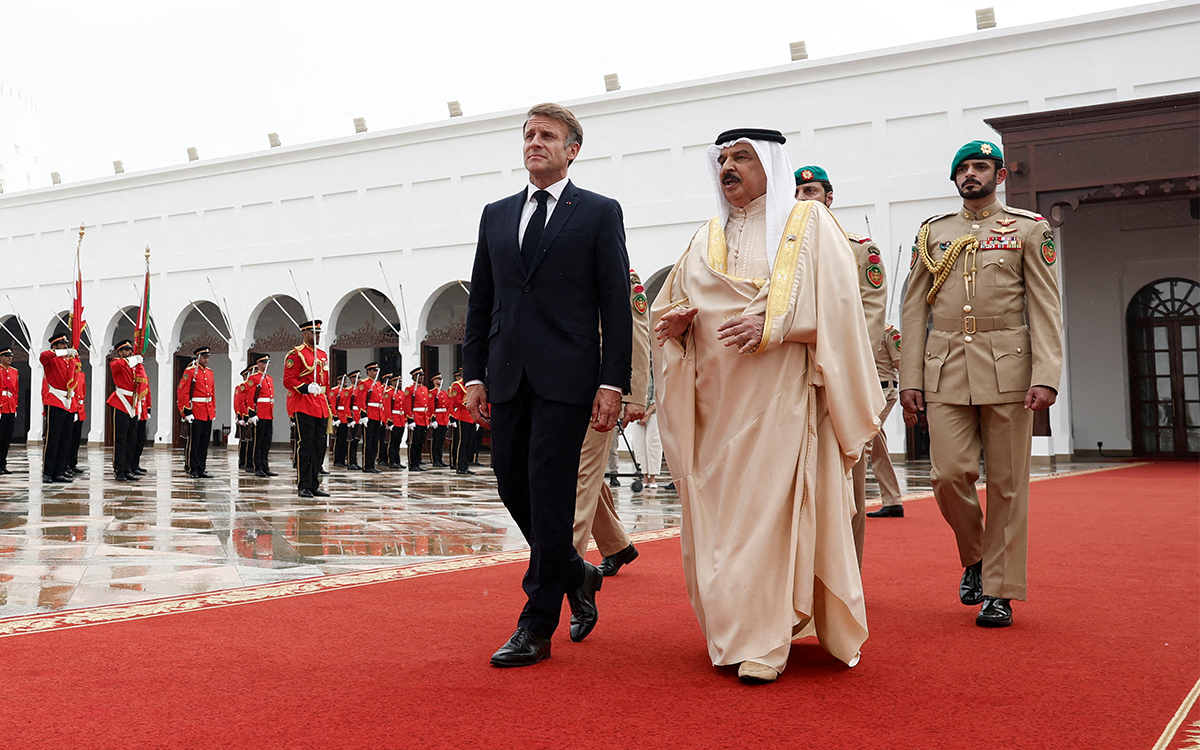
The unrest at home and the energy diplomacy abroad have thus become parts of the same crisis. France’s predicament illustrates the limits of European strategic autonomy. Macron can pursue diplomatic arrangements with Gulf producers and contribute to regional security, but neither offers a straightforward solution to disruptions in the Strait of Hormuz. Ultimately, reopening the strait turns on a settlement between Washington and Tehran. Europe’s energy security therefore rests on a confrontation it did not start and cannot end. Its main alternative supplier, the United States, provided 57 percent of Europe’s liquefied natural gas imports in 2025 and is itself a party to that confrontation. France’s naval and air deployments to the region since the spring also carry costs that a state facing both fiscal strain and street protest will find harder to sustain.
Transatlantic Strains and European Elections
The fuel prices that helped bring French protesters into the streets are also reshaping policy toward Russia across the Atlantic. On October 9, Trump announced a deal with Putin to buy Russian diesel, and the U.S. Treasury suspended sanctions on Russian diesel until April 2027. Three days later, EU governments approved the biggest single round of sanctions listings since the war began. Washington and Brussels are answering the same price shock in opposite directions. For Paris, the diesel deal supports its long-standing argument that Europe cannot assume Washington will share its priorities.
The fuel prices that helped bring French protesters into the streets are also reshaping policy toward Russia across the Atlantic
Prolonged social anger could push European policy in Washington’s direction by boosting parties hostile to the political mainstream, several of them skeptical of continued aid to Ukraine. Spain holds a snap election in November, and France, Italy, and Poland vote in 2027. Because EU sanctions need the approval of all 27 member states, a handful of new governments could weaken the EU’s pressure on Russia.
The French vote matters most. A July court ruling cleared Marine Le Pen of the far-right National Rally to run, and a September poll put her first with about 35 percent. Her party has built its appeal on living costs and public order, the two issues the October protests pushed to the top of the French agenda. The next president will decide whether France keeps opening its nuclear deterrent to European partners and keeps pushing for strategic autonomy.
Europe wants to be a power in its own right. To get there, its governments must pay for defense and energy security without losing the support of the voters who fund them. The protests in France show that this support can no longer be assumed.