
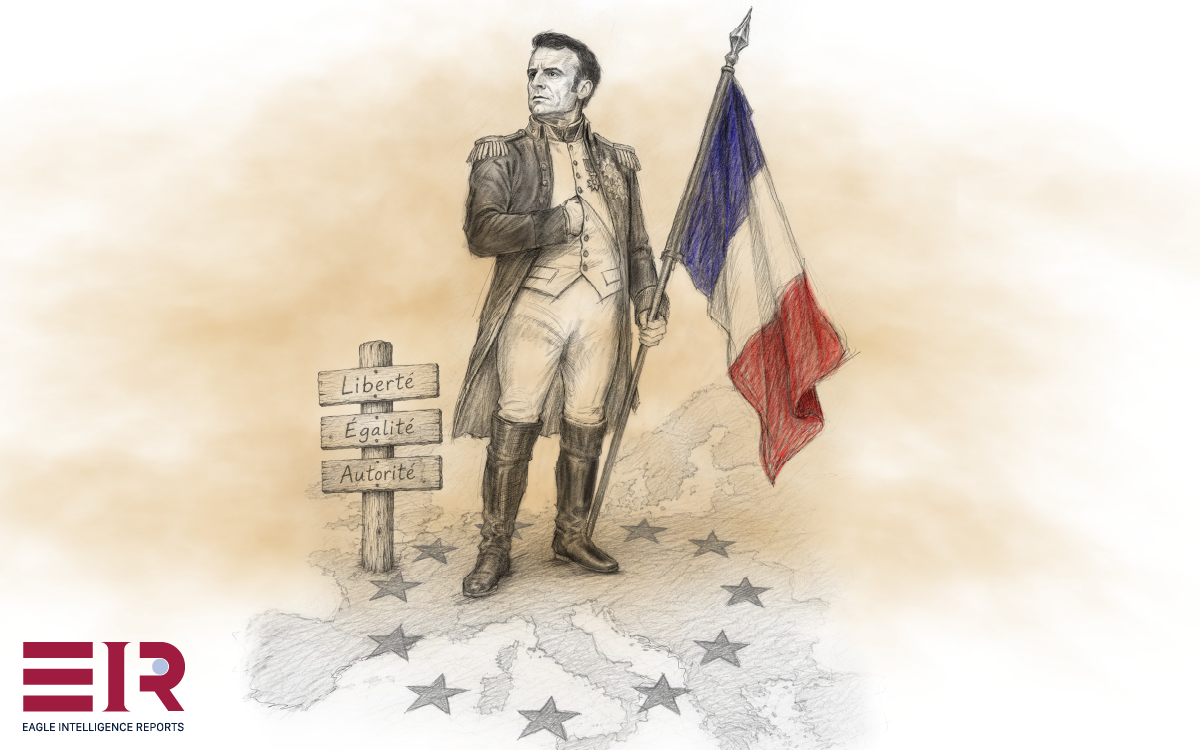
Europe cherishes freedom and the rule of law, Emmanuel Macron told the French armed forces on Monday. It stands ready to fight for both “at the cost of blood.” For seven decades, that was the standard script in American foreign policy. From the Truman Doctrine onward, it was how Washington explained its defense of liberal democracy. Under Trump, that may be changing.
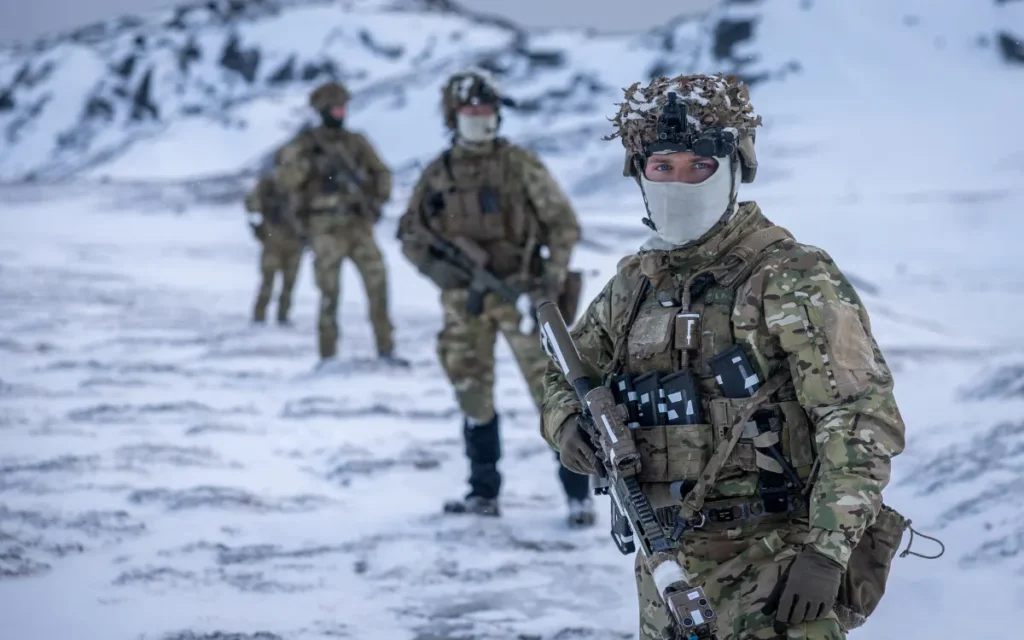
On Tuesday, 500 soldiers from the Coalition of the Willing lead the Bastille Day parade on the Champs-Élysées. They come from Germany, the UK, Poland, Romania, Sweden, Slovakia, Austria, Australia, and Canada. A Ukrainian contingent closes the march, and the United States is not on the list. The Élysée calls it a “strategic signal” that France can lead multinational operations.
France is betting it can take the job Washington is set to give up. It is the only European state that belongs to both the EU and NATO while holding a permanent seat on the UN Security Council and maintaining an independent nuclear deterrent. The UK is outside the Union. Germany has neither the seat nor the warheads. Strategic autonomy has been Macron’s theme for a decade. What changed this year is that Washington began vacating the field.
Strategic autonomy has been Macron’s theme for a decade. What changed this year is that Washington began vacating the field
The centerpiece is the nuclear arsenal. At the Île Longue submarine base on March 2, Macron announced forward deterrence, or dissuasion avancée. France would raise its warhead stockpile for the first time since the Cold War and allow willing partners to host French strategic aircraft for limited periods. No European nuclear power had previously offered its deterrent to the continent on such terms.
Norway signed the French president’s initiative on May 27, becoming the ninth country to join. The signature matters more than the number. Norway helped found NATO, shares an Arctic border with Russia, and has leaned on the American guarantee throughout the alliance’s history. It is now hedging with Paris. The other eight are Belgium, Denmark, Germany, Greece, the Netherlands, Poland, Sweden, and the UK. A Franco-German steering group also gives Berlin its first formal role in nuclear coordination outside the American framework.
Yet the offer is thinner than it looks. France gives no treaty commitment, keeps sole authority over any decision to use its weapons, and would fly any deployment with French crews. It holds an estimated 290 warheads, compared with more than 4,300 for Russia. The arsenal is small, but the influence it buys is not. Nine European capitals now look to Paris for nuclear deterrence—a role Berlin cannot match.
Nine European capitals now look to Paris for nuclear deterrence—a role Berlin cannot match
The conventional record follows the same pattern. France leads NATO’s battlegroup at Cincu, Romania, expanded to brigade size in 2025. At the Ankara summit on July 8, Macron promised French troops to Finland. Five weeks earlier, Washington had reduced its crisis posture in Europe, pulling an aircraft carrier, tanker aircraft, and dozens of fighter jets. About 5,000 U.S. troops are also leaving Germany. Macron said France alone covered 80 percent of the naval shortfall and offered a carrier. Every deployment is an offer to stand where Washington is standing down.
The “Coalition of the Willing,” launched with the UK in March 2025, now includes more than 30 states. Its leaders met in Paris on Monday and declared the Multinational Force for Ukraine ready to deploy after any ceasefire. France built the structure, chairs it, and would command the force. No American officer sits in the chain of command.
Weapons are the weak link. Paris is pushing the Franco-Italian SAMP-T over the American Patriot, and promoting a European anti-ballistic capability built with Ukrainian production. Yet the Franco-German fighter project collapsed last month, and Macron told French manufacturers on Monday that they were not producing fast enough.
Paris is pushing the Franco-Italian SAMP-T over the American Patriot, and promoting a European anti-ballistic capability built with Ukrainian production
On July 7, Macron became the first Western head of state to visit Damascus since the fall of Bashar al-Assad. Only the rule of law could build a new Syria, he told his hosts. At Davos in January, he had aimed the same phrase at Washington, saying Europe preferred “the rule of law to brutality.”
For 70 years, the United States justified Western power in Europe in terms of democracy, freedom, and the rule of law. Today, Washington bargains bilaterally over tariffs and burden-sharing, leaving the role of the West’s spokesman vacant. Macron has taken it.
Today, Washington bargains bilaterally over tariffs and burden-sharing, leaving the role of the West’s spokesman vacant. Macron has taken it
The ambition runs ahead of the budget. France will spend about 2.2 percent of GDP on defense this year and plans to reach over 2.5 percent by 2030, well below NATO’s 3.5 percent target for 2035. Germany is projected to spend €109.7 billion next year, compared with €63.3 billion for France. Paris cannot match American power. Neither can Berlin, nor the two together.
This is Macron’s tenth and final Bastille Day parade as president. Marine Le Pen leads the polls for next spring’s election. She intends to pull France out of NATO’s integrated command and opposes extending the French nuclear umbrella to European allies. The question is whether these new arrangements will survive their architect’s departure from office.
Paris is bidding to become Europe’s principal strategic leader in anticipation of an American drawdown. This requires a permanent seat on the Security Council, a nuclear arsenal, a habit of acting alone, and the will to speak. France is the only European state with all four. Whether Macron’s strategic gamble yields enduring French leadership in Europe will depend on whether the institutions and arrangements he has built survive the end of his presidency.