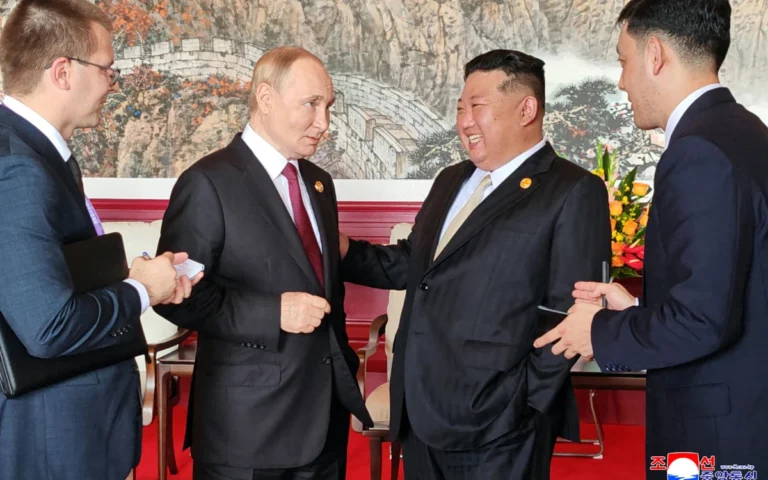

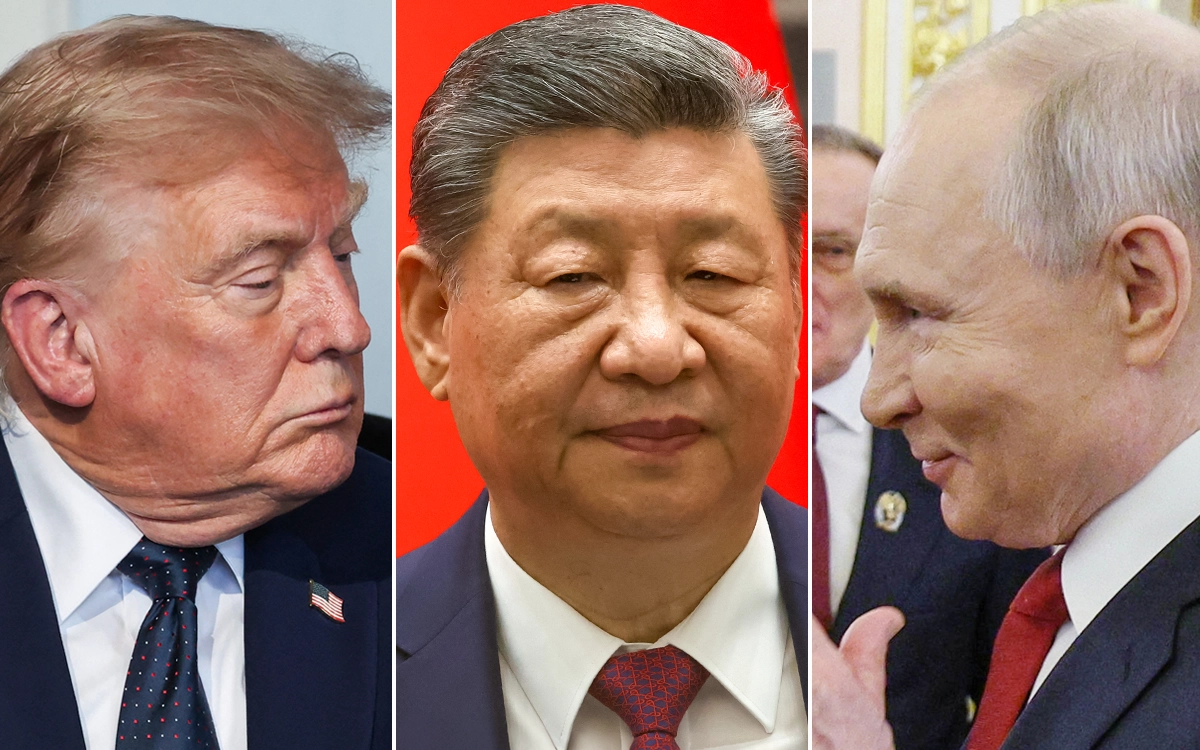
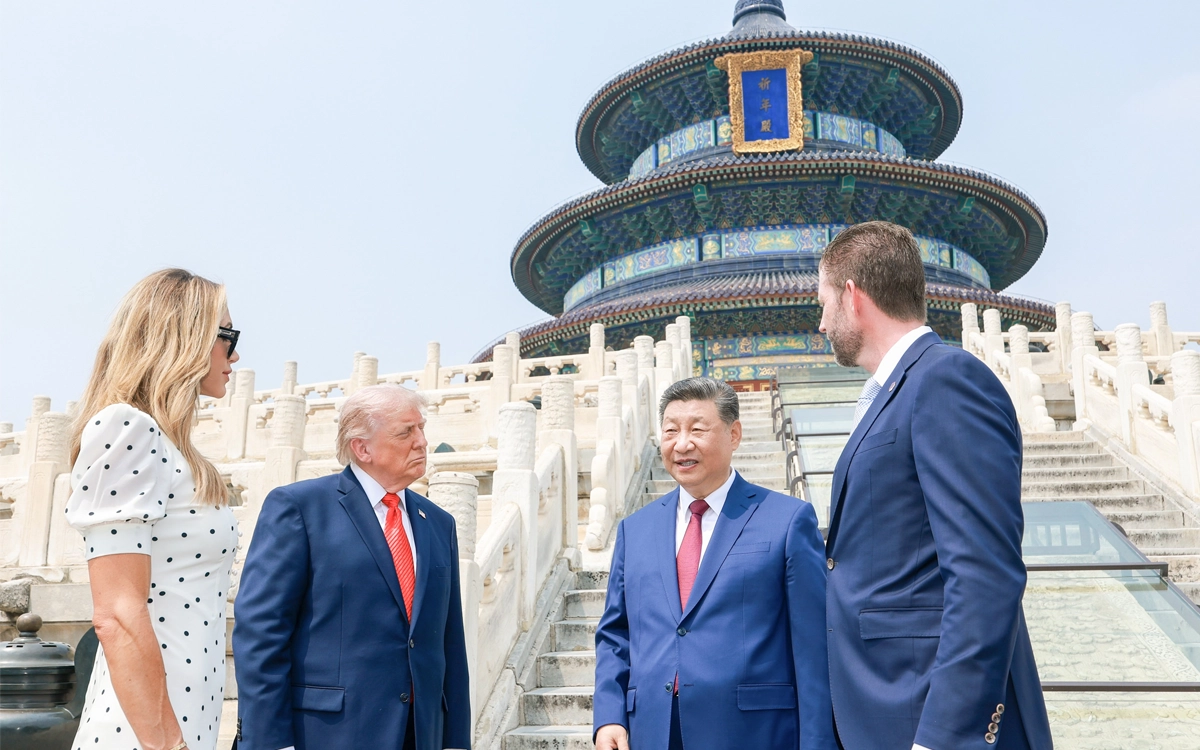
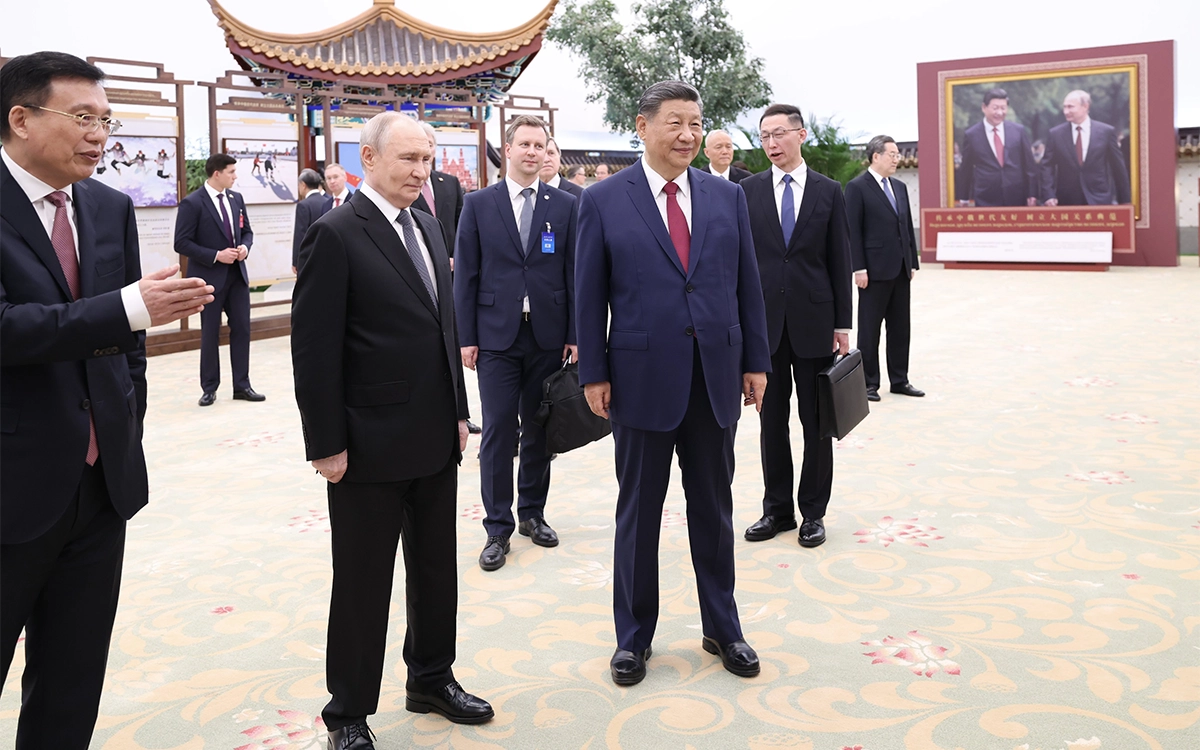
For a few days this May, Beijing became the diplomatic center of the world. China seized the opportunity to showcase its strategic dexterity. Within a single week, Beijing hosted the leaders of the two countries most central to its foreign policy. Putin arrived on May 19, just four days after Trump’s departure. Both received lavish state ceremonies.
Yet beneath the pomp and choreography lies a more complicated reality. The two summits illustrate Beijing’s attempt to court Washington without alienating Moscow and to honor and reassure Moscow without overcommitting to it. The result is a balancing act that, despite its tensions and contradictions, increasingly defines relations among China, Russia, and the United States.
The two summits illustrate Beijing’s attempt to court Washington without alienating Moscow and to honor and reassure Moscow without overcommitting to it
The Washington–Beijing–Moscow Triangle
Without question, the United States represents China’s most serious external security threat, commercial challenger, and ideological rival. Beijing’s greatest fear is a premature military clash with Washington. PRC leaders, therefore, strive to stabilize Sino–American ties by reducing regional conflicts, economic disputes, and other sources of tension. They seek to avert an unwanted war at a time when China’s capabilities remain inferior to those of the United States.
Russia is the Chinese government’s most significant diplomatic, military, and energy partner. During Putin’s visit, the two sides signed dozens of agreements and joint statements pledging cooperation in these domains. Nonetheless, Putin’s visit underscored the limits of Russia’s ability to secure Chinese support on specific priorities. Most notably, Beijing has yet to grant final approval to the Power of Siberia 2 pipeline despite Russian lobbying.
On the other hand, PRC policymakers fear both abandonment and entrapment when it comes to relations with Russia. As a rule, Beijing will back Moscow because Russia helps dilute the U.S. threat, increases China’s leverage with Western countries, and reduces the risk of a weakened Russia harming China’s strategic position. However, the Chinese government does not want to become entrapped in the Russian war in Ukraine or Moscow’s attempt—which Beijing views as premature—to shatter the existing Western-centric international order without a clearly viable alternative.
Thus, China’s posture toward Russia reflects its broader approach to questions of geopolitical alignment. In general, the PRC limits its support for explicit collaborative projects unless they yield clear benefits to China and do not overly damage its ties with the United States and other countries. For this reason, Beijing remains strategically cautious in an era defined generally by volatility from Washington to Moscow.
Beijing remains strategically cautious in an era defined generally by volatility from Washington to Moscow
Trump and Putin, Back-to-Back
The near overlap between Trump’s departure from China and Putin’s arrival in Beijing was coincidental. The Russian President’s visit to China was scheduled back in February to coincide with the 25th anniversary of the Sino–Russian Treaty of Good-Neighborliness and Friendly Cooperation. Yet the visit was not publicly confirmed until less than 24 hours after Trump had left. Trump had originally been scheduled to visit Beijing at the end of March. However, he delayed the trip until mid-May due to the U.S.–Israeli war against Iran. While neither visit produced major deals or policy transformations, the proximity provides an opportunity to compare the two relationships.
During Trump’s May 14–15 visit, Chinese officials proposed a new conceptual framework in which Beijing and Washington would openly acknowledge their conflicting interests but manage their policies to avoid inadvertent escalation. President Xi Jinping expressed particular unease about a possible “Thucydides trap” between China and the United States. The concept describes a circumstance in which a rising power and an established hegemon clash in a great power war for primacy driven by the established power’s fear and anxiety about the challenger. Along these lines, Xi also reportedly amplified warnings regarding U.S. support for Taiwan in a private conversation with Trump. He did not, however, offer concrete support for U.S. policies regarding Iran, Ukraine, North Korea, or other regional security issues.
As an alternative to the Thucydides trap, Xi offered a new term to characterize Sino–U.S. ties—a relationship of “constructive strategic stability.” The wording suggests that, for the first time, the Chinese leadership has accepted Washington’s premise of inevitable Sino–American competition and the imperative to carefully manage and contain this rivalry. It also implies that both parties are now peer competitors and need to strive to avert actions that could disrupt strategic stability. For Beijing, these could include lavishing U.S. military support on Taiwan, overthrowing more Beijing-friendly regimes, or threatening China’s energy imports. Trump has since paused the $14 billion weapons deal with Taiwan, citing the demands of the Iran operation.
During Putin’s May 19–20 visit, the Chinese government adroitly displayed Sino–Russian diplomatic solidarity and mutual respect. Yet it did not commit additional resources to Russian-favored economic policies or overly alienate Western audiences alarmed about Beijing’s alignment with Moscow. Putin’s Chinese hosts accorded him equivalent status with Trump. Both leaders received 21-gun salutes, motorcades through cheering children, and substantial face time with Xi.
Putin’s two highest foreign-policy priorities are to subordinate Ukraine to Moscow and maintain China as Russia’s preeminent international partner. Russia relies on China for general diplomatic, comprehensive economic, and targeted military support for its military-industrial complex. Whereas even a decade ago, prominent Russians could challenge this prioritization, Putin’s unyielding commitment to achieving his war aims in Ukraine has effectively ended the possibility of any Western option. In any case, Russia’s contracting information space under Putin no longer permits open debate on such issues.
Putin’s two highest foreign-policy priorities are to subordinate Ukraine to Moscow and maintain China as Russia’s preeminent international partner
Sino–Russian Alignment Pillars
Chinese–Russian reciprocal diplomatic support is most evident in their mutually supportive arms control policies, voting in the United Nations and other multilateral institutions, and joint statements that frequently criticize U.S. global leadership. In the information space, Russian and Chinese leaders offer the same interpretations of international events. Putin and Xi share a common worldview regarding the importance of national sovereignty and the ideological threat posed by Western liberal-democratic principles. Furthermore, Russia’s domestic cyber sphere increasingly resembles China’s comprehensively controlled information regime.
In the military sphere, the Russian and Chinese armed forces remain each other’s most significant foreign partners. Their combined exercises encompass ground, sea, air, and drone warfare. Many Russian weapons rely heavily on dual-use high-tech imports from China. Though the issue of Taiwan was not prominent during Putin’s trip, Beijing would value Russian aid in deterring Japanese military intervention. Moreover, in a protracted conflict, Beijing would likely expect Moscow to supply agricultural goods and hydrocarbons.
China’s large purchases of Russian goods help Beijing boost Russia’s economy while contributing to Chinese energy security. The war in Ukraine has solidified China’s status as Russia’s dominant economic partner. Sino–Russian trade has grown steadily in recent years, while PRC firms have filled the gap left by departing Western firms in several market segments, such as automobiles, smartphones, and other advanced consumer sectors. Russian reluctance to import more PRC industrial goods is growing, but it still lags far behind the resistance Chinese exporters have encountered in many other markets.
Beijing’s Balancing Act
China’s approach to balancing Russia and the United States is evident in its stance on several regional conflicts that involve Moscow, Washington, or both. China leverages these conflicts to divert U.S. resources that Washington might otherwise allocate to the Indo-Pacific region, while keeping Moscow dependent on Beijing’s support against the West. PRC representatives routinely advocate compromise and general principles without incurring substantial costs or taking risks. As such, they have not intervened to orchestrate lengthy peace talks or coerced parties into making concessions, despite retaining the position and resources to do so. Rather than demanding China’s support, which would risk alienating it to the other’s benefit, Moscow and Washington tolerate Beijing’s detachment.
For example, while China declines to apply economic or other pressure on Iran to open the Strait of Hormuz or curtail its nuclear program, Beijing also does not attempt to coerce Washington to end its military campaign or counterblockade of Iranian ports. China wants Moscow to take the lead in defending Iran against the United States and desires that Washington assume the primary burden of keeping Iran from either acquiring nuclear weapons or impeding commercial maritime traffic.
China wants Moscow to take the lead in defending Iran against the United States and desires that Washington assume the primary burden of keeping Iran from either acquiring nuclear weapons or impeding commercial maritime traffic
Regarding North Korea, Russian policies toward Pyongyang likely arouse substantial unease among both the Beijing and Washington policy communities. The failure of Chinese and U.S. diplomatic outreach to Pyongyang gave Moscow an opportunity to forge its unprecedented alliance with North Korea. Russia’s open acceptance of Pyongyang’s de facto nuclear status has compelled Beijing and Washington to follow suit. Nonetheless, Beijing has declined to challenge the Russia–North Korea alliance, fearing it would alienate one or both countries. Instead, the PRC leadership has strived to improve its own ties with North Korea, as evidenced by Xi’s visit to Pyongyang in early June.
Regarding Ukraine, the Sino–Russian Joint Statement emphasizes eliminating the war’s “root causes,” which Moscow describes—without Beijing’s objection—as Western policies in Eastern Europe that threaten Russia. China has provided critical economic, diplomatic, and quasi-military help to Russia throughout the war. This stance has fortified Russia against Western pressure, helped sustain the Russian military threat to Europe, and yielded China economic and security gains. At the same time, it has avoided crossing the Western “red line” of providing direct defense assistance to Russian armed forces. However, Ukraine’s recent military successes are intensifying the contradictions in Beijing’s Ukraine policy. Pressure on China to support Moscow grows while Russia’s economic and military value to Beijing declines.
Ukraine’s recent military successes are intensifying the contradictions in Beijing’s Ukraine policy. Pressure on China to support Moscow grows while Russia’s economic and military value to Beijing declines
Post-Summit Policy Implications
The nature of the Sino–Russian partnership makes it highly resilient against potentially divisive issues or efforts by the United States or others to divide it. Since the Moscow–Beijing partnership is neither binding, constraining, nor exclusive, it is low-cost, multipronged, and highly resilient. The United States, meanwhile, lacks plausible incentives that could decisively draw Beijing or Moscow away from each other. Both governments consider their historically atypical strong relationship to be a major mutual asset and discount Washington’s ability or willingness to provide comparable benefits.
The Sino–Russian relationship is stronger than either state’s ties with the United States. Yet, all three countries enjoy substantial strategic autonomy. Beijing and Moscow have limited ability to shape each other’s policies toward Washington and its allies. Xi and Putin regard the United States as their countries’ primary military adversary and each other as their principal security partners. However, future Chinese and Russian leaders may assess the security and economic costs and benefits of this partnership differently, especially if the United States stops confronting both states simultaneously. Both regimes are authoritarian, so the domestic constraints on realigning toward Washington at the other’s expense are modest.
Diverging Regional Drivers and Future Succession
As underscored by Xi’s reference to the Thucydides trap, the Chinese leadership perceives the relative power of China to the United States to be shifting in its favor. Indeed, Beijing may achieve global primacy in the next few decades. However, several developments could upend these optimistic expectations.
Sino–Russian collaboration has been particularly close regarding Central Asia. Though China’s economic and security presence there has grown, Beijing has eschewed policies that would challenge Russia in that space. However, China’s expanding stakes could lead Beijing to reconsider its policy of regional deference, particularly if Moscow seemed unable or unwilling to sustain a favorable environment for Chinese economic interests. Beijing might then assume a more elevated regional security profile, alienating Moscow.
If the Russia–Ukraine war were to end and Russian–Western relations improved, China would worry less about an erosion of Russian power. Conversely, Moscow would also depend less on Beijing, enjoy more rapid economic growth, and more readily balance between China, the United States, and other powers. As a result, the Sino–Russian relationship would more closely resemble that between other great powers, contributing to a more genuinely multipolar world.
As both governments are authoritarian, the trajectory of Sino–Russian relations also depends heavily on leadership relationships. Xi and Putin are highly invested in sustaining good Sino–Russian ties, but their successors may not be. A patriotic successor to Putin could plausibly reconsider the wisdom of investing so heavily in China at the expense of Russia’s long-term independence. Meanwhile, both economic and security considerations might plausibly lead a future Chinese leader to seek stronger Sino–U.S. ties.
Whatever happens in Ukraine, Russia will probably remain a modest trade and investment partner for China. PRC economic managers will therefore always see opportunities to expand economic ties with Western markets at Russia’s expense.
Whatever happens in Ukraine, Russia will probably remain a modest trade and investment partner for China
As long as the United States remains China’s principal strategic rival and Russia continues to be at odds with the West, Beijing’s balancing act will likely endure. The real question is not whether or how Beijing will alter course but whether volatile geopolitical conditions will force it to make choices it has so far managed to avoid.