
Over the past decade, Washington led a coalition of Indo-Pacific democracies in checking a rising China, then stepped back. The Quadrilateral Security Dialogue, better known as the Quad, links Australia, India, Japan, and the United States. Now the group is testing whether it can preserve a great-power balance without American leadership.
The coalition has always been improvised. Its members’ four navies first joined forces in 2004 to coordinate relief after the Indian Ocean tsunami, and the partnership that followed has run hot and cold ever since. The Quad has no treaty, no permanent staff, and no resources of its own, so it moves only when national leaders invest resources in it. Elections also keep changing who those leaders are. In both the first Trump administration and the Biden administration, the United States pushed hardest, and the group gained momentum as an instrument of great-power competition.
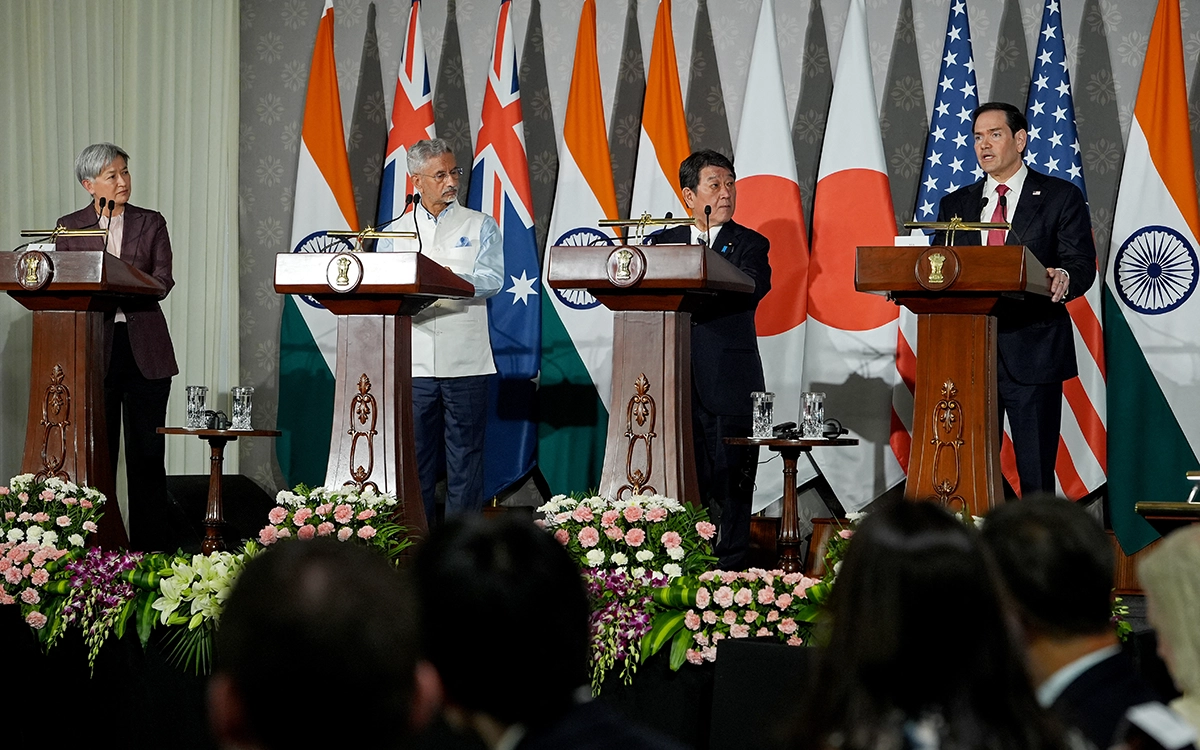
Over the past year, that momentum drained away. Senior U.S. officials fell silent on the Quad, the group slipped out of Washington’s strategy documents, and the summit planned for 2025 never convened. Yet the coalition did not fold. On May 26, 2026, the four foreign ministers met in New Delhi and rolled out a fresh slate of initiatives. A coalition many had written off was back in motion.
As American enthusiasm has cooled, India, Japan, and Australia have taken up more of the burden themselves. Three strategic paths now lie open. The Quad could deepen, hardening its quiet effort to deny China dominance in trade, technology, and sea lanes. It could widen, enlisting new Asian partners into a broader alignment. Or it could contract into a smaller, more durable form—a less American but more nimble Quad. Each path offers a different answer to the same question: whether Asia’s democracies can preserve the regional balance against China as the United States reduces its level of engagement.
Deepening Collaboration Within the Quad
The first path uses the Quad to contest Chinese economic power in the domains where the four members already hold advantages, without pursuing a formal alliance. Even if relations between Beijing and the Quad do not worsen, the group could deepen collaboration on issues that would most help them counter Chinese economic security threats. The Quad would not aim to become an “Asian NATO,” but rather to address China-driven, dual-use hybrid issues. Prominent examples include maritime protection, critical minerals, supply chain vulnerabilities, energy security, and global standards-setting for emerging technologies, such as artificial intelligence and quantum computing. The group could also convene regular leadership meetings, highlight their shared democratic values along with their converging strategic interests, and establish permanent bodies to manage critical programs.
The Quad could contest Chinese economic power in the domains where its four members already hold advantages, without pursuing a formal alliance
Though not confronting Beijing directly, the Quad’s promotion of integrated maritime surveillance through information and technology sharing can expose coercive Chinese naval activity, whether above or below the ocean surface. This includes China’s territorial encroachments, hydrographic surveying, dual-use port projects, illegal fishing and shipping, and the hacking and disruption of undersea cables.

Another priority would be securing the $20 billion target in public and private funds announced at the New Delhi ministerial for Quad-backed critical mineral projects. The challenge is less about expanding extraction of rare earth materials, many of which are not rare, than about processing and refining them, which remain environmentally messy processes. Reducing reliance on Chinese supplies is an immediate concern, given Beijing’s penchant for leveraging its dominance in critical minerals. Over time, Quad governments also aspire to reduce dependence on other Chinese sources of supply, demand, and technology.
In some sectors, the Quad would collectively promote non-PRC sources, structures, rules, and processes. For example, Quad members can reciprocally offer interoperable components, multinational public-private partnerships, reinforced export controls, and coordinated research and development. They can also harmonize regulations, build secure digital ecosystems, and extend generous rules of access for members and privileged partners. Members can also align their diplomacy behind their preferred global standards for emerging technologies.
In practice, the Quad often displays more show than substance. Over the last five years, the group has fallen short of its goals for distributing the COVID-19 and HPV vaccines in Asia. The Quad does not possess a standing body to monitor program execution. It also lacks a treaty or other binding mechanism to constrain members’ behavior. Governments can modify or abandon their commitments to Quad programs at will. Many programs announced within a Quad framework are essentially aggregates of members’ national projects. A focus on deepening would directly aim to decrease the recurring gap between the Quad’s declared goals and its concrete achievements.
Many programs announced within a Quad framework are essentially aggregates of members’ national projects. A focus on deepening would directly aim to decrease the recurring gap between the Quad’s declared goals and its concrete achievements
Widening: More Members, More Influence?
As the Asian economic security environment changes, the Quad could follow the path of other prominent regional institutions such as the European Union, BRICS (Brazil, Russia, India, China, and South Africa), and the Shanghai Cooperation Organization (SCO). Each has expanded participation, either through expanded membership or other forms of association like engagement in specific programs. Through this widening, the Quad could expand its geographic influence and acquire additional capabilities.
For example, other states might join the Quad’s specific economic projects to augment or complement their limited national capabilities. They could also take part in the established Malabar maritime exercises or the new Quad-at-Sea Ship Observer Mission. The group has limited such outreach in the past, owing to internal differences. Even so, the Quad may target select partners such as Asian states that share its general economic and security goals.
South Korea would become an obvious candidate for affiliation given Seoul’s military ties with Japan and the United States, sophisticated technologies, and unwelcome overdependence on the Chinese market. The Association of Southeast Asian Nations (ASEAN) has traditionally viewed the Quad with caution due to Beijing’s hostility toward the group. However, the recently heightened divisions among ASEAN members over China-related issues might make Quad ties attractive to some of them. For instance, the Philippines might want to join programs that bolster its maritime security. Other ASEAN countries might join Quad programs to make undersea cables more resilient or to counter transnational crime, such as the syndicate-managed online scam centers proliferating throughout Asia.
Due to concerns about China’s expanding presence in nearby regions, Australia could promote greater ties between the Quad and its neighbors, including New Zealand and the South Pacific islands. At their late-May foreign ministers’ meeting, the Quad announced its first joint infrastructure initiative, a partnership to develop port infrastructure in Fiji. This initiative implicitly aims to counter Chinese influence in the South Pacific. Beijing has increasingly cultivated the region, investing in local infrastructure and deploying more commercial and military vessels in the South Pacific. Beijing could leverage Fiji’s heavy indebtedness to China to demand expanded port access for its paramilitary fleet. Control over strategically located port infrastructure would increase China’s ability to sustain a persistent maritime presence across the South Pacific while expanding its political leverage over small island governments. A change in U.S. policies could also enable the Quad to return to its earlier focus on helping these islands mitigate climate challenges and pursue sustainable development.
Localization: A Less American Quad?
Until recently, the United States promoted the Quad as an instrument to fill gaps in its hub-and-spoke network of primarily bilateral alliances by enveloping India in this architecture. Meanwhile, other countries advanced the Quad to anchor the United States in the Indo-Pacific region. But Washington’s de-prioritization of the Quad, if sustained, could result in a less ambitious but more balanced group. The Quad would focus on developing action plans within interagency working groups concentrating on select technical issues.
Washington’s de-prioritization of the Quad, if sustained, could result in a less ambitious but more balanced group
Given the deterioration in Indian–U.S. ties, an Indian government might find the Quad more attractive if Washington remained in the organization but exercised less influence within it. A continued U.S. presence would provide unique resources and serve as a ballast for the overall relationship between New Delhi and Washington. Building on its large population and rapidly growing economy, India could expand its own role in the Quad to pursue its Pacific-wide goals through a flexible multilateral framework. At the New Delhi meeting, External Affairs Minister S. Jaishankar observed that, as region-wide connectivity increases, “the responsibilities of the Quad will grow commensurately, and we must prepare for that.”
In the past, India’s commitment to strategic autonomy had limited the group’s potential. Whereas Australia and Japan are U.S. treaty allies, India is not. But the current Japanese and Australian governments perceive the Quad as an important tool for building ties with each other and with India. In recent years, India has been expanding its military ties with all three governments.
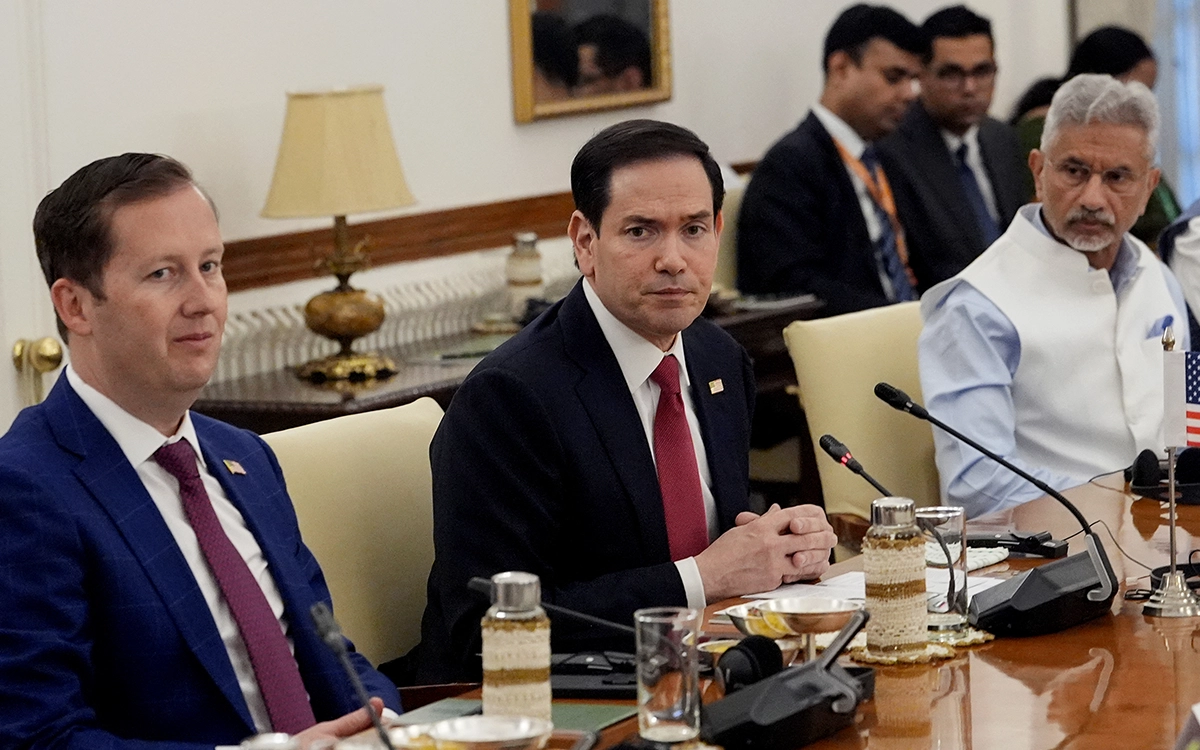
Even a multilaterally adverse U.S. administration might favor a non-ideological Quad in which India and other Asian members cover a greater share of program costs. U.S. and Indian officials share a desire to increase the group’s effectiveness. In New Delhi, U.S. Secretary of State Marco Rubio urged members to continue efforts “to turn this from a forum in which we meet and talk about problems, to one where we actually do something about it.” All four governments have recently pushed to group the projects into streamlined workstreams.
A Quad with lower costs, fewer constraints, and curbed ambitions would be better positioned to avert a repeat of the 2007–2008 setback. Then, frustrated efforts at premature institutionalization contributed to the organization’s decade-long hibernation. The new conditions could help inoculate the structure against political transitions within members or disputes between them. Though both the first Trump and the subsequent Biden administrations pursued activist Quad agendas, their radically divergent substantive priorities led to a churn of initiatives that lacked staying power.
Less U.S. Involvement Forces Quad Changes
If the Quad continues its current trajectory, it will settle into a lower level of institutional ambition, a looser coalition in which India, Japan, and Australia carry more of the weight. The group gains durability as it sheds ambition. This also presages the rise of regional actors as balancers against China in domains where economic power, rather than military force, decides the contest.
The group gains durability as it sheds ambition. This also presages the rise of regional actors as balancers against China in domains where economic power, rather than military force, decides the contest
The same logic is visible elsewhere. In the Gulf, states wary of Iran are being nudged toward carrying more of their own defense, though rivalry and limited complementary capabilities slow the process. In Europe, NATO is taking the lead against Russia as U.S. resources contract. Across all three regions, Washington’s partners bear more risk and cost. The Quad shows how that transition can work outside a formal alliance—through a flexible coalition rather than a treaty.
Whether this proves a source of strength or of drift remains to be seen. A Quad that delivers on minerals, maritime security, and infrastructure can advance a regional order that constrains China without American leadership. A Quad that keeps announcing more than it builds will confirm that retrenchment simply leaves a strategic gap.