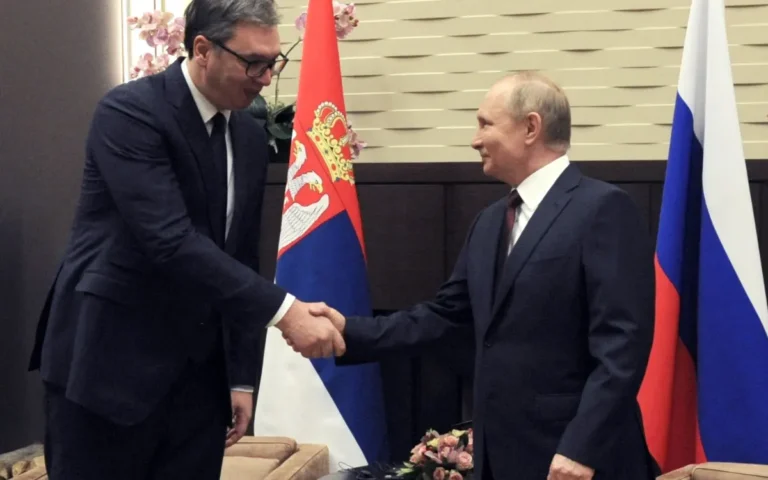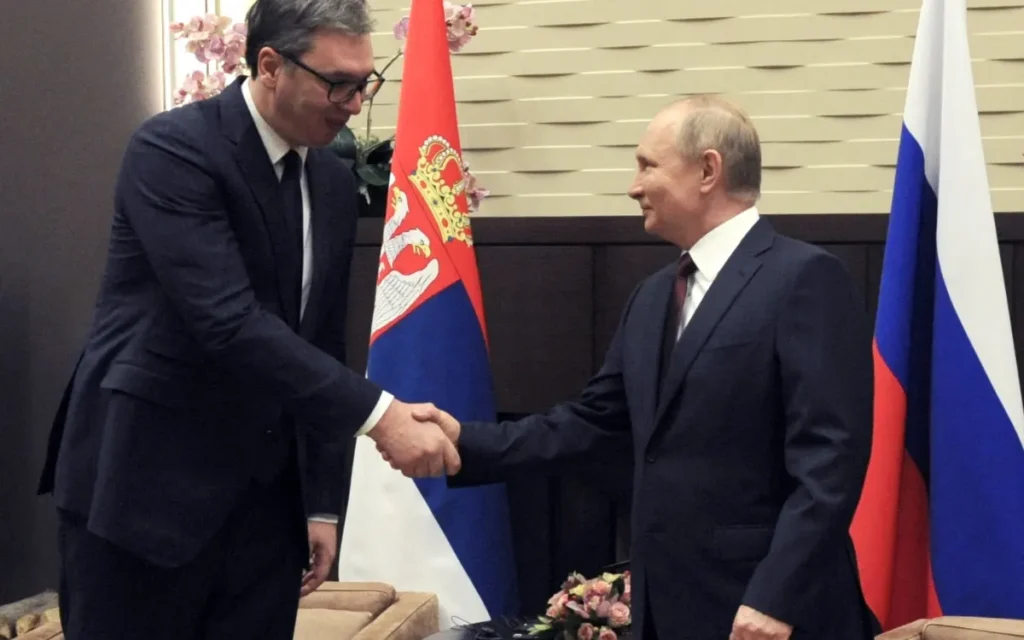

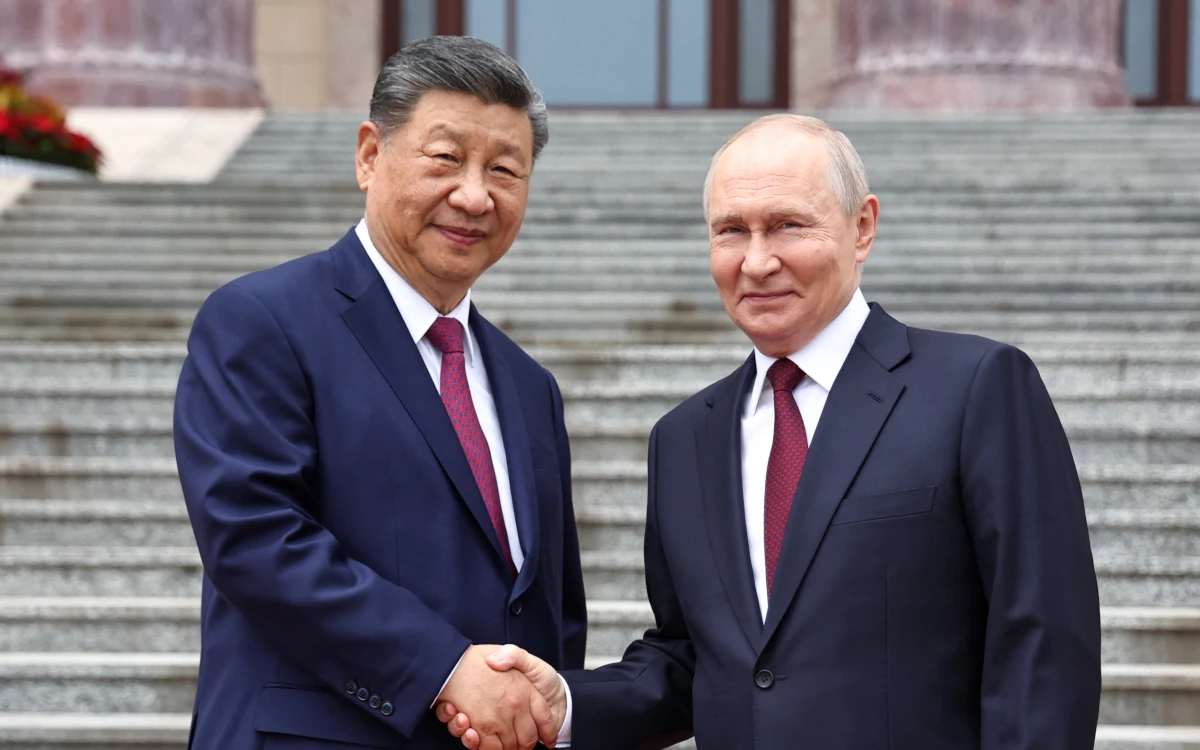
China and Russia have spent decades trying to open the Tumen River. North Korea continues to stand in their way. In May, Xi Jinping and Vladimir Putin pledged to advance Chinese navigation through the border river, giving Beijing its strongest backing yet. The declaration reflects China’s longstanding ambition to secure direct access to the Sea of Japan, lost in the unequal 1860 Treaty of Peking.
Beijing’s pursuit of direct Sea of Japan access is part of a broader effort to secure regional transport redundancy and economic connectivity, with some naval implications as well. Yet when Xi made a rare visit to Pyongyang in June, the issue disappeared entirely from the agenda. The silence underscored a striking geopolitical reality: even with Moscow and Beijing aligned, North Korea still retains the decisive strategic veto—and it shows little sign of giving it up anytime soon.
The omission is more than a diplomatic setback for China. It is a clear demonstration that, for North Korea, preserving sovereign control—even in its remote borderlands—trumps any economic or strategic benefit that may come by accommodating its two giant neighbors. It is the latest indication that economic dependence does not necessarily produce strategic compliance.
Diplomatic Stalemate Despite Bilateral Momentum
The Xi–Putin joint statement invoked a 1991 trilateral border agreement as the legal foundation for consultations on the Tumen River. The joint pledge sought to coordinate their approach to Pyongyang to facilitate Chinese commercial access along the river’s final 15 kilometers. However, the statement did not outline an implementation roadmap, allocate capital for necessary infrastructure modifications, or establish a joint technical commission with binding authority. Instead, it merely committed the parties to continue consultations—a formulation that acknowledges the existence of a diplomatic problem.
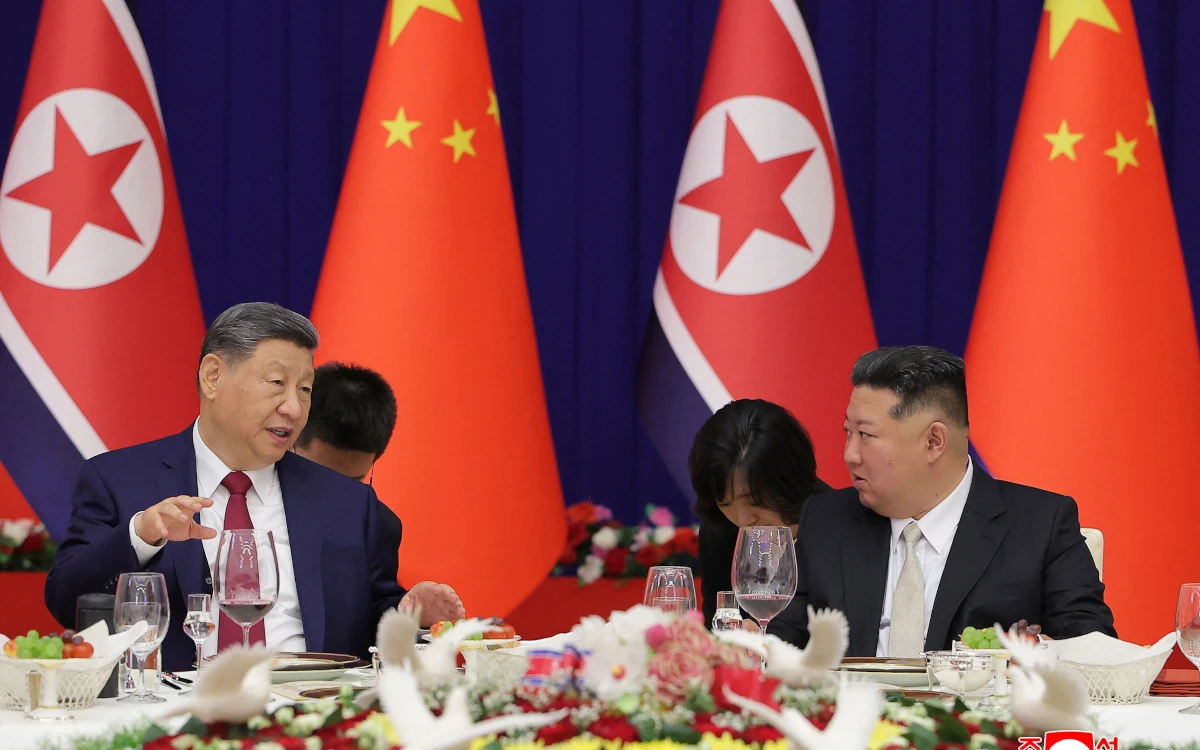
The silence on the Tumen River issue after Xi’s Pyongyang visit suggests that the Sino–Russian pledge did not translate into actionable progress. During the bilateral summit, North Korean leader Kim Jong Un reaffirmed support for Beijing‘s core sovereignty positions on Taiwan and territorial disputes in the South China Sea. Xi, on the other hand, emphasized the restoration of bilateral ties following years of pandemic-induced isolation.
While it is uncertain what exactly the two leaders discussed, this pattern suggests a fundamental constraint on Chinese leverage. Despite the massive economic asymmetry between Beijing and Pyongyang—with China accounting for approximately 90 percent of North Korea’s external trade—the smaller state has successfully resisted a multilateral initiative explicitly endorsed by both of its most important allies. The diplomatic record demonstrates that even when Moscow and Beijing coordinate their positions, they cannot unilaterally compel North Korea to negotiate away territorial sovereignty over strategically sensitive border zones.
Even when Moscow and Beijing coordinate their positions, they cannot unilaterally compel North Korea to negotiate away territorial sovereignty over strategically sensitive border zones
Russia’s willingness to back China’s Tumen River ambitions reflects Moscow’s deepening dependence on Chinese economic support following years of Western sanctions related to the Ukraine conflict. Russia has become increasingly willing to concede on regional issues where it previously held reservations, including the prospect of expanded Chinese commercial activity near its Far Eastern maritime borders. However, with the Tumen River issue, Russia’s assent is operationally meaningless without North Korean consent. Under current international legal demarcations, the final 15 kilometers of the Tumen River are shared exclusively between Russia and North Korea. China’s territory terminates at the village of Fangchuan, leaving its northeastern provinces entirely landlocked from the adjacent maritime zone. Any agreement between Beijing and Moscow that excludes Pyongyang, therefore, constitutes diplomatic posturing rather than a practical solution.
Any agreement between Beijing and Moscow that excludes Pyongyang constitutes diplomatic posturing rather than a practical solution
Historical precedent reinforces skepticism about near-term breakthroughs. The 1991 trilateral border agreement referenced in the May 2026 statement has been invoked repeatedly over the past three decades without producing substantive change in North Korea’s position. Multiple rounds of technical consultations in the 1990s and 2000s collapsed over Pyongyang’s refusal to permit the dredging and infrastructure modifications necessary to accommodate even small commercial vessels. The pattern suggests that joint statements by Beijing and Moscow on regional connectivity primarily serve a symbolic function, projecting an image of strategic coordination against Western-led security frameworks while lacking enforceable mechanisms to overcome North Korean resistance.
The Strategic Geography of the River Mouth and North Korea’s Sovereign Calculus
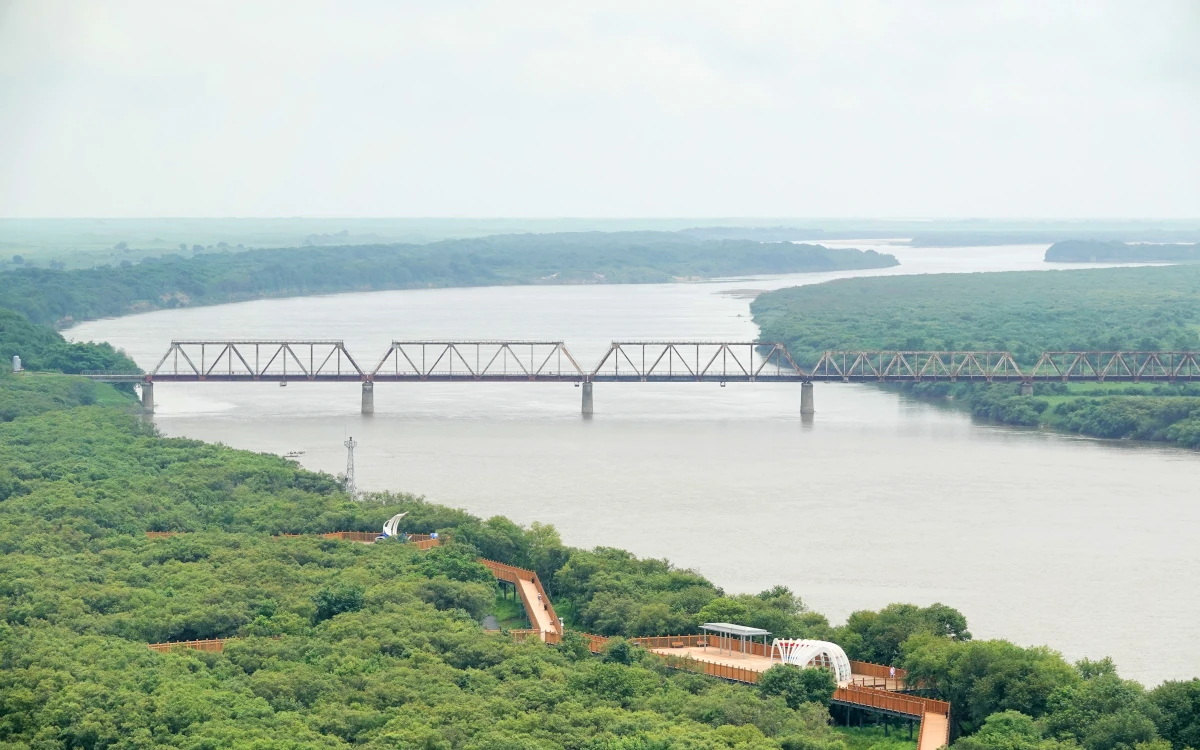
The core of the impasse centers on the Russian and North Korean borders before the waterway empties into the Sea of Japan. This segment contains critical infrastructure and geographic features that align with North Korean security imperatives. These include the Korea–Russia Friendship Bridge, a rail crossing constructed during the Cold War era, and the newly built Khasan–Tumangang Bridge, the first road bridge connecting the two nations. These bridges cross at a clearance height of less than 10 meters, functioning as a physical barrier to Chinese maritime ambitions by preventing vessels larger than shallow-draft barges from navigating beneath them. Making the river viable for meaningful commercial shipping would require either demolishing and reconstructing the bridges with a significantly higher span, or conducting massive, continuous dredging operations to lower the riverbed and accommodate larger hulls.
Yet from Pyongyang’s perspective, both infrastructure options present immediate threats to North Korean strategic autonomy. Demolition and reconstruction of the Friendship Bridge would necessitate a prolonged suspension of the rail link that currently serves as North Korea’s primary overland connection to Russia for fuel imports and bilateral trade. More significantly, any major construction project would require an influx of Chinese engineers, heavy machinery, and long-term security personnel into a border area that contains classified North Korean coastal radar installations, artillery positions, and border guard garrisons. Pyongyang views its northeastern frontier as a closed military district where foreign presence is strictly regulated to prevent intelligence gathering on defensive capabilities.
North Korea’s persistent blocking of the Tumen River initiative demonstrates the regime’s prioritization of strategic autonomy over economic inducements. The decision reflects a calculation that preserving absolute sovereignty over border regions is essential to regime survival. Any compromise on the Tumen River would establish a precedent for internationalized management of its territory. The regime’s leadership assesses that allowing passage rights for Chinese vessels would gradually transform a sovereign waterway into a jointly administered corridor, diminishing Pyongyang’s capacity to regulate movement along its own borders. Breaking the current deadlock would require compensation and legally binding security guarantees that China has thus far been unwilling or unable to offer. Pyongyang would likely demand formal treaty language that strictly limits Chinese jurisdiction to civilian commercial vessels, explicitly prohibits any military or coast guard presence, and establishes North Korean veto authority over vessel inspection and clearance procedures.
China’s pursuit of Tumen River access, on the other hand, is driven by regional logistics optimization and enhanced strategic redundancy rather than direct military expansion. The landlocked manufacturing centers of Jilin and Heilongjiang provinces currently transport goods thousands of kilometers south via rail to congested ports such as Dalian and Tianjin before shipping products to Japan, South Korea, or southern China. This circuitous routing imposes substantial time penalties and transportation costs on northeastern industrial output, rendering factories in cities like Hunchun and Yanji uncompetitive relative to coastal manufacturing hubs with direct ocean access.
Securing a direct exit through the Tumen River would dramatically reduce shipping times, revitalize the economically stagnant rustbelt of northeast China, and create an integrated economic corridor linking Chinese production centers with Northeast Asian markets. The potential economic impact extends beyond simple transportation efficiency, enabling the transformation of China’s underdeveloped northeastern region into a viable export platform capable of competing with established coastal manufacturing zones.
The strategic dimension centers on supply chain resilience and reduced dependence on chokepoints controlled or monitored by potential adversaries. The Korea Strait, through which Chinese vessels must currently pass to reach the Sea of Japan from northern ports, represents a significant vulnerability in Chinese maritime logistics. During periods of heightened regional tension or potential military confrontation, this heavily monitored corridor could become a point of interdiction or blockade. This would disrupt export and import flows of critical raw materials. While the Tumen passage would not eliminate China’s vulnerability, it would provide an alternative civilian trade route that bypasses the most intensively surveilled maritime zones in Northeast Asia. This geographic diversification reduces systemic dependence on a single heavily monitored passage, enhancing China’s economic resilience during crises.
On the other hand, North Korea’s awareness of this potential economic transformation explains its defensive posture. The regime calculates that an overwhelming influx of Chinese economic activity along its border may lead to loss of political control over the region. Cross-border commercial traffic brings not only goods and capital, but also information flows and cultural influence. It is also a security issue, as the traffic could be a potential avenue for intelligence collection. For Pyongyang, granting passage rights represents an existential risk to border sovereignty and internal security controls. It seems unlikely that China will overcome North Korean resistance to its influence in this region, particularly as the Kim regime faces no immediate economic crisis that would force a reconsideration of its strategic priorities. This, incidentally, is thanks to the economic gains it has achieved from supporting Moscow’s war in Ukraine.
It is also a security issue, as the traffic could be a potential avenue for intelligence collection. For Pyongyang, granting passage rights represents an existential risk to border sovereignty and internal security controls
Pyongyang’s refusal to accommodate an infrastructure project that both Beijing and Moscow publicly endorsed reveals that the Kim regime operates according to a hierarchy of strategic priorities in which territorial sovereignty and regime security consistently outweigh material incentives. This pattern challenges conventional assumptions about how smaller states navigate relationships with vastly more powerful neighbors. North Korea has effectively weaponized its geographic position at the river mouth, transforming it into a source of leverage by maintaining absolute veto authority over transit arrangements. The regime has demonstrated repeatedly across multiple Chinese governments and changing regional circumstances that it will prioritize preservation of border control mechanisms over access to Chinese investment, Russian energy supplies, or multilateral economic integration schemes that require ceding operational autonomy to external actors.
North Korea has effectively weaponized its geographic position at the river mouth, transforming it into a source of leverage by maintaining absolute veto authority over transit arrangements
This calculus reflects deeper lessons Pyongyang has drawn from observing other socialist states that permitted gradual economic integration with more powerful neighbors. Its leadership has studied the dissolution of the Soviet Union and the transformation of former Eastern European satellites, concluding that economic dependency creates political vulnerabilities that can be exploited during regime crises. By maintaining the Tumen River deadlock, North Korea signals to both China and Russia that its participation in their broader anti-Western geopolitical alignment does not imply willingness to compromise on core sovereignty issues that could create long-term dependencies. This strategy of selective resistance allows Pyongyang to extract maximum economic benefits from both powers while preserving the strategic autonomy necessary to prevent either from gaining decisive leverage over regime decision-making.
Naval Geography and Operational Constraints
The existing maritime geography of Northeast Asia imposes severe operational constraints on the People’s Liberation Army Navy Northern Theater Command. Chinese naval vessels stationed at major northeastern bases—Qingdao, Dalian, and Lushun—are effectively landlocked from the Sea of Japan by the Korean Peninsula and Japanese archipelago. The People’s Liberation Army Navy (PLAN) surface combatants and submarines must navigate southward through the Yellow Sea and traverse the Korea Strait, intensely monitored by underwater acoustic sensors, maritime patrol aircraft, and radar installations maintained by the United States, South Korea, and Japan. Securing sovereign maritime access via the Tumen River would alter this operational geography. By utilizing a cleared waterway directly from Jilin province into the Sea of Japan, China would establish an alternative northern corridor, providing the PLAN with strategic redundancy.
For Japan and South Korea, a Chinese maritime breakthrough at the Tumen mouth would introduce uncertainty into their immediate security environments. For decades, Tokyo and Seoul have treated the northern Sea of Japan as a relatively secure maritime backyard, shared primarily with a defensively oriented Russian Pacific Fleet and technologically limited North Korean Navy. Direct PLAN access would force Japanese and Korean navies to reallocate high-end assets—such as Aegis-equipped destroyers and anti-submarine aircraft—to northern frontiers. Tokyo and Seoul would contend with a dual-front naval challenge, stretching operational readiness and diluting allied naval power concentration across the Western Pacific.
Despite these significant geopolitical advantages, the practical military utility of the Tumen River remains constrained by North Korea’s acute security concerns regarding border sovereignty and coastal military installations. North Korea fiercely guards its strategic autonomy and views any foreign footprint on its sovereign waterways—even that of a nominal treaty ally like Beijing—as a potential vector for espionage, political pressure, and the gradual erosion of its internal security controls.
While Tumen River access is a highly consequential strategic objective for China, its naval utility is defined by specific physical parameters rather than blue-water naval dominance. The waterway’s average depth of 3–5 meters cannot accommodate capital ships such as Type 055 cruisers or modern destroyers. This rules out conventional attack submarines. Instead, its significance lies in providing a secure sanctuary for shallow-draft combatants such as Type 056A corvettes and riverine patrol craft, creating a persistent operational presence in the Sea of Japan without transiting allied-monitored chokepoints. These vessels could support joint exercises with Russian forces from Vladivostok and complicate Japanese and South Korean maritime domain awareness.
Access to the Tumen River thus offers China a geographic wedge into the Sea of Japan that could change the balance of naval surveillance and operational flexibility in Northeast Asia. Since 2021, Beijing and Moscow have conducted increasingly complex joint naval exercises in the Sea of Japan, demonstrating enhanced interoperability between PLAN and Russian Pacific Fleet forces. A Chinese-controlled Tumen River outlet would enable better coordination by providing forward-basing options, dedicated berthing, fuel storage, and maintenance facilities. Moreover, these facilities would connect to China’s northeastern industrial base. Given these changes, Sino-Russian naval cooperation may shift from episodic exercises to sustained, integrated operations.
Given the complex forces shaping Tumen River access, the following scenarios are the most likely.
Scenario 1: Limited Accord Under Duress
North Korea faces severe food shortages following consecutive agricultural failures, forcing Pyongyang to seek immediate financial assistance from Beijing beyond routine trade arrangements. North Korea formally agrees to participate in trilateral technical working groups focused exclusively on hydrographic surveys and infrastructure feasibility studies in exchange for multi-year grants of subsidized fuel and agricultural equipment from China. This grants China access via gray-zone activity related to surveys and studies.
In this context, a restricted pilot program is established permitting low-tonnage, flat-bottomed commercial barges carrying non-strategic civilian cargo to transit the river under joint regulatory oversight. North Korea retains absolute veto authority over vessel inspections and maintains sovereign control over all border installations. Constraints on such a scenario include intense diplomatic protests from Japan and South Korea demanding environmental impact assessments, technical requirements to modify the Korea-Russia Friendship Bridge, and negotiations over construction financing and operational control. The likelihood of such a trajectory is low-to-moderate.
Scenario 2: Consolidation of Sovereign Resistance
Pyongyang conducts internal security reviews and concludes any riverbed alterations would compromise coastal defense installations. It then issues explicit policy statements through official media declaring the Tumen River mouth a closed military zone, removing the issue from diplomatic discussion indefinitely.
In this context, Pyongyang deploys additional border security battalions, reinforces coastal artillery positions, and installs physical riverine barriers. Meanwhile, the regime intensifies nationalist propaganda emphasizing territorial sanctity. China retains the capacity to apply economic countermeasures such as deliberately slowing customs clearances at border crossings like Dandong, potentially triggering localized shortages. Indicators to watch for such a scenario include nationalist editorials in state media, the cancellation of trilateral economic forums, expanded military exercises along the northeastern coastline, and satellite imagery showing new defensive installations. Such a scenario is moderate-to-high in likelihood.
The lesson of the Tumen River issue is clear: economic dependence may buy influence, but it does not ensure compliance. In an emerging era of competing economic corridors and supply chains, control of strategic geography—even by small states—may prove as consequential as the strategies of great powers themselves.
The lesson of the Tumen River issue is clear: economic dependence may buy influence, but it does not ensure compliance