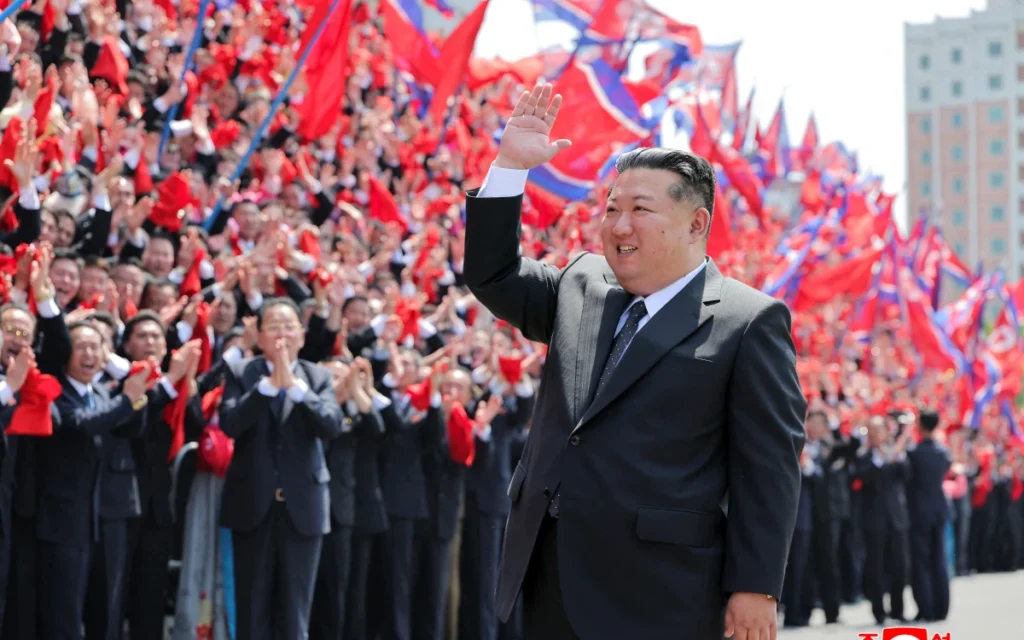
For more than half a century, North Korea insisted that the South was not a foreign country. It was the other half of one nation, split by war and awaiting reunification. Its constitution now says otherwise. References to national reunification, peaceful reunification, and great national unity have vanished.
A territorial clause now sits there instead: the Republic of Korea (ROK) is recognized as a separate, sovereign state to the south. Pyongyang has dropped the premise that has guided inter-Korean ties since the 1972 Joint Communiqué—that the two Koreas form one nation, temporarily divided.
It would be easy to file this away as another turn in a long, familiar cycle. Pyongyang escalates, tests weapons, raises the temperature—then trades the tension back for sanctions relief and aid. A more convincing reading is that something larger is underway. The constitutional change reads as the legal seal on a deeper strategic turn, one built on a faster, more self-reliant nuclear program and a hardening alignment with Russia.
That change turns the South from a brother nation into a neighbor best kept at arm’s length. Pyongyang acts more like an ordinary state, dealing with Seoul and Washington through standard diplomacy rather than discussing reunification. The goal seems to be shielding the regime’s security and nuclear standing from inter-Korean politics. Doing so would also undermine the unification logic that once gave denuclearization talks their purpose.
Pyongyang acts more like an ordinary state, dealing with Seoul and Washington through standard diplomacy rather than discussing reunification
Hanoi and the Broken Routine
The reorientation goes back to the collapse of the February 2019 Hanoi summit between Kim Jong Un and U.S. President Donald Trump. Before that failure, North Korean foreign policy followed a recognizable pattern. The regime pushed ahead with weapons tests and the implied weight of its nuclear program. That pressure drew Washington and Seoul to the table in search of sanctions relief and security guarantees.
Reunification framed this pattern rather than serving as its goal. Summits built on shared ethnic nationalism enabled Pyongyang to secure economic concessions while keeping Southern influence tightly limited. The regime also used these meetings domestically, presenting itself as a steward of a shared national future to shore up its legitimacy.
The buildup peaked in 2016 and 2017. Those two years alone brought three nuclear tests—including the high-yield detonation of September 2017—and more than 40 ballistic-missile launches. Pyongyang then moved to engagement. After a self-imposed testing pause, it joined three summits with South Korean President Moon Jae-in and the Singapore meeting with Trump, each cast around peninsula-wide reconciliation.
Hanoi broke the pattern. Pyongyang could not trade the Yongbyon nuclear complex for broad sanctions relief, and the episode revealed the limits of its usual script. Instead of easing tensions and returning to talks, the regime began to abandon the denuclearization-for-aid model that had shaped its diplomacy. Its nuclear program was recast, less as a bargaining chip and more as a core part of national defense.
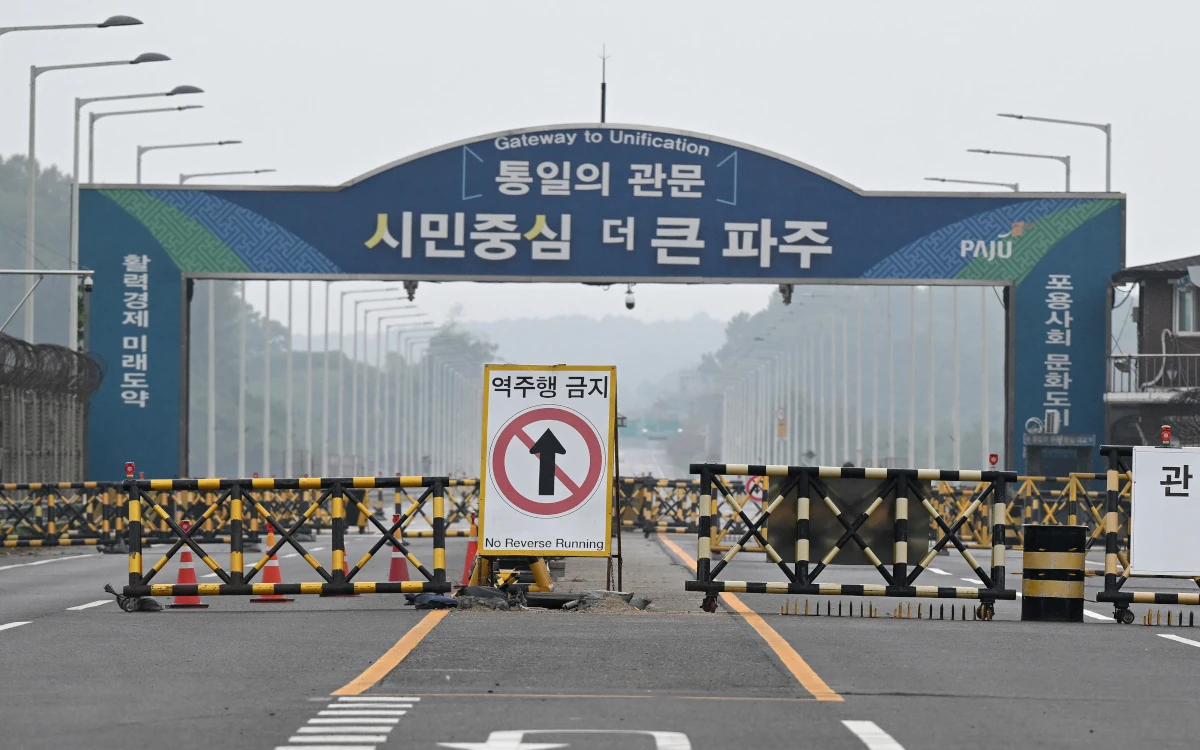
Barriers at a military checkpoint on the border between North and South Korea. AFP
Tactical Maneuver or Strategic Shift?
Whether this counts as a tactical move or a serious strategic shift remains the central question. The March 2026 text is more nuanced than it may seem. The territorial clause stops short of fixing contested maritime boundaries, such as the Northern Limit Line, and omits earlier language on forcible annexation. That restraint preserves military flexibility and prevents the regime from being locked into automatic escalation over a minor border incident.
In 2018, Kim’s New Year address still framed relations in terms of reunification, and the September 2018 military agreement dismantled frontline guard posts as a goodwill gesture. The post-2019 steps run in the opposite direction and are costly. Pyongyang destroyed the Kaesong inter-Korean liaison office in June 2020 and demolished the Monument to the Three-Point Charter for National Reunification in January 2024. In October 2024, it severed the roads and railways linking the two countries. These were costly assets, and their destruction is difficult to reconcile with any plan to preserve reunification as a near-term option.
Institutional changes point in the same direction. The Supreme People’s Assembly abolished the Committee for the Peaceful Reunification of the Fatherland on January 15, 2024, acting through legislation rather than waiting for a party congress. Across late 2024 and 2025, the existing National Reunification Institute was rebranded as the Institute of Enemy State Studies and folded into a reorganized intelligence bureau. Veteran inter-Korean negotiators in the Politburo gave way to external diplomats, such as Foreign Minister Choe Son Hui. These moves remove the expertise and bureaucratic base for engagement, making a quick return to dialogue harder, though not impossible.
The military program strengthens that reading. Since Hanoi, testing has not only risen—2022 alone saw 37 separate launch events and more than 90 missiles—but has also changed in character. Earlier rounds looked like episodic signaling.
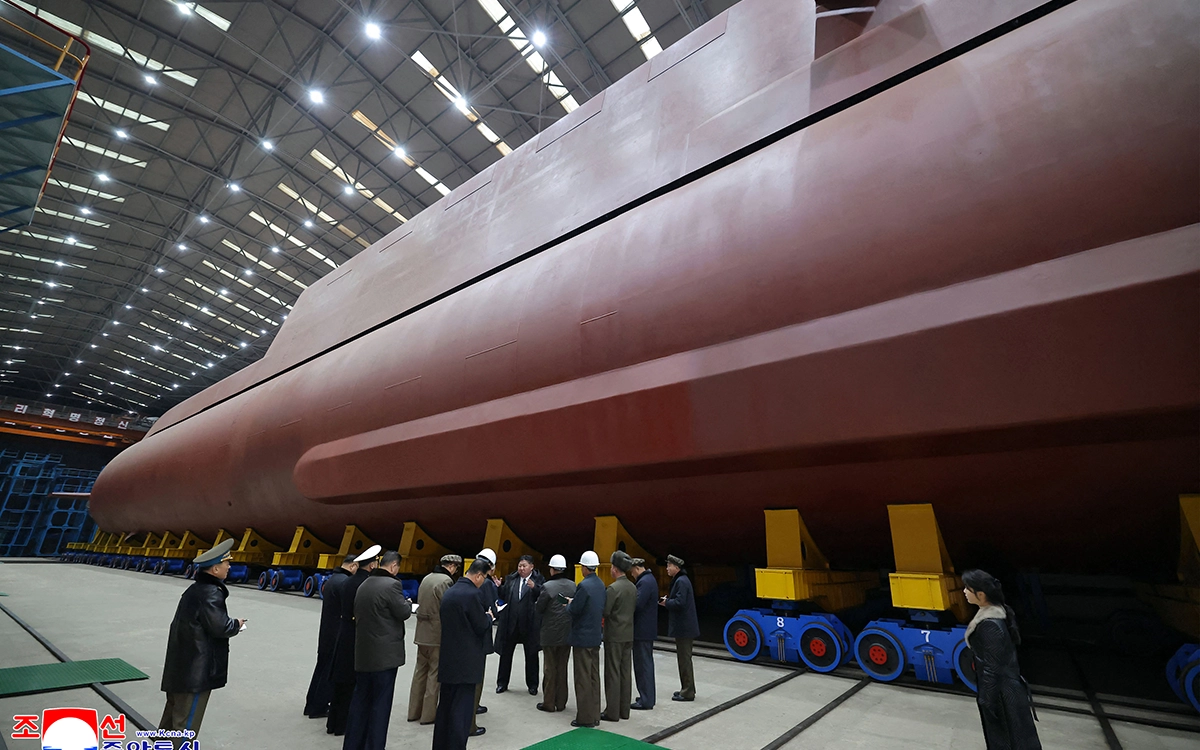
Work since the 2021 Eighth Party Congress has followed a published list of strategic systems pursued on multi-year timelines. One, a nuclear-powered submarine, appeared under construction in December 2025; its operational reach stays unverified. The move toward solid-fuel missiles also stands out, since such systems shorten launch preparation and improve survivability against a pre-emptive strike. That kind of sustained, capital-intensive effort fits a program built for deterrence more than one calibrated to the rhythm of negotiations.
Alignment with Russia further loosens the old constraints. Since the start of the Ukraine war, Pyongyang has supplied troops and munitions to Moscow in exchange for technology, aid, and diplomatic cover. The June 2024 partnership agreement includes mutual-defense language and could, in principle, extend a measure of Russian deterrence to the regime. That would mark a real change in a security architecture in which isolation once left Pyongyang exposed to combined U.S.-ROK pressure. How far Moscow would act on the commitment remains untested, and the relationship may prove more transactional than strategic. Even so, it reduces the regime’s dependence on sanctions relief, thereby weakening a lever that previously gave denuclearization talks much of their pull.
Alignment with Russia further loosens the old constraints. Since the start of the Ukraine war, Pyongyang has supplied troops and munitions to Moscow in exchange for technology, aid
Taken together, the steps look more like reorientation than positioning. A tactical play would pair harsh rhetoric with preserved backchannels and reversible gestures. It would suspend institutions rather than abolish them, as in military work against the state of talks, and lean on China, which favors stability. Pyongyang has instead closed channels, dismantled institutions, and diversified its partnerships in ways that are costly to reverse.
This shift also unsettles an assumption that has underpinned denuclearization diplomacy for three decades: that both Koreas ultimately seek a peaceful political settlement. The 1994 Agreed Framework froze plutonium production and rested on the 1992 inter-Korean Basic Agreement, which committed both sides to peaceful reunification. The 2005 Six-Party Joint Statement went further still. It paired North Korea’s pledge to abandon nuclear weapons with a commitment that the “directly related parties will negotiate a permanent peace regime on the Korean Peninsula.” Even the 2018 Panmunjom Declaration tied denuclearization to a shared vision of Korea’s future. In each case, nuclear limits served as steps within a broader political process, not as ends in themselves.
Remove that endpoint, and the logic for accepting nuclear constraints weakens. Where weapons once served as bargaining chips on the path to settlement, the revised framing presents them as a more settled instrument of security. The incentives that supported past deals—sanctions relief, recognition, development—lose some of their appeal.
The elevated rhetoric of self-reliance points the same way. Juche, the doctrine of self-sufficiency central to the state since the 1970s, already drove its isolation through the post-Cold War period. With unity removed as a goal, that doctrine reframes external inducements: sanctions relief and development aid look less like opportunities and more like dependencies to be avoided. Russian support reinforces this effect, allowing Pyongyang to absorb the isolation imposed by Seoul and Washington at a lower cost. None of this makes engagement impossible, but it raises the price the regime would demand to return to engagement.
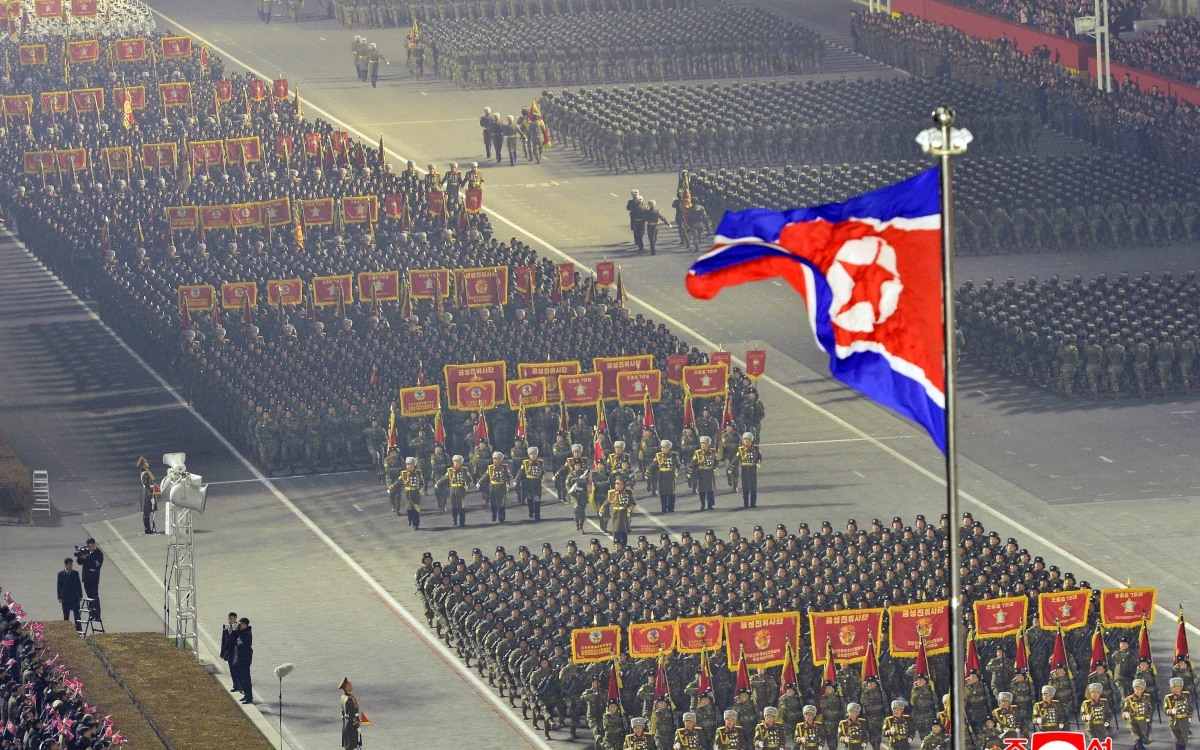
A military parade marking the 9th Congress of the Workers’ Party of Korea. AFP
The shift also erodes the minimal trust that phased denuclearization requires. With the South cast as an adversary, even temporary disarmament reads as a strategic risk, one that years of reconstruction could not quickly undo. This does not render existing frameworks obsolete so much as raise the threshold for their use. The assumptions that made them work no longer hold automatically, but a future government could restore them.
The most likely near-term outcome is a managed stalemate. North Korea advances its capabilities, the U.S.-ROK alliance strengthens deterrence, and both sides avoid confrontation while preparing for the possibility of one. Managed does not mean stable. Two trajectories illustrate how this could develop. They differ less in direction than in degree: one formalizes the new relationship through diplomacy; the other hardens it through a hard posture.
The most likely near-term outcome is a managed stalemate. North Korea advances its capabilities, the U.S.-ROK alliance strengthens deterrence
Scenario One: Formal State-to-State Relations
In the first, Pyongyang formalizes the new posture. It routes inter-Korean contact through the foreign ministry, presses Washington for direct bilateral relations, and excludes Seoul from any nuclear talks. The trigger would be a formal rejection of a joint U.S.-ROK initiative on constitutional grounds, citing a violation of North Korean sovereignty. Pyongyang would then press for engagement through state-to-state and United Nations channels, positioning itself as a standard nuclear-armed state. It would also pursue formal border and maritime arrangements with neighboring states, using the coordinates newly codified in the constitution.
This path faces a structural limit. South Korea’s Article 3 claims the entire peninsula, so Seoul cannot replicate the model without amending its own constitution. The result is asymmetry, in which official interaction would require one side to act against its own basic law. China, wary of consolidating a U.S.-aligned state on its border, may also prefer ambiguity, limiting how far the framework can be recognized.
Scenario Two: Deterrence Without Dialogue
In the second, the emphasis shifts to hardened deterrence. Pyongyang deploys its nuclear-powered submarine, declares its modernization complete, and frames the arsenal as a non-negotiable element of sovereignty against its “principal enemy.” It would withdraw from the remaining inter-Korean military agreements and deploy forces in once-demilitarized areas, rejecting any talks premised on denuclearization. The posture would resemble a Cold War deterrent, sustained by Russian technology and continued Chinese economic support, and held independent of any sanctions-relief track.
This trajectory carries clear risks. It could prompt South Korea or Japan to revisit their nuclear options, or prompt expanded U.S. deployments, feeding a regional arms race. It could also strain Chinese patience, reducing support that Russian ties may not fully replace. Neither side, however, may have the leverage to change the other’s calculus, leaving hostility as the working baseline.
Whichever path Pyongyang takes, the near-term picture remains somewhat clear. The peninsula is being run as a relationship between two states, not as two halves of one nation waiting to reunite. This is now reflected doctrinally rather than only de facto. Diplomacy built on the old promise of one Korea now has little to work with, and any opening would have to rest on the new status quo.
The peninsula is being run as a relationship between two states, not as two halves of one nation waiting to reunite
North Korea has walled itself off from the South before, only to reopen the door when the circumstances changed. The constitution sets the terms of this estrangement; it does not guarantee its permanence. Whether it hardens into a durable order or proves to be another chapter in a pattern of rupture and reconciliation remains open. The answer will turn less on the words in Pyongyang’s legal code than on the price each side is willing to pay.
Seong Hyeon Choi is a research fellow at the Central European Institute of Asian Studies (CEIAS) and a specialist in Chinese military affairs, North Korea’s foreign and nuclear policy, and South Korea’s defense ties with Europe.
Get access to in-depth analysis, exclusive intelligence, and expert reports designed to keep you
informed and ahead of the curve on the most important global developments.
Get access to in-depth analysis, exclusive intelligence, and expert reports designed to keep you
informed and ahead of the curve on the most important global developments.