
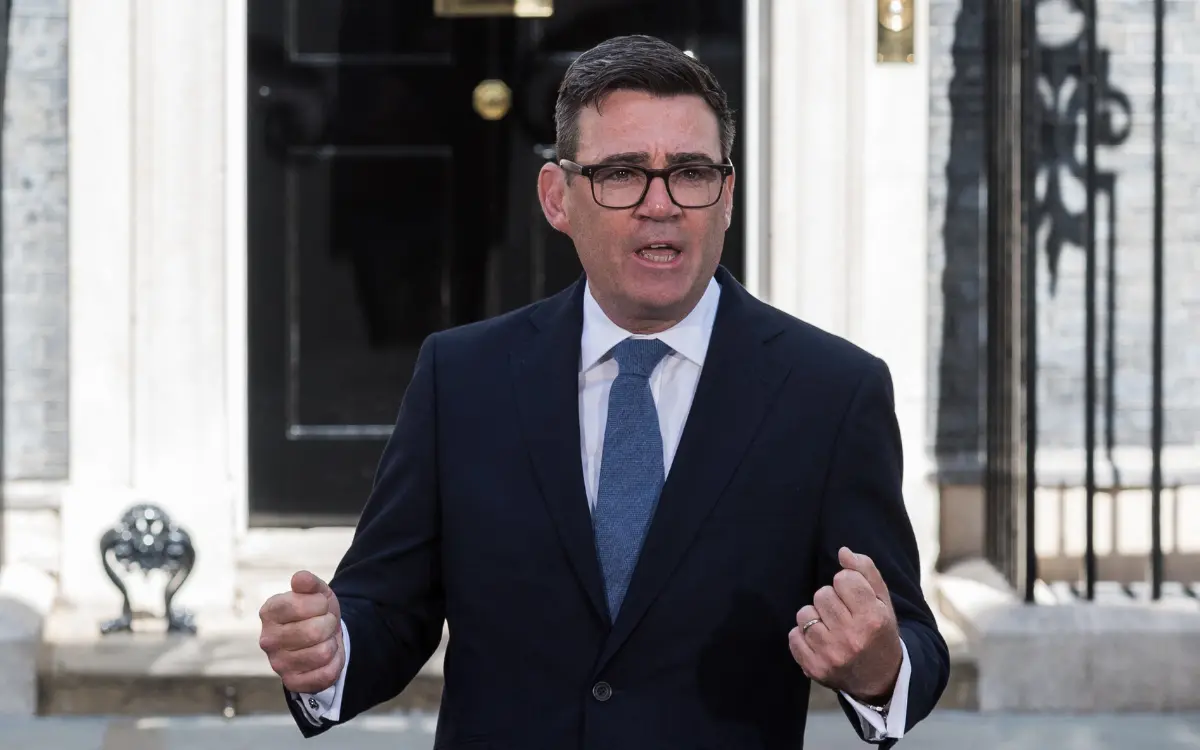
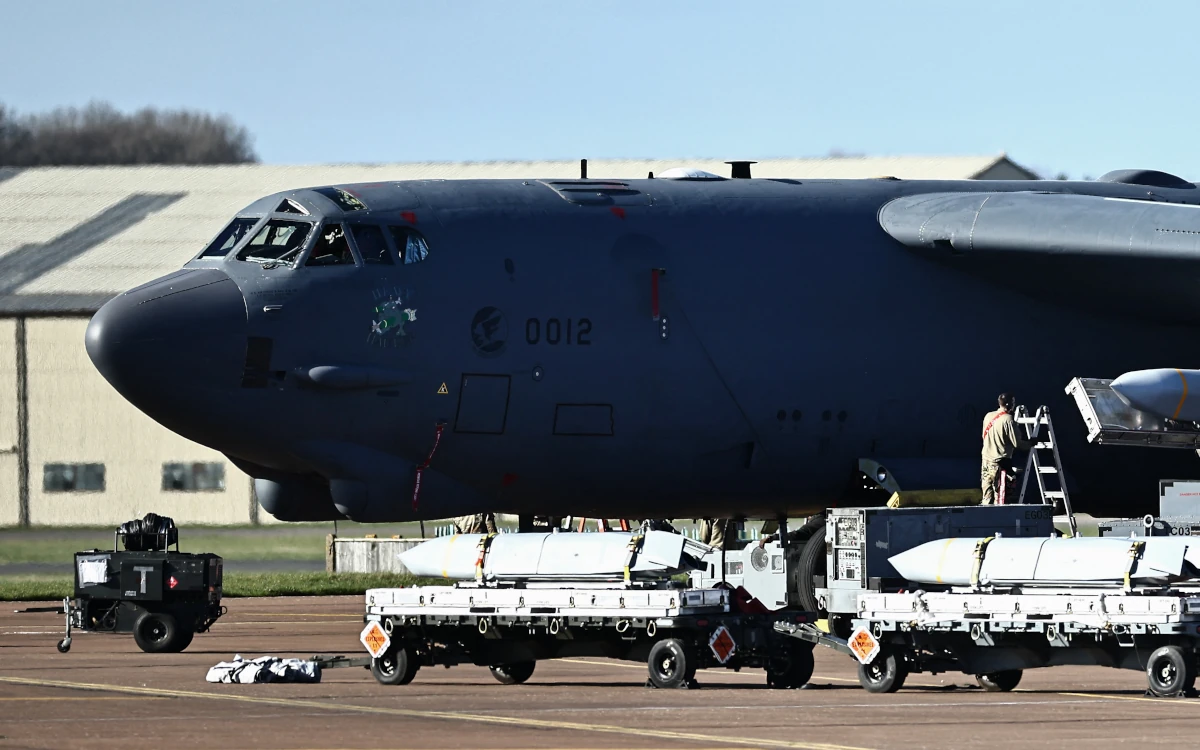
Andy Burnham has entered Downing Street at a moment when British bases are supporting an ongoing American war. U.S. aircraft operate from RAF Fairford in Gloucestershire and Diego Garcia in the Indian Ocean under an authorization Keir Starmer granted in March. Burnham did not choose it, yet he now owns it. The U.S.–Iran ceasefire has collapsed this month, and both bases sit inside a live conflict. Burnham has little choice: before defining his own foreign policy, he must manage the one he inherited.
The March crisis exposed the working terms of the U.S.–UK alliance. Those terms now frame the inheritance of a prime minister with almost no record in international affairs. This underlines a central strategic question that remains open: is Burnham piloting a reciprocal strategic partnership or is he on autopilot in a relationship of systemic dependency? The real test of his premiership will be whether he can exercise greater leverage within an alliance Britain cannot afford to abandon.
What the March Crisis Revealed
Starmer first refused Washington’s request to launch strikes on Iran from British soil. He reversed that position on March 1, 2026, permitting American use of RAF Fairford and Diego Garcia for “defensive operations.” Three weeks later, he widened the authorization to cover Iranian missile sites threatening shipping in the Strait of Hormuz, effectively enabling offensive operations.
Iran answered within a day, firing two ballistic missiles at Diego Garcia, the British base over 2,000 miles south of the Strait of Hormuz. Both missed: the first failed in flight, and a U.S. warship intercepted the second. But the strikes marked Iran’s first operational use of intermediate-range missiles, whose range extends to European capitals. Trump attacked Starmer throughout the crisis, later likening him to Neville Chamberlain—the embodiment of appeasement and naivety toward Adolf Hitler.
The lease terms sharpen the imbalance. Under the 2025 treaty, Britain ceded the Chagos Archipelago to Mauritius and leased Diego Garcia back for 99 years. Trump first attacked the handover, then blessed it once a review had bent the terms toward Washington. London now pays an average of £101 million each year—a net cost of £3.4 billion—for sovereignty over a base that American forces run almost exclusively. The exchange is plain: Britain buys the title; Washington keeps the use.
Territory, Consent, Asymmetry
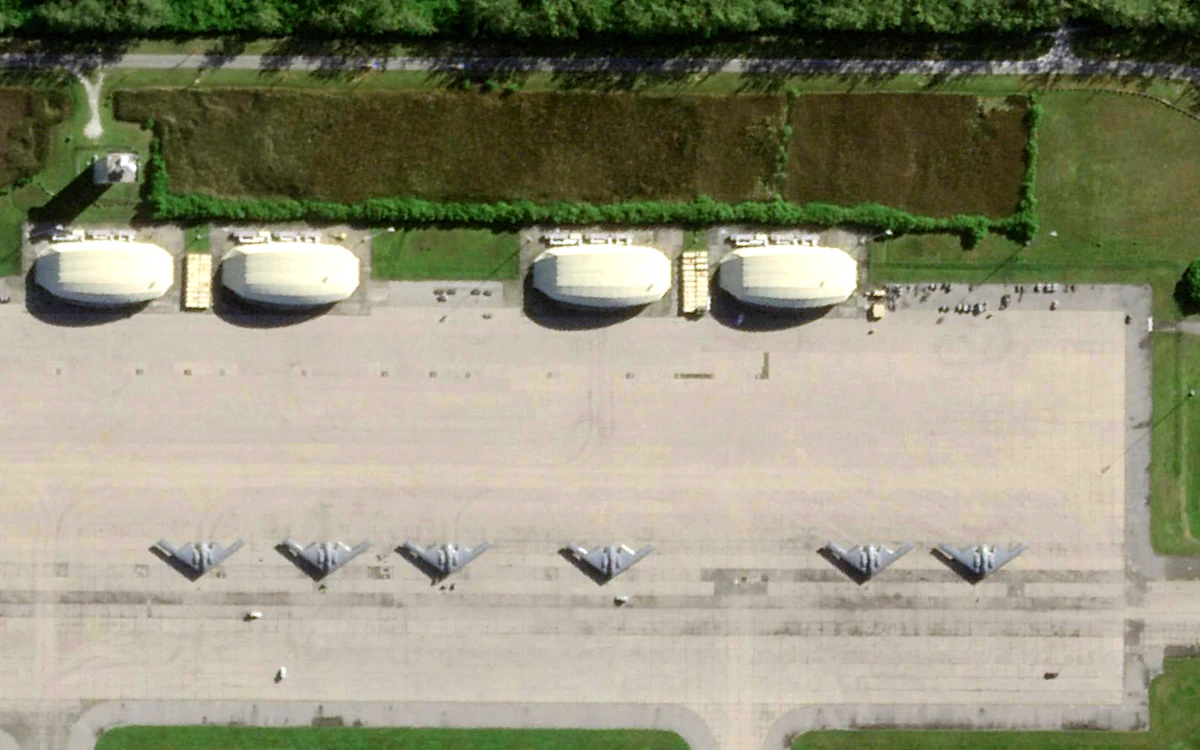
These facts describe a specific exchange: Britain supplies territory and consent while the United States carries out operations and retains command. The arrangement grants Washington strategic reach from Diego Garcia across the Middle East, South Asia, and East Africa. By contrast, it grants London little more than the status of a host, while exposing it to all the attendant risks.
Trump’s conduct during the crisis clarified the balance. He used the bases while berating the prime minister who provided them. Washington gave little in return, pressing tariffs on allied metals and leaning on London over China and defense spending. A balanced partnership would trade access for reciprocal political commitment. The March exchange showed Britain received neither.
The intelligence relationship deepens the same reliance. Diego Garcia complements Britain’s role within the Five Eyes intelligence network to form a single asset, trading British geography for a seat at the American table. That seat delivers reach no European partner can match. It also effectively prohibits walking away, since the loss would be far too costly for London. Consent is the one real lever Britain holds, and it weakens the moment Britain reaches for it.
The legal architecture is thinner than the label suggests. The line between defensive and offensive is unsustainable in a live theater of war. A modern air campaign rarely remains purely defensive. The distinction itself exposes the limits of consent as a strategic tool for London.
The line between defensive and offensive is unsustainable in a live theater of war. A modern air campaign rarely remains purely defensive. The distinction itself exposes the limits of consent as a strategic tool for London
The Latitude Problem
Burnham’s freedom to reprice this arrangement is narrow. Diego Garcia anchors British reach across the Indian Ocean and beyond, and no European alternative offers the same platform. Withdrawal would cost more than it could save. The arrangement predates Burnham by generations, from wartime cooperation to the subsequent Cold War intelligence pact that became the Five Eyes network. Middle powers rarely renegotiate the terms of access with a superpower on which they also depend.
History sets the pattern. Harold Wilson kept Britain out of Vietnam in the 1960s while preserving the alliance. Yet he drew on a stronger Britain, relatively speaking. He also faced no live base commitment binding him to the American campaign. The Suez collapse of 1956 remains the sharper memory, when Washington broke a British operation by withdrawing financial support. The result was a stark demonstration of the limits of British power. The pattern is enduring: Britain bends to American preference when the two diverge under pressure.
The dependency runs deeper than any single base. The United States leases Britain its Trident missiles, services them at King’s Bay in Georgia, and supplies the guidance systems they run on. The deterrent Britain calls independent therefore floats on American goodwill. Ed Davey used his party’s spring conference, amid the fighting, to demand a genuinely British replacement, citing Trump’s unreliability. A premier who cannot credibly threaten to leave the base can hardly challenge the arrangement that keeps his submarines at sea.
A premier who cannot credibly threaten to leave the base can hardly challenge the arrangement that keeps his submarines at sea
Burnham’s own standing compounds the limit. He reaches Downing Street largely unknown beyond Manchester, without a diplomatic record or an established network in Washington. Fiscal rules cap what defense and diplomacy can command, and the aid budget has already shrunk. A leader so configured leads on the economy and manages the rest.
A contrary reading credits Burnham with more room for maneuver. The prerogative gives him a free hand in law, since he could narrow base access without a parliamentary vote. A large Commons majority and a distracted, transactional White House might let him extract better terms. But that case underrates the timing. He arrives mid-war, when pressure on the bases would read as desertion, and their value to Washington is at its highest.
His instincts seemed to point away from Trump. Burnham has called American politics polarized and poisonous, and an adviser has warned that Britain cannot rely on Washington. Yet his recent gestures toward Trump suggest a more pragmatic approach. The shift is unsurprising; political rhetoric costs him little. Structural renegotiation would cost far more, because Washington has shown it will punish distance.
A War He Did Not Choose
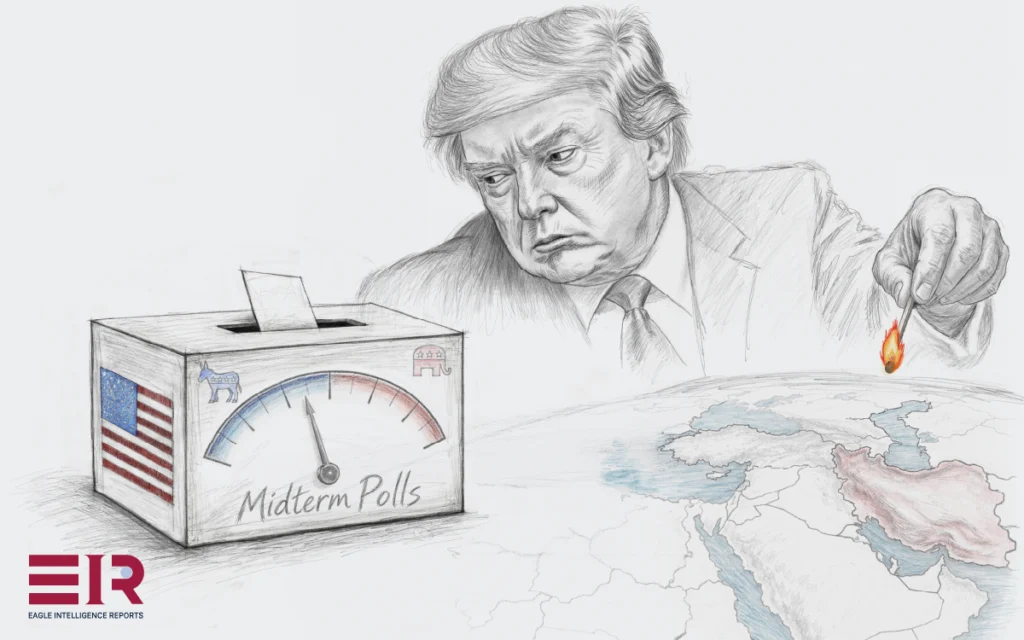
The reignited Gulf war turns these limits into an immediate test. The ceasefire broke this month, and American strikes have resumed across Iran. Iran has closed the Strait of Hormuz, struck tankers there, and targeted American bases across the region. Iran now answers to Mojtaba Khamenei, whose foreign minister has cast British permission for U.S. base access as participation in aggression.
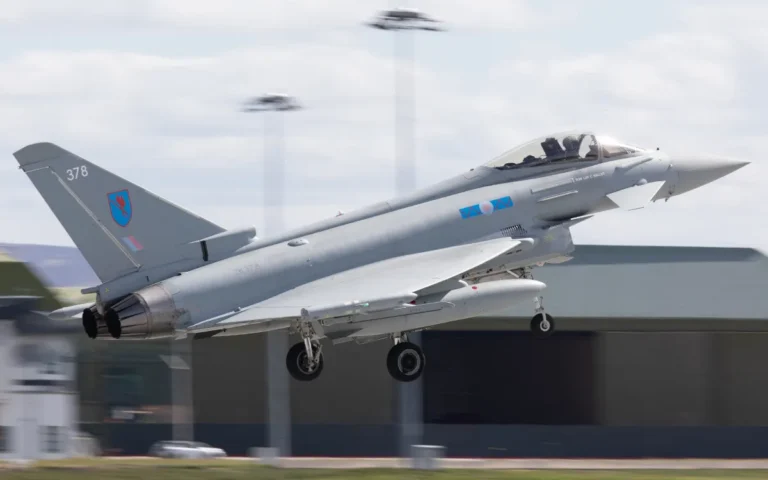
The exposure extends to British soil. RAF Fairford launches American bombers over the Gulf, making Gloucestershire an active node in the war. Diego Garcia has already absorbed one Iranian strike, and a wider escalation would expose both. Starmer had also committed a warship and additional Typhoon jets to the region, deepening the footprint Burnham now commands.
The choice carries no easy option. Rejecting or narrowing base access would rupture the relationship and reinforce Trump’s charge of an unreliable Britain. Maintaining it deepens British entanglement in a war London never chose to join. Continuity is therefore the easiest course, but it binds the country to Washington’s timetable.
Maintaining base access for the United States deepens British entanglement in a war London never chose to join. Continuity is therefore the easiest course, but it binds the country to Washington’s timetable
The Left Flank
The sharper pressure may come from within. Authorizing foreign use of the bases is a prerogative power, taken by the prime minister without a Commons vote. So Burnham will own each decision himself. Base access already mobilized an anti-war coalition against Starmer in March, and that coalition has only grown since. Jeremy Corbyn, now parliamentary leader of the new Your Party, tabled a cross-party bill to move the decision into Parliament. The Greens, Your Party, the Independent Alliance, and Labour backbenchers formed a bloc around it.
The Greens have gained the most. Under Zack Polanski, they surged to second in national polls, framing the war as a fight Britain did not need and tying it to living costs at home. Green members pressed the government on whether it could refuse individual American targets, and on whether cluster munitions were loaded at British bases. Your Party’s platform demands an end to foreign military interventions.
That flank is precisely where Labour bleeds support. The revolt that forced Starmer out drew energy from the same left, and Burnham inherits both the seat and the exposure. Continued base access would hand the Greens and Your Party a mobilizing cause when Labour can least afford one. Reform presses from the right, and the anti-war bloc presses from the left. Polling already shows the public is uneasy about the use of British bases against Iran. A premier mandated on the cost of living cannot easily absorb a foreign war that will likely raise it.
Leading Ally or Habit?
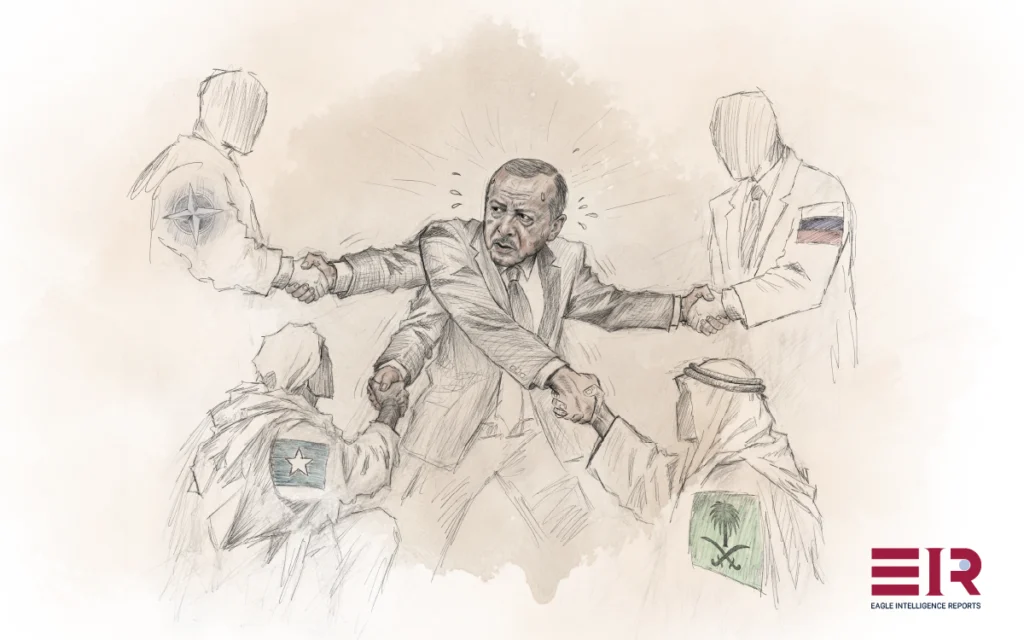
The base imbalance sits inside a wider reordering of European security. Recep Tayyip Erdoğan hosted this month’s NATO summit in Ankara, where allies discussed how to fund a target of five percent of GDP by 2035. Washington set the conditions once again, tying its own commitment to sharper burden-sharing and pricing the alliance as it prices the bases. Mark Rutte framed the meeting around delivery, but the leverage remains overwhelmingly American.
Britain built its European standing on two foundations. The first is the coalition of the willing it assembled with France to backstop Ukraine, promising troops for a reassurance force once the fighting stops. The second is its self-cast role as Washington’s indispensable interlocutor inside NATO. Both are under strain. The reassurance force has struggled to move without the American guarantee it always required, and the interlocutor role will fade if Burnham keeps his distance from Trump.
The rearmament across Europe narrows Britain’s claim to stand apart in defense. France fields Europe’s only sovereign deterrent. Poland now spends close to 4.8 percent of its output on defense, and Germany has stationed a permanent brigade in Lithuania. Britain’s residual distinctiveness rests on the bases and the intelligence they feed, which ties its European standing back to an American relationship it cannot control.
Some urge Britain to pull back on the special relationship and turn toward Europe. Yet that turn has a ceiling: no European framework can yet provide the nuclear umbrella, military enablers, and intelligence that Britain draws from Washington. The label of leading ally may now describe a habit of speech more than a role Britain still holds.
The Each-Way Bet
China marks the other axis where Burnham might seek room, and the same dependency constrains him there as well. Starmer’s January reset with Beijing was itself a hedge against dependence on the United States, an effort to spread British bets beyond Washington. The visit produced a comprehensive strategic partnership with Xi Jinping, roughly $2.2 billion in export deals, and $2.3 billion in market access, alongside AstraZeneca’s $15 billion investment in China. Chery placed its European headquarters in Liverpool, and China now ranks as Britain’s third-largest trading partner.
Washington treats China policy as a test of geopolitical alignment, limiting how far the reset can run. Trump warned that doing business with China would be dangerous for Britain. Any recalibration would register first in the screening of Chinese investment, semiconductor exposure, and critical-mineral dependence. Dependence on American bases leaves Britain little margin to run an each-way bet between the two powers.
The Realistic Trajectory
The likeliest course is managed continuity rather than renegotiation. Burnham will probably maintain the base authorization, take some rhetorical distance from Trump for domestic audiences, and hedge cautiously toward Europe and Beijing. That posture preserves the relationship without repricing it, and it fits the limits he inherits. The pattern would echo his predecessor, whose caution earned Trump’s contempt without buying autonomy.
Continuity carries its own bill, now payable at home. Each month the bases serve Washington’s war, the anti-war bloc gains a cause, and Labour’s left flank frays further. Burnham may find the domestic price of saying yes rising faster than the diplomatic price of saying no. That reversal, if it comes, would reshape the calculation Starmer set.
Each month the bases serve Washington’s war, the anti-war bloc gains a cause, and Labour’s left flank frays further. Burnham may find the domestic price of saying yes rising faster than the diplomatic price of saying no
Three contingencies could force a sharper choice. A broader escalation in the Gulf might compel a public decision on continued American use of British bases. A direct demand from Trump, on China or defense spending, could make refusal too costly to sustain. A prolonged closure of the Strait of Hormuz would raise energy costs and squeeze the fiscal room on which his domestic program depends.
The through-line holds across each axis. On the bases, on NATO, and on China, Britain confronts the same constraint: it depends on American power more than American power depends on it. Burnham can adjust tone and hedge at the margin. But he cannot rewrite that equation in his first year, and probably not in his first term.
The deeper point remains structural, and it will outlast the current crisis. Burnham’s mandate is domestic, yet inherited commitments already shape his first foreign policy choices. He takes command of bases that serve another country’s war, on terms set long before he took office. Whether he can change the price of access rather than simply pay it may prove the defining question of his premiership.