
On September 30, the last U.S. combat forces left Iraq, and Washington, Baghdad, and Tehran all hailed the moment as a victory. Only Kurdish leaders struck a discordant note.
The rare consensus obscures a more important issue. Iraq could become a bellwether for whether the United States can preserve substantial influence in a pivotal Middle Eastern country without the military presence that previously underwrote it. Washington is “normalizing” relations with Iraq by relying more on local partners, financial leverage, and over-the-horizon military capabilities to offset its troop drawdown.
The obstacles are formidable. Washington’s primary partners have limited capabilities, and the Kurds have lost the U.S. air and missile defenses that once shielded them. Deeper Iraqi-U.S. economic ties depend on strengthening security and advancing economic reforms. The Pentagon is also reducing its assets throughout the region. Iran, by contrast, retains potent assets, including a robust proxy network, that could derail U.S. plans.
Washington’s primary partners have limited capabilities, and the Kurds have lost the U.S. air and missile defenses that once shielded them. Deeper Iraqi-U.S. economic ties depend on strengthening security and advancing economic reforms
How these pressures play out will show whether financial leverage can substitute for the deterrence, reassurance, and crisis response that troops once provided. The answer will reach well beyond Iraq, influencing how far Washington can lighten its military footprint across the Middle East.
Coming Home
Each capital framed the departure in its own terms. The Pentagon hailed the end of Operation Inherent Resolve as “mark[ing] the successful conclusion of the military mission that defeated ISIS in Iraq.” President Donald Trump boasted, “This Day is a victory for the United States, a victory for Iraq, and a decisive victory over ISIS.” He added that ISIS “has been completely decimated by the Trump Administration.” The Iraqi government declared a Sovereignty Day holiday. Pro-Iranian groups proclaimed a historic victory against U.S. occupation forces.
In Washington, critics of the withdrawal focused on the timing. They argued that the exit should have awaited a resolution of the U.S.-Iran war to avoid appearing weak and encouraging anti-U.S. militants elsewhere. They also urged suspending the pullout pending a comprehensive review of the future U.S. military posture in the Gulf region. Defenders of the departure maintain that it aligns with earlier bilateral commitments and with longstanding expectations that the U.S. presence was temporary. In their view, the outnumbered U.S. forces had become focused on protecting themselves rather than fighting terrorists. Removing them also deprives Tehran of potential hostages. Supporters further contrast the low-key exit from Iraq with the chaotic U.S. departure from Afghanistan in 2021.
The two governments have applied the broad term “normalization” to the post-withdrawal relationship. The Pentagon characterizes it as “a transition from a wartime coalition mission to an Iraqi-led security effort supported by a more normal bilateral security relationship.” Iraqis also describe it as a return of sovereignty. However, neither term fully applies. Both governments aim to deemphasize the security dimension and focus on strengthening commercial ties, especially by boosting U.S. investment. Yet, the United States still controls much of Iraq’s finances, while Iranian-backed militias contest the government’s monopoly of force.
Both U.S. and Iraqi governments aim to deemphasize the security dimension and focus on strengthening commercial ties, especially by boosting U.S. investment
Partner Problems
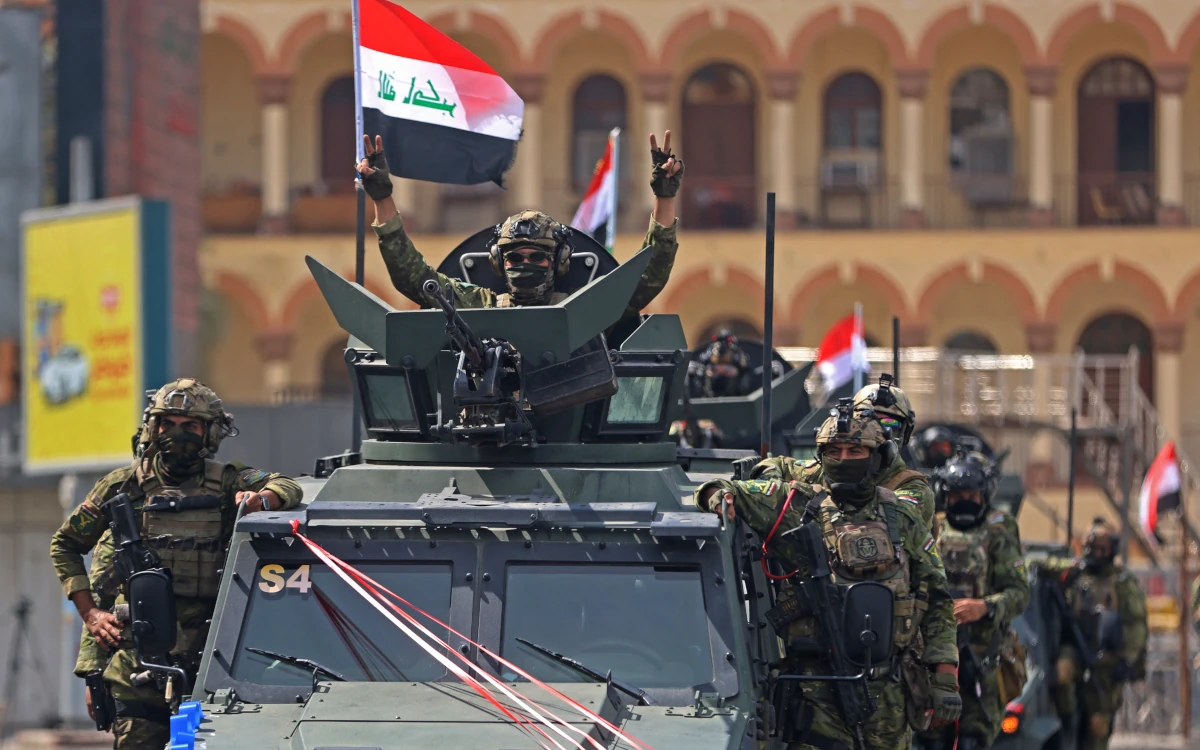
Whether the Iraqi Security Forces (ISF) can contain extremist threats remains an open question. The United Nations and other observers assess that the Islamic State of Iraq and al-Sham (ISIS) is weaker than at any time over the last dozen years. Yet it still has sleeper cells in Iraq and neighboring countries, especially Syria. The Pentagon insists that it will continue providing training and intelligence to Iraqi partners from the U.S. Central Command regional hub in Jordan. These partners include the Kurdish Peshmerga militia and the federal Counter-Terrorism Service, a 14,000-strong force directly subordinate to the Iraqi prime minister. But this is the first time in more than a decade that the ISF has operated outside a supporting coalition framework. Its performance will offer an early measure of whether U.S. influence in Iraq can rest on local partners.
Meanwhile, the Trump administration has deemphasized a longstanding U.S. priority: maintaining a strong, semi-autonomous partner in the Kurdistan Region of Iraq (KRI). When U.S. forces left Erbil, they removed their air and missile defense assets from the KRI, which has suffered hundreds of drone strikes this year. As Washington did with Syria’s Kurds, the United States may press the Kurdistan Regional Government to accept a gradual erosion of autonomy and integrate into federal political structures. Many Iraqi political leaders outside the KRI would welcome the opportunity to reduce the region’s autonomy. They fault the American occupation for imposing a constitution that enshrined sectarian divisions and granted the KRI excessive independence. It also remains unclear how extensively the Iraqi central government will defend the KRI from Iran and Turkey, whose governments both have reasons to rein in the region’s Kurds. Washington still envisages the Kurds as an important security partner, but many in the KRI likely recall the proverb that “the Kurds have no friends but the mountains.”
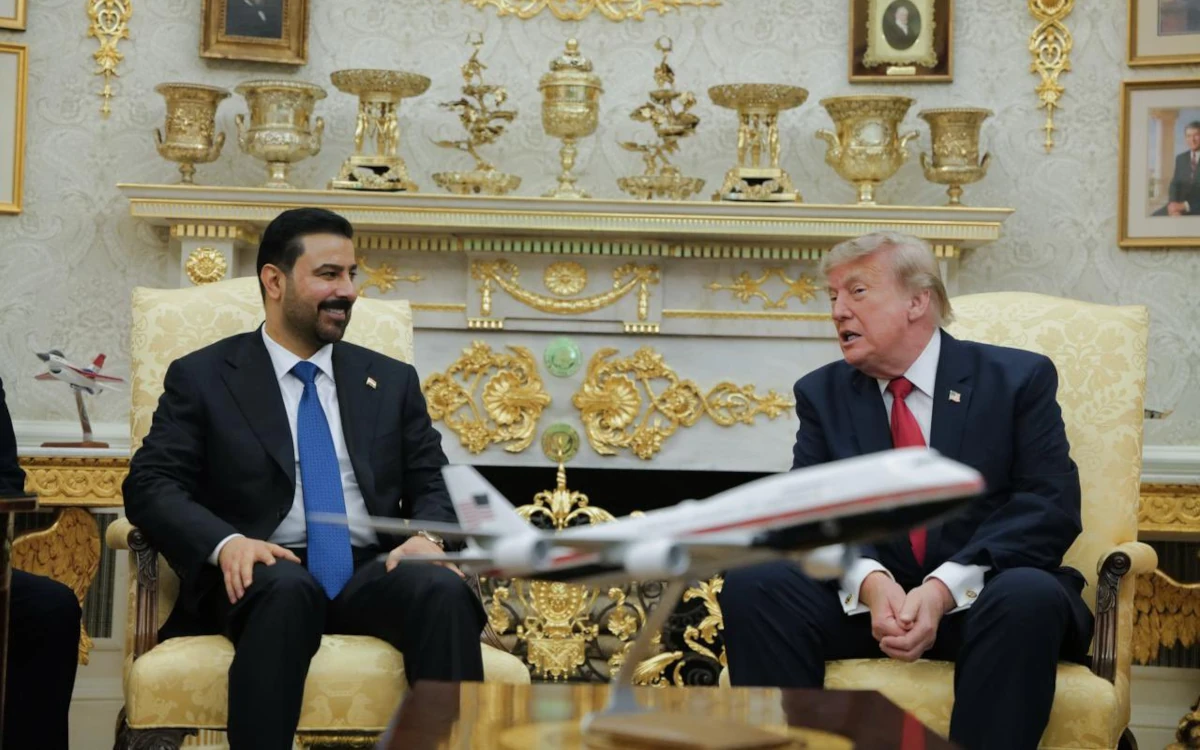
Trump sees Prime Minister Ali al-Zaidi as his candidate, but this is only partly accurate. Trump’s political intervention helped defeat Zaidi’s rivals, but Shiite political factions would not have selected Zaidi if he were not acceptable to all key stakeholders. Since assuming office in May, Zaidi has cultivated U.S. political and corporate leaders. Much of official Washington regards Zaidi the same way it views the Trump-endorsed leader of Syria, Ahmed al-Sharaa: preferable to the alternatives but with uncertain ability to deliver.
Demilitarization Deferred
This ambivalence may explain why Washington appears prepared to give Zaidi more time to bring Iraq’s Iranian-aligned militias under state control. September 30 was supposed to be a double deadline, but Baghdad postponed the timeline for demilitarizing the Popular Mobilization Forces (PMF) to June 2027. U.S. officials expect the Iraqi government to control the PMF through coercive measures and positive inducements, such as offering militia leaders senior positions in the ISF and government. They add that the U.S. military withdrawal has removed a justification for the militias retaining their weapons. Yet, there is widespread skepticism, in the United States and elsewhere, that many militants will fully disarm anytime soon. From Washington’s perspective, the main problem has become that Iranian-affiliated groups regularly attack U.S. forces and allied targets in other countries. Although demilitarization would resolve this challenge more completely, suspending these attacks would at least address the immediate threat.
From Washington’s perspective, the main problem has become that Iranian-affiliated groups regularly attack U.S. forces and allied targets in other countries. Although demilitarization would resolve this challenge more completely, suspending these attacks would at least address the immediate threat
The Trump administration aims to tackle this problem in several ways. In the long term, the administration expects to settle the war on terms that require Tehran to rein in its regional proxies. If the United States defeats Iran, or if Tehran chooses to reconcile with its Arab neighbors, then the threat from these groups, including those in Iraq, should diminish. In the near term, it expects that threats of sanctions, limited kinetic force, and economic inducements can persuade the Iraqi government and many militia leaders to curb their external attacks. Given the unlikelihood of achieving genuine disarmament, Washington may settle for behavioral containment in which the militias cease attacking U.S. forces and partners.
The Limits of Financial Leverage
The militia issue underscores the complexity of calculating the precise balance of influence between Tehran and Washington in Iraq, since they possess different assets. Iran leverages geographic proximity, sectarian affiliations, and elite connections. Conversely, U.S. strengths lie in conventional military might, counterterrorism capabilities, and global economic power.
The current administration sees economic power as its primary tool. Its strategy therefore depends on how well these tools can deter, reassure, and respond to crises in place of U.S. troops. The goal, publicly welcomed by the Iraqi government, is increased U.S. investment, first to revitalize oil production, then to diversify exports. Iraqi officials hope greater U.S. private-sector engagement will strengthen the economy, reduce dependence on Iran for critical imports, and help shield Iraqis from further U.S. sanctions. During his U.S. visits, Zaidi oversaw dozens of deals with U.S. corporations, worth billions of dollars if executed. Baghdad is eager to boost oil exports because they provide some 90 percent of the government’s revenue and an even greater share of total export earnings.
Due to the legacy of the U.S. invasion, the Federal Reserve Bank of New York manages most of these earnings, now totaling around $84 billion. Iraqis also depend on the U.S. financial system and regular deliveries of U.S. dollars. The Trump administration has delayed several of these shipments to pressure Baghdad to end certain transactions with Iranian entities. More recently, U.S. sanctions on Iranian airlines led Iraqi authorities to suspend flights to and from Iran at Baghdad and three other airports. Another source of U.S. influence is the ISF’s need for parts and other support to maintain its large stockpile of advanced U.S.-provided weapons.
These instruments give Washington considerable leverage over Baghdad, but they map poorly onto the functions that U.S. troops performed. Dollar controls and sanctions can deter the Iraqi government from dealing with Iranian entities, as the flight suspensions showed. They offer far less leverage over militias that answer to Tehran rather than to Baghdad. Investment deals also cannot replace the air and missile defenses that once reassured the Kurds. Crisis response is the starkest gap. Sanctions and delayed dollar shipments work over months, whereas a militia offensive or an ISIS resurgence would require a response within days.
Dollar controls and sanctions offer far less leverage over militias that answer to Tehran rather than to Baghdad. Investment deals also cannot replace the air and missile defenses that once reassured the Kurds
Moreover, whether U.S. financial and commercial leverage can compensate for the reduced military presence depends on Iraqis making their business climate more attractive to international investors. This requires maintaining sufficient security to protect foreign investors and addressing longstanding concerns about corruption, public-sector bloat, and an inefficient banking sector. Even if Baghdad meets these conditions, economic leverage is unlikely to substitute for the departing U.S. military footprint.
Scenarios
Most likely, the Iraqi government will muddle through notwithstanding the reduced U.S. role, maintaining an uneasy sectarian equilibrium at home and a precarious balance between Tehran and Washington. But more stressful scenarios are conceivable tests of whether a reduced U.S. footprint can still protect American interests in Iraq.
Renewed Civil Strife
If fighting breaks out over disarmament, the Islamic Revolutionary Guard Corps (IRGC), having suffered proxy setbacks in Gaza and Lebanon, would see defending its Iraqi partners as imperative. Beyond security, the IRGC holds substantial economic assets in Iraq and wants to expand them. It could send more fighters into Iraq and launch demonstration drone and missile strikes against members of the Gulf Cooperation Council (GCC) to deter their intervention.
In response, the Gulf monarchies would probably appeal for U.S. military assistance. Washington would most likely employ air and naval forces to defend its GCC partners. Sending a major ground force back to Iraq to fight the Iranians directly would prove more challenging. It could take weeks or even months to assemble a suitable force, and Iranian projectiles could inflict many casualties during the resulting conflict. A future U.S. president may well decide the projected costs of preventing Iranian military control would prove excessive.
Syrian Spillover
Iraq’s security is inextricably tied to that of Syria. A decade ago, the Syrian civil war created a permissive environment that spurred ISIS’ rapid growth in both countries. Although border security has strengthened, instability in one country could easily spill over into the other. The U.S. troop withdrawals from both states have further intertwined their security, since Washington now wants both governments to assume primary responsibility for national security.
In both cases, the administration has prioritized counterterrorism, commercial opportunities, and the cultivation of a strong central government friendly to Washington. To advance these narrower goals, U.S. officials have offered inducements such as sanctions relief, security cooperation, and especially business deals. Arab governments and Turkey have supported this approach, but terrorist groups maintain cells and supporters in both countries who await opportunities to seize territory again. A renewed terrorist offensive would test whether Washington can still intervene effectively from over the horizon. Drones and special forces operating from remote bases could strike select targets, seize terrorist assets, and provide limited military support to regional partners, but could not hold territory. Should terrorist groups overwhelm local government forces, the United States may have to rely on regional partners, such as Turkey or Israel, to restore security, or return in strength itself.
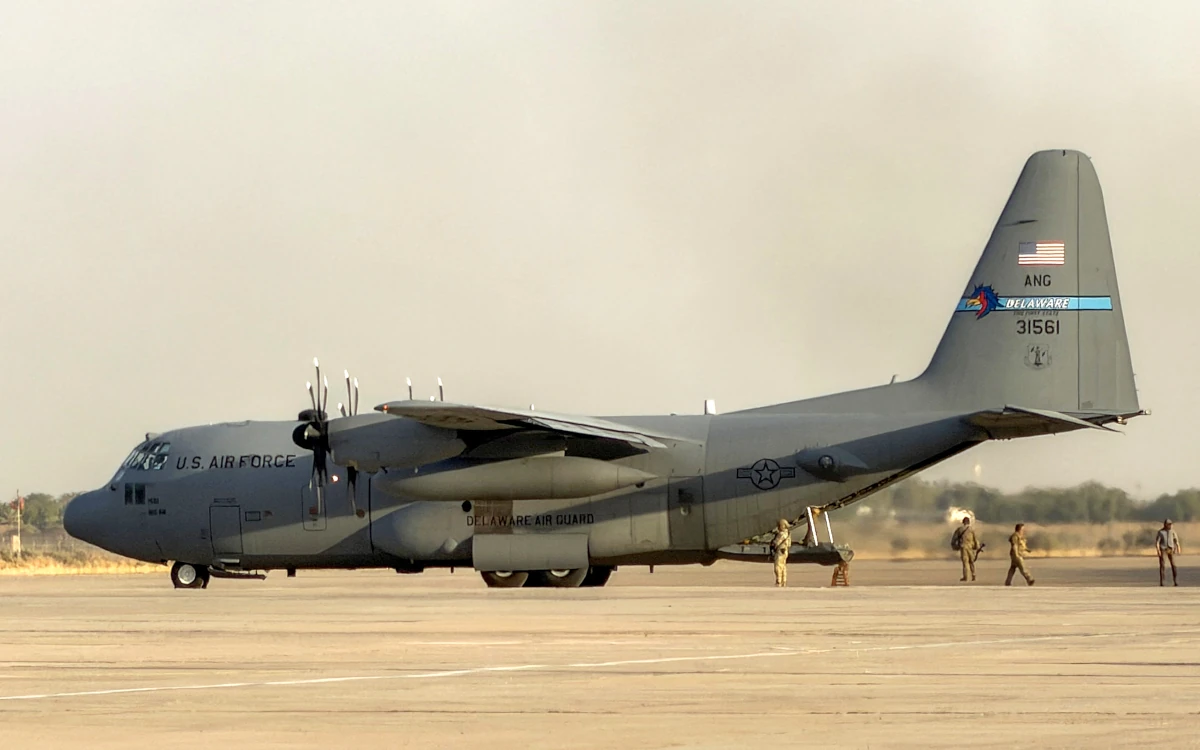
Back Beyond the Horizon
Washington agreed to withdraw militarily from Iraq years before the current war with Tehran. Even so, the departure may become part of a larger reassessment of the U.S. postwar regional force posture. The recent confrontation has highlighted the vulnerability of U.S. bases to Iran’s drones, missiles, and proxy attacks. Pentagon planners and other policymakers may choose a more defensible deployment. If so, Iraq could serve as an important test case for what a reduced and redistributed U.S. military presence in the region means in practice.
Returning to the over-the-horizon stance of the pre-1990s would entail a more distributed force posture. Any bases in Iraq, Syria, and the GCC states would be small or temporary facilities. The main U.S. forces would be stationed in Jordan, Israel, western Saudi Arabia, the Horn of Africa, Turkey, and elsewhere in Europe, and the U.S. homeland. The Pentagon would rely primarily on drones and special forces against limited targets. For larger or more sustained operations, the United States would play essentially a supporting role for local partners. In Iraq, these would be non-PMF ISF units and the Peshmerga in the KRI.
Such a withdrawal would align with both an America First strategy and a progressive national security approach that likewise seeks less global activism. Beyond military feasibility, alliance management would matter most. Washington’s GCC partners might welcome this smaller U.S. military footprint as reducing the likelihood of further Iranian strikes against the U.S. bases they host. Alternatively, they might see it as the latest U.S. retreat after earlier departures from Afghanistan, Central Asia, and Syria. The latter view could lead them to seek accommodation with Tehran or pursue alternative security partners and structures. These could include the Mecca Pact, the defense pact Saudi Arabia, Turkey, and Pakistan signed in August, or national nuclear weapons programs. Advocates of a U.S. foreign policy of restraint might even welcome that outcome.
The Real Test Ahead
Washington’s wager in Iraq is that financial leverage, local partners, and remote firepower can sustain American influence at lower cost and risk than a permanent troop presence. In calm conditions, that bet may hold. Baghdad can probably balance between Tehran and Washington, with dollars and deals underpinning Iraqi-U.S. ties.
The decisive test will come if a crisis strikes. Sanctions and investment can shape choices, but they cannot directly deter Iran-backed militias, safeguard the Kurds, or reverse another ISIS surge. Those tasks would fall to over-the-horizon forces and regional partners whose reach and reliability remain uncertain. In this case, Iraq would illuminate whether Washington is redesigning its military power in the Middle East or simply reducing it.
The decisive test will come if a crisis strikes. Sanctions and investment can shape choices, but they cannot directly deter Iran-backed militias, safeguard the Kurds, or reverse another ISIS surge. Those tasks would fall to over-the-horizon forces and regional partners whose reach and reliability remain uncertain