
The 2026 World Cup will bring the global game to three North American hosts: the United States, Canada, and Mexico. But in the United States, it will arrive at a moment when the very meaning of hosting has become highly contested. In the background, another kind of infrastructure is being prepared: the immigration and security apparatus that will determine who enters the United States and who does not.
Teams from 48 nations will play 104 matches in 16 cities across the United States, Canada, and Mexico between June 11 and July 19, chasing the 18-carat gold trophy of the Fédération Internationale de Football Association—FIFA—and a record $50 million in prize money.
The timing is significant, and for more than one reason. The final match to crown a world champion will fall barely two weeks after America officially celebrates its 250th birthday and the values championed by its Constitution. Equally portentous, the championship will be decided at MetLife Stadium, just across the river from New York and roughly nine miles from Delaney Hall, the largest immigration jail on the East Coast. There, Immigration and Customs Enforcement (ICE) holds as many as 900 people swept up in raids—many of them for allegedly entering the country illegally from many of the nations now competing for the Cup.
Indeed, fans, players, soccer officials, and dignitaries will gather for the games in a country that no longer promises to take “your tired, your poor, your huddled masses yearning to breathe free.” These words, penned by the poet Emma Lazarus, are fixed at the foot of the Statue of Liberty, which stands just five miles as the crow flies from the ICE detention center. Between January 20, 2025, and March 10, 2026, data examined by Human Rights Watch shows ICE agents have arrested some 167,000 people accused of being in the country illegally in the 11 American host cities alone. That number will surely be higher by the time the Cup starts.
Indeed, fans, players, soccer officials, and dignitaries will gather for the games in a country that no longer promises to take “your tired, your poor, your huddled masses yearning to breathe free.”
What unfolds over the next 40 days will not only be games and competition. By staging its tournament in an America that lays its welcome mat behind an armed checkpoint, FIFA has put at risk the very organizational integrity it claims: a federation built on unity and fair play. The tournament did not pose the question of what kind of America was chosen to co-host the games; it merely scheduled the spectacle for prime time and put it in front of a billion-strong audience.
A Host Hostile to Immigrants
The United States will stage a sports extravaganza while lubricating the most aggressive domestic immigration enforcement machine in its modern history. The two displays of muscle and might will not run on separate tracks. They will no doubt collide in the host cities, in full view of an audience of billions.
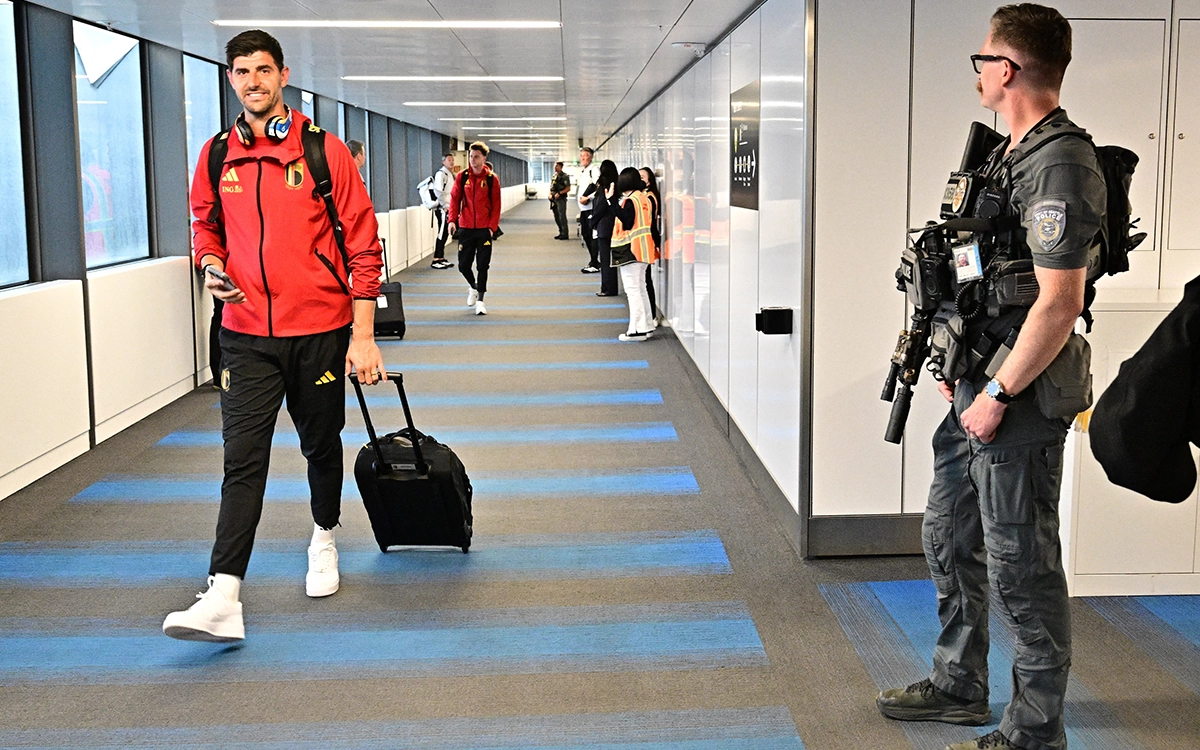
For the better part of two years, the question hanging over the 2026 World Cup has been whether a country that has militarized its borders, detention institutions, and immigration process could credibly act as a gracious host. The tournament was always going to be a showcase. The only question was what kind—a hoped-for break from the story of America as a security state, or a continuation of President Donald Trump’s aggressive immigration enforcement.
The mechanics are staggering by design. Gianni Infantino, FIFA’s president, likes to describe the scale of the Cup as “three Super Bowls a day” for a month. He promises an economic windfall in the tens of billions with more than ten million people in motion. The United States hopes the 2026 matches will be a sequel to 1994, when the World Cup last came to the United States and left behind a country newly persuaded that it belonged in the global game. Trump intends for the 2026 Cup to symbolize what he calls the Golden Age—a soft power spectacle rendered in stadium lights, proof that America remains the indispensable host.
Trump intends for the 2026 Cup to symbolize what he calls the Golden Age—a soft power spectacle rendered in stadium lights, proof that America remains the indispensable host
Front Row Seat: $32,970
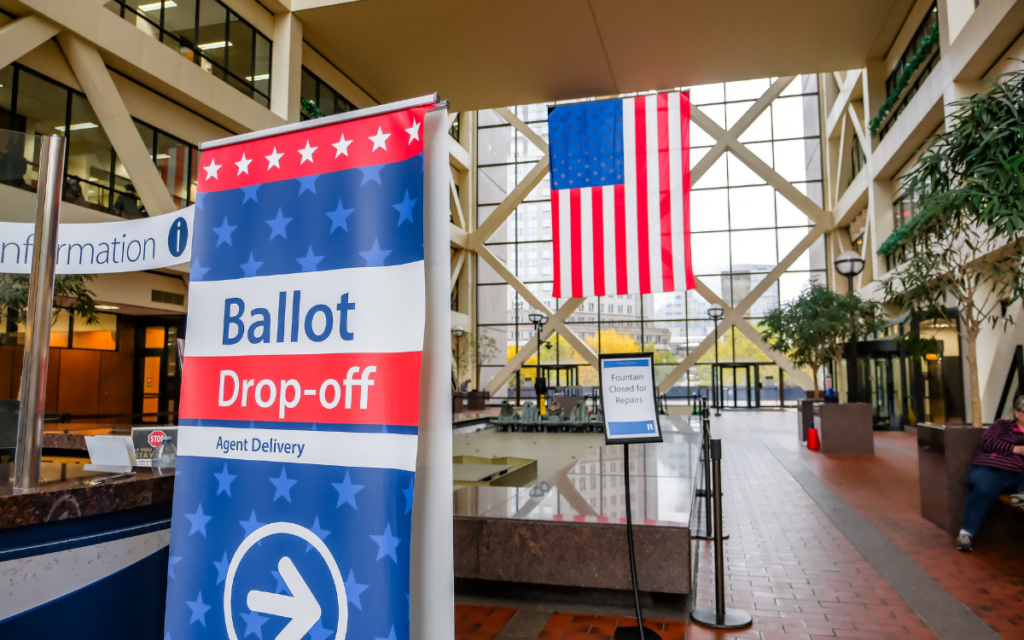
But contradictions flourish. The first one is at the gate. A proclamation issued in June 2025 restricted entry into the United States for the games for 19 countries; by December 16, it had grown to 39. Haiti, which hasn’t qualified to play in the Cup for 52 years, faces full restrictions, which means that Haitians without a valid visa can’t attend the games, even if they could afford tickets that mostly range from $60 to $10,990. A front-row seat at the final sold this month for $32,970.
Iran faces full restrictions; Côte d’Ivoire and Senegal face partial ones. The fine print exempts athletes and their staff. Thus, the players will arrive, but the ordinary fan traveling on a B-2 tourist visa from a barred nation will not. The government has also issued warnings against Colombia and even co-host Mexico because of the administration’s confrontation with Venezuela.
The soft-power paradox is now literal. A tournament sold as a global gathering will be played in stadiums that exclude fans from nations that qualified to play. The team arrives; the country it represents stays home. FIFA’s marketing speaks of unity; the State Department’s cable traffic speaks of exclusion. Both are operating at full volume, at the same time, in the same country.
The soft-power paradox is now literal. A tournament sold as a global gathering will be played in stadiums that exclude fans from nations that qualified to play
The Host that Won’t Pause
If the visa decides who reaches the gate, the agents inside the perimeter decide what greets those who make it through. Department of Homeland Security (DHS) Secretary Markwayne Mullin has cast the tournament not as a reprieve from immigration enforcement but as a saturation deployment. He declared in an ICE video on social media that “ICE and HSI (Homeland Security Investigations) will be out there every day.” The deployment ostensibly seeks to combat counterfeit tickets, human trafficking, and drug smuggling. As he put it, the agency is “not there to go round up mass individuals” but is “always looking for the worst of the worst.”
The hedge is thinner than it sounds. DHS plans no mass operations inside the stadiums, but immigration law will not be suspended for the run of the tournament. Moreover, officials told various news outlets that ICE personnel have not been barred from making arrests at the matches themselves.
Congress has been unable to close that gap. The Save the World Cup Act, introduced on March 19 by Rep. Nellie Pou of New Jersey and three Democratic colleagues, sought to prohibit enforcement. It would bar the Departments of Homeland Security and Justice from spending federal funds on civil immigration enforcement within one mile of any World Cup match or fan festival, absent exigent circumstances. It was referred to the House Judiciary Committee but has gone nowhere. With the federal shield stalled, Mullin’s “every day” becomes the operative policy when play begins June 11. Mullin also received some good news on the funding front. The Senate just passed a bill providing an additional $70 billion for immigration enforcement, sending it to a reliably compliant House for expected approval just days before kickoff.
Another contradiction is in the streets near the stadiums. Ten of eleven cities are run by Democratic mayors, six of ten states by Democratic governors. For two years, ICE has run its bare-knuckled deportation operations in the face of resistance from city and state governments. This raises the likelihood that ICE enforcement during the Cup could spill over into a highly publicized political showdown for the world to see.
This raises the likelihood that ICE enforcement during the Cup could spill over into a highly publicized political showdown for the world to see
Chicago Adopts “Ice-Free” Zones
Newark is the clearest example, only nine miles from where the trophy will be lifted. Mayor Ras Baraka, a Democrat, sued the GEO Group—the private prison operator for the Delaney jail—almost the moment its contract was announced. Democratic Governor Mikie Sherrill’s health inspectors have been turned away from the building’s doors. In another host city, Chicago, Mayor Brandon Johnson—also a Democrat—signed orders carving out “ICE-free zones” on municipal property while federal agents ran Operation Midway Blitz through the neighborhoods. The pattern repeats from Seattle to Boston: mayors and governors negotiating with their own federal government over the terms of hospitality just weeks before they are asked to welcome the world.
Just last week, fighting erupted between protestors and GEO Group employees in front of Newark’s Delaney Hall. The center is one of the largest of its kind and has become a magnet for opponents of the Trump administration‘s immigration crackdown. Press reports said scrums of people punched and tackled each other while nearby state and local police—in contrast to earlier altercations—looked the other way until after the fighting ended. Also, unlike prior melees, reporters noted that the fisticuffs occurred in broad daylight instead of at night, and protesters were pepper-sprayed by ICE enforcement officers.
Security Climate Contradicts Mission
Some of the cost is measurable in empty seats. Immigration attorneys warn that the political climate itself will deter people, regardless of who is technically eligible. The National Immigration Forum notes that the visa freeze, paired with new social media screening, could keep travelers from affected countries away even though spectators are formally exempt. Amnesty International and allied groups went even further, issuing a “World Cup Travel Advisory” warning potential visitors about conditions in the United States.
Demand data trackers reinforce the warning. Nearly 80 percent of hotels across the host cities report bookings are running below forecast, citing visa difficulties and steep prices. Cities have begun trimming their projections, too. Visit Seattle, a tourism promotion organization, trimmed its World Cup revenue estimate for the city by about $100 million. Tracking organizations report that U.S. international arrivals have already fallen by 6.3 percent in 2025, a decline that researchers partially attribute to perceptions of the administration’s policies. While pricing accounts for much of the shortfall, the enforcement posture certainly has an effect. In any case, it runs counter to the event’s founding premise of good will and unity among fractured nations.
The enforcement posture certainly has an effect. In any case, it runs counter to the event’s founding premise of good will and unity among fractured nations
The deeper cost won’t show up in any attendance figures. Haiti’s grasp of a World Cup spot for the first time in more than half a century is a team that could not safely train in its own country. Yet its flag will fly over American grass while its people are turned away at American consulates. Many fans who could legally come won’t risk it. The immigrant communities in host cities will watch the matches on their own televisions rather than walk into a plaza ringed by federal agents. None of these registers in a box office tally. The empty seat is the policy’s truest measure, and it photographs poorly.
The Carve-Out That Wasn’t
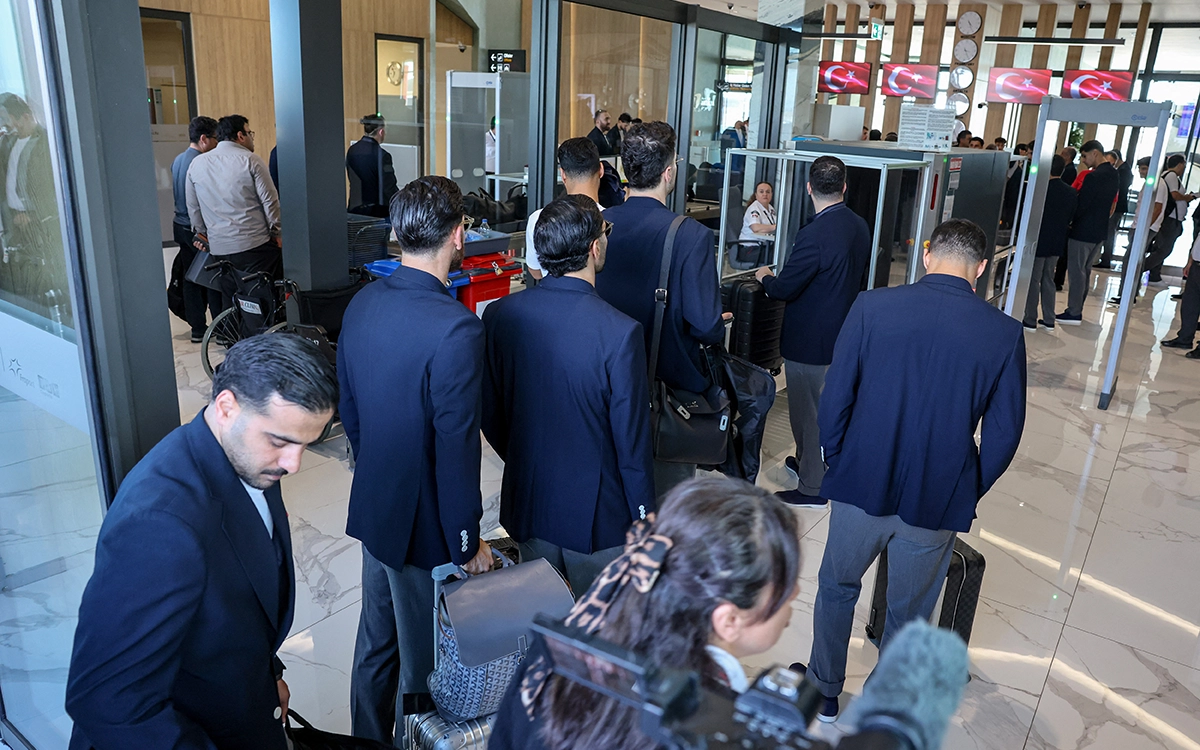
The fine print always promised that the participants, at least, would get through. The proclamation carved out an exemption for “any athlete or member of an athletic team, including coaches, persons performing a necessary support role.” FIFA repeated assurances for two years that team officials and accredited personnel would be waved past the wall. The carve-out was the administration’s proof that enforcement and hospitality could share a calendar—that the machinery built for the undocumented could be switched off for the credentialed when the cameras arrived.
That proof is not holding. As the squads began landing in late spring, the same apparatus turned on the very people the exemption was written to protect. Iraq, back in the tournament for the first time since 1986, flew into Chicago to a welcome it did not expect. Aymen Hussein, the striker whose goal against Bolivia ended a 40-year wait and carried his country to the finals, was held for nearly seven hours at O’Hare Airport and had his phone searched before officers released him to his teammates. No official reason was given; some news accounts reported an identity mix-up. Talal Salah, the team’s photographer, fared worse. He was detained more than ten hours, subjected to the same phone search, and then denied entry outright. Iraq will document its World Cup appearance without its own photographer.
Although they are not on teams, dozens of accredited journalists from Iran and various African countries have been denied entry visas by U.S. authorities. The International Press Association, a journalistic trade group, issued an official letter to FIFA condemning widespread visa blockages as an unacceptable violation of the global principles of press freedom.
United States Challenges Referee’s Visa Status
World Cup officials are not exempt from suspicion either. Days before kickoff, Omar Artan, an award-winning soccer referee and the first Somali ever selected to referee a World Cup—flew into Miami holding a valid U.S. visa. He was turned back to Istanbul. Somalia sits on the travel-ban list; the exemption for match officials apparently did not reach the man meant to stand at the center of the field. FIFA named fifty-two referees for the tournament. One of them was sent home before he could blow a whistle.
The pattern reaches the delegations themselves. South Africa, drawn to open the tournament against co-host Mexico, nearly missed its own training camp when the U.S. consulate in Johannesburg denied visas—without explanation—to the assistant coach and the team’s head of security. An administrative tangle grounded the wider squad for a frantic 24 hours. The visas came through in the end, and South Africa’s own football association shouldered part of the blame for the chaos. But a country forced to convene an emergency meeting to get its bench into the host nation is not a country being welcomed. And Iran, the most freighted case of all, watched its federation boycott December’s World Cup draw in Washington after U.S. authorities denied visas to its officials. The team itself was cleared only at the last minute and shifted its training base from Arizona to Mexico.
Taken one at a time, each episode is explicable—an identity mix-up, an administrative bungle, a consular backlog, a security precaution. Taken together, they describe precisely what the carve-out was supposed to prevent: a host that runs the World Cup through a politicized security checkpoint rather than a celebration of unity and sport.
The Iran Knot
The cost lands on two reputations at once. America, which sold the Cup as proof that it remains the indispensable global host, instead furnishes the evidence that it now screens the world before admitting its players, photographers, referees, and benches. FIFA President Infantino built the show on the premise that the game dissolves borders. The borders are answering back.
FIFA President Infantino built the show on the premise that the game dissolves borders. The borders are answering back
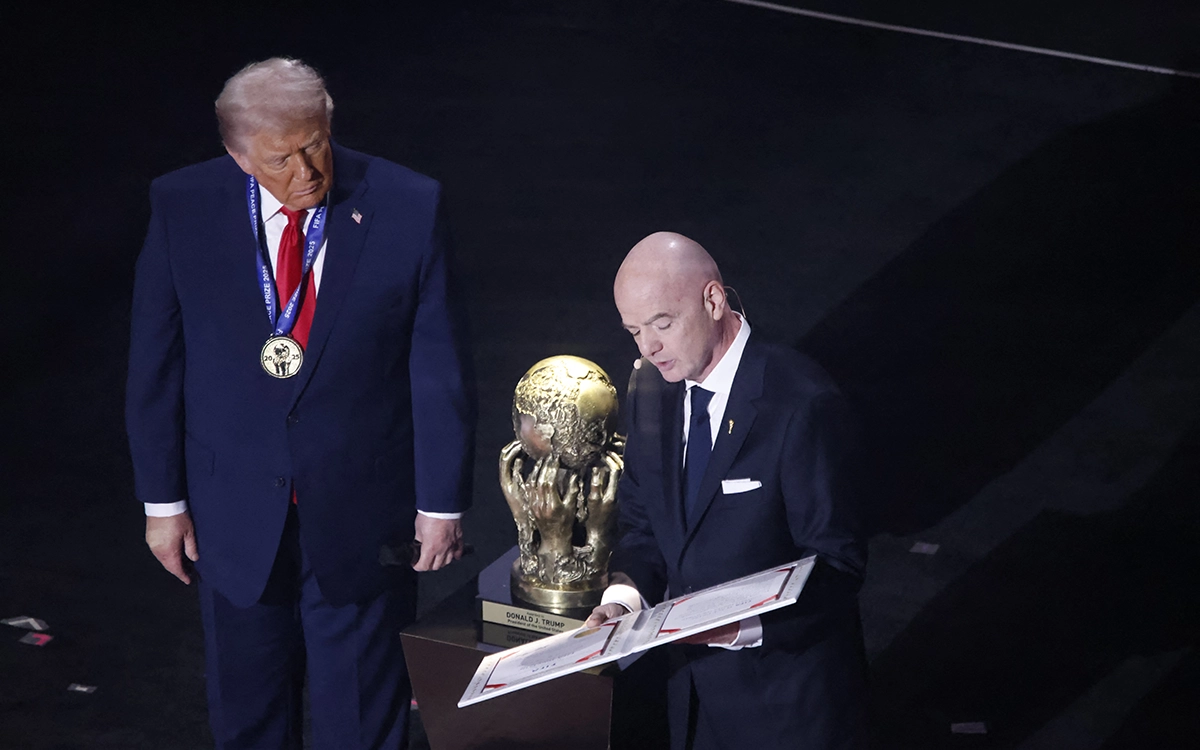
The most ironic image the games create can be claimed by Iran. Earlier this cycle, President Trump accepted FIFA’s inaugural “Peace Prize.” Then he joined Israel in launching an attack on Iran. Now Iran’s national team is scheduled to play on American soil under heightened security due to current world events. Iran is a guest at a festival hosted by a country that bombed it, whose wartime coalition assassinated its leader.
Infantino sold the World Cup 2026 as a celebration of global unity. Yet it will be staged by a co-host at war with one of its own competitors, behind a perimeter built on its own anxieties. America wanted the world to watch. The world will. The question is what it will see.