
The Constitution is clear: Congress declares war. Period. That is the way the Founding Fathers wrote it. They set the line in the nation’s founding document. On Friday, a sixty-day War Powers clock ran out of time on Operation Epic Fury. The war had been declared over on paper. The ships, aircraft, personnel, and threat framework remained. Washington did not cross the line drawn by the Founders. It wrote around it.
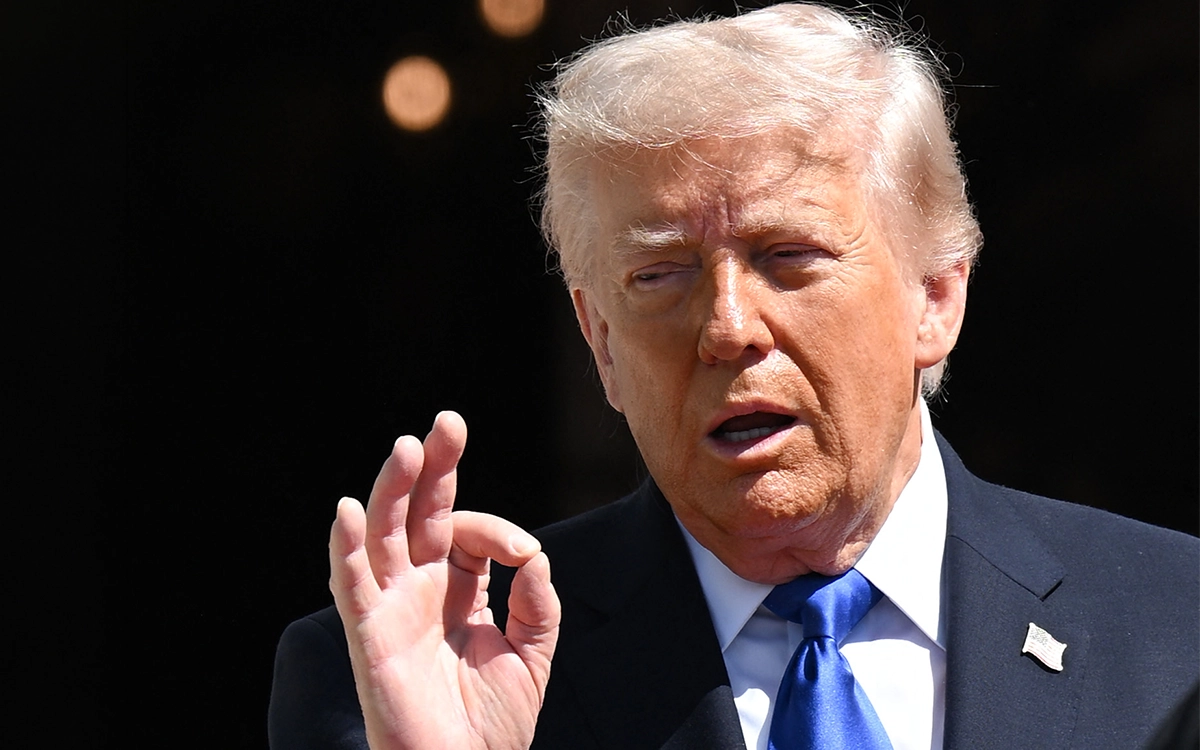
As the clock ticked toward the deadline set by the War Powers Resolution of 1973, President Donald Trump hatched a plan: He would send a letter to the congressional leadership arguing that the hostilities with Iran had effectively ended. A ceasefire was in place. The intense phase of the air campaign had ended. By the administration’s account, the sixty-day clock had already stopped running and the executive’s legal obligations no longer applied. At the same time, the letter said the Iranian threat remained significant, that U.S. forces would continue repositioning, and that the president retained every authority he would need to resume fighting on short notice.
The audacious nature of the letter was vintage Trump: ending a war on paper without ending it in fact. It is how this president rationalizes keeping ships, aircraft, and tens of thousands of personnel in theater while telling Congress that the law requiring him to seek their authorization no longer applies. It is, in effect, a legal off-ramp built by the president for the president. Congress, given repeated chances to challenge it, declined.
The audacious nature of the letter was vintage Trump: ending a war on paper without ending it in fact. It is how this president rationalizes keeping ships, aircraft, and tens of thousands of personnel in theater
That is the precedent set on May 1, 2026. Congress did not just fail to vote; it was offered a way to avoid voting and took it.
How the Off-Ramp Works
The War Powers Resolution, passed in 1973 over Richard Nixon’s veto, was designed to make presidential war-making harder, not easier. Its central provision is straightforward: Once a president notifies Congress that he has sent American forces into hostilities, he has sixty days to obtain authorization. Absent such a vote, he must begin withdrawing forces.
The statute does not define “hostilities” with the precision its drafters might have wished. That ambiguity has become the principal lever every modern administration has used to avoid the law’s grip. President Barack Obama’s lawyers argued that bombing Libya for months did not constitute hostilities because no American troops were taking direct fire. In his first term, Trump’s lawyers said much the same thing about strikes in Syria. But the current letter takes the argument one step further. It does not claim Epic Fury was never a war. It concedes that it was, then declares it has ended—on the executive’s timetable, by the executive’s definition, with the executive’s caveats attached.
Read carefully—the letter does three things at once. First, it asserts that hostilities have ended, which, under the administration’s reading, stops the sixty-day clock. Under this reading, the resolution does not require withdrawal because the “hostilities” have ended.
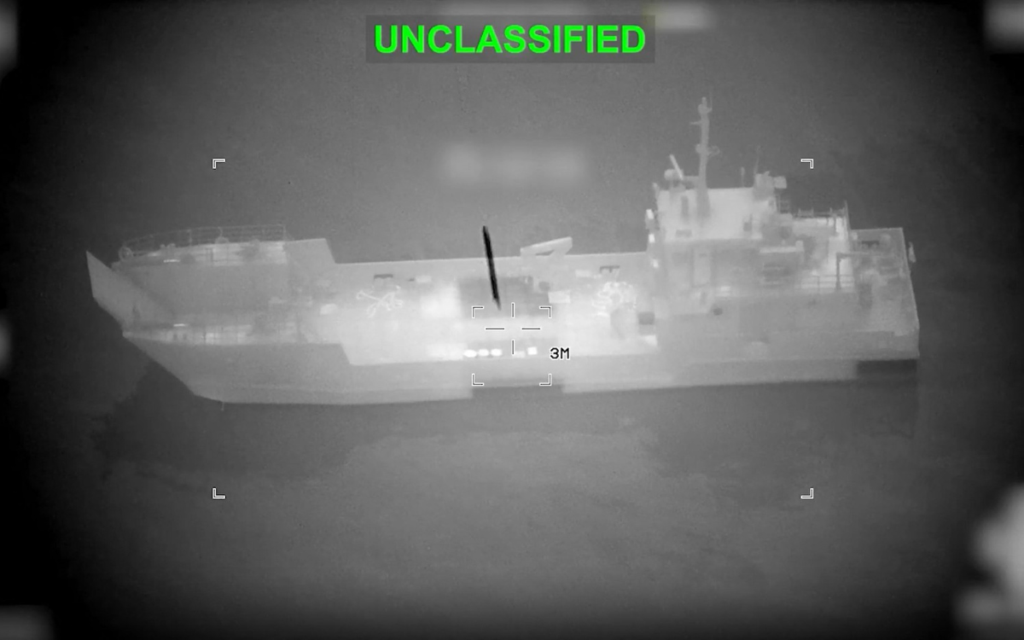
Second, it preserves the military posture. The letter explicitly argues that the Iranian threat endures, that the repositioning of forces continues, and that defensive and deterrent operations remain in effect. Nothing America is doing in the Arabian Gulf or the Strait of Hormuz has changed. Carrier groups stay. Air wings stay. The blockade that has tightened around Iranian shipping remains. Only the legal label changes.
Third, it preserves the option to resume the fighting. The threat framework the letter describes is the same threat framework that justified Epic Fury in the first place. If the administration determines next week—or next month for that matter—that Iranian behavior warrants renewed strikes, the rationale is already neatly in place. The clock would presumably restart. The administration would file a new notification, sixty more days would begin to run, and the cycle would continue.
The shrewdness of the maneuver is that it requires nothing of Congress. No vote. No authorization. No confrontation. The president declares the war over on his terms. Congress is not asked to consent or to object. The administration almost invites lawmakers to look the other way once again.
The shrewdness of the maneuver is that it requires nothing of Congress. No vote. No authorization. No confrontation. The president declares the war over on his terms
A Vote Avoided, Power Squandered
The Constitution does not give Congress the power to authorize war. Article 1, Section 8, Clause 11 gives the legislature the duty of declaring it. There is no permissive language. It unambiguously places the power to declare war squarely in the hands of legislators elected by the people.
The Trump administration had neither sought congressional authorization nor submitted a supplemental appropriation for a war that has already cost an estimated $25 billion and is still expected to rise further.
Operation Epic Fury began on February 28 with a Truth Social post and a wave of punishing air strikes against Iran’s nuclear facilities, missile production sites, and senior regime leadership. Iran’s Supreme Leader Ayatollah Ali Khamenei was killed in the attacks. The administration filed its formal War Powers notification on March 2. Sixty days from that notification was May 1.
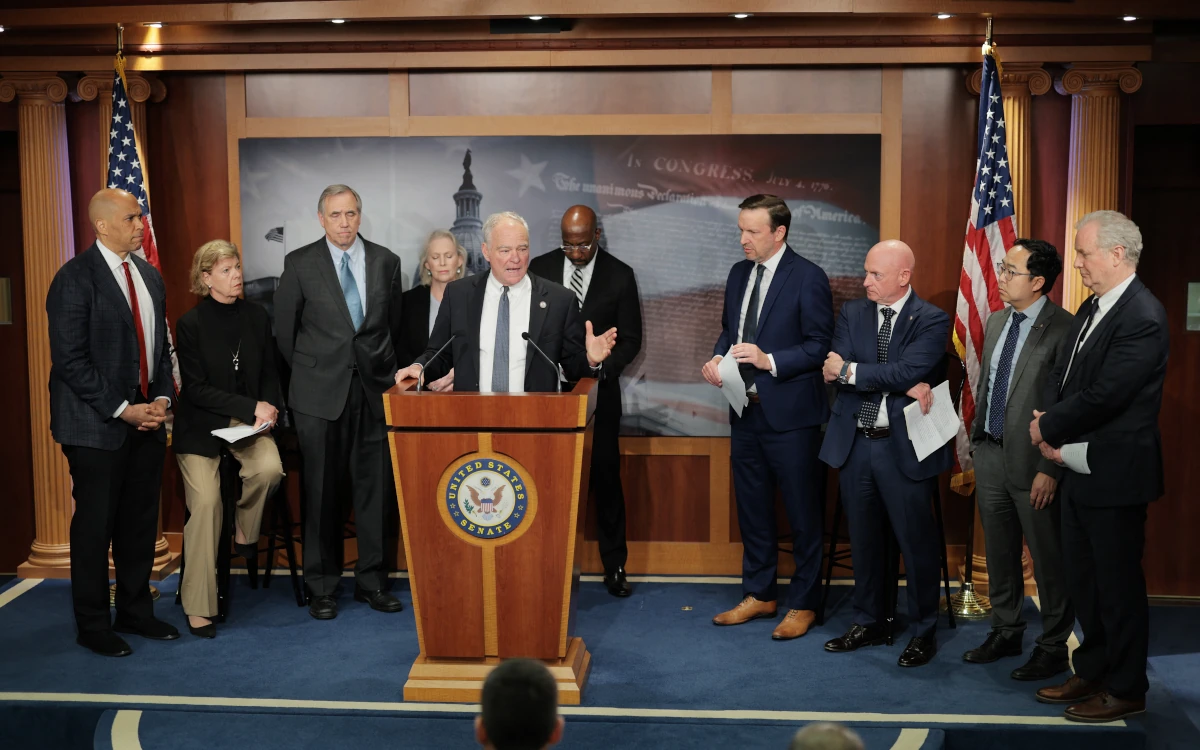
Some lawmakers did exactly what the law envisioned. Senator Tim Kaine, a Virginia Democrat, and Senator Tammy Duckworth, a Democrat from Illinois, forced numerous war powers votes in two months. House Democrats drafted a parallel resolution. A group of Democrats with a few GOP outliers prepared a lawsuit like those filed in every conflict since Vietnam. The measures constitute a real exercise of congressional prerogatives, and the lawmakers behind them deserve credit for shouldering the burden their job requires. But the legislators who wrote the 1973 resolution intended it to be enforced by Congress, not a faction within it. A vote that fails is a position taken, not a power asserted. Congress speaks authoritatively through a majority vote, and the Republican majority refused to act.
On March 4, the Senate rejected a war powers resolution introduced by Senator Kaine and Kentucky Senator Rand Paul by a vote of 47-53. Paul was the only Republican in favor of the resolution. Pennsylvania Senator John Fetterman was the only Democrat against. A bipartisan resolution introduced by Rep. Thomas Massie, Kentucky Republican, and Rep. Ro Khanna, a California Democrat, failed in the House by seven votes, with four Democrats opposing it. Subsequent resolutions met the same fate. Roughly six votes in the Senate. At least two in the House. Eight chances to assert the constitutional prerogative. Eight chances declined.
White House Letter Solves Problems for Both Sides
Senator Lisa Murkowski typifies the nuanced positions that many lawmakers take when faced with war votes. She has drafted an Authorization for Use of Military Force (AUMF) that would, in her words, prevent President Trump from “going in with ground troops aiming for a full takeover.” She says she will introduce it once Congress returns from its recess on May 11. The proposal has merit on paper, but the Alaska Republican’s voting record undercuts it. She had earlier voted against a measure that would have denied the administration funds to continue the war. She reasoned that Trump should have sought Congress’s approval, but one had to consider the “hard reality” that Trump committed troops to take on an enemy that had targeted and killed Americans for decades. Her half-measure is not the exception; it is the rule.
Senator Chris Murphy, a Democrat from Connecticut, described the cycle of failed resolutions as Congress’s “only opportunity to debate the war, which is tragic.” It is also a choice. The War Powers Resolution is privileged legislation—a status that guarantees a floor vote. What most members clearly fear is not the chance to vote; it is the vote itself, one that puts their names on every casualty, every dollar, every spike at the gas pump, every Iranian missile that gets through U.S. air defenses. A vote creates an attack ad just months before the midterm elections. Doing nothing produces a press release.
The White House letter solves a problem for both sides. The administration gets to keep the war it wants without the authorization vote it clearly wants to avoid. Republican members of Congress who dread a recorded vote are spared one. The handful of dissenters from both parties get to register their objections in resolutions everyone knows will fail. Each branch postures for the cameras, but neither performs its constitutional duty.
The White House letter solves a problem for both sides. The administration gets to keep the war it wants without the authorization vote it clearly wants to avoid. Republican members of Congress who dread a recorded vote are spared one
Madison: The Executive Branch Is Most Prone to War
The Founding Fathers saw this coming. James Madison, the Constitution’s principal architect, wrote to Thomas Jefferson that “the Executive is the branch of power most interested in war, and most prone to it.” The Constitution, he said, “has accordingly, with studied care, vested the question of war in the Legislature.”
Studied care. Not oversight. Not deference. Not debate, not consultation. Not legislative sleights of hand. The Founders deliberately placed authority to declare war in the branch of government least likely to want it. The men who drafted the nation’s founding document had just spent eight years fighting a bloody war and understood, as Madison said, that an executive freed from the legislative check on war would, in time, become indistinguishable from the king they had overthrown.
Alexander Hamilton, a Founding Father and the nation’s first Treasury Secretary, wrote in the Federalist Papers that America’s presidency was not a monarchy. True, the Constitution designed the president as Commander-in-Chief, but that power amounted to “nothing more than the supreme command and direction of the military and naval forces.” The British king could declare war. The American president could not.
Two and a half centuries later, that is no longer the case. It has not been the case for some time. But Operation Epic Fury—and the letter that closed it on the executive’s terms—mark the moment the change became formal.
Epic Fury Differs from Past Wars
Presidents have stretched war powers before. Truman went to Korea in 1950 without congressional authorization and called it a “police action.” Lyndon Johnson took the country into Vietnam with the Gulf of Tonkin Resolution, a piece of legislation premised on false information. George W. Bush received open-ended Authorizations for Use of Military Force in 2001 and 2002 that have been stretched to justify operations against entities that did not exist when Congress wrote the resolutions. Barack Obama relied on the AUMF passed in 2001 to justify the 2014 air war against the Islamic State in Iraq and Syria, a group that did not exist in 2001 and had publicly broken with Al-Qaeda. Trump, in his first term, killed Qassem Soleimani, the Iranian commander of the elite Quds Force, at the airport in Iraq, and dared Congress to do something about it. Vice President JD Vance has called the War Powers Resolution “a fundamentally fake and unconstitutional statute.”
Epic Fury is different in three significant ways. It is a sustained, declared, full-scale war against a sovereign state, not a discrete strike or a contained operation. Korea, Vietnam, and Libya posed questions about whether the executive branch bypassed Congress. With Epic Fury, no argument exists. Trump bypassed Congress. The calendar documents a deadline; Congress recorded the votes. After May 1, a new precedent is in place. The president no longer has to stretch war powers. He can wage a war, declare it concluded on his own authority while keeping the means and the rationale to resume it, and rely on Congress to decline the confrontation.
After May 1, a new precedent is in place. The president no longer has to stretch war powers. He can wage a war, declare it concluded on his own authority while keeping the means and the rationale to resume it
Hegseth’s Contribution
Congress is not only declining to vote on the war. It is also declining to examine who is fighting it. In April, Defense Secretary Pete Hegseth fired Army Chief of Staff General Randy George and several other senior officers in the middle of an active conflict. The official explanation was leadership change and realignment. It is very likely that the actual reason was that George and the others were judged insufficiently aligned with the Trump White House and its views of Pentagon orthodoxy.
In 1951, President Harry Truman fired Douglas MacArthur for insubordination. MacArthur, the most decorated general of his generation, had publicly contradicted Truman’s policy on the conduct of the Korean War. But a foundational principle was at stake: Civilian control of the military. Truman’s popularity plunged, but he prevailed.
Hegseth’s actions suggest the inverse. He removes officers who raise lawful concerns about the administration’s actions. General Chris LaNeve’s rapid rise into the vacancies tells the rest of the story. A principled compact has not been broken from below by a general overstepping his authority. It has been broken from above by a civilian secretary who removed officers for doing their job. The same Congress that will not vote on the war will also not hold hearings on Hegseth’s firings.

What Can Congress Do?
What happens on May 2? Probably nothing visible. The administration will continue operations under the posture outlined in the letter. It will not acknowledge that the deadline was binding because, by its own logic, it no longer applies. Republican control of Congress means it will not act, unless a handful of Republicans now raising concerns about the White House’s view on war powers switch sides. A small number of legal scholars and a handful of senators will note that the war is now, as a matter of statute, illegal—or, depending on which reading prevails, that the statute itself has been written out of practical existence. The press will note the deadline and move on. Congress will remain on holiday until May 11.
The tools Congress retains are still real. When it returns to Washington, Congress can cut off appropriations. It can subpoena testimony. It can, in the extreme case, impeach. None of these is likely to be used. The appropriations lever requires a majority willing to vote against funds for soldiers in the field—a vote no member of Congress wants to cast—fearing the White House will frame it as a betrayal of the troops. The subpoena power has atrophied. Impeachment, the framers’ ultimate remedy for an executive who exceeds constitutional limits, is unavailable in a Senate where conviction requires 67 votes that do not exist.
So the deadline will pass. The war will continue, in whatever form the administration chooses to call it. And the precedent has been set.
The strategic consequences extend beyond the constitutional questions raised by the Iran war. Allies in the Gulf watch as America conducts a major war without the political consensus that should accompany such an undertaking. Adversaries watch a Congress that has abdicated its principal check on the executive. Both will draw conclusions. The midterm elections will be fought, in part, on the question of whether the country approves of how the war began—but a referendum on a war already six months old is not a substitute for the authorization the Constitution required at the start. The war is deeply unpopular with the voting public.
A System That Now Works This Way
The central question raised by Epic Fury is not whether the War Powers Resolution was followed. It was not. The question is not even whether Congress failed to enforce it, though it did. The question is whether the United States, in the year 2026, still believes that the decision to send Americans to fight and die in a foreign war ought to be made by the elected representatives of the American people—or whether that decision now belongs, finally and without serious challenge, to one person in the West Wing.
The question is whether the United States, in the year 2026, still believes that the decision to send Americans to fight and die in a foreign war ought to be made by the elected representatives of the American people
The answer, on the evidence of the last eight weeks, is the second one. And the mechanism by which that answer has been ratified is now visible in full. The executive declares hostilities ended on its own authority while preserving the rationale, the forces, and the option to resume fighting. Congress, given the chance to test that declaration, declines. The clock stops. The posture remains. The precedent is set. Each branch performs its preferred role; together, they redraw the constitutional balance.
The Constitution still says what it says. Hamilton’s distinction between a president and a king is etched in history. But the institution charged with enforcing it all has, vote by vote—and silence by silence—walked away from its obligations. There is no procedural innovation, no reform statute, no clever resolution that fixes a Congress unwilling to use the powers it already has. The War Powers Resolution did not fail on its own terms. It failed because the executive learned how to write around it, and the body it was written to empower decided it preferred not to be empowered.
Madison anticipated this, too. In the Federalist Papers, he wrote that the constitutional structure would hold only as long as ambition counteracted ambition—only so long as each branch of the government created by the Founders jealously guarded its own prerogatives against encroachment by others. The system was not built to function with an executive that drafts its own off-ramps and a Congress that gratefully takes them. That is the system we now have: an executive that writes its own exits from the law, and a Congress that lets it walk through them.