
Over the past decade, China played the long game in Europe, and for years it drew little response. Piece by piece, Chinese firms bought into the continent’s ports, railways, and logistics networks, each deal looking like ordinary commerce. But together they formed something else: a strategic map drawn in concrete and steel. What Europe had sold as financial assets, Beijing had been amassing as geopolitical leverage.
The awakening came late. By March 2026, the EU had grasped the design and answered it, recasting harbors and rail lines as ground to defend. The logic was uncomfortable but simple. Years of European governments courting that investment had left the bloc dependent. The same assets that carried Europe’s goods could also be used to choke them. Connectivity, once a matter of commerce, had become a question of power. Brussels’ task was no longer to expand it, but to attempt to claw back control.
The awakening came late as the EU grasped the Chinese design. Years of European governments courting that investment had left the bloc dependent
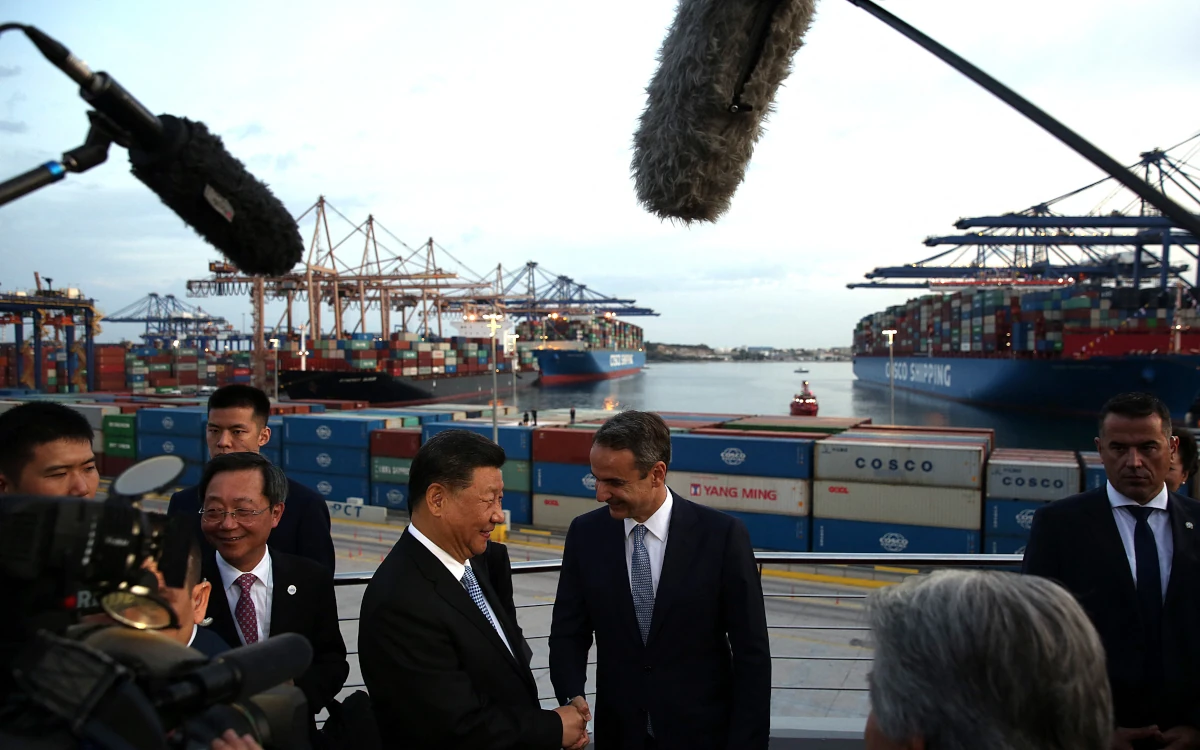
Outside shocks laid the danger bare. Russia’s war in Ukraine exposed the cost of leaning on an adversarial supplier. Turmoil in the Middle East showed how fast Europe’s sea lanes could be cut. Two ports told the story best. A Chinese company took over Piraeus, the Greek port Athens had sold off under its bailout, and turned it into a gateway to the continent. From there a corridor pushed north through Serbia and Hungary, binding the Balkans to the EU market. Years earlier, Haifa Bay Port had been a blueprint: a Chinese firm had taken over a port beside Israel’s main naval base, turning a commercial deal into a security risk and alarming the United States.
The EU has begun to push back. New corridors and a defensive strategy aim to spread risk and loosen China’s grip. But ambition on paper is not power in practice. Brussels now sees the threat, but it cannot yet answer it. Whether the EU can close that gap will decide if its ports stay open to the world or become levers in another power’s hands.
The Piraeus–Belgrade–Budapest Corridor
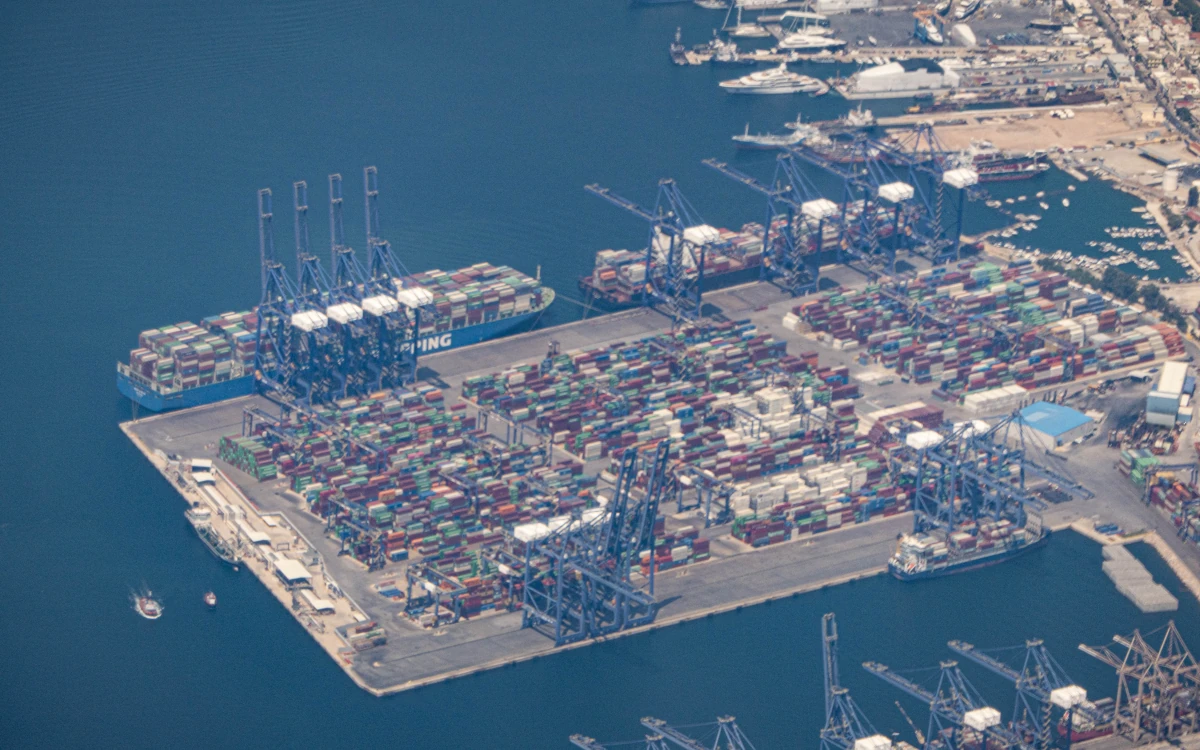
Piraeus shows how Chinese infrastructure investment became central to Europe’s debate over strategic connectivity. Under the new management, the port became one of the Mediterranean’s leading container hubs. Throughput climbed from around 880,000 TEUs in 2010 to more than five million by 2023.
This development brought clear economic benefits for Greece, improving the port’s commercial performance, strengthening its logistics role, and increasing its value as a gateway between Asia and Europe. It also reflected a European decision. Athens sold control of Piraeus during its debt crisis, when bailout terms forced a wave of privatizations. It was thus a function of European choice under conditions of fiscal distress.
Yet Piraeus matters not only because it became a successful port. Its broader significance lies in the role it was expected to play within a wider transport chain running north through the Balkans into Central Europe. In this chain, Piraeus became the maritime anchor of a connectivity strategy. Goods arriving from Asia could enter through the port and move inland by rail toward the European market.
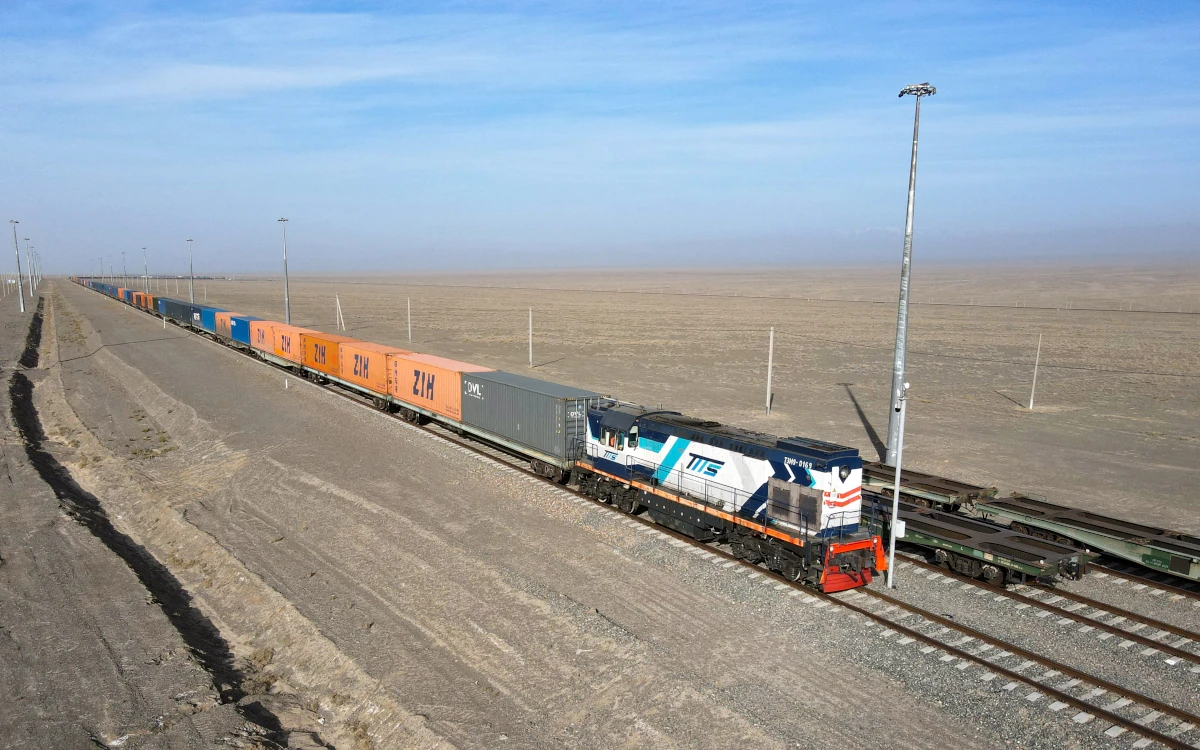
That wider corridor is most visible in Serbia and Hungary, especially through the Belgrade–Budapest railway. Stretching roughly 350 kilometers, the line has been promoted as a flagship Belt and Road project designed to accelerate the movement of goods from Piraeus toward Central Europe. The Serbian section advanced faster than the Hungarian one. The Belgrade–Novi Sad segment opened in 2022, and by late 2025 trains were running between Belgrade and Subotica at up to 200 km/h. Indeed, Serbia has been the principal hub of Chinese investment in the Western Balkans and a gateway for Chinese firms seeking access to the European market.
The corridor matters because it links different political, economic, and regulatory environments in a single infrastructure chain. It begins at a Chinese-operated port in an EU member state. It runs through Serbia, a candidate country with more latitude toward outside investors, and ends in Hungary, a somewhat disruptive EU member bound by European procurement and state-aid rules. In that sense, the Piraeus–Belgrade–Budapest axis became a clear example of the strategic stakes involved when Chinese-backed infrastructure projects move across different legal and political settings within Europe.
Its significance should not be overstated in purely economic terms. Recent assessments suggest that the economic footprint of Chinese projects in Serbia and Hungary remains limited. Fitch, for example, estimated that Chinese firms accounted for around 3.1 percent of Serbia’s gross value added in 2022 and just 0.8 percent of Hungary’s in 2022. The corridor, therefore, has not yet produced the transformative economic effect that earlier political narratives often implied.
Even so, it remains relevant. Its importance lies more in the strategic logic it illustrates: a Chinese-operated maritime gateway linked to Chinese-financed or Chinese-built rail infrastructure running north through the Balkans toward the EU market.
The principal concern is not that China could exercise decisive control over Europe via Piraeus, nor that this corridor alone has driven EU policy change. Rather, the case illustrates a broader challenge at the heart of European debates on economic security. Critical infrastructure can become embedded in wider networks whose ownership, financing, and operational logic are shaped by external actors. That gives ostensibly commercial assets a strategic weight reaching well beyond trade, turning questions of connectivity into questions of dependency. Yet Beijing did not create this exposure alone. European governments, courting capital and growth, helped build the very vulnerability they now seek to manage.
Yet Beijing did not create this exposure alone. European governments, courting capital and growth, helped build the very vulnerability they now seek to manage
When Infrastructure Becomes an Alliance Test
The Piraeus corridor shows how ports and rail can be pulled into networks shaped by foreign capital. Haifa shows something else. Although it lies outside Europe, it is a useful comparison illustrating how foreign involvement in a port can turn a commercial project into a question of security and alliance management.
In 2015, Shanghai International Port Group (SIPG) secured a 25-year contract to operate Haifa Bay Port, which opened in 2021. Unlike Piraeus, however, Haifa’s significance was never confined to trade or logistics. The port is located approximately 1.8 kilometers from key Israeli naval facilities, near Haifa’s airport. Foreign involvement in the port was therefore never viewed as purely commercial.
American officials raised concerns that a Chinese operator at Haifa could affect intelligence sharing and security cooperation between the United States and Israel. The controversy reflected a simple fear. A port located beside critical military assets, in the orbit of a close U.S. ally, could no longer be treated as purely economic. In 2025, the Israeli government approved SIPG’s expansion of Bay Port, reigniting debate over the long-term implications of Chinese involvement in such a sensitive location. Yet the alarm owed as much to Washington’s broader contest with China as to any demonstrated breach. American warships kept calling at Haifa after SIPG took over, and the predicted rupture never came.
Haifa’s significance lay less in SIPG’s daily operations than in the dilemma it exposed. How far should a state closely aligned with the United States go in letting China into infrastructure near critical military sites? In that sense, Haifa became a clear example of how infrastructure can blur the boundaries between commerce, security, and alliance management.
For the European Union, Haifa is comparative rather than direct. It illustrates a problem now central to European debates over ports, investment screening, and critical infrastructure: ownership can create security concerns that a purely commercial lens may miss.
IMEC and the Search for Alternatives
If Piraeus and Haifa show how infrastructure can create dependency, Europe’s response shows how hard that dependency is to undo. The clearest attempt is the India–Middle East–Europe Economic Corridor (IMEC), a Western-backed bid to diversify routes and build connectivity that does not run through China. Announced at the 2023 G20 summit in New Delhi, IMEC would link India to Europe through the Gulf by rail, sea, energy lines, and data cables. Its sponsors, led by the United States and the European Union, cast it as a rules-based answer to the Belt and Road. IMEC’s logic is diversification. Rather than route flows through a single gateway, it spreads them across several links, so that no one corridor or supplier can hold the rest hostage.
The corridor also reflects a wider geopolitical shift. India wants deeper ties to European markets. The Gulf states are positioning themselves as logistics and energy hubs. And the European Union sees diversified routes as a way to reduce its exposure in a more dangerous environment. IMEC matters less as a finished alternative to China-backed infrastructure than as a sign of changed strategic thinking. Connectivity is now being designed with resilience and risk in mind.
Whether IMEC can deliver is another matter. The corridor stalled within weeks of its launch, when the October 2023 war in Gaza froze the Saudi–Israeli normalization on which it depended. Three years on, its central rail segments across Saudi Arabia, Jordan, and Israel exist largely on paper, and no government has agreed to a financing mechanism or a timetable. The 2026 war between Israel, the United States, and Iran then closed the Strait of Hormuz, disrupting the very routes the corridor was meant to make more resilient.
IMEC is therefore best understood as part of a broader search for alternatives, not a finished solution. The same logic drives the EU’s Global Gateway initiative. It aims to mobilize up to €300 billion between 2021 and 2027 for infrastructure, energy, transport, and digital projects worldwide. Global Gateway is wider in scope, but both reflect the same push: to diversify and reduce vulnerability to external shocks.
IMEC is best understood as part of a broader search for alternatives, not a finished solution. EU’s Global Gateway is wider in scope, but both reflect the same push: to diversify and reduce vulnerability to external shocks
The Vulnerability of Connectivity
Yet alternative corridors do not eliminate vulnerability if the regions they cross remain unstable. The war in Ukraine and the 2026 war with Iran made that clear. Russia’s invasion disrupted energy supplies, grain exports, and trade routes, exposing the risks of leaning on a hostile supplier. The Iran war then closed the Strait of Hormuz for months, choking oil and gas flows and pushing some European buyers back toward Russian gas.
Together, these crises reinforced a broader lesson: connectivity cannot be judged by efficiency or cost alone. Ports and corridors are only as secure as the political environments through which they operate. These crises did not create Europe’s infrastructure debate, but they made its stakes harder to ignore. They showed that the question is not only who owns critical infrastructure, but whether the routes and networks on which Europe depends can remain functional during geopolitical disruption.
Together, these crises reinforced a broader lesson: connectivity cannot be judged by efficiency or cost alone. Ports and corridors are only as secure as the political environments through which they operate
As these risks have become harder to ignore, so has the case for treating infrastructure as a strategic question. That is the backdrop to the EU’s new approach to ports and connectivity.
The End of Infrastructure Neutrality
This broader shift is now evident in EU policy. Over the past decade, issues once treated as technical, such as trade flows, investment, and efficiency, have become bound up with resilience, economic security, and critical infrastructure protection.
The 2026 EU Ports Strategy formalized this change by placing competitiveness, security, resilience, and sustainability at the center of port governance. For the first time, it calls on member states to screen foreign ownership and control of ports deemed strategic dual-use infrastructure. The move tightens a door that European governments themselves had opened. Even Germany, after labeling a Hamburg terminal critical infrastructure, cleared a Chinese state-owned stake in it in 2023.
What has changed is not only the policy language but also the conceptualization of infrastructure itself. Ports are no longer viewed solely as commercial gateways; they are now seen as assets integral to supply chains, energy security, industrial competitiveness, and Europe’s broader geopolitical posture.
The focus has shifted from questions of efficiency to those of control, resilience in times of crisis, and the capacity of critical networks to withstand geopolitical shocks.
From Awareness to Capacity
Infrastructure has become an arena of geopolitical competition in its own right. A harbor or a rail line matters less for what it joins than for who controls the money, the ownership, and the security behind it. For the EU, awareness has come more easily than capacity.
Strength, in this game, is unglamorous. It is financing that arrives, deadlines that hold, and capitals that pull in the same direction. It is the patience to turn IMEC and Global Gateway from communiques into rail, cable, and steel. None of this comes naturally to a union of 27 countries. The question is whether Europe can govern the networks its prosperity now rests on or leave that power to others.
The stakes reach far beyond Europe’s harbors. Great-power rivalry has slipped off the battlefield and into the infrastructure of the world economy. In this new geometry of power, the map of dependency is becoming the map of control. The global balance of power is being redrawn in concrete and fiber, not just in arms and military bases. Europe’s struggle to govern its own gateways is only a chapter of that story.
Great-power rivalry has slipped off the battlefield and into the infrastructure of the world economy. In this new geometry of power, the map of dependency is becoming the map of control