
Wars often end with agreements that appear more important than they ultimately prove to be. The U.S.–Iranian memorandum of understanding may be one such accord. Indeed, the MoU’s significance lies less in its contents than in what it reveals about the balance of power in the Middle East.
The agreement exposes the hard limits of American and Israeli military power in the region, while underscoring the resilience of the Iranian state. Ultimately, it signals an accelerating transformation of the Middle East into a more fragmented and multipolar strategic environment. The Iran deal may prove to be one of the first clear signs that the Middle East is entering a new strategic era.
The MoU signals an accelerating transformation of the Middle East into a more fragmented and multipolar strategic environment. The deal may prove to be one of the first clear signs that the Middle East is entering a new strategic era
What the Iran War Actually Changed
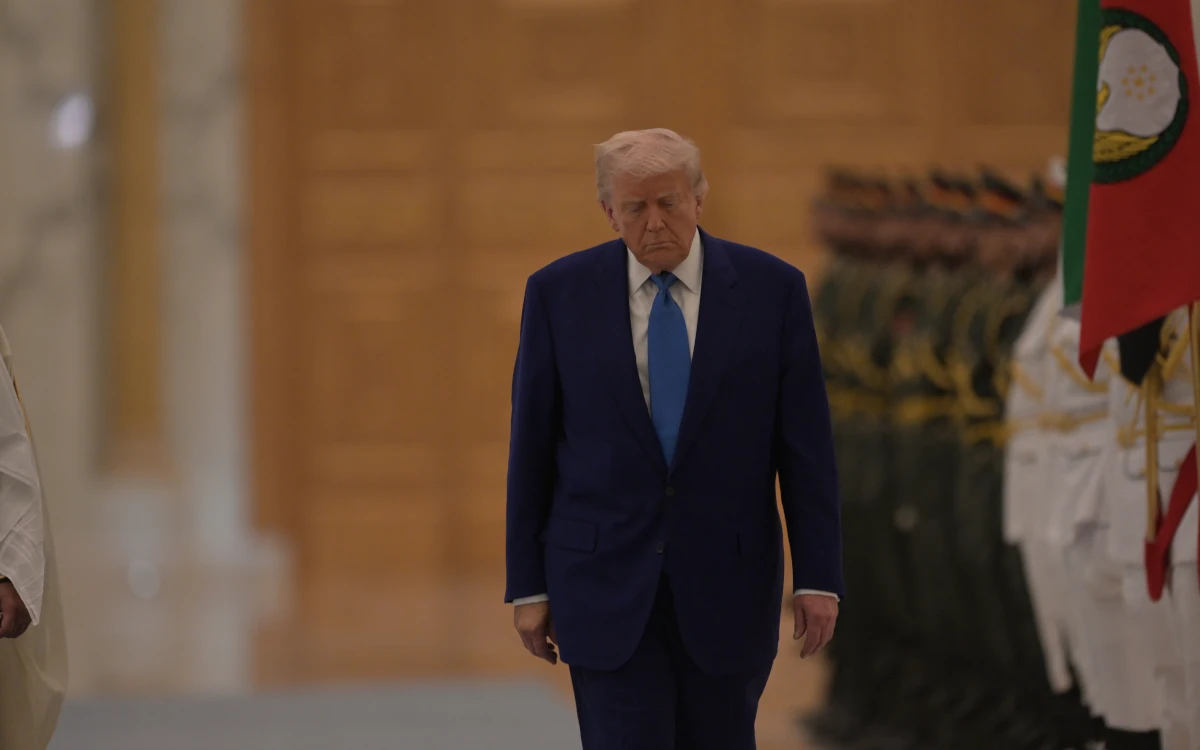
The document that ended nearly four months of war between the U.S.–Israeli coalition and Iran runs to roughly one and a half pages. Donald Trump signed it electronically at the Palace of Versailles on June 17, 2026; Iranian President Masoud Pezeshkian countersigned in Tehran. Neither leader staged the ceremony each had once promised—a fitting start for a settlement built on what it omits rather than what it resolves.
The conflict killed more than 7,000 people, disrupted one-fifth of global oil and gas trade, and cost Washington nearly 30 billion dollars in operational spending. Today, it has been brought to a halt on a framework too thin to resolve the question that started it.
Iran’s nuclear program, the war’s proximate cause, remains unsettled and deferred to 60 days of further talks. That deferral is the most honest part of the document. Neither side secured the outcome it sought, and the fighting stopped not because the dispute had ended but because its costs had become unsustainable for everyone involved.
The MoU halts operations across every theater, including Lebanon, lifts the American naval blockade of Iranian ports, and grants sanctions waivers for Iranian energy exports. Further, Washington and regional partners commit to mobilizing 300 billion dollars toward an Iranian reconstruction fund, with a financing mechanism due within the same 60-day window.
Tehran agrees to negotiate the Strait of Hormuz’s future administration with Oman and Gulf states rather than asserting unilateral control over it. The nuclear issue—enrichment rights, the uranium stockpile, whatever verification regime—sits entirely outside the text.
Power Revealed, Power Limited
The war began on February 28, 2026, when American and Israeli forces launched Operation Epic Fury, killing Supreme Leader Ali Khamenei and much of Iran’s senior military leadership. Within a week, U.S.–Israeli strikes had cut Iranian missile fire by roughly 90 percent and destroyed most of Iran’s navy. Israeli intelligence again showed an extraordinary capacity to penetrate and decapitate Iran’s command structure.
Yet none of it delivered the desired political collapse. The Assembly of Experts installed Khamenei’s son, Mojtaba, as supreme leader within days, under pressure from the Revolutionary Guard Corps. States are institutional systems, not collections of individuals, and removing a leader did not remove the apparatus that sustained him. Decapitation succeeded operationally and failed strategically—a distinction regime-change planners have struggled with since Iraq.
Tehran’s response clarified what its actual deterrent had been. Unable to contest American air power, Iran closed the Strait of Hormuz, disrupting roughly 15 million barrels of daily crude exports and triggering fuel rationing across Asia and Africa. Washington, in trying to deny Iran a weapon of mass destruction, handed it a weapon of mass disruption instead.
Washington, in trying to deny Iran a weapon of mass destruction, handed it a weapon of mass disruption instead
The lesson generalizes. Deterrence does not end when prevention fails. It can continue as the capacity to make further escalation unaffordable, which is exactly what Hormuz proved.
None of this signals American decline per se. No other state could have degraded Iranian military infrastructure with comparable speed, and Washington’s dominance was never seriously contested. What narrowed was the distance between that dominance and what it can deliver politically.
The Pentagon requested a further 200 billion dollars in supplemental funding even as the campaign succeeded by its own metrics. NATO partners absorbed delayed arms deliveries diverted toward the Gulf, a cost imposed on allies that had no vote in starting the war.
Victory as a Relative Term
The question of who won the war obscures the more useful question of which side came closest to its minimum objectives. By that measure the war produced no winner, just three different kinds of incomplete success.
The question of who won the war obscures the more useful question of which side came closest to its minimum objectives. By that measure the war produced no winner, just three different kinds of incomplete success
Washington’s minimum aim—degrading Iran’s capabilities without an open-ended occupation—was largely met, but credibility paid the price. Trump claimed a deal was imminent at least 38 times between March 23 and June 9 before one actually materialized. A Senate effort to constrain his war authority failed in mid-June, leaving the conflict’s conduct almost entirely in executive hands.
Israel’s minimum objective, the permanent removal of Iran’s nuclear threat, remains unmet. The memorandum assigns that file to a negotiation in which Israel holds no seat, and senior Israeli officials were reportedly kept in the dark through the deal’s final stage. A poll published this week found only 18 percent of Israelis support the agreement.
Iran’s minimum aim—survival without unconditional surrender—succeeded. The cost ran as high as one trillion dollars in damage, officials estimate, alongside the loss of its supreme leader and most of its naval and missile capacity. No party reached its maximum objective. Each avoided the worst-case scenarios, which is a more accurate description of this war’s end than victory for any one party.
Where Washington and Tel Aviv Diverged
The structural drivers behind the war—Iranian nuclear latency, Tehran’s proxy network, and an Israeli doctrine of pre-emption sharpened after October 7—explain why a confrontation eventually came. They explain less well why it came in February 2026, during active negotiations rather than after some fresh Iranian provocation. That timing reflected a convergence of immediate interests between two governments rather than a shared theory of how far the campaign should go.
Washington and Tel Aviv agreed on the goal—preventing an Iranian nuclear breakout—and diverged on essentially everything else. Trump wanted a finite campaign that reopened Hormuz and allowed disengagement. Netanyahu’s government favored continued pressure over a swift exit, treating the war as a rare chance to dismantle Iranian capacity permanently.
That divergence became public when Trump rebuked Netanyahu for continuing strikes on Beirut, warning that they were jeopardizing the negotiating track. Lebanon remains the clearest fault line. Iran’s army recorded 84 claimed Israeli ceasefire violations there before the memorandum took effect, and Tehran treats continued Israeli operations in Lebanon as a breach Washington is obliged to police.
The IDF has refused to withdraw from what it calls “security zones,” which it occupies in southern Lebanon, Syria, and Gaza. Netanyahu has separately vowed to keep acting against Iranian nuclear infrastructure regardless of what the memorandum says. That posture leaves the 60-day window negotiating a settlement that one of Washington’s own allies has already signaled it will not fully observe. For that reason, further Israeli operations may render any settlement dead on arrival.
A New, Harder Equilibrium
This is not a return to the pre-war order. It is a fundamental change, the contours of which are only beginning to come into focus. Iran’s regime survives, as it did after the Twelve-Day War of June 2025. But it continues under a leadership more dependent on the Revolutionary Guard Corps than in its previous form. Its missile and naval forces stand at a fraction of their former size, but its political resolve has hardened.
The Gulf states, on the other hand, paid for an alignment with Washington that did not protect them. Iranian strikes reached Saudi, Qatari, Bahraini, and Emirati infrastructure despite each state’s formal security ties to the United States. The World Bank now projects Gulf growth of just 1.3 percent in 2026, compared with 4.5 percent the year before. A UN assessment warns the region’s standing as a stable investment destination has sustained damage the memorandum cannot repair.
The fracture this produced runs through the Gulf Cooperation Council itself. The UAE and Bahrain have deepened security ties to Israel, while Saudi Arabia, Qatar, and Kuwait have moved instead toward a new grouping with Egypt, Pakistan, and Turkey. These shifts are not entirely new, but the conflict is likely to accelerate them. More than any ideological choice, the Gulf split reflects a shared loss of confidence in the reliability of American security guarantees.
Shifts in Gulf ties are not entirely new, but the conflict is likely to accelerate them. More than any ideological choice, the Gulf split reflects a shared loss of confidence in the reliability of American security guarantees
Middle Powers Draw Their Lessons
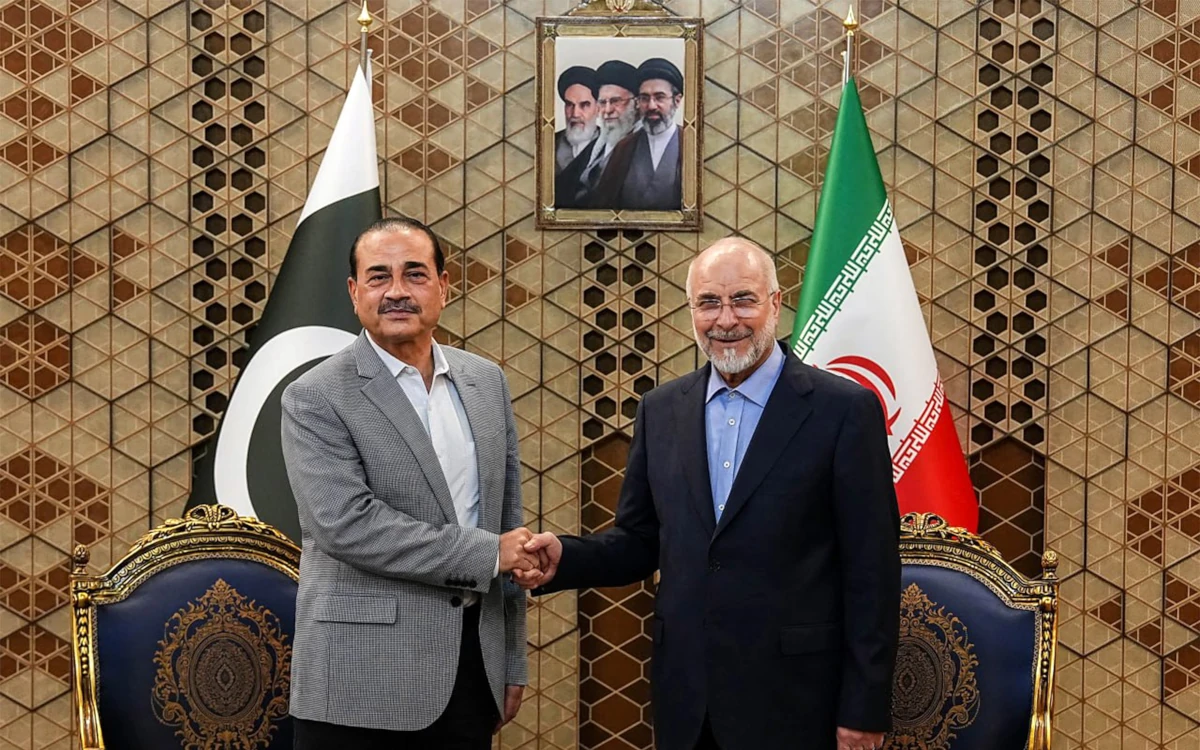
Pakistan’s prime minister, Shehbaz Sharif, worked alongside Qatari mediator Ali Al-Thawadi to broker the final agreement. The role has elevated Islamabad’s regional standing well beyond what its economy alone would support. The fact that four states with no direct stake in the war’s outcome did more to end it than either belligerent’s patron is itself a measure of how far authority has dispersed in the region.
Yet these lessons will not stay confined to the Middle East. Middle powers from Southeast Asia to North Africa face a comparable calculation: how to retain leverage once a patron’s military superiority stops guaranteeing political protection. Iran showed that a state under sustained attack can still shape its own settlement if it is able to leverage control over a chokepoint or comparable geographic position. That lesson travels well beyond Tehran’s borders.
Iran’s policy of nuclear hedging is the most contested lesson. Iran’s decades of nuclear latency—remaining one technical step from a weapon without crossing the threshold—did not deter the attack it was meant to prevent. Some regional analysts read that as proof ambiguity invites strikes rather than deterring them. The logic parallels North Korean reasoning and could push hedging states toward full weaponization rather than away from it.
Saudi Arabia appears to be drawing the opposite conclusion. Riyadh is diversifying nuclear cooperation toward Beijing and negotiating civilian enrichment rights with Washington, while a new defense pact with Islamabad adds a military hedge alongside the technical one. Which reading prevails will depend on what the nuclear talks produce, and on whether Israel disrupts them first.
A war fought partly to restore American primacy in the Middle East has instead accelerated a regional order in which no single patron, ally, or adversary commands it. More than anything, the settlement suggests that in a multipolar world, even overwhelming military superiority no longer guarantees political outcomes. The lesson is not that American power has disappeared from the region, but that it has discovered its limits.
A war fought partly to restore American primacy in the Middle East has instead accelerated a regional order in which no single patron, ally, or adversary commands it