
The recent joint U.S.–Israeli operation against Iran has sent shockwaves far beyond the Middle East. While the primary theater is the Arabian Gulf, the conflict’s strategic reverberations have found immediate resonance on the Korean Peninsula. Despite the campaign’s stated aim of restoring a red line of not allowing Tehran’s possession of nuclear weapons, they also validate North Korea’s position on nuclear development—that nuclear capabilities are the best deterrence against foreign aggression.
This shifts Pyongyang’s strategy from one of potential negotiation vis-à-vis its nuclear program to a permanent nuclear state posture with the help of a Russia-China security bloc. This development follows a period of heightened tensions in which Washington and Tel Aviv considered Iran’s reported increasing stockpiles of 60-percent-enriched uranium to be an unacceptable proliferation risk, despite the lack of evidence of an active weaponization program.
North Korea, a long-time military and political partner of Iran, has viewed these developments with anxiety and considerable strategic calculation. State-run Korean Central News Agency immediately issued a condemnation, with the Foreign Ministry spokesperson characterizing the attack as a “blatant violation of sovereignty” and a “grave threat to global peace.” He warned that such actions by “U.S. imperialists and their vassals” would only strengthen the resolve of nations to bolster their “self-defensive nuclear deterrence.”
This rhetoric underscores a deeper, pragmatic concern within Pyongyang regarding the implications of the U.S. willingness to employ preemptive military force against its adversaries should they pursue nuclear weapons. The strike on Iran has thus complicated the already intricate web of relations on the Korean Peninsula, shifting Pyongyang’s perception of U.S. strategic policy, its dependence on China and Russia, and the long-term viability of its own nuclear arsenal as the guarantor of regime survival.
The strike on Iran has thus complicated the already intricate web of relations on the Korean Peninsula, shifting Pyongyang’s perception of U.S. strategic policy
Accelerated Nuclear Expansion
The U.S.–Israeli campaign against Iran have heightened North Korea’s perception of an immediate threat. The attack, executed against a nation that, like North Korea, had faced a combination of crippling sanctions and intense international pressure, demonstrate a new level of threat. For Pyongyang, the military action makes unlikely any “new relationship” with the United States, as discussed during the 2018 and 2019 summits between leaders. The lessons North Korea is likely to derive from the Iran war is that agreements can be abandoned, and sanctions may merely be a prelude to kinetic action, however unlikely a U.S. strike on North Korea may be. Even though the pattern of U.S. regime change intervention has focused on states without viable nuclear weapons, the U.S.–Israeli operation may also fuel an anxiety that North Korea could be the next target. This is especially the case given its advances in intercontinental ballistic missiles (ICBMs) designed to reach the U.S. mainland and its recent tactical nuclear weapons development.
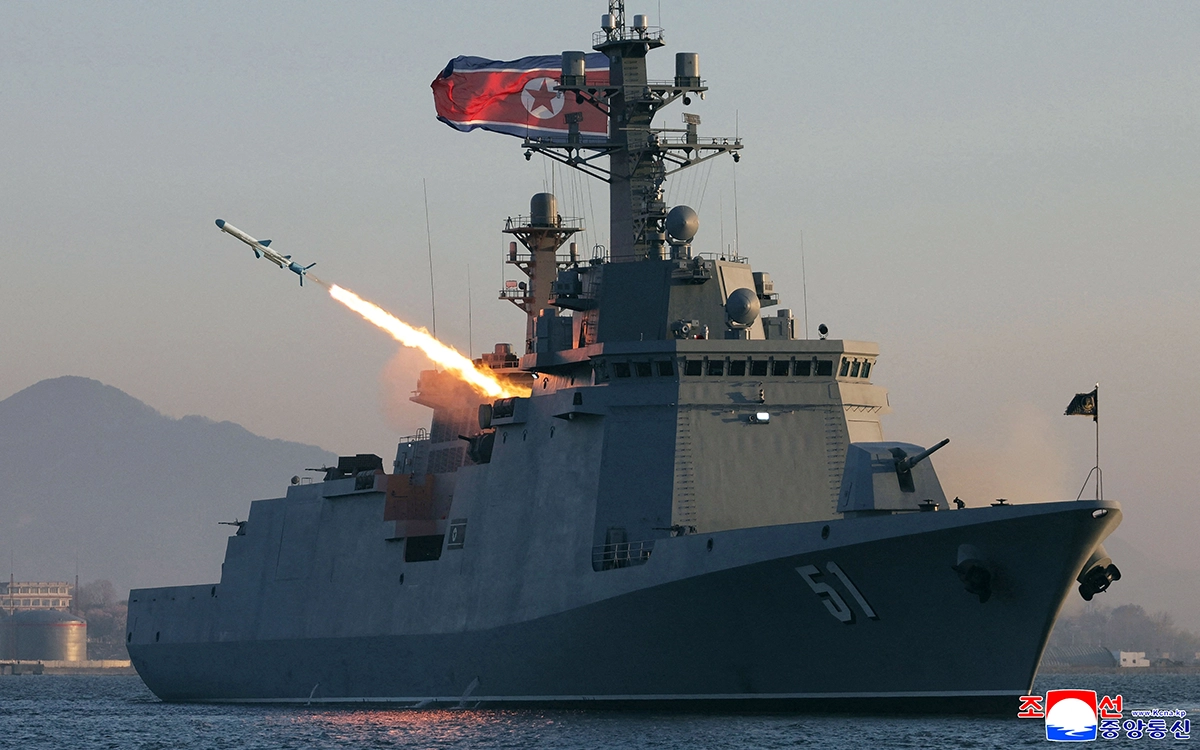
This perception of threat is anchored in the documented history of military-technical collaboration between Tehran and Pyongyang. For decades, the two nations have engaged in a sophisticated “missile-for-oil” exchange. The extent of tech-sharing can be derived from the structural commonalities between North Korea’s Musudan (BM-25) and Nodong missiles and Iran’s Shahab and Khorramshahr series. In the 1980s, North Korea provided “Scud-B” missiles to Iran during the Iran-Iraq War. More recently, UN panel reports have noted cooperation on long-range missile components, including high-thrust engines and heavy-lift boosters.
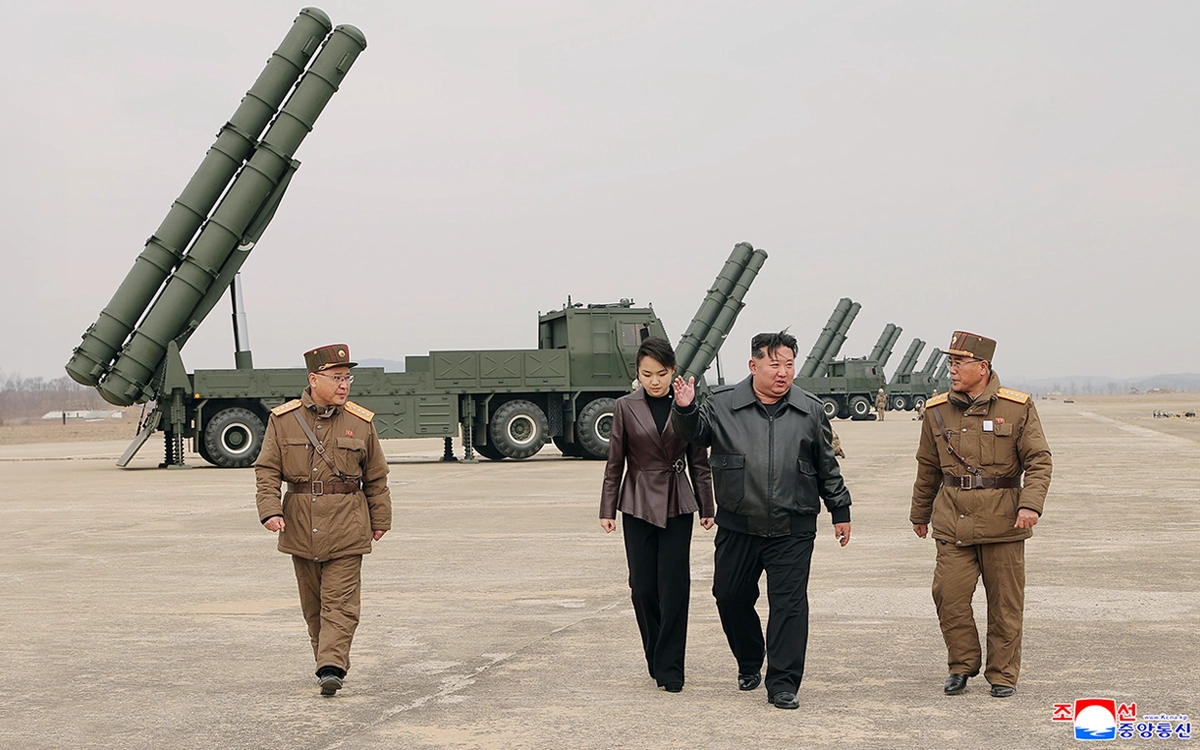
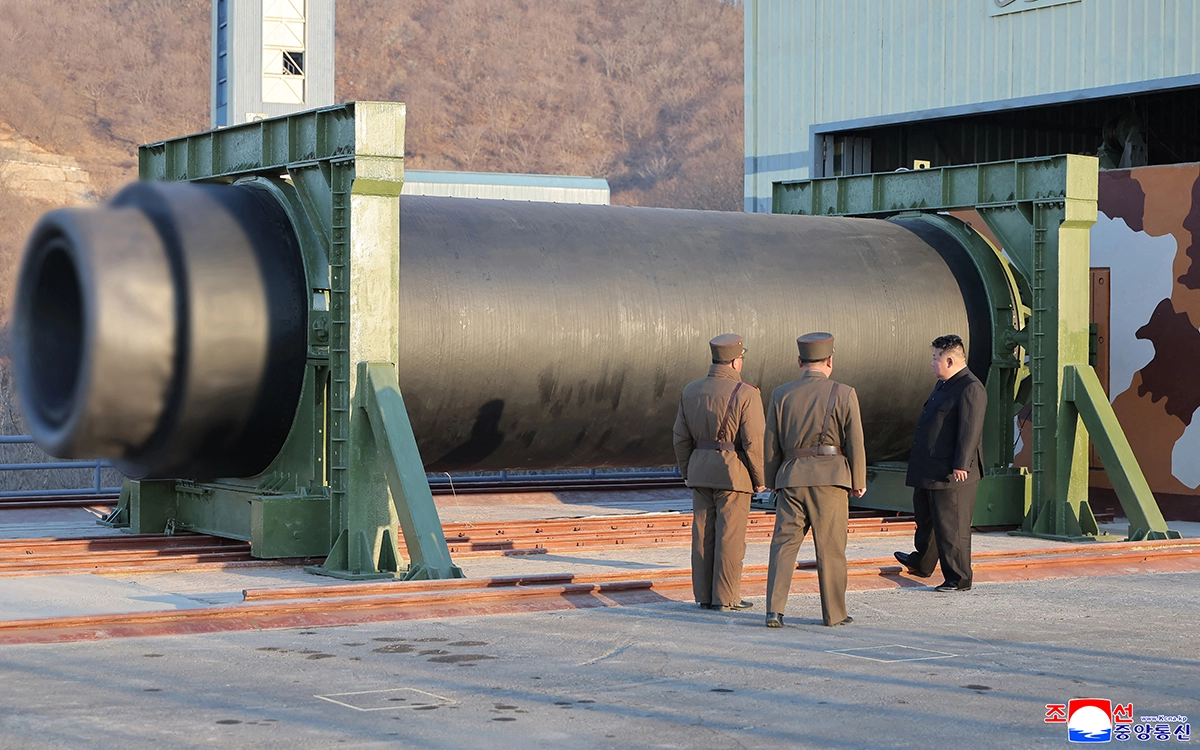
Seeing a partner targeted reinforces Kim Jong Un’s conviction that only a saturated nuclear environment—one where North Korea possesses so many survivable delivery systems that a preemptive strike is mathematically impossible to succeed—can guarantee regime survival. This anxiety is likely to accelerate North Korea’s drive to refine its nuclear deterrence capabilities. The U.S. attack reinforce Pyongyang’s only logical response—to prioritize survival and ensure that its retaliatory capacity is both undeniable and devastating. North Korea’s recent rhetoric and military activities, including the testing of solid-fuel ICBMs, align with this strategy.
The strike on Iran also compels North Korea to deepen alignment with Beijing and Moscow. Recognizing that it cannot withstand a comprehensive U.S.–led offensive on its own, Pyongyang relies on its historical allies for a strategic umbrella. While Beijing may disapprove of North Korea’s nuclear provocations, its ultimate strategic imperative is maintaining stability on the Korean Peninsula and preventing the emergence of a unified, pro–U.S. Korea on its border. Beijing views the attack on Iran as a destabilizing act of U.S. hegemony. In this context, China is likely to provide more explicit political support and economic assistance to Pyongyang, reinforcing North Korea as a necessary buffer against U.S. influence in East Asia. This increasing collaboration is not born of mutual affection but of a calculation of shared regional interests.
Recognizing that it cannot withstand a comprehensive U.S.–led offensive on its own, Pyongyang relies on its historical allies Beijing and Moscow for a strategic umbrella
Similarly, Russia, already isolated due to its war in Ukraine, will likely enhance its relationship with North Korea. Following the war against Iran, Moscow is incentivized to enhance military cooperation with Pyongyang, potentially including technology transfers that could expand North Korea’s nuclear and missile capabilities. The deepening strategic alignment between North Korea, China, and Russia is a direct response to a more aggressive and proactive U.S. security posture. This dynamic further solidifies a regional security architecture, limiting the avenues for U.S. diplomatic engagement with individual members of this informal alliance.
However, the critique of China and Russia’s tacit approval of North Korean proliferation must be balanced against the historical context of global proliferation. While often framed as a dangerous precedent, this behavior mirrors long-standing U.S. strategic posture. Washington has historically accommodated proliferation when it served broader power-projection goals. Examples include the U.S. posture toward Israel’s nuclear ambiguity to fortify Middle Eastern stability, the accommodation of Pakistan’s nuclear development in the 1980s to facilitate the anti-Soviet campaign in Afghanistan, and the 2008 Civil Nuclear Deal with India to build a counterweight to China.
Diminished Prospects for Dialogue and Denuclearization
The North Korean leadership, already operating under a siege mentality, is likely to conclude that any degree of denuclearization is a recipe for catastrophic vulnerability. The U.S. war against Iran significantly diminishes the trust and shared understanding necessary for denuclearization talks. It reinforces Pyongyang’s belief that Washington is fundamentally untrustworthy, and the failure of Iran’s Joint Comprehensive Plan of Action (JCPOA) serves as a justification for North Korea’s long-held skepticism about U.S. intentions.
Furthermore, the Iran war raises the political and strategic cost of concessions for North Korea. In previous negotiations, Pyongyang sought sanctions relief in exchange for partial denuclearization steps. Now, any move toward dismantling its nuclear program, even partially, would be seen internally as an act of weakness that may expose the regime to the type of military action witnessed in Iran. Instead of offering compromises, North Korea is more likely to respond with further provocations to signal its resilience and willingness to escalate, thereby solidifying its bargaining position as a recognized nuclear state. This posture makes meaningful negotiations on denuclearization, which would require North Korea to eventually relinquish its nuclear asset, almost unimaginable in the foreseeable future.
Moreover, the attack against Iran shift the internal political balance within North Korea further towards the military and hardline security apparatus. The military can now point to Iran as an example of what happens to nations that attempt to bargain with the U.S. This leads to a consolidation of the national security doctrine around nuclear maximalism, where the path to security lies not in diplomacy but in nuclear statehood. This internal political dynamic creates a rigid negotiating position where only total recognition of its nuclear status is acceptable to Pyongyang, a demand that Kim made as a prerequisite of any resumption of talks with Washington.
The deadlock is also further complicated by the fact that Washington’s attention is now more fractured. It must now deal with the fallout of the war against Iran, navigating the complexities of Middle Eastern politics, which will consume significant political capital and diplomatic resources. This allows North Korea time and maneuvering space, during which it can continue its nuclear development with less direct U.S. pressure. While the U.S. maintains a robust security presence in East Asia, its capacity for sustained diplomatic and economic pressure on Pyongyang, particularly given China’s likely counter-efforts, is weakened. The war against Iran, whose stated aim was to counter proliferation in one region, may have accelerated it in another. This all but ensures that denuclearization talks on the Korean Peninsula remain deeply frozen.
The war against Iran, whose stated aim was to counter proliferation in one region, may have accelerated it in another
Regime Security, Deterrence, and the Proliferation Paradigm
Pyongyang has long utilized its relationship with Iran as a strategic force multiplier, cooperating on missile technology, conventional weapons, and political rhetoric. The strike on Iran, therefore, is not viewed in isolation but as a direct challenge to the durability of North Korea’s partners. If the U.S. can effectively degrade the military capabilities of an ally like Iran, it naturally raises questions in Pyongyang about the reliability of its own defenses and the extent of U.S. resolve. This fuels a heightened state of alert, in which every U.S.–South Korean joint military exercise or regional deployment is scrutinized for signs of an imminent preemptive strike disguised as a defensive maneuver. This anxiety directly informs North Korea’s first use nuclear doctrine, where the threat of early escalation is designed to preempt any conventional U.S. military action that might target its leadership or critical infrastructure.
Furthermore, the war highlights the limitations of the existing international non-proliferation regime. Despite the intense international pressure, sanctions, and diplomatic efforts that culminated in the JCPOA, and the U.S. ultimately resorted to military force. This reinforces North Korea’s contention that the global non-proliferation architecture is fundamentally biased, designed to freeze the strategic advantages of existing nuclear powers while denying developing nations the same means of self-defense. For Pyongyang, the solution is not to re-engage with this international system, but to establish itself as a de facto nuclear state that other powers, including the U.S., must accept as a peer. The attack on Iran, therefore, undermine the normative power of the Non-Proliferation Treaty (NPT) and embolden other threshold states to seek their own nuclear security guarantees, free from the constraints of international agreements that, in their view, fail to provide true protection.
Ultimately, the dynamic of North Korea’s alignment with China and Russia in the aftermath of the Iran war further complicates nuclear proliferation dynamics. Both China and Russia are recognized nuclear powers under the NPT. However, their strategic prioritization of counter-U.S. alignment over non-proliferation norms creates a permissive environment for North Korean proliferation. This could potentially lead to a more fractured and unstable nuclear order, where proliferation becomes not an exception but a normalized response to a perceived lack of security in a multi-polar world.
The dynamic of North Korea’s alignment with China and Russia in the aftermath of the Iran war further complicates nuclear proliferation dynamics
Scenario I: Deepening Blocs and Stabilized Confrontation
In this scenario, the war against Iran fails to achieve its goals and instead reinforces Tehran’s determination to achieve nuclear capabilities. North Korea, observing this, doubles down on its nuclear expansion, while China and Russia consolidate their trilateral alignment. Beijing, viewing the war as a dangerous expression of U.S. power projection, steps up its economic and security guarantees to both Tehran and Pyongyang, transforming them into vital regional partners.
The Korean Peninsula, therefore, settles into a stabilized but intense standoff. Large-scale U.S.–South Korean military exercises are met with corresponding, coordinated displays of North Korean nuclear and missile power, often with implicit Chinese political support. No progress is made on denuclearization, and the talks remain permanently stalled. Pyongyang achieves a globally recognized nuclear status, effectively normalizing its position within a new, bifurcated regional order.
Scenario II: Escalation and the Breaking of the Stalemate
In this scenario, Iran’s retaliatory attacks on U.S. and regional interests escalate dramatically, leading to a wider regional conflict that draws in major powers. North Korea, fearing that this wider conflict is a prelude to a comprehensive U.S. assault on all anti-Western regimes, miscalculates and executes a significant military provocation, perhaps a high-trajectory ICBM test over Japan or a tactical nuclear test.
This provocation, coinciding with the instability in the Middle East, triggers a fundamental reassessment in Washington, resulting in a U.S. response, potentially involving intense cyber-attacks on North Korea’s command and control infrastructure or limited preemptive kinetic strikes, which shatters the decade-long stalemate. The outcome is highly uncertain, ranging from a major war to a new diplomatic framework born of mutual existential fear. But the status quo of protracted deadlock is broken, leading to a fundamental transformation of the security dynamics in East Asia.