
The China-U.S. arms race has entered a critical phase. For decades, China’s nuclear deterrent relied almost exclusively on land-based missiles—static assets vulnerable to a preemptive first strike. Today, Beijing is rapidly developing a more survivable undersea nuclear force.
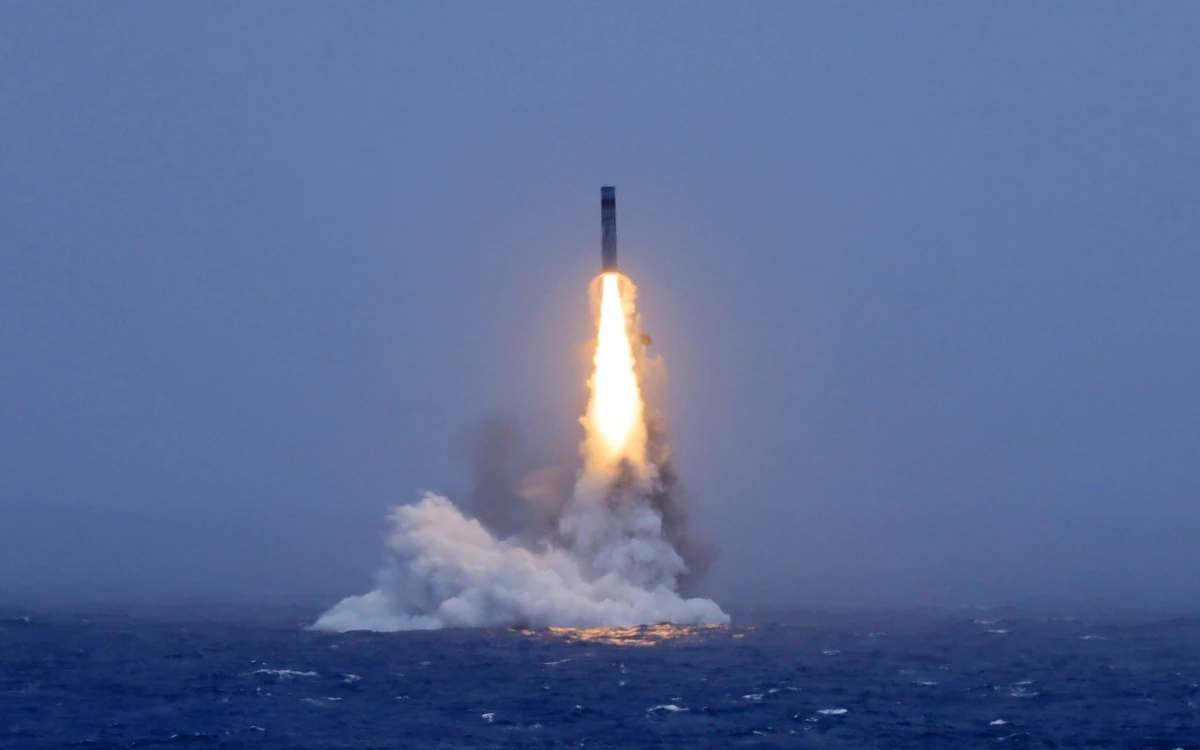
On July 6, a Chinese submarine test-fired a ballistic missile that flew more than 7,000 kilometers into the South Pacific. The launch signaled for the first time that China could potentially strike the continental United States from a submarine operating in its protected home waters. Submarines are difficult to find and sink. The test therefore moves Beijing closer to a survivable nuclear triad—a force able to launch from land, sea, and air, and to survive any first strike.
China’s strategic submarine force remains relatively young, with doubts about its reliability. But it already unsettles the United States and the allies who depend on American protection. That concern is most immediate for Tokyo and Manila, but it also extends to Europe as Washington leans on its partners to do more.
China’s strategic submarine force remains relatively young, with doubts about its reliability. But it already unsettles the United States and the allies
Deterring by Sea
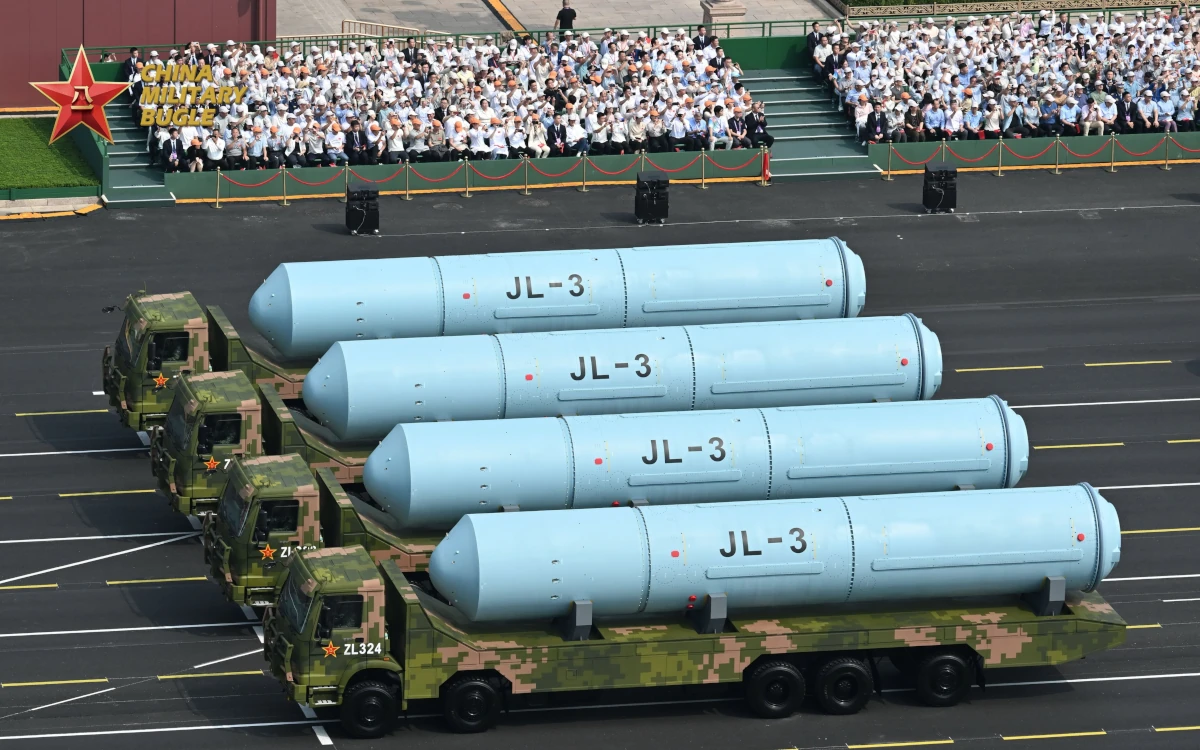
The test was but the latest evidence of China’s progress toward developing a nuclear triad. That triad comprises SLBMs, land-based intercontinental ballistic missiles, or ICBMs, and new strategic bombers, which China displayed during last September’s Beijing military parade. The July test confirmed the operational readiness and performance of China’s sea-based strategic nuclear deterrent. Two years ago, the PLA also launched an ICBM into the South Pacific.
These were the first announced strategic missile launches outside Chinese territory in four decades. Since the early 1980s, the PLA had publicly tested its strategic missiles exclusively in China’s western desert regions. PRC policymakers now want better nuclear capabilities for peacetime deterrence, managing escalation in wartime, and to elevate their country’s global status. Other nuclear-weapon possessor states have comparable objectives.
The PRC has devoted enormous resources to fielding a fleet of several hundred ICBMs. The recent construction of hundreds of new silos indicates that this expansion will continue. Building and operating ICBMs is less difficult than building SLBMs. ICBMs can launch more rapidly, and they generally have superior accuracy. However, ICBMs are vulnerable to preemptive attacks given their generally known location.
Missile-launching submarines are more complex and expensive than land-based missile launchers. But once submerged, they are harder to locate than even mobile land missiles. China’s submarines have traditionally been noisier than their Russian or Western counterparts, but the PLA can enhance their protection by operating them from China’s home waters. When the boats hide in such bastions, the PLA can defend them better against adversary planes and ships and envelop them in camouflage and distracting sounds.
The recent test has confirmed that the PLA has a SLBM that probably can reach North America even if the submarines patrol near China. That the PRC described the launch as “a routine part of China’s annual military training” suggests the PLA will conduct more such tests. Further tests would perfect its technology and operational concepts and dispel persistent doubts about the submarine force’s functional effectiveness in a relatively novel warfighting domain for China. In a few years, China will likely develop and deploy superior strategic submarines and missiles. The combined impact of these developments is significant. Washington and its allies can no longer assume the United States could wage a war with China without risking devastating damage to its homeland.
Washington and its allies can no longer assume the United States could wage a war with China without risking devastating damage to its homeland
South Pacific Stage, Washington Audience
Australian leaders reacted more harshly to the test than any other government. Foreign Minister Penny Wong denounced the flight as “provocative and destabilizing,” highlighting in particular China’s lack of transparency, last-minute notification, and Beijing’s overall military buildup.
Several local commentators noted that the launch also occurred the same day as Australia and Fiji signed their unprecedented mutual defense treaty, the Ocean of Peace Alliance. Through the treaty, Australia aimed to compete more effectively against China for influence in the South Pacific, which has become an increasing object of Sino-Western rivalry. PRC officials and media criticized the treaty as designed to counter Beijing’s influence in the South Pacific. Some interpreted the test as an attempt to intimidate regional states by warning them of the risks of confronting China.
Furthermore, some neighboring states joined their Australian counterparts in complaining that the missile landed in the South Pacific Nuclear Free Zone, established four decades ago by the Treaty of Rarotonga. The PRC has signed and ratified the treaty’s relevant Protocols, which prohibit State Parties from testing nuclear weapons in the zone. It also bars threatening their use against other states possessing territory in the zone.
However, the launch was at best only tangentially related to China’s regional intimidation tactics. A SLBM test requires months of advanced preparation. Operational considerations likely had the most impact. These include moving several long-range tracking ships into position along the flight path, the weather, crew readiness, and other dynamics unconnected with the treaty signing. Since China wanted to test its SLBM at long range, sending it toward the South Pacific would avoid the complications of flying the missile over Japan and South Korea.
Additionally, using strategic missiles to intimidate small South Pacific states that Chinese diplomats are trying to cultivate is excessive and counterproductive. If anything, China proved willing to antagonize these countries by landing a missile in their midst. Even the Solomon Islands, one of Beijing’s closest regional partners, voiced its unease. That choice suggests PRC policymakers prioritize perfecting their nuclear deterrent, even at the cost of regional popularity.
Doubt Under the American Umbrella
The prospect of China employing conventional force against Australia anytime soon is negligible. Instead, Beijing’s improving capacity to attack the U.S. homeland most immediately threatens countries facing near-term threats from China: the Philippines, South Korea, and especially Japan. These countries depend on U.S. military intervention for their direct defense as well as for protecting their extended neighborhood. However, they have doubts regarding Washington’s willingness to defend them if Beijing can retaliate against the U.S. homeland in response. In the near term, China’s recent SLBM test, parade of strategic capabilities, and other actions aim to signal that the PLA already has such a capacity. That signal persists despite real uncertainties, including leadership purges, limited operational experience, and other confounding variables.
Beijing’s military buildup generates complex effects on U.S. extended security guarantees in Asia. On the one hand, an immediate impact has been to increase allied demands for stronger U.S. capability commitments. They fear that PRC leaders may treat their growing nuclear capabilities as a shield. Behind it, Beijing could threaten U.S. allies and partners in Asia, calculating that brandishing the PLA’s nuclear forces would deter U.S. military intervention on their behalf. PRC policymakers may hope that such a situation could induce Asian nations to doubt U.S. pledges to protect them and conclude they had to accommodate Beijing’s regional hegemony.
Yet, another effect has been that these countries are committing more resources to national defense. These novel national capabilities harmonize with U.S. goals and helped compensate for the hitherto only modest increase in U.S. regional forces. However, these countries’ expanding ability to attack the Chinese homeland increases the prospect that their actions could generate escalatory cycles leading to a PRC attack on the U.S. homeland. Furthermore, in the future, these countries might decide they need their own nuclear weapons or, conversely, decide to close the gap between their goals and limited capabilities by appeasing China.
U.S. allies might decide they need their own nuclear weapons or, conversely, close the gap between their goals and limited capabilities by appeasing China
Europe’s Indirect Exposure
The impact of Beijing’s nuclear buildup on Europe is sometimes overlooked. Though much of China lies closer to Berlin than Sydney, Europe is an improbable target for Chinese missiles. The main threat is indirect. One reason that Washington is pressing other NATO countries to assume more of a defense burden is the Pentagon’s need to deter two major nuclear powers. European allies face growing pressure to bolster their defenses to backstop an overstretched United States.
Additionally, China’s unconstrained nuclear buildup erodes the traditional arms control architecture that historically anchored European security. The future of nuclear arms control is bleak as long as Beijing refuses to engage in legally binding arms control. Recent NATO summits have called on Beijing to become more militarily transparent. Britain and France have unsuccessfully pressed China to join the Hague Code of Conduct, which requires pre-launch notifications and other missile-related transparency measures.
Nonetheless, some European governments have refrained from confronting Beijing on security issues to protect their economic interests and to hedge against transatlantic tensions and uncertain U.S. defense commitments. Well beyond the Trump presidency, Washington will press European governments to assume a more unified, more active stance regarding Chinese nuclear and arms control practices.
Scenarios
The PRC is increasing and diversifying its nuclear arsenal faster than any other country. Yet, Beijing stubbornly insists on opacity while rejecting legally binding constraints on its buildup. Continuing this approach will undermine global stability and compel other countries to consider major changes in their defense policies.
Counterbalancing
Despite their differences with the Trump administration, Australia, Japan, the Philippines, and South Korea will most likely respond to China’s growing military capabilities in familiar ways. They will continue to enhance their national defenses and to rely on backstopping U.S. extended security guarantees. Geography will limit Australia’s and South Korea’s contributions to countering China. Australia is too far to project much power against the PRC, while South Korea is too close to risk overtly challenging Beijing militarily. But Japan and the Philippines are forming a leading anti-Beijing axis in the western Pacific. NATO Europe, focused on the Russian military threat, will not strongly resist the further pivoting of U.S. forces to Asia. Nor will it resist Washington’s nuclear arms control demands regarding Beijing and Moscow.
Collapse
A more substantial, if less likely, development would see one or more U.S. allies realign their national security strategies more fundamentally. Such a shift would reflect China’s rising power and mounting uncertainties over U.S. security commitments. On the one hand, they could try to appease Beijing by foreswearing participation in any military conflict over Taiwan or by decreasing security ties with the United States. For example, they could curtail U.S. basing rights. On the other hand, they could pursue more independent policies, such as by developing national nuclear deterrents.
Constraints
In the longer term, the PRC’s expanding nuclear potential could work the other way. It may give Beijing the confidence to join Russia and the United States in serious nuclear arms control negotiations. So far, Chinese leaders have rejected participating in both strategic arms reductions and less formal confidence-and-transparency measures. But that calculus could shift as China’s secure second-strike capabilities increase and its international air and naval patrols become more frequent. Beijing’s interest should then grow in treaties that confirm its new nuclear status and avert inadvertent military clashes.
Across all three scenarios, the same structural pressure is at work. China’s nuclear buildup is transforming global politics: making the world less predictable, complicating military planning, and eroding the arms control and nonproliferation regimes built over decades. This fallout will not stop with the United States and its allies. Beijing’s nuclear surge will also reshape the nuclear calculations of India, North Korea, and others. Whether this emerging trilateral nuclear order produces stable deterrence or cascading instability depends on how skillfully decisionmakers in the major nuclear powers manage this rewriting of international politics.
Whether this emerging trilateral nuclear order produces stable deterrence or cascading instability depends on how skillfully decisionmakers in the major nuclear powers manage this rewriting of international politics