
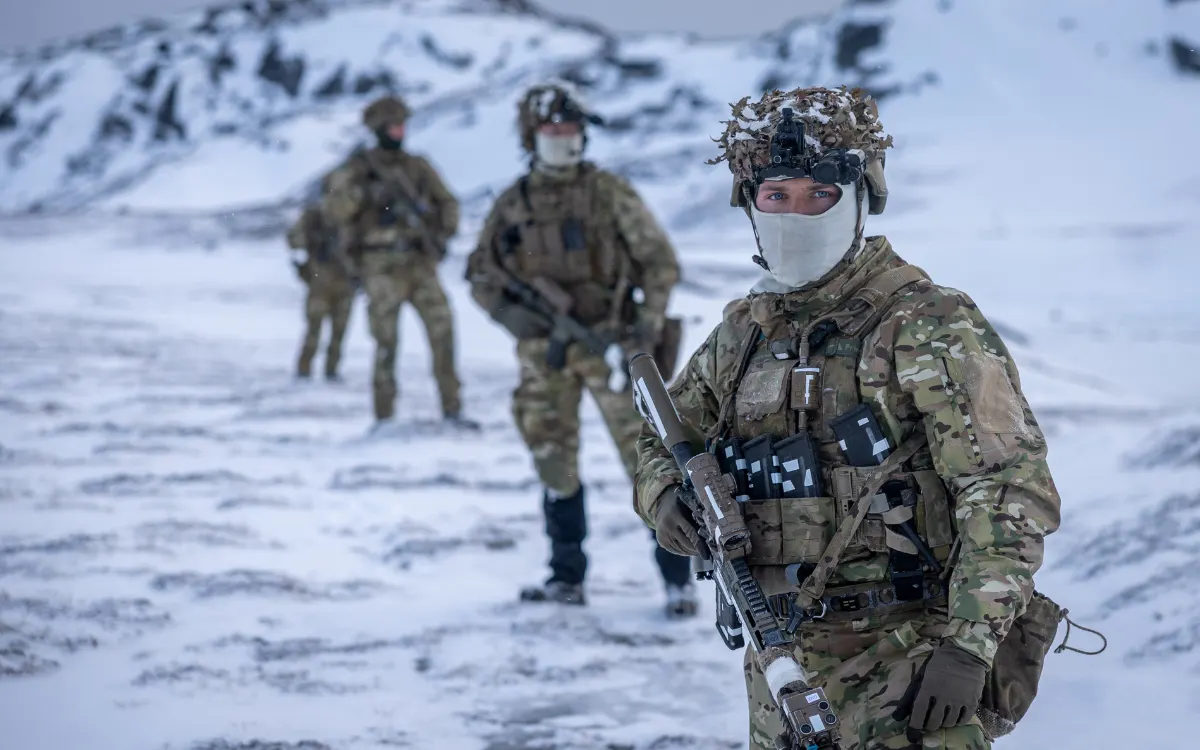
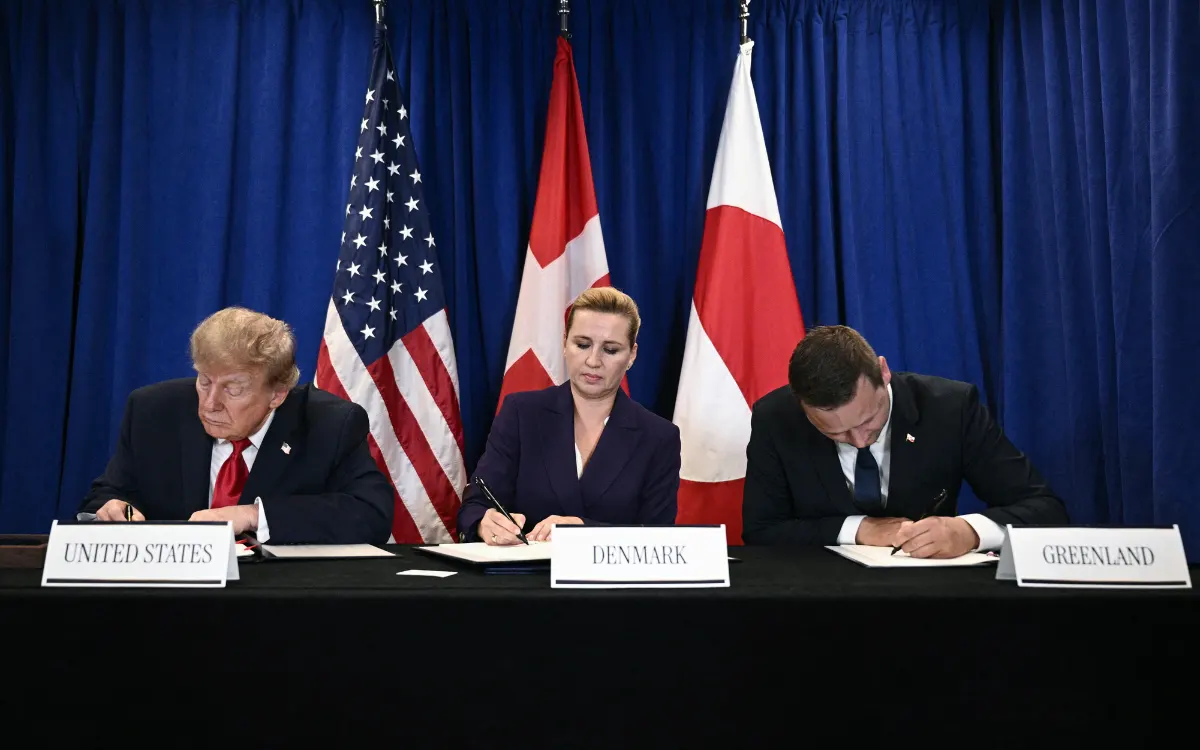
For most of 2026, the dispute over Greenland tested how far the United States would go to coerce its own allies. In January, President Donald Trump threatened eight European governments with tariffs until the island was sold. On September 22, in New York, he signed an agreement with Denmark and Greenland that leaves the island Danish.
The flag stays in Copenhagen, but the strategic map has moved. Washington gains the right to new defense areas, a standing say over rival military presence and sensitive investment, and a pledge that an independent Greenland would remain in the alliance. It does not get freedom to build at will or any claim to the island’s minerals. Those gains and gaps will shape Greenland’s room for autonomy, Denmark’s weight inside NATO, and the balance of power in an Arctic where Russian and Chinese activity continually expands.
From Purchase Demand to Access
Ownership had been Trump’s goal since he first floated a purchase in 2019. A White House meeting on January 14 ended in what Copenhagen called a fundamental disagreement, and the tariff threat followed within days. Trump withdrew it on January 21 after agreeing on a framework with NATO Secretary General Mark Rutte.
Ownership had been Trump’s goal since he first floated a purchase in 2019. Trump withdrew it on January 21 after agreeing on a framework with NATO
Disaggregated, the demand served four aims. Freedom of military action reflected the planned Golden Dome missile defense system, for which Trump called the island vital. Permanence answered American officials’ concern that access could be curbed if Greenland became independent. Exclusion of rivals responded to Chinese investment interest, and resource access reflected what are often cited as the world’s eighth-largest rare-earth reserves.
Each aim could in principle be pursued without territory, which made a settlement possible. Western officials floated a model resembling Britain’s sovereign base areas in Cyprus, but Copenhagen and Nuuk refused any cession. Greenlanders backed them: in a January poll, 76 percent said joining the United States would bring no benefit.
The signed text largely preserves the 1951 Defense of Greenland Agreement. It authorizes the expansion of Pituffik Space Base and allows new defense areas at Narsarsuaq and Mestersvig. The consequential innovations are procedural. Denmark and Greenland must review U.S. requests for unmanned installations outside the defense areas under accelerated procedures, providing a plausible route for Golden Dome sensors.
Article IX bars non-NATO military installations or persistent presence unless all three parties agree. Article X applies the same unanimity to investment in sensitive sectors from outside NATO, its partners, and the EU. The agreement has no end date and obliges Copenhagen and Nuuk to ensure that an independent Greenland remains in NATO and assumes Denmark’s obligations. Narsarsuaq hosted a U.S. base until the 1950s, and Mestersvig is a staging post for Denmark’s military dog-sled patrol. Physically, little will change until the parties agree on each site’s terms and Washington funds construction.
Ownership and Access Compared
Measured against the four aims, the agreement delivers unevenly. Exclusion of rivals is secured institutionally, at least in law, because American consent becomes a standing condition for any rival military presence or sensitive investment. Permanence is largely secured: the 1951 framework already required mutual consent for amendment, and the independence clause closes the gap that most worried American officials.
Freedom of action is only partly achieved. Movement is nearly unrestricted: U.S. aircraft may overfly and land anywhere in Greenland, and U.S. vessels have undersea access to its territorial waters. Basing is different: new defense areas require mutual agreement through a permanent committee, with a 90-day deadline before escalation to senior officials and ministers. Ownership would have removed that requirement, allowing Washington to build, deploy, and restrict access unilaterally. Trump’s claim of permanent control over Greenland’s security overstates a text that still runs on consent.
Ownership would have removed that requirement, allowing Washington to build, deploy, and restrict access unilaterally. Trump’s claim of permanent control over Greenland’s security overstates a text that still runs on consent
Sovereignty would further have conferred jurisdiction over the seabed, including roughly 895,000 square kilometers that Denmark claimed beyond 200 nautical miles in 2014. That claim reaches the North Pole and overlaps Russia’s along the Lomonosov Ridge. As a non-party to the UN Convention on the Law of the Sea, Washington cannot obtain final and binding limits through its review process. Ownership would therefore have yielded a seabed claim with weaker legal standing than Denmark’s.
Resources remain beyond Washington’s direct reach. The agreement contains no mineral-rights provision, only a preambular reference to existing minerals cooperation. Article X shapes who may develop Greenland’s deposits without conferring any claim on them. Licensing stays with Nuuk, and development still depends on commercial viability.
Ownership would, however, have carried costs the agreement avoids. Washington would have assumed responsibility for some 57,000 people and replaced Denmark’s block grant, worth $614 million in 2023 and about half of Greenland’s government revenue. Copenhagen has said the United States will finance any bases it builds, while Denmark funds its own Arctic modernization.
Overall, Washington has obtained one aim in full, a second largely, a third in part, and the fourth, resources, only indirectly. It has done so at a fraction of sovereignty’s fiscal cost and without the alliance rupture that annexation risked.
Why Greenland Matters More Now
A decade ago, the same access would have carried far less strategic weight. In 2016, the Arctic Council still operated with full Russian participation, Finland and Sweden stood outside NATO, and China had no published Arctic strategy.
A decade ago, the same access would have carried far less strategic weight. In 2016, the Arctic Council still operated with full Russian participation, Finland and Sweden stood outside NATO, and China had no published Arctic strategy
Each condition has since changed. Beijing’s January 2018 white paper declared China a “near-Arctic state” and proposed a Polar Silk Road. The council’s seven Western members paused cooperation with Moscow in March 2022, and the two Nordic states joined NATO in 2023 and 2024. Russia is now the only Arctic state outside the alliance.
Russian and Chinese activity has grown in tandem. In July 2024, Chinese and Russian bombers flew a first joint patrol off Alaska, and their coast guards later sailed together through the Bering Sea. In August 2025, the U.S. Coast Guard tracked five Chinese research vessels in or near American Arctic waters at once. Russia commissioned its first armed icebreaker, able to carry Kalibr cruise missiles, the same year. Civilian and military activities in the Arctic increasingly overlap.
Missile warning and submarine access raise the stakes further. Pituffik already hosts a radar that warns of ballistic missiles aimed at North America. Danish intelligence assessed in December 2025 that China, not yet militarily present in the Arctic, seeks the ability to operate submarines there. Narsarsuaq offers deep-water access, giving the U.S. Navy options that Pituffik alone did not provide.
The agreement is an exercise in preemptive denial. Denmark’s foreign minister said in January that no Chinese warship had visited Greenland in about a decade, yet Greenland had drawn Chinese bids for airports and mining projects. Closing that route concentrates Beijing’s polar ambitions north of the Bering Strait, where Danish intelligence already locates most recent Chinese activity and Russia controls the main sea route. The risk is that this deepens the Sino-Russian alignment Western planners most want to constrain.
Nuuk’s Autonomy, Washington’s Perimeter
For Greenland, the settlement brings formal standing alongside reduced strategic latitude. Unlike in 1951, when it was a colony, Greenland signed as a party, extending the consultation rights it gained in 2004. The text recognizes Greenlanders as a people under international law with a right to self-determination. Premier Jens-Frederik Nielsen said the agreement should settle any doubt about where Greenland’s loyalty lies.
That statement has a legal counterpart. Independence still requires Greenlandic consent, a referendum, and approval by the Folketing, Denmark’s parliament, but the agreement fixes the resulting state’s strategic alignment in advance. Public opinion makes the constraint easy to accept for now. In the same January poll, 62 percent opposed independence in the near term, and 52 percent would reject it if living standards fell.
Economic latitude narrows in parallel. Greenland has no investment-screening scheme, having pulled a draft law for revision in spring 2026, and must now legislate one within Article X’s limits. With no screening authority and no experience of vetting complex ownership structures, Nuuk will probably find early cases a strain on its administrative capacity.
Chinese capital in sensitive sectors is no longer a realistic alternative to Copenhagen’s subsidy, so the route to fiscal self-sufficiency runs through Western investors. Greenlanders appear to prefer that route: 65 percent favored closer cooperation with the EU, against five percent for the United States.
Chinese capital in sensitive sectors is no longer a realistic alternative to Copenhagen’s subsidy, so the route to fiscal self-sufficiency runs through Western investors.
The EU’s €200 million package, announced on September 7, and a proposal to more than double regular EU aid from 2028 suggest where that capital will come from. Because Article X keeps EU investors inside the trusted perimeter, Greenland’s economy can tilt toward Europe even as its security tilts toward Washington.
Greenland’s direct gains are concrete but modest. Defense-area contracts must go to Greenlandic sources to the maximum extent possible, and American access rights must respect hunting, fishing, and other traditional activities. Nuuk stresses that each new site requires Greenlandic approval and must respect local communities and the environment. Washington, however, may raise concerns about construction near the defense areas, extending American influence into local planning.
Denmark’s Leverage Inside NATO
For Denmark, the agreement converts a sovereignty dispute into a managed alliance arrangement. The 1951 agreement was concluded under the North Atlantic Treaty, and the new text commits all parties to support stronger NATO engagement in the Arctic. American rights in Greenland are largely framed as alliance rights, giving Copenhagen a legal argument should Washington’s commitment to NATO weaken.
The framing is incomplete, however, and the gap reveals a larger shift. The text also grounds U.S. access in defense of the American continent. That language echoes the December 2025 U.S. National Security Strategy, which prioritized the Western Hemisphere and portrayed European allies as weak. Greenland is being drawn into an American homeland-defense perimeter, a rationale that would survive any U.S. retreat from NATO. Copenhagen’s alliance argument is therefore a hedge of limited value.
Denmark’s intelligence service judged in December that doubts were growing over America’s role as Europe’s security guarantor. The combined result could be a kingdom secured unevenly: Greenland defended for American reasons, Denmark itself left to a less certain alliance guarantee.
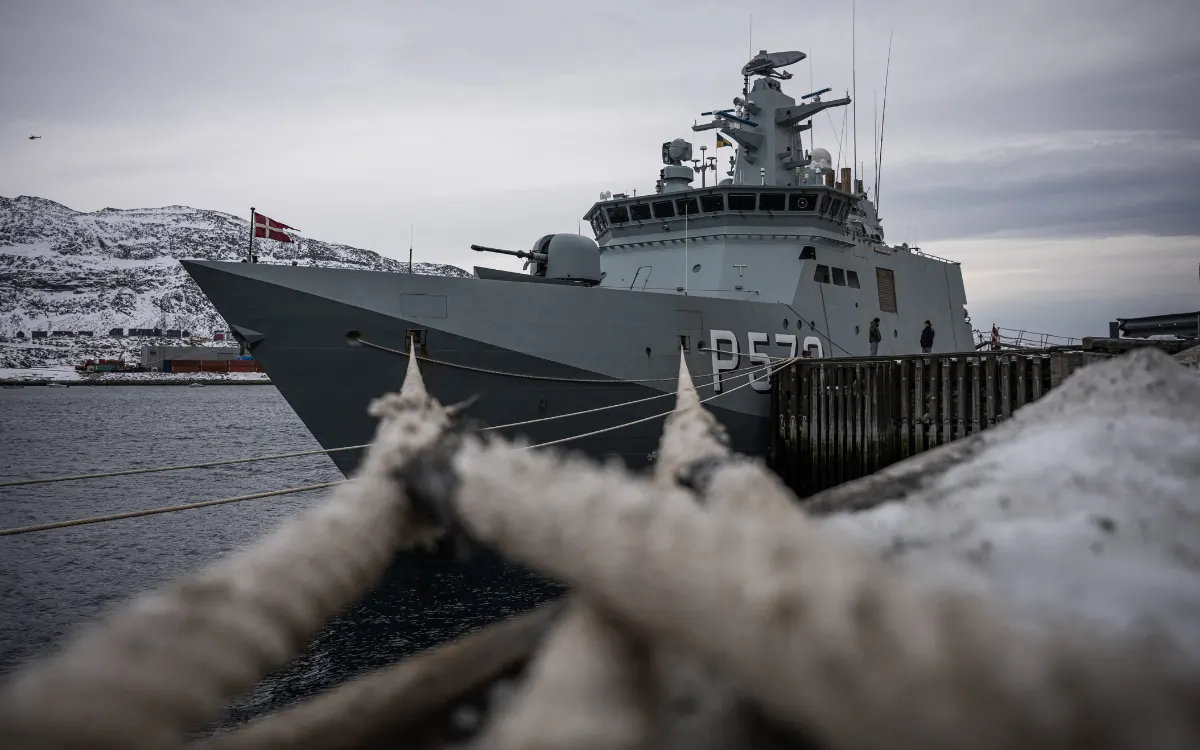
The agreement also commits Denmark to keep strengthening its Arctic posture across land, sea, air, and space. That clause turns Vice President JD Vance’s complaint that Denmark was failing to keep Greenland safe into a treaty obligation. Copenhagen approved two Arctic defense packages in 2025, the second worth DKK 27.4 billion, so the clause largely codifies a buildup already under way.
NATO is written into an agreement to which it is not a party. The independence clause presumes NATO membership, yet admission requires a unanimous invitation from the allies under Article 10 of the North Atlantic Treaty. Copenhagen and Nuuk have pledged an outcome that other allies control, so the permanence Washington sought rests partly on them.
A harder legacy remains. Arctic Endurance, a Danish-led allied deployment to Greenland, began in January. In March, Danish media reported, citing unnamed sources, that it had included preparations against a possible American landing. Troops had reportedly carried explosives to disable runways at Nuuk and Kangerlussuaq. Copenhagen has not confirmed the account. The December intelligence report had also warned that Washington no longer ruled out force, even against allies. The settlement suggests that alliance channels can absorb coercion between members. It also shows how pressure that failed to win sovereignty could still extract access.
The settlement suggests that alliance channels can absorb coercion between members. It also shows how pressure that failed to win sovereignty could still extract access
Ratification and the Implementation Test
The agreement enters into force once Denmark and Greenland complete their parliamentary procedures. Approval appears likely, given that both governments negotiated and signed it. The design of Greenland’s screening law will offer the earliest indicator of how narrowly Nuuk defines sensitive sectors.
The substantive contest will then move to implementation. Three early tests stand out: terms for Narsarsuaq and Mestersvig, the first U.S. request for unmanned systems under the accelerated procedure, and the first contested investment under Article X.
Washington’s side needs no congressional approval, since it treats the arrangement as an executive agreement. Whether funding for the new sites appears in U.S. defense budgets will show how quickly access becomes presence.
Minerals, the aim the agreement addressed only indirectly, are the likeliest subject of any further negotiation. Having secured a say over rival capital, Washington may seek its own arrangements for Greenlandic deposits. Any such framework would require Nuuk’s consent, giving Greenland leverage. The EU, which has written critical raw materials into its own package, is positioned to compete for the same projects.
Moscow’s initial response was restrained: the Kremlin called the agreement a matter for the parties involved and said Arctic cooperation with Washington was off the agenda. Beijing dismissed the “China threat” as groundless in January and has little reason to change that line.
Washington may treat the agreement as a template for securing strategic access in allied territory without assuming sovereignty. If so, the U.S. will have shown that coercion between allies can be converted into treaty rights without a change of borders. For Greenlanders, the principle of hosting the United States is settled; the contest now is over the terms.
Washington may treat the agreement as a template for securing strategic access in allied territory without assuming sovereignty. If so, the U.S. will have shown that coercion between allies can be converted into treaty rights without a change of borders