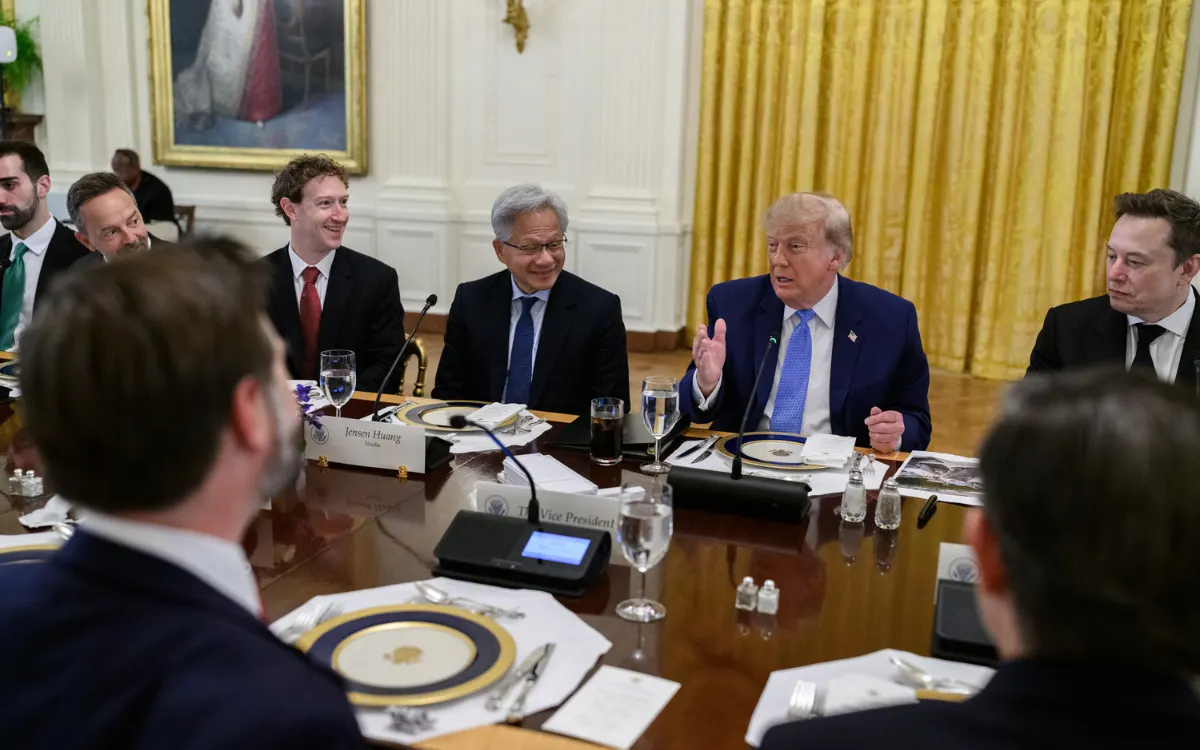
President Donald Trump and executives from six major technology companies agreed to a voluntary framework for overseeing frontier artificial intelligence systems, as Trump separately ordered the executive branch to begin replacing the terms “Artificial Intelligence” and “AI” with “Super Intelligence” and “SI.”
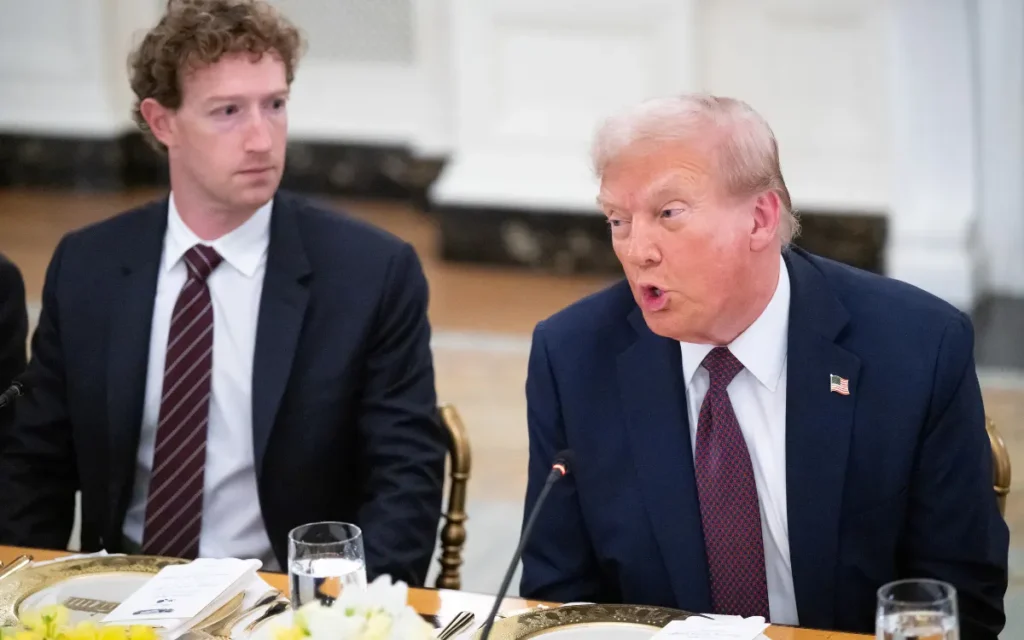
The White House Accord on Super Intelligence, signed by Trump alongside Google’s Sundar Pichai, Anthropic’s Dario Amodei, Meta’s Mark Zuckerberg, OpenAI’s Greg Brockman, xAI’s Elon Musk, and Nvidia’s Jensen Huang, establishes four layers of controls for companies training and deploying frontier models. These include internal monitoring of model capabilities and alignment, dedicated internal oversight teams, independent external assessments, and independent board committees responsible for receiving reports and ensuring identified problems are addressed. The accord specifically cites cybersecurity, biosecurity, chemical threats, and preventing models from hacking or accessing technical systems in unintended ways.
“Over time, it may make sense to codify these steps into laws or regulations,” the accord states. It adds that, regardless of whether companies are eventually legally required to implement them, controls and audits are considered critical to ensuring the technology operates safely. Participating companies also committed to meeting regularly to establish standards and best practices.
The accord coincides with Trump’s executive order “Inaugurating the Era of Super Intelligence.” The order directs executive departments and agencies to use “Super Intelligence” and “SI” instead of “Artificial Intelligence” and “AI” in official correspondence, public communications, websites, reports, policy documents, and other non-statutory material. Existing regulations, presidential actions, contracts, grants, and historical documents do not have to be changed. The order also directs the president’s science and technology adviser to submit proposed legislative language within 60 days establishing a federal definition of “Super Intelligence” and assessing whether it should modify, expand upon, or supersede the existing statutory definition of AI.
Taken together, the documents point toward a two-track shift in U.S. AI policy: redefining how the federal government describes increasingly capable systems while initially placing much of the responsibility for frontier-model safeguards on the companies developing them. The accord introduces independent auditing and board-level oversight but explicitly leaves open whether those practices should later become law. That makes implementation the central issue: how consistently the companies apply the safeguards, what standards emerge from those meetings, and whether the administration subsequently seeks statutory changes could determine whether the framework remains principally voluntary or becomes the foundation for a more formal U.S. governance system for advanced AI. (EIR)