
Hungary declined to join Ukraine’s new Carpathian Eight initiative despite efforts to improve bilateral relations since Peter Magyar replaced Viktor Orban.
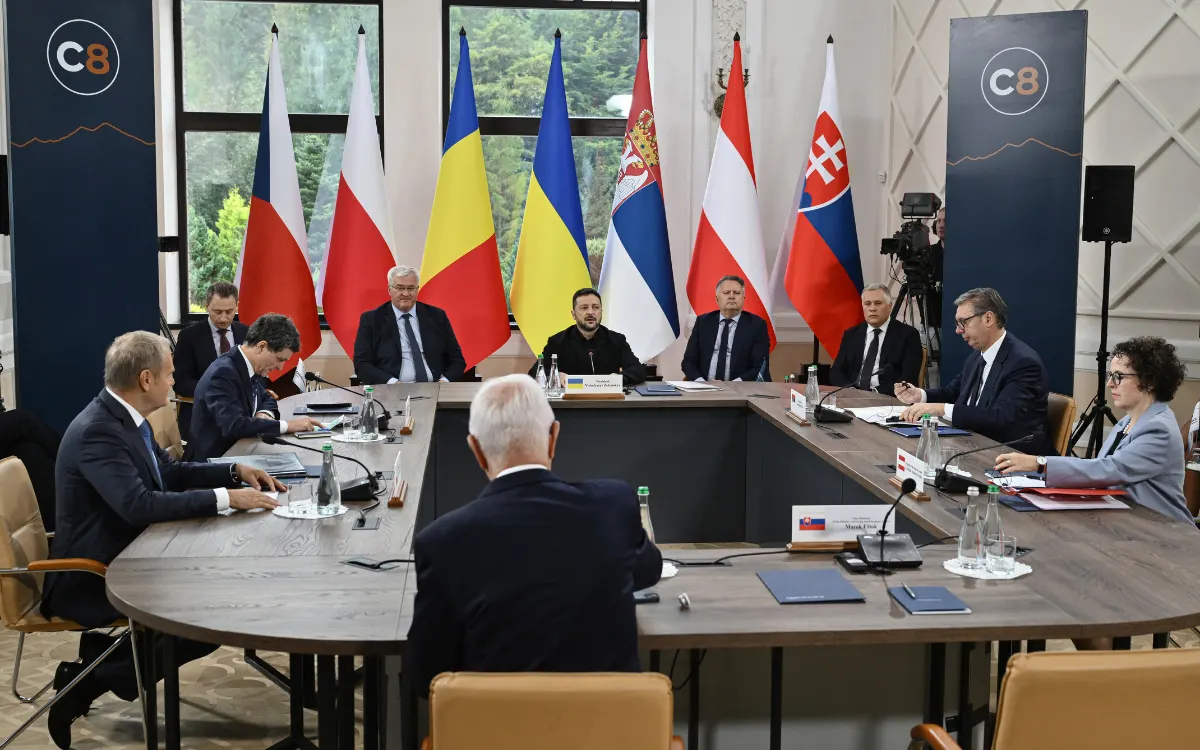
It comes after Ukrainian President Volodymyr Zelensky opened the first Carpathian Summit in Ukraine on Friday, saying representatives from seven other countries in the region attended, including Hungary. But Budapest said it had not joined the economic cooperation and security initiative, giving no public reason for staying outside the group.
“Hungary is not a member of the Carpathian Eight regional cooperation initiative launched by President Zelensky but is closely monitoring its establishment and further development. On the Hungarian side, the event was observed on site by Adam Cegledi, acting chargé d’affaires at the embassy in Kyiv. Hungary did not sign the declaration adopted at the forum,” Hungary’s foreign ministry said in a statement cited by French media.
Kyiv and Budapest have been trying for months to improve ties after pro-EU Prime Minister Peter Magyar succeeded Viktor Orban, whose government frequently clashed with Ukraine. This year, Budapest ceased blocking the start of EU membership negotiations with Kyiv but has since blocked further progress on accession talks. The dispute centers on longstanding disagreements over the rights of Ukraine’s ethnic Hungarian minority, with Budapest accusing Kyiv of failing to implement commitments reached earlier this year.
Hungary’s refusal to join the Carpathian Eight highlights the limits of the diplomatic reset between Budapest and Kyiv following Viktor Orban’s departure. Although Peter Magyar’s government has taken steps to improve relations with Ukraine, disputes over minority rights and Kyiv’s EU accession continue to constrain cooperation. Budapest’s decision is particularly significant because the initiative seeks deeper cooperation on security, energy, trade, and infrastructure, areas in which Hungary’s geographic position makes it an important regional partner. By sending an observer while declining to sign the declaration, Hungary appears willing to keep channels with the initiative open without committing itself to a Kyiv-led regional framework.
The increasingly public disagreement also suggests that the initial improvement in relations is becoming more transactional, with Kyiv accusing Budapest of continuing policies that obstruct cooperation, while Hungarian officials argue that they have already made significant efforts to improve ties and that Ukraine must now reciprocate. The dispute demonstrates that Orban’s departure has changed the political relationship without removing the bilateral disagreements that previously complicated cooperation, potentially limiting Kyiv’s ability to turn the Carpathian Eight into a cohesive regional framework. (AFP+EIR)