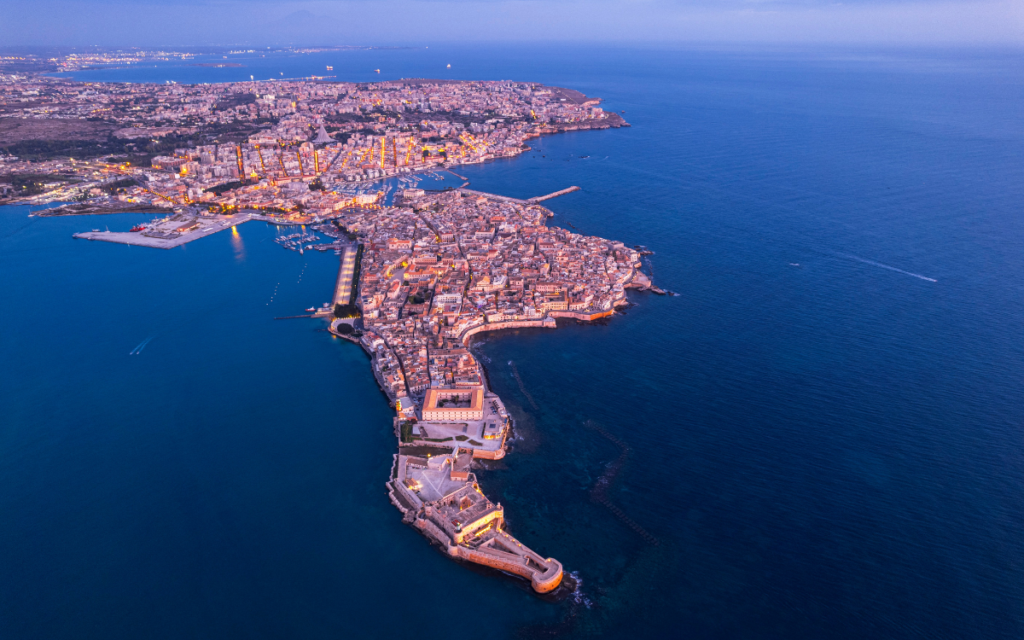


The sea lanes are turning north. The Strait of Hormuz remains largely closed, and Houthi forces now blockade Saudi shipping at the Bab el-Mandeb Strait after seizing Yemen’s Red Sea coast. A Chinese shipping line now runs from Ningbo to Felixstowe around Russia. As southern chokepoints become less reliable, the strategic value of the northern approaches is growing. Scotland is one important place where the NATO alliance watches that traffic arrive. Yet just as that geography rises in significance, the UK is entering a renewed period of constitutional uncertainty over the future of Scotland, Wales, and Northern Ireland.
Four party leaders signed a memorandum in Cardiff on September 14, 2026, calling on the British government to prepare for constitutional change. It binds nobody, and Downing Street had already ruled out a referendum before the signing. The significance lies in what it coincides with. Britain and its allies are committing increasingly irreversible defense infrastructure to territories whose constitutional status is being reopened, at the moment the strategic value of the northern approaches increases. Defense planning runs in decades while the commitments signed this year mature in the 2030s. Planners cannot price a question that has no closing date.
Britain and its allies are committing increasingly irreversible defense infrastructure to territories whose constitutional status is being reopened, at the moment the strategic value of the northern approaches increases
The Declaration’s Practical Weight
The signatories carry more weight than the document. John Swinney leads the Scottish National Party and serves as Scotland’s first minister. Rhun ap Iorwerth leads Plaid Cymru and became Wales’s first minister in May. Michelle O’Neill is Northern Ireland‘s first minister and vice president of Sinn Féin. Mary Lou McDonald, Sinn Féin’s president and leader of the opposition in the Irish parliament, signed alongside them.
All three first ministers signed as party leaders, which keeps the document outside formal governmental policy. The text covers the economy, energy, international cooperation, and self-determination. Emma Little-Pengelly, Northern Ireland’s deputy first minister, accused O’Neill of using the office without executive authority.
Supporting arithmetic is solid without being commanding. The SNP won 58 of 129 seats at Holyrood, the Scottish parliament, in May, seven short of a majority. Green members supply a pro-independence majority in the chamber. Plaid Cymru governs as a minority on 43 of 96 seats in the Senedd, the Welsh parliament.
The British government has closed the route regardless. Prime Minister Andy Burnham told the House of Commons that a fresh Scottish vote could proceed given a clear public consensus, then wrote to Swinney stating that none exists. Without a Section 30 order, the instrument that would transfer referendum powers to Edinburgh, Holyrood cannot legislate for a binding vote. A motion requesting one passed at Holyrood by 72 votes to 55 and changed nothing. Downing Street restated after the Cardiff signing that referendums remain off limits.
What the declaration alters is duration. A dispute previously confined to Scottish politics now carries a standing expression across three administrations, and the clocks are not synchronized. Swinney has named 2031 as his target. Ap Iorwerth has ruled out a Welsh vote before 2030. Northern Ireland runs on a third timetable, one set by statute. That spread extends the period over which planners must treat the settlement as open.
Geography Without a Substitute
The deterrent supplies the hardest constraint, and the constraint is physical. When the original basing decision was taken in 1963, ten sites were judged viable. Six lay in Scotland, one in Wales at Milford Haven, and three in England. Faslane and Coulport remain the only British facilities able to host the boats and their warheads for extended periods.
Faslane and Coulport remain the only British facilities able to host the ballistic-missile submarines and their warheads for extended periods.
Warhead handling drives the difficulty. The explosives handling jetty at Coulport sits roughly two miles from the nearest villages. Regulators are unlikely to permit equivalent operations at Devonport, which lies inside a city of about 250,000 people. Milford Haven could take the role only if its oil and gas facilities closed.
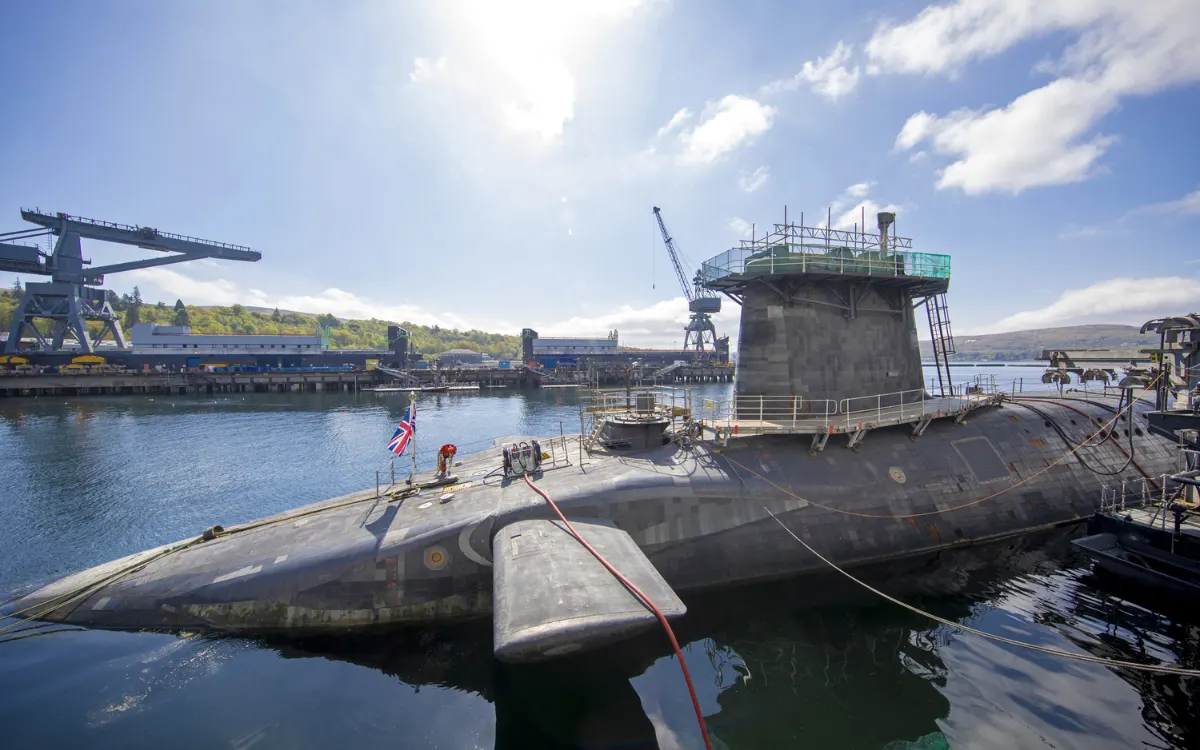
Timelines come from the original program. Trident works at Faslane and Coulport took 13 years to complete, at a cost of approximately £1.9 billion at 1994 prices. Only the Channel Tunnel had cost more. Explosive safety distances have increased since then, and the depot required today exceeds what was built for Polaris. Relocation would now compete against a nuclear enterprise projected to absorb between 20 percent and 25 percent of the defense budget in the late 2020s.
Scottish ministers make the opposite complaint. They maintain that Scotland accounts for 62 percent of United Kingdom waters while hosting no Royal Navy surface vessels, and that its conventional security has been treated as residual. The claim is contested, since patrol craft and mine countermeasures forces operate from the Clyde. It still indicates what a successor government would prioritize, and SNP planning would convert Faslane into a conventional naval headquarters.
Negotiated transition is feasible and fragile. Russia leased Sevastopol from 1997 on a 20-year term, later extended to 2042, until the wider relationship collapsed in 2014. Analysts have argued for years that a British deterrent would remain on the Clyde for a decade or more after any vote. The hazard concentrates in that interval, when access, jurisdiction, and alliance membership would all be unsettled.
Capital Committed, Politics Unsettled
Investment runs directly against that exposure. The Defence Investment Plan commits £298 billion over four years, holding core NATO-qualifying spending at 2.7 percent of GDP from 2027–28. John Healey, now the chancellor, resigned as defense secretary in June. His letter said the prime minister had been unable, and the Treasury unwilling, to commit the resources the country needed.
Scotland takes the largest share of the resulting infrastructure. HMNB Clyde receives £15.1 billion under a £26 billion naval base program, at a site employing over 6,500 personnel. The money funds infrastructure for the Dreadnought class and the SSN-AUKUS attack submarines, together with three floating docks at Faslane. The Ministry of Defence has also bought the Finnart Oil Terminal to expand sovereign fuel-holding capacity and confirmed £240 million in sustainment contracts for Lossiemouth-based aircraft. Capital of this kind is site-specific and cannot be lifted once poured. No alternative site has been funded as a hedge.
Base infrastructure is site-specific and cannot be lifted once poured, and no alternative site has been funded as a hedge.
Manufacturing horizons extend the mismatch. Each Type 26 takes roughly 66 months to build, and BAE Systems expects one delivery a year from the fifth ship onward. Suppliers weigh capacity investment against contract horizons of that length, skilled labor follows perceived stability, and allied partners price political risk into delivery schedules they cannot control.
Devolved instruments already reach reserved programs. Scottish Enterprise refused a £2.5 million grant for a submarine welding facility on the Clyde, citing munitions policy, and the UK government funded the project instead. Swinney lifted the restriction in September 2025, after which industry waited four months for implementing guidance. No constitutional change was required for any of that.
Three Departures, Three Problems
The three cases produce different losses and run on different timelines. Scottish departure is the acute one. It removes the deterrent base, the yard building the alliance’s anti-submarine frigates, and the air node at Lossiemouth from which the maritime patrol fleet works the northern approaches. The Hebrides Range off the Western Isles hosts Formidable Shield, Europe’s largest integrated air and missile defense exercise, alongside Norway’s Andøya. The alliance rehearses its northern air defense on Scottish ground.
Scottish departure removes the deterrent base, the yard building the alliance’s anti-submarine frigates, and the air node at Lossiemouth.
Welsh departure is slower and narrower. A 2030 horizon places it beyond most current procurement decisions, which lowers its weight without removing it. Its exposure is the training estate, including Sennybridge in the Brecon Beacons and the armored ranges at Castlemartin—ground the English estate could not absorb. The Ministry of Defence also lodged a planning application in spring 2026 for 27 radar antennas at Cawdor Barracks in Pembrokeshire. The installation is the British contribution to a space-monitoring network built with the United States and Australia, and consent rests with a county council.
Northern Ireland differs in mechanism as much as in content. The Good Friday Agreement obliges London to call a border poll once a majority appears likely to favor unification. The trigger therefore sits outside Westminster’s discretion. Demography moves that clock, and London does not hold it. Thales in Belfast assembles the Saab-designed NLAW and builds Britain’s short-range air defense missiles. A £1.6 billion order for Ukraine covers more than 5,000 Lightweight Multirole Missiles.
Reunification would also change the neighborhood. Ireland spent the least on defense among 38 European countries surveyed in 2024, at 0.24 percent of GDP. It remains militarily non-aligned, and legislation to ease its deployment rules is still before the Irish parliament. U.S. President Donald Trump said during a visit to Ireland two days before the summit that he would welcome unification. Departure alongside Scotland would place non-aligned states on both sides of the Irish Sea.
Only the Scottish case touches the deterrent and the northern surveillance network at once. Welsh and Northern Irish departures would impose serious costs while leaving the core architecture standing. That combination is what defense planning cannot absorb, and it runs on the shortest timeline.
The Northern Watch
The value of northern waters is rising because the southern routes have largely closed. The Bab el-Mandeb declaration pushed oil above $100 a barrel in July. Houthi forces took Mokha and Perim Island in September.
The northern alternative has moved from concept to schedule. A Chinese shipping line has begun a container service linking Ningbo with Felixstowe through the Northern Sea Route, cutting a voyage of roughly 40 days to about 20. Beijing markets the route as the Polar Silk Road. Volumes remain marginal. Total cargo reached 37 million metric tons in 2025 against 464 million through Suez, and only 3.2 million crossed the full route. Rosatom issues the permits. Vessels below the required ice class need Russian icebreaker escort, and expected Chinese investment in polar ports never materialized.
Direction matters more than tonnage. A seasonal corridor combining Russian infrastructure with Chinese cargo terminates in the North Atlantic, and the waters approaching that terminus are watched from Scotland. British capability is concentrating in the same waters. Atlantic Bastion, launched in the June 2025 defense review, is the program built to counter Russian activity against undersea cables and pipelines.
A seasonal corridor combining Russian infrastructure with Chinese cargo terminates in the North Atlantic, and the waters approaching that terminus are watched from Scotland.
Atlantic Net is its first phase and its sensing layer. It introduces large numbers of uncrewed underwater vehicles around the Greenland–Iceland–UK gap. A minimum capability is due in the water by the end of 2026, with full functionality a year later. Coverage extends to the Norwegian Sea and the Bear Island gap. In April 2026 British aircraft flew more than 450 hours tracking three Russian submarines north of the United Kingdom.
Jurisdiction over the seabed extends the same dependency. Eastern Green Link 2 is under construction between Peterhead and Drax, and a second link from Aberdeenshire to Norfolk is in the consent process. Control of the exclusive economic zone determines who licenses, inspects, and polices such assets. Independence would move that authority to Edinburgh while the monitoring burden stayed with the alliance.
An Alliance Without Procedure
Allied exposure has attracted little attention. Norway’s order for at least five Type 26 frigates, worth about £10 billion, is the largest defense investment in its history. Every hull will be built at Govan and Scotstoun alongside Royal Navy ships. First delivery falls in 2030. Trade reporting puts Oslo’s own requirement a year earlier, which would transfer at least one Royal Navy hull to the Norwegian flag. Britain has guaranteed Norwegian industry cooperation equivalent to the total value of the acquisition.

NATO’s principal anti-submarine capability in the North Atlantic therefore rests on a single build site in one city. That city sits in a jurisdiction whose governing party has set 2031 as its referendum target. The alliance has no procedure for the situation. Article 10 of the North Atlantic Treaty provides for accession by unanimous invitation and Article 13 governs withdrawal. Neither addresses the division of a member’s territory.
A successor state would need unanimous consent to join, which gives London a veto it might prefer not to exercise publicly. Several timelines then converge. Atlantic Net reaches full functionality at the end of 2027, NATO reviews its spending trajectory in 2029, and the next United Kingdom general election must be held by that year. Norwegian deliveries begin in 2030 and Dreadnought enters service in the early 2030s.
Independence remains improbable on the current mechanics. The consequences that can be measured over the next five years fall on planning behavior rather than on borders. Britain is delivering its northern sensing architecture to a two-year deadline, funding a base program that runs for decades, and concentrating allied production in one city. The constitutional status of that city stays open. The corridor is turning north as the ground beneath the northern flank becomes contested.
The wider problem is not confined to Britain. Western defense geography now depends on jurisdictions whose electorates can revisit their own membership of the state, and the alliance has written no procedure for that. Russia and China are consolidating along the Polar Silk Road without facing any equivalent contest over territory, basing, or industrial siting.
Western defense geography now depends on jurisdictions whose electorates can revisit their own membership of the state, and the alliance has written no procedure for that.
That asymmetry is the strategic point. The northern flank is becoming a much more important theater at the moment the states that hold it are least certain of their own future. Whether the alliance treats constitutional risk as a planning variable, or continues to price it at zero, will determine how much of the Atlantic architecture survives the next decade intact.