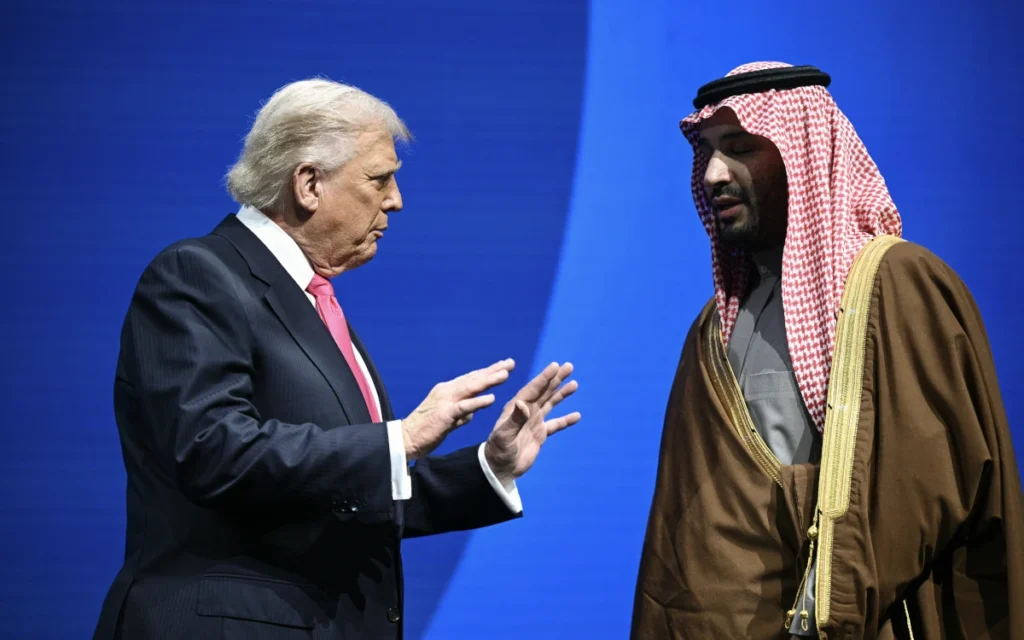

The world is accustomed to viewing Chinese power through the prism of the China–U.S. relationship. Yet Xi Jinping’s recent foreign travel suggests that China’s more consequential diplomatic gains may be occurring elsewhere, in its relationships with the Global South. Such gains may also be accruing in the institutions through which non-Western countries are seeking greater international influence. China is capitalizing on shifting international power dynamics to strengthen its position against what it perceives as a declining United States. It is also increasingly comfortable operating in a world in which it does not need to outcompete the United States directly to expand its own influence.
Much international attention has focused on President Xi’s state visit to Washington and his meeting with President Donald Trump. But a more complete picture emerges from examining all four of Xi’s trips abroad in late August and September. Together, they reveal how Beijing is positioning itself to benefit from Washington’s diplomatic difficulties while expanding its influence beyond the bilateral rivalry.
Xi’s Quiet Challenge to American Primacy
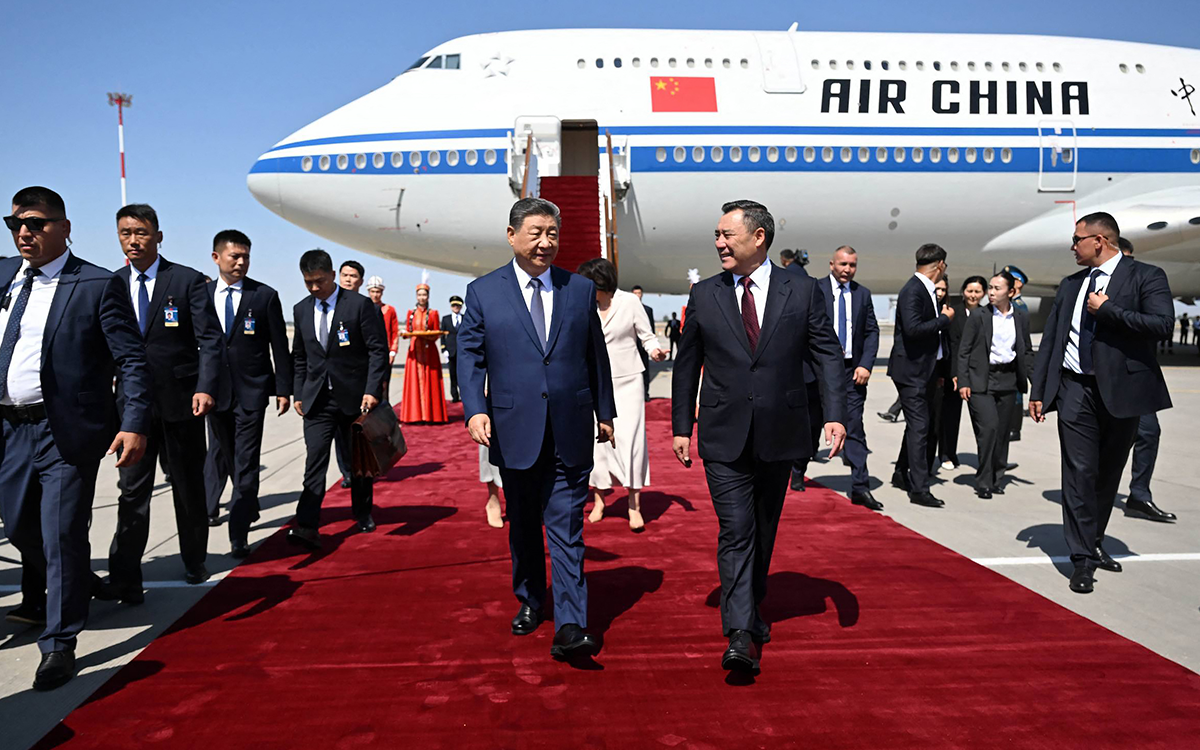
Xi visited Bishkek, Kyrgyzstan, for the Shanghai Cooperation Organization (SCO) summit and undertook a state visit to Cairo. He then attended the BRICS summit in Delhi before concluding his travels with the state visit to Washington, D.C. This concentration was unusual for a leader who makes few foreign trips. His only previous international visit in 2026 had been to Pyongyang in June to meet Kim Jong Un. Since taking office in 2012, Xi has made just 56 trips abroad.
If the travel schedule of a country’s leader offers clues to foreign policy priorities, Xi keeps these cards close to his chest. Any trip abroad by Xi is noteworthy. He has preferred to project stateliness and superpower status by letting the world’s leaders come to him. He has avoided an extensive international campaign to promote China as an alternative to American global leadership. His recent flurry of visits is therefore particularly revealing, both for the destinations and the diplomatic message connecting them.
Taken together, the visits illustrate a calculated effort to strengthen China’s position among emerging and established powers seeking a greater international voice, particularly through the SCO and BRICS. These relationships offer Beijing opportunities to cultivate economic partnerships, shape alternative multilateral institutions, and expand its diplomatic options without provoking direct confrontation with Washington.
They also point to shifting global power dynamics. When Xi arrived at Joint Base Andrews to meet Trump, he did so on considerably more equal terms than during his previous state visit in 2015, under Barack Obama. Yet the wider significance of his diplomatic offensive lies in China’s growing ability to pursue its international interests independently of Washington. The strategic risk for Washington is that while its policymakers fixate on the bilateral rivalry, Beijing is quietly building an alternative international order in which American power matters progressively less.
The strategic risk for Washington is that while its policymakers fixate on the bilateral rivalry, Beijing is quietly building an alternative international order in which American power matters progressively less
China’s Rising Standing
In the 11 years between Xi’s two state visits to the United States, the balance of power and influence between the two countries has changed in important ways. But this shift cannot be understood by examining their bilateral rivalry alone. It also requires taking in the wider international landscape, where geopolitical instability and changing attitudes toward American leadership have created new diplomatic opportunities for Beijing.
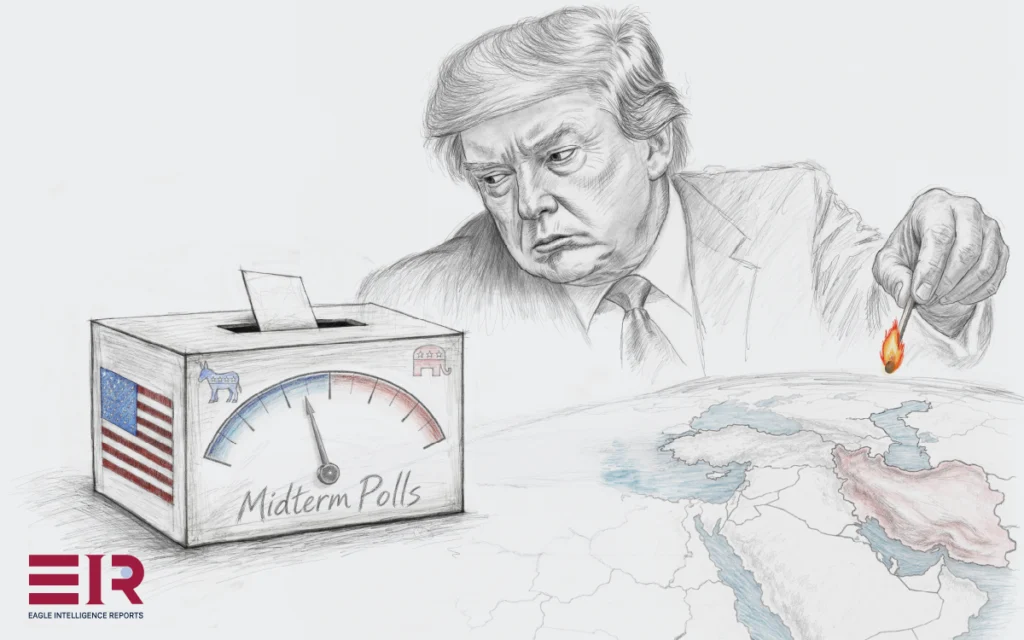
Trump’s inconclusive and disruptive war against Iran has added to the global unease felt toward his administration. It has compounded the resentment already felt around the world at the tariffs and other coercive measures directed at partners and rivals alike since the beginning of his second term. This is a key reason why China’s international standing is growing in the eyes of global audiences, especially in the Global South. These developments have created a diplomatic opening that Beijing has sought to exploit. The shift owes more to the decline in U.S. popularity than to the success of China’s own policies in capturing international attention.
Beijing has also invested heavily in cultivating its own appeal through trade, infrastructure development, cultural exchanges, and diplomatic initiatives. Xi’s Global Civilization Initiative, launched in 2023, seeks to strengthen China’s soft power by championing cultural diversity and a vision of international relations less dominated by Western political values. Yet the declining popularity of American leadership has created a particularly favorable environment for these Chinese efforts.
Beijing stands to gain from perceptions shifting positively in its favor. More favorable attitudes toward China could make governments and societies more receptive to its economic partnerships, diplomatic proposals, and international institutional initiatives. Whether such perceptions translate into greater Chinese geopolitical leverage remains to be seen. Nevertheless, they suggest that China has growing opportunities to expand its influence without directly challenging Washington.
Recent polling illustrates the changing international landscape. Respondents in several regions view China as a more positive global influence than the United States. In Latin America, the 2026 Latinobarómetro survey covered 17 countries and was published on October 2, 2026. It found that 65 percent of respondents viewed China’s influence positively, compared with 57 percent for the United States. This marked the first time China had overtaken the United States on this measure since the survey began in 1995. In 2020, the corresponding figures were 48 percent for China and 60 percent for the United States, a substantial reversal in just six years.
A similar shift is evident among Southeast Asian opinion-makers. In its 2026 State of Southeast Asia report, the Singapore-based ISEAS–Yusof Ishak Institute asked which power the region should align with if forced to choose between Beijing and Washington. China drew 52 percent of responses, against 48 percent for the United States. These preferences have fluctuated in recent years. Washington narrowly led in 2025, while Beijing had edged ahead in 2024 by 50.5 percent to 49.5 percent. The narrow margins suggest that regional preferences remain divided rather than decisively aligned with either power.
In Africa, Afrobarometer surveys reveal a similar divergence in perceptions of the two countries’ influence. Positive assessments of American influence fell from 59 percent in 2019–2021 to 49 percent in 2021–2023, before recovering modestly to approximately 52 percent in 2024–2025. Over the same period, positive perceptions of China’s influence remained comparatively stable at around 62 percent.
This is not a global trend. For instance, there is still much official and popular skepticism toward China in Europe, especially over its trade surplus with the EU. In July, the French and German governments announced a joint roadmap to address it. But Beijing does not need these states to align exclusively with China to benefit from their changing perceptions. Greater receptivity to Chinese investment, diplomatic initiatives, and alternative institutions can gradually expand Beijing’s room for maneuver and make it harder for Washington to mobilize unified international opposition.
Greater receptivity to Chinese investment, diplomatic initiatives, and alternative institutions can gradually expand Beijing’s room for maneuver and make it harder for Washington to mobilize unified international opposition
The steady or increasingly positive perceptions of China across the Global South are significant. This is a demonstration of China’s intimidating stature and a reflection of its more assertive posture. As the United States has shown, a superpower may wish to be both feared and admired to enhance its standing.
China has not “beaten” the United States in any meaningful way, but the trajectory of opinion is telling, especially in the Global South. It has served as a powerful undercurrent during Xi’s trips abroad. Beijing is cultivating a wider network of relationships through which it can exercise influence and leverage connections that are increasingly independent of American power.
Xi Among Friends in the SCO and BRICS
China is capitalizing on these trends gradually and with restraint, avoiding the outwardly triumphalist behavior that might attract Trump’s ire. Rather than embarking on a victory lap to promote China as a stable alternative partner, Xi has conveyed this message more carefully and subtly.
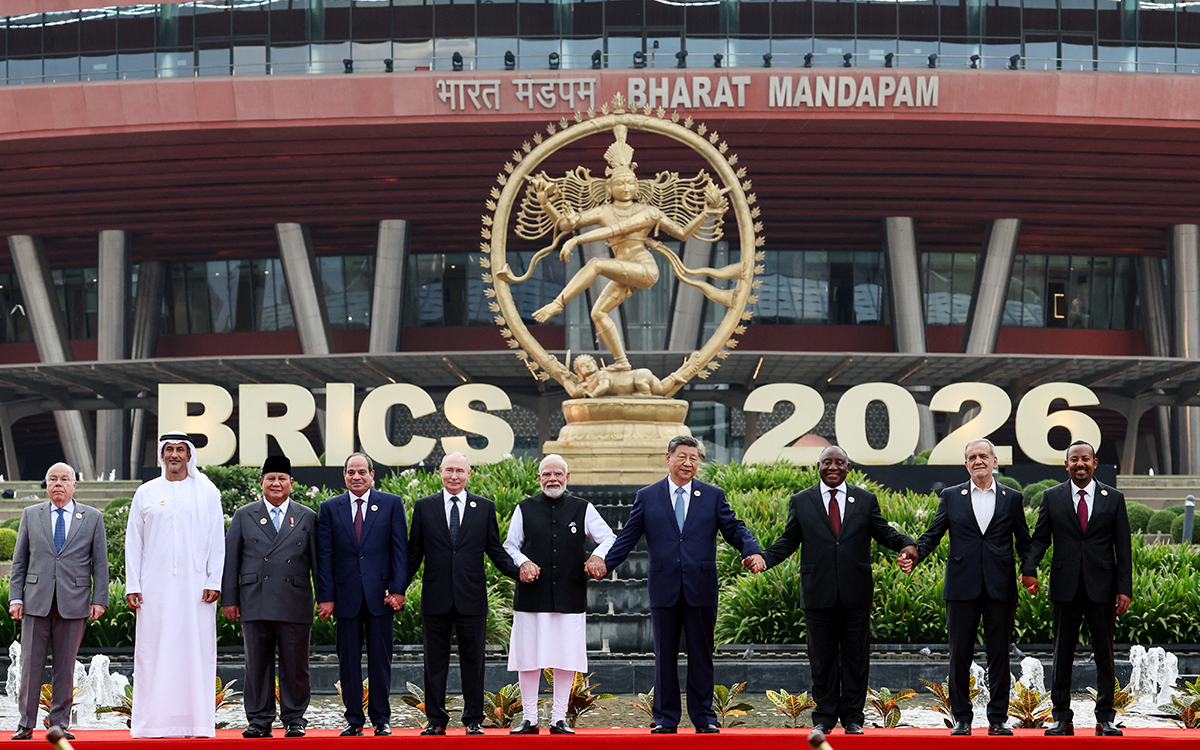
Xi addressed the SCO summit in Bishkek and the BRICS summit in Delhi. In both speeches, he invoked variations of a familiar phrase: “changes unseen in a century are accelerating across the world.” At both summits, he expounded on China’s role in spearheading a more balanced international order for countries outside the West. He took care not to present this shift too explicitly as coming at the expense of the United States or Europe. His references to the resurgence of “hegemonism, unilateralism, and protectionism” were indirect criticisms of the Trump administration rather than outright condemnations of Washington.
Notably, Russian President Vladimir Putin and Iranian President Masoud Pezeshkian attended both summits. Their presence lent the gatherings an air of defiance toward European efforts to isolate Russia and American efforts to isolate Iran. Xi did not need to say anything particularly controversial on either matter. For China, the simple demonstration of regularly convening so many significant heads of state and government outside the Western-led sphere conveys a message in itself.
While there is no formal Chinese bloc or network of alliances comparable to those maintained by the United States, this does not mean Beijing’s international influence is negligible. China’s bilateral trade with Russia and Iran has helped both governments sustain their economies and military activities despite Western-led sanctions. This illustrates how dramatically international affairs have changed since the post-Cold War decades, when coordinated Western economic pressure often offered better prospects of isolating an adversarial government.
China’s bilateral trade with Russia and Iran has helped both governments sustain their economies and military activities despite Western-led sanctions
In Chinese statecraft, delivering a message without necessarily spelling out every implication has considerable cachet, particularly when contrasted with the more confrontational rhetoric of the Trump administration. Xi’s stock formulations illustrate the point. He called on the SCO to “jointly advocate an equal and orderly multipolar world” and expressed an aspiration to “build a community with a shared future for humanity.”
Such phrases are easy to dismiss or mock, particularly because they are seldom accompanied by specific policy proposals. Yet their consistent repetition over the years has helped position Xi and China as relatively predictable international actors.
Indeed, Xi has generally departed from this diplomatic restraint only when addressing two matters of particular concern to Beijing: Taiwan’s future and Japan’s increasing military spending. But neither issue featured prominently in his public statements at the SCO or BRICS summits. Although both remained sources of tension during his subsequent visit to Washington, they were largely kept from dominating the public exchanges with Trump.
Some of the practical gains associated with these diplomatic gatherings are likely to emerge gradually. One example is the development of interconnected payment arrangements among major non-Western economies, which could eventually reduce their dependence on the Western-dominated international financial system and its potential chokepoints.
China is also seeking to translate this institutional diplomacy into a broader role in shaping international governance. Its inaugural Global Governance Forum, held in the Xiong’an New Area in late October, sought to position Beijing as a rallying point for alternative, particularly non-Western, views on global governance.
Chinese companies also continue to establish commercial relationships across the Global South through the long-standing Belt and Road Initiative. Together, these efforts reflect Beijing’s long-term ambition to position itself as a leading alternative pole in the international order.
Xi Meets Trump From a Position of Advantage
Xi arrived in Washington for his state visit on September 23, 2026, shortly after the BRICS summit. He had ample reason to feel confident about China’s international position relative to the United States. In 2025, Beijing had demonstrated its ability to retaliate against American trade restrictions by threatening to curb its exports of critical minerals.
In 2025, Beijing had demonstrated its ability to retaliate against American trade restrictions by threatening to curb its exports of critical minerals
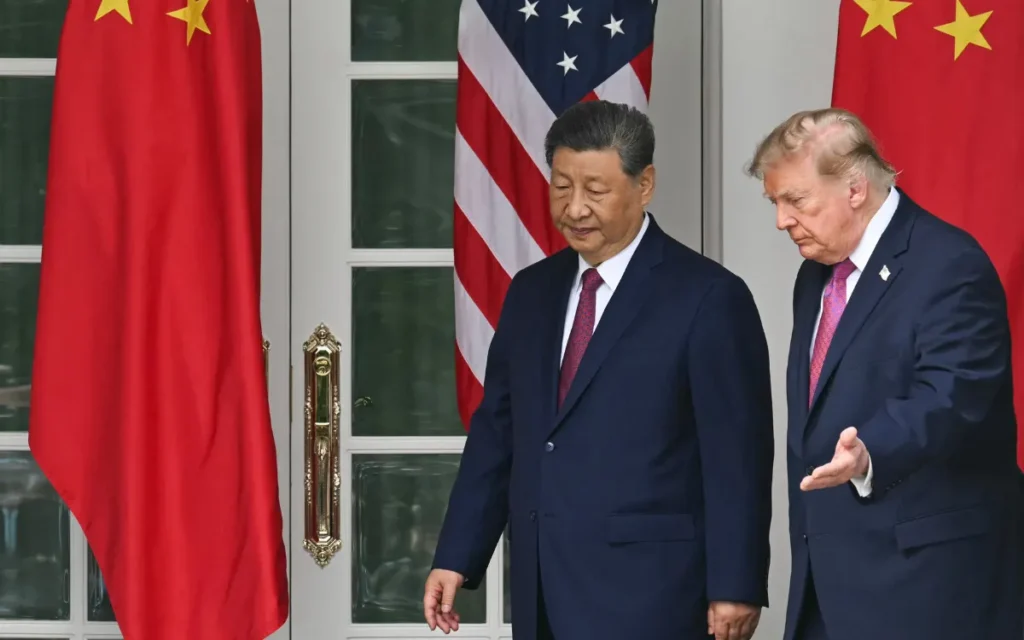
The central message of Xi’s visit was his call to “build a constructive China–U.S. relationship of strategic stability.” It continued the stabilization of relations that began when the two leaders met at the Asia-Pacific Economic Cooperation (APEC) summit in Busan, South Korea, in October 2025.
Few tangible advantages or concessions emerged from the state visit. Much of its significance therefore rested on diplomatic optics and less explicit strategic benefits. Notably, the two leaders set aside several contentious issues in favor of presenting an overarching narrative of stable U.S.–China relations. At the White House summit, Xi urged Trump to officially oppose Taiwanese independence and discouraged further American weapons sales to Taiwan. Tensions remained relatively subdued, partly because one potentially disruptive issue had already been set aside in May, when Washington paused a weapons package for Taiwan worth $14 billion. Trump described the package as a “very good negotiating chip” in his dealings with China.
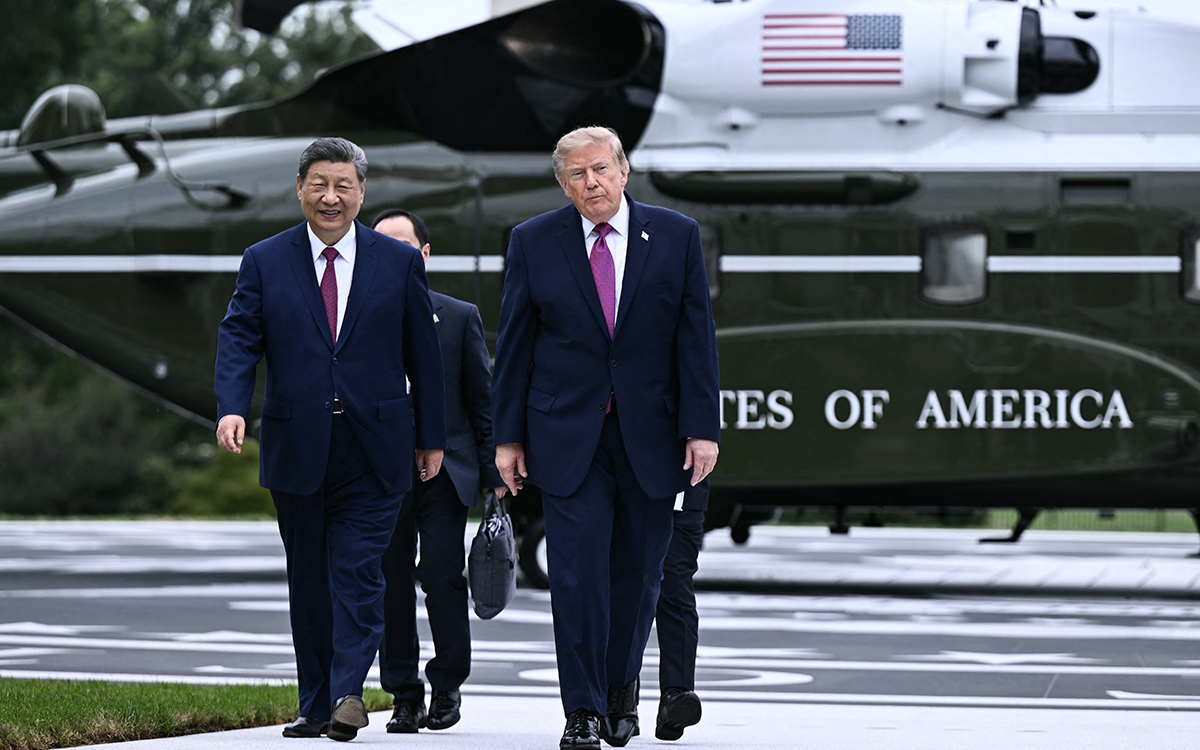
During the state visit, at least, Xi and Trump delivered a carefully choreographed display of coexistence between the two superpowers. This left Trump vulnerable to domestic criticism that he had been too deferential toward Xi. But the accommodating atmosphere may also reflect the growing diplomatic and economic costs of confrontation with Beijing. For Washington, receiving Xi with considerable hospitality offered a more practical means of managing the relationship than the verbal confrontations that have characterized other aspects of Trump’s foreign policy.
China and Middle East Security
Washington’s restraint toward Beijing also reflects its strained position in the Middle East, where the war it launched alongside Israel against Iran has proved difficult to conclude. During Xi’s less-publicized state visit to Egypt in early September, he presented a proposal for a new regional security architecture in the Middle East. As a major economic partner to countries on different sides of the regional confrontation, China is well positioned to explore a behind-the-scenes diplomatic role in whatever postwar arrangements eventually emerge.
As a major economic partner to countries on different sides of the regional confrontation, China is well positioned to explore a behind-the-scenes diplomatic role in whatever postwar arrangements eventually emerge
The Cairo visit also produced more concrete developments. Egypt and China agreed to deepen cooperation involving the Suez Canal Economic Zone, an important commercial foothold for Beijing near one of the world’s most strategically significant maritime corridors. The arrangement is particularly significant given the recent intensification of conflict in Yemen and the Houthis’ encroachment on Red Sea shipping, especially at the Bab el-Mandeb Strait. Egypt and China also agreed to increase the use of the yuan and other local currencies in bilateral trade. The step is consistent with Egypt’s BRICS membership and the bloc’s broader interest in reducing dependence on the dollar.
These agreements do not amount to a decisive shift in the Middle Eastern balance of power. Nevertheless, they demonstrate how Beijing can use economic partnerships to expand its regional presence without assuming the military commitments traditionally associated with American influence.
Subtlety in Chinese Internationalism
Viewed together, Xi’s four trips reveal a broader picture that is essential to understanding China’s growing standing. Relations with the United States remain of singular importance to Beijing, and the two powers continue to disagree profoundly over Taiwan, Japan’s military expansion, and other strategic issues. Yet China’s diplomatic ambitions are increasingly directed toward a much wider international arena.
It is easy to characterize Chinese statecraft as being light on specifics and concerned primarily with a loosely defined, long-term competition with Washington. Its practical effects can be harder to discern precisely because they accumulate incrementally. But Xi’s four foreign visits illustrate how Beijing is positioning itself to exploit American missteps without provoking direct confrontation, while strengthening its standing among important parts of the non-Western world.
Despite the intense attention devoted to China’s technological competition with the United States and the future of Taiwan, Beijing clearly regards the international contest as more expansive. Traditional diplomacy still plays an important role in it.
Xi may have welcomed the optics of being treated as an equal during his visit to Washington. Yet the broader significance of his diplomatic offensive lies elsewhere. China is gradually expanding the relationships and institutions through which it can exercise international influence, even when Washington is neither a participant nor the central consideration.