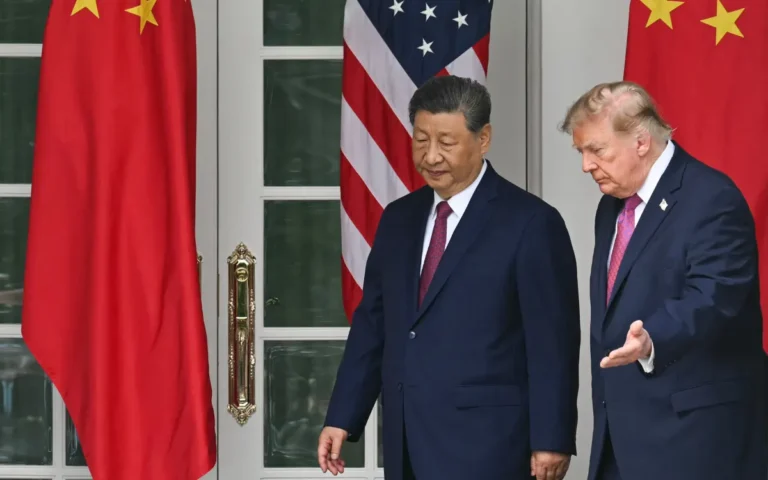
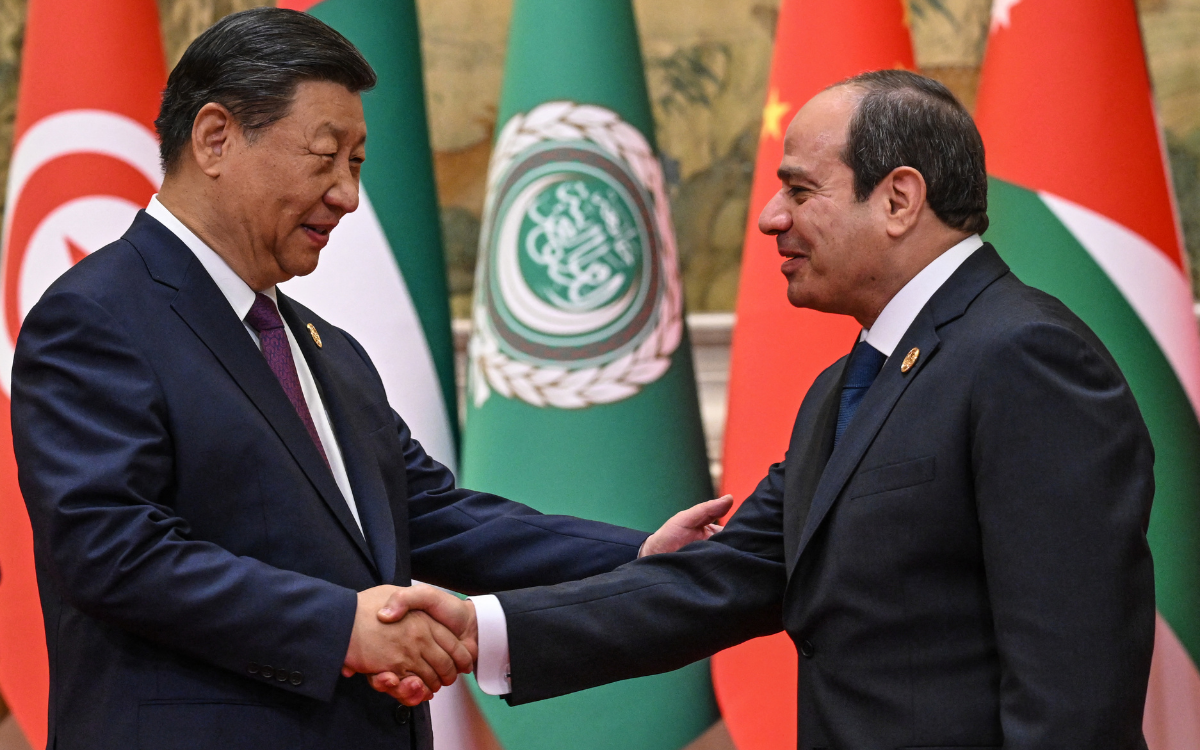
Chinese President Xi Jinping is visiting Egypt in a rare trip to the Middle East as both countries face the threat of U.S. sanctions over financial links to Iran.
Xi is set to meet his Egyptian counterpart Abdel Fattah al-Sisi on Wednesday, when he is expected to discuss Iran, shipping in the Red Sea and the Strait of Hormuz, and the war in Gaza. The two leaders are also expected to sign agreements on artificial intelligence, transport, energy, and investment in the Suez Canal Economic Zone. The discussions come against the backdrop of Chinese and Egyptian militaries conducting joint air combat exercises last month.
“I look forward to renewing the friendship and working together with President Sisi to… map out a new blueprint for deepening the China–Egypt comprehensive strategic partnership,” Xi wrote in an Egyptian media outlet on Tuesday.
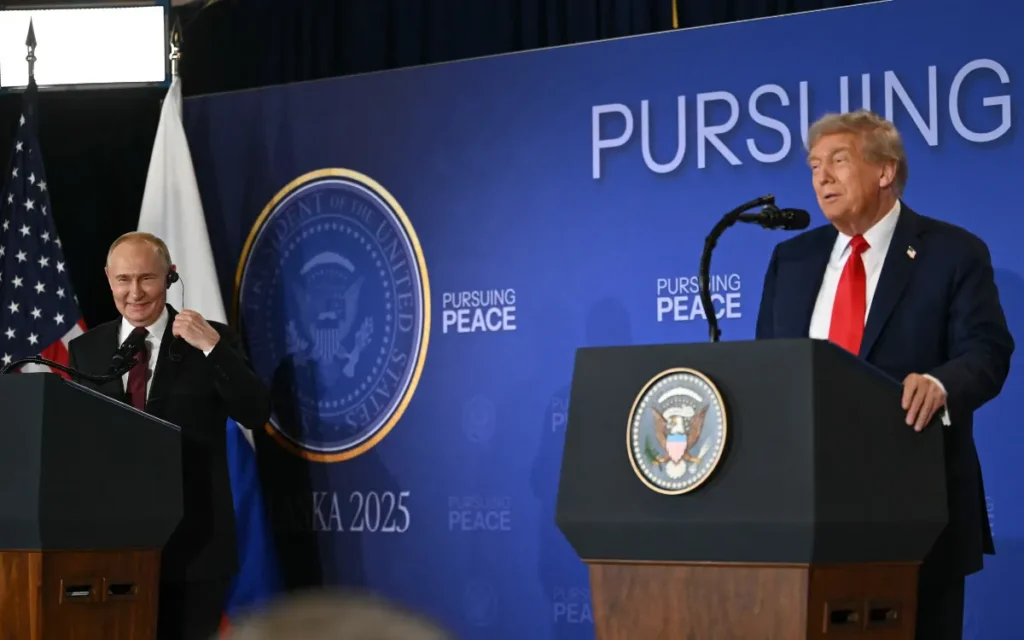
Xi arrived in Egypt after attending the Shanghai Cooperation Organization summit in Bishkek, Kyrgyzstan, where he held talks with Russian President Vladimir Putin and other regional leaders as the war with Iran and U.S. economic pressure featured prominently in diplomatic discussions. Last month, U.S. President Donald Trump announced an “economic D-day” for Iran and warned that any countries that provide “any type of lifeline” to Tehran will face “tremendous economic consequences.” China, a major buyer of Iranian oil, said it would safeguard its interests. Egypt, a longtime recipient of U.S. military aid, warned against regional escalation after a drone strike hit one of its ports in July.
Xi’s visit highlights how Washington’s campaign to economically isolate Iran could reshape relationships beyond Tehran, as China seeks deeper ties with a major U.S. security partner while Egypt attempts to preserve strategic room between Washington and Beijing. The combination of planned Chinese investment, expanding military cooperation, and U.S. financial pressure on Banque Misr makes Cairo an important test of whether sanctions targeting Iran’s economic links strengthen U.S. leverage or encourage affected countries to diversify away from American-controlled financial channels. The key developments to watch are the agreements signed during Wednesday’s Xi–Sisi meeting, whether Egypt alters financial links targeted by Washington, and whether China provides alternative financing, investment, or payment mechanisms that could reduce Cairo’s exposure to U.S. sanctions.