
A lawyer for a Ukrainian accused of blowing up the Nord Stream pipelines said on Wednesday that Russia used them as a “weapon” to exert political and economic pressure.
The claim comes as the trial of former Ukrainian special forces officer Sergiy Kuznietsov opened in Hamburg, Germany, over the 2022 explosions that damaged pipelines designed to carry Russian gas to western Europe.
“In September 2022, the pipelines were not supplying anyone with heat,” defense lawyer Nicola Canestrini told the court. “They were a means of exerting pressure in a war.”
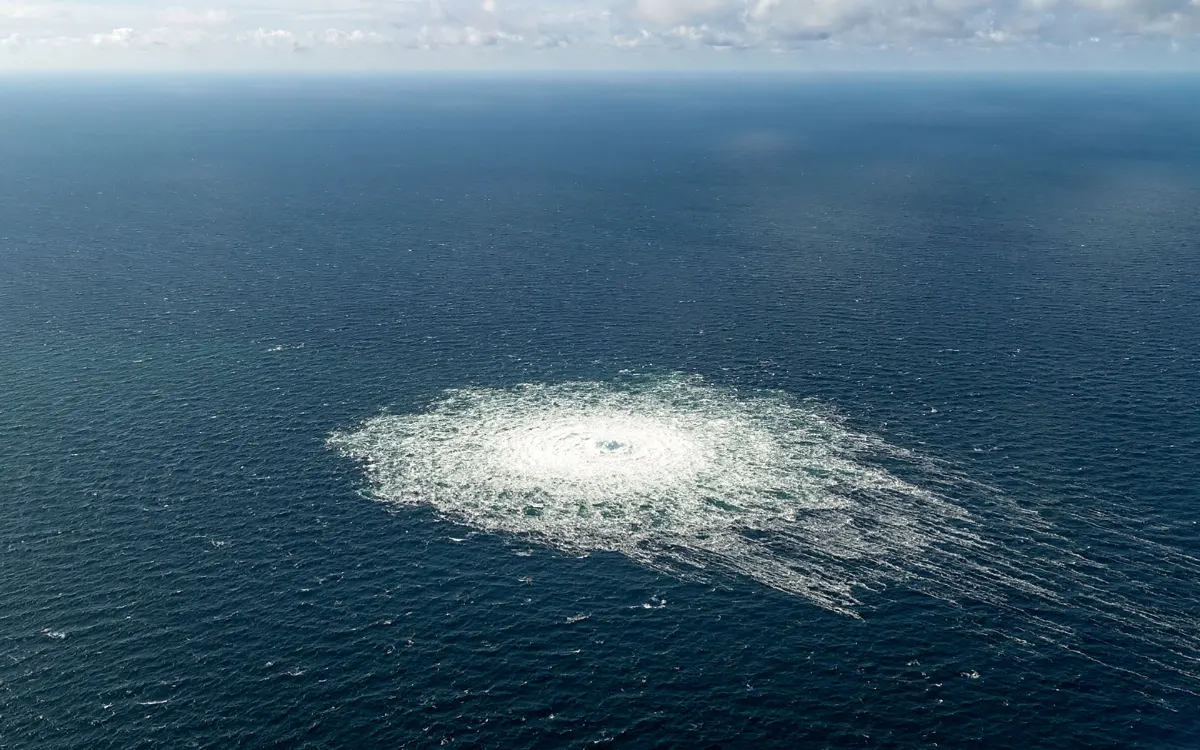
German prosecutors accuse the 50-year-old Kuznietsov of leading a Ukrainian team of divers and an explosives expert that sabotaged the pipelines seven months after Russia’s full-scale invasion of Ukraine. Prosecutor Stefan Schmidt described the bombing as a war crime involving military action against civilian targets. Kuznietsov is also charged with attacking civilian infrastructure and causing an explosion. Canestrini argued there was no clear evidence connecting his client to the sabotage and instead accused Russia of committing war crimes. Three of the four Nord Stream pipelines were seriously damaged by underwater explosions in the Baltic Sea in September 2022.
Prosecutors allege Kuznietsov entered Germany using a forged Ukrainian passport before the group departed Rostock aboard a rented yacht carrying military-grade explosives. Divers allegedly placed timed charges on pipelines near the Danish island of Bornholm, with prosecutors arguing the operation sought to permanently halt Russian gas deliveries and deprive Moscow of revenue for its war. None of the pipelines was operating when the explosions occurred, and Russia had already suspended deliveries through Nord Stream 1 after progressively reducing supplies to Europe. Kyiv has consistently denied organizing the sabotage, while German investigators have identified a group of Ukrainians as the alleged perpetrators. Germany’s position as a leading military supporter of Ukraine makes the proceedings particularly sensitive for bilateral relations. The trial also raises broader questions about the legal boundaries of wartime sabotage, particularly when infrastructure linked to an adversary’s economy is located outside the immediate battlefield. The competing arguments could complicate Berlin’s efforts to maintain military support for Kyiv while pursuing accountability for attacks on European energy infrastructure. (AFP+EIR)