
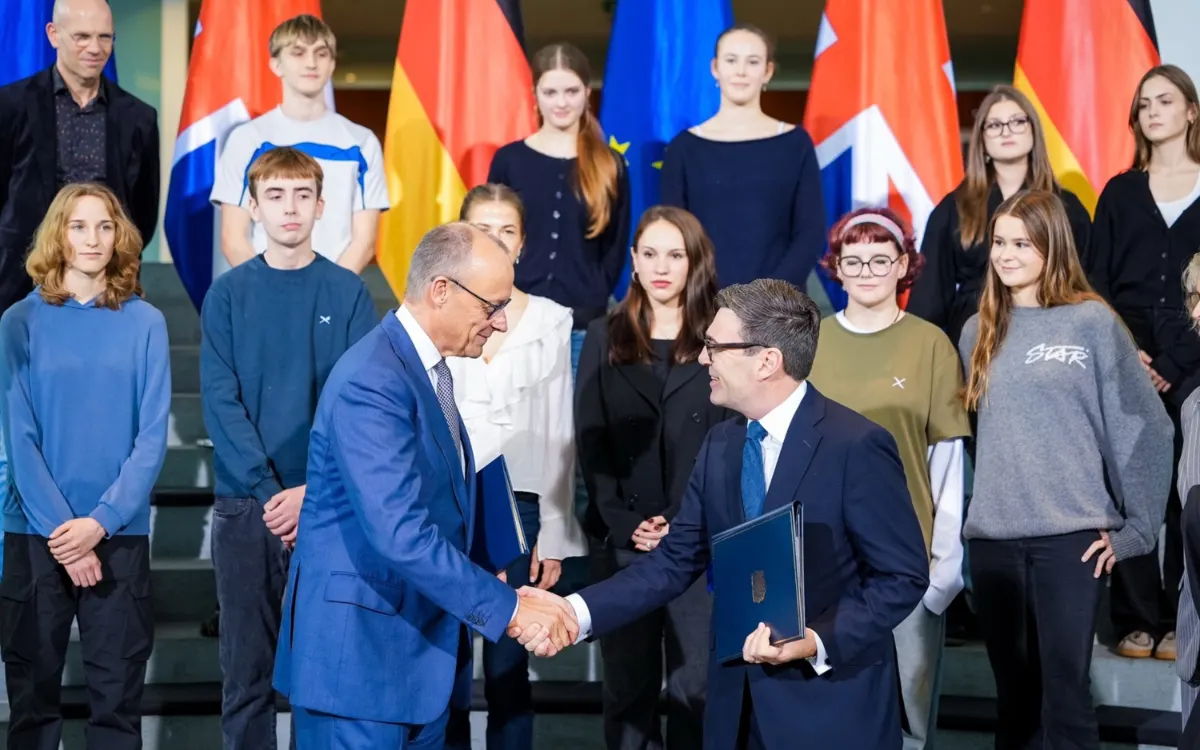
British Prime Minister Andy Burnham said Russia interfered in the 2016 Brexit referendum and warned of similar threats to German and French politics, as Paris highlighted the UK’s lasting economic losses from leaving the EU.
Speaking on a British podcast, Burnham said he sought an assessment of Russian interference after entering Downing Street and received confirmation that it had occurred. He also revealed that he discussed alleged Russian links to the far-right Alternative for Germany (AfD) party and disinformation targeting German politics with Chancellor Friedrich Merz during their meeting in Berlin on October 8.
“I asked the question coming into Downing Street, well, was there interference in the 2016 referendum from Russia? And I’ve had the clear answer that yes, there was,” Burnham said.
Burnham’s remarks mark the first public acknowledgment by a serving British prime minister of Russian interference in the Brexit referendum, although he did not disclose the evidence behind his assessment or establish whether Moscow influenced the result. A 2020 parliamentary intelligence report criticized the UK government’s failure to adequately investigate potential Russian interference. Burnham said Merz had raised concerns about the AfD’s Russian connections, while suggesting possible funding links without presenting supporting evidence. He warned that Russian disinformation was entering German politics and argued that voters in Germany and France needed greater awareness of foreign attempts to influence democratic processes.
Separately, French Finance Minister Roland Lescure warned that Brexit had produced “irrevocable” consequences, arguing that London’s financial district had lost ground to European financial centers including Paris, Frankfurt, and Dublin. Lescure welcomed the possibility of Britain returning to the EU but cautioned that reversing its departure would not restore the previous economic relationship.
The combination of Burnham’s warning and Lescure’s assessment places Brexit within a broader European debate over democratic resilience and economic security. Burnham’s acknowledgment raises questions about whether British institutions adequately identified and communicated foreign interference during a decision with lasting geopolitical consequences, although interference itself does not establish that Russia determined the referendum’s outcome. His references to Germany and France suggest that the threat he identifies is not confined to Britain’s political past but extends to contemporary European electoral debates. Meanwhile, Lescure’s comments illustrate how major political decisions can produce economic shifts that remain difficult to reverse, regardless of subsequent changes in government policy. Together, the developments highlight the strategic importance of countering foreign influence before democratic decisions produce consequences that may outlast the political circumstances in which they were made. (AFP+EIR)