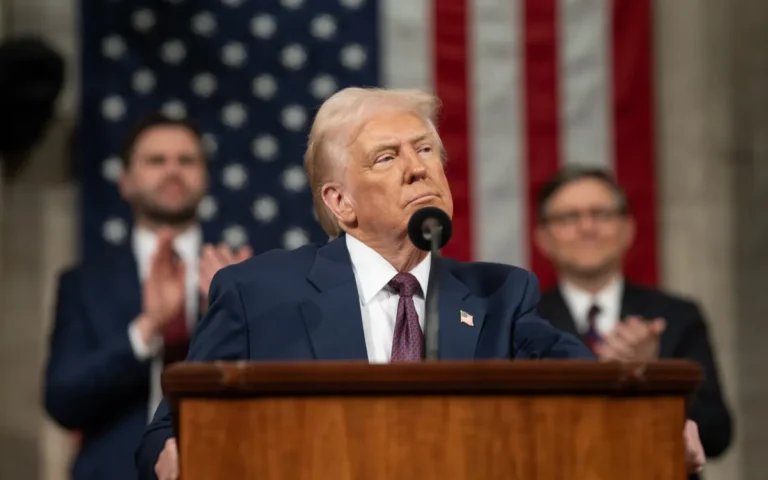

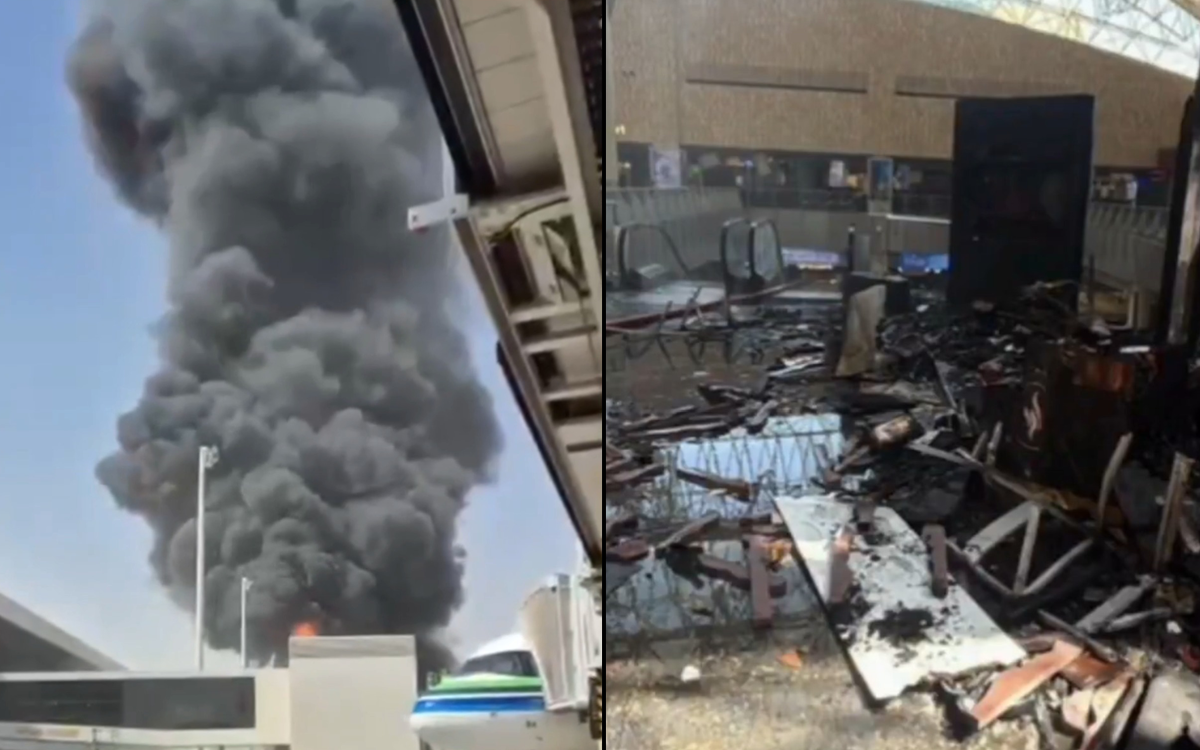
U.S. President Donald Trump said on Sunday that he is considering joining Saudi Arabia in striking the Houthis in Yemen, stating that he will decide quickly whether the United States will participate. He emphasized that the attack on Riyadh airport was unacceptable and that he would speak with Saudi Crown Prince Mohammed bin Salman.
Meanwhile, Pakistani Prime Minister Shehbaz Sharif strongly condemned the “heinous” attack launched by the Houthis in Yemen on Riyadh’s international airport, which killed at least 12 people and injured 309 others.
Sharif wrote on X that “attacks targeting civilians and critical infrastructure are completely unacceptable and constitute a serious threat to regional peace and stability.” He stressed that “such acts of violence, which are a flagrant violation of international law, must cease immediately.”
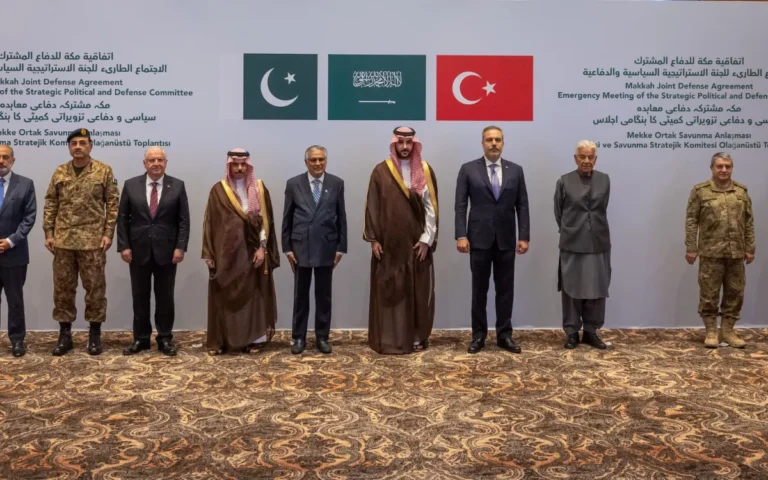
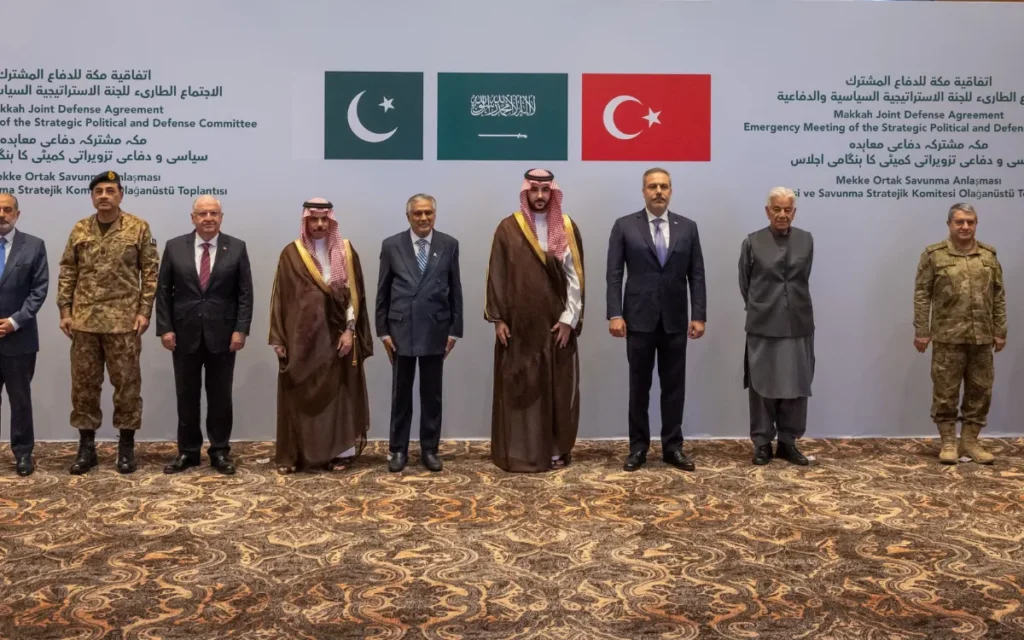
He reiterated Pakistan’s unwavering commitment to the sovereignty and territorial integrity of the Kingdom of Saudi Arabia. In August, Saudi Arabia, Pakistan, and Turkey signed a joint defense agreement in Mecca, stipulating that an attack on any one of them would be considered an attack on all three.
The Saudi-led military coalition supporting Yemen’s internationally recognized government accused pro-Iranian Houthi fighters in Yemen on Sunday of carrying out the deadly attack on Riyadh’s international airport, vowing to respond “decisively”.
For its part, the Jordanian Ministry of Foreign Affairs said early Sunday that one Jordanian citizen was killed and four others were injured in the “brutal” attack launched by the Houthis on King Khalid International Airport in the Saudi capital, Riyadh, on Saturday afternoon.
In a statement published on X, the Jordanian Foreign Ministry considered the attack a blatant violation of Saudi sovereignty, a threat to its security and stability, a dangerous escalation, and a flagrant breach of international law and the UN Charter. At least 12 people were killed and 309 others wounded on Saturday in an attack attributed to the Iranian-backed Houthis targeting King Khalid International Airport in Riyadh, where operations were suspended, according to the Saudi General Authority of Civil Aviation.
This is the worst attack in Saudi Arabia since the 2015 suicide bombing by ISIS that killed 21 worshippers at a Shiite mosque in Qatif, in the east of the kingdom.
Saudi authorities announced on Saturday the suspension of operations at Riyadh airport, while schools in Riyadh switched to distance learning starting Sunday, following the attack on the capital’s airport, according to a message sent to parents.
Late Saturday, the coalition announced that a projectile had landed near Dammam airport in the oil-rich eastern region of the kingdom. It later reported that it had intercepted and destroyed a ballistic missile launched by the Houthis in Al-Kharj province, southeast of Riyadh.
The Houthis have not yet claimed responsibility for any operation, although they have targeted King Khalid International Airport in recent days, amid an escalation of their attacks on the Kingdom, which supports the internationally recognized Yemeni government. This escalation follows the resumption of the conflict between the two sides in July, against the backdrop of the broader Middle East war.
The UN envoy to Yemen, Hans Grundberg, said that the deadly attack on Riyadh airport “represents a dangerous escalation,” accusing the Iranian-backed Houthis of being behind it.
Last month, press reports indicated that Saudi Crown Prince Mohammed bin Salman contacted Trump and “reiterated his request for assistance in confronting” the Houthi advance, noting that Trump refused.
The Houthi military spokesman, Yahya Saree, reiterated that “humanitarian flights to and from Riyadh airport will be permitted for all flights authorized by the Humanitarian Operations Coordination Center in the capital, Sana’a.”
On the ground, the coalition intensified its airstrikes in support of Yemeni government forces, which launched a large-scale offensive this week to retake areas controlled by the Houthis. Houthi media reported airstrikes on Bab al-Mandab and Sana’a airport, which has been under Houthi control since 2014. Fighting in western Yemen over the past 24 hours, particularly in and around Bab al-Mandab, has left at least 63 people dead, including 35 government fighters and 28 Houthis, according to military sources from both sides on Saturday.
The U.S. embassy in Saudi Arabia on Sunday said staff working in the kingdom would now be required to request permission to use airports in the cities of Jeddah and Dammam, days after a similar order was issued for Riyadh.
“US government employees working in Saudi Arabia require special authorization to use the King Khalid International Airport in Riyadh, as well as the airports in Jeddah and Dammam,” read a statement published online following fatal attacks on Riyadh airport. (AFP)