
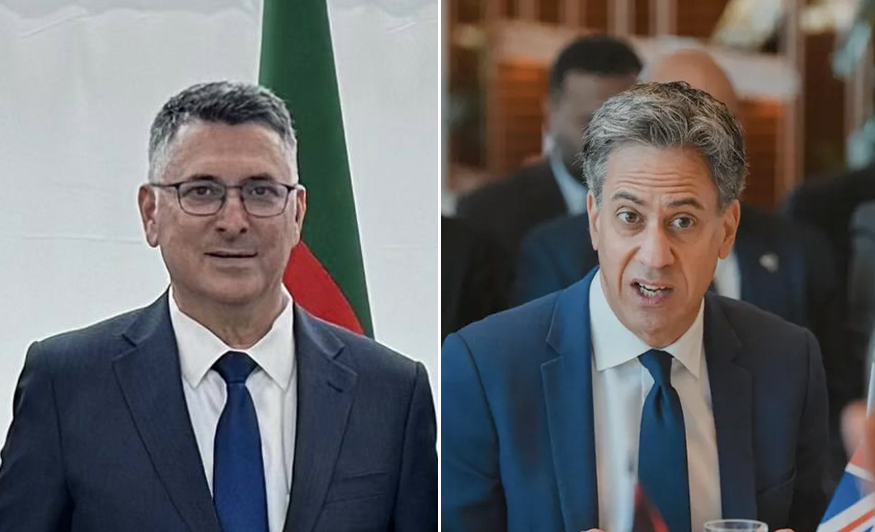
Britain and Israel reached an understanding on Thursday preserving a reduced British diplomatic presence in Jerusalem, averting a wider confrontation after Israel ordered the UK’s nearly 200-year-old consulate to close.
British Foreign Secretary Ed Miliband said the Consulate General building would remain open as the “UK Mission, Jerusalem,” describing it as independent and operational and saying it would continue working with Palestinians. Israeli Foreign Minister Gideon Sa’ar said the consulate had ended its activities and that Israel authorized a seven-diplomat British team to operate from the building. Sa’ar said 20 diplomats, including the consul general, would depart Israel.
“We have been clear that we do not accept that the Government of Israel has the legal right to close the British Consulate General in Jerusalem,” Miliband said, reiterating Britain’s position that East Jerusalem is occupied territory. Sa’ar said countries acting against Israel would face “appropriate response measures.”
The dispute escalated after Britain joined international measures last month targeting Israeli settlements in the West Bank and extended restrictions related to defense export licenses, measures London said supported a two-state solution intended to deliver peace and security for Israelis and Palestinians. Israel responded by closing the consulate, removing British representatives from a Gaza aid center, ending British training for Palestinian Authority forces, and imposing entry bans on 12 British elected officials and other nationals. Sa’ar cited a wider deterioration since Labour took office, including Britain’s recognition of a Palestinian state, renewed UNRWA funding, sanctions, defense export restrictions, suspended free-trade negotiations, and reduced military and security engagement. He nevertheless described bilateral security and intelligence cooperation as valuable, claiming Israel recently provided Britain with vital information concerning the RAF Fairford case. Sa’ar said the “period of Israeli containment is over” on both security and political levels.
The agreement contains rather than resolves the underlying dispute over Jerusalem and Britain’s approach to Israel and the Palestinians. London maintains that East Jerusalem is occupied territory and intends to preserve Palestinian engagement, while Israel considers the former consulate closed and has demonstrated its willingness to retaliate against British measures. Yet continued intelligence and security cooperation gives both governments an incentive to prevent political disagreements from rupturing strategically important ties. The reduced “UK Mission, Jerusalem” provides a mechanism for continued engagement without resolving their competing positions. Its status, alongside future disputes over settlements, Palestinian statehood, and defense cooperation, will test the durability of the compromise. (EIR)