
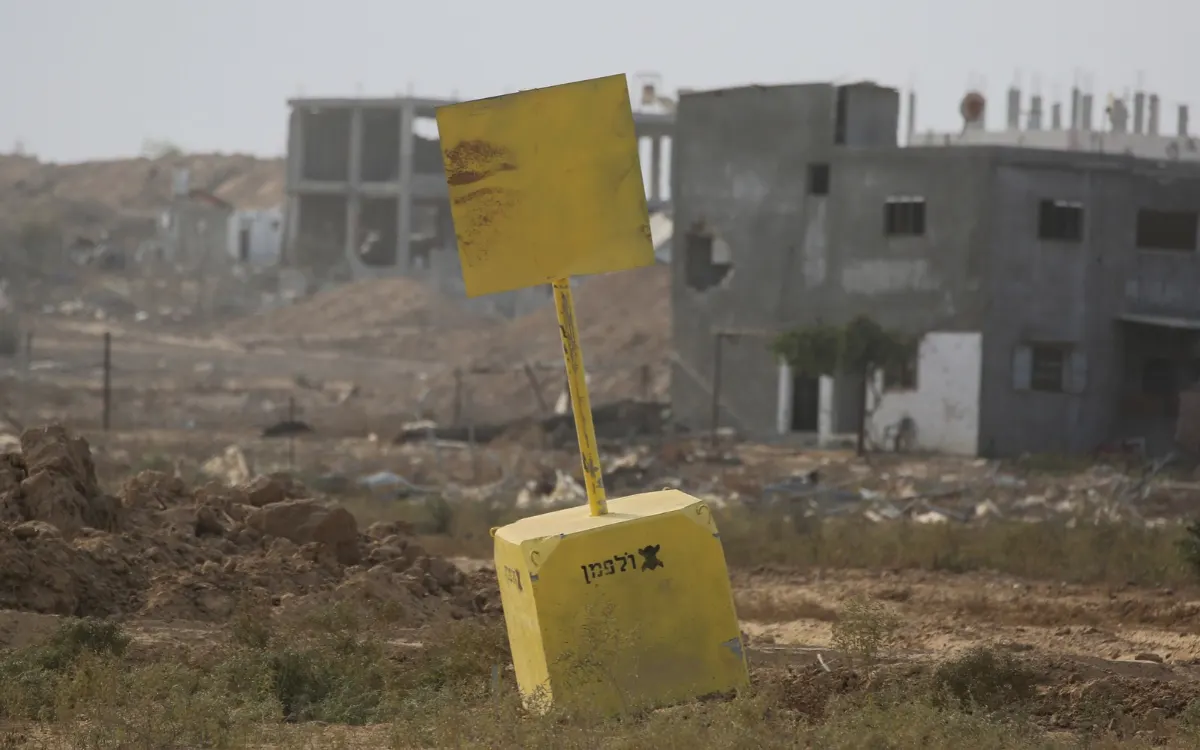
Israeli forces launched a military operation beyond the Yellow Line in central Gaza on Wednesday, November 18, raising concerns over the durability of the U.S.-brokered ceasefire in place since October 2025. The operation, which Israel said was intended to destroy a tunnel threatening its troops, comes amid political uncertainty following an inconclusive Israeli election and efforts in parliament to reverse elements of former Prime Minister Benjamin Netanyahu’s judicial overhaul.
The Israeli military said its forces had begun a targeted operation west of the Yellow Line, which separates Israeli-controlled territory from areas under Hamas control. Evacuation warnings were issued for neighborhoods near the Bureij and Nuseirat refugee camps, while sections of Salah al-Din Road were closed. Israeli tanks were observed near Nuseirat, and residents reported shelling and renewed displacement. Gaza’s civil defense agency reported three Palestinians killed in separate Israeli drone strikes on Wednesday, although it was unclear whether the strikes were connected to the ground operation.
The Israeli military said the operation was intended to destroy a tunnel posing an “immediate and direct threat” to its forces. Hamas condemned the incursion as “a flagrant violation of the ceasefire agreement,” while Israel accused the group of violating the truce. The military said its forces would continue acting against threats to Israeli troops and civilians.
The operation marks a significant development in a ceasefire that halted major fighting but has not resolved disputes over Hamas disarmament, Israeli troop withdrawals, and Gaza’s future governance. More than 1,600 Palestinians have been killed since the agreement took effect, according to Gaza health authorities, while the Israeli military says seven soldiers and one civilian contractor have died over the same period. Separately, Israeli lawmakers advanced preliminary legislation on Wednesday to repeal key elements of Netanyahu’s judicial overhaul, including changes affecting judicial appointments. The initiative, backed by a parliamentary bloc led by Gadi Eisenkot, requires further votes before becoming law.
The incursion raises questions about how far Israeli forces may operate beyond the Yellow Line without undermining the ceasefire’s territorial arrangements. With Israel’s political future still unsettled and Washington central to the truce’s implementation, further military operations could complicate efforts to negotiate the next phase of the agreement. The parliamentary push to reverse judicial reforms adds another dimension to Israel’s political transition, although neither its outcome nor the trajectory of the Gaza operation is yet clear. (Agencies+EIR)