
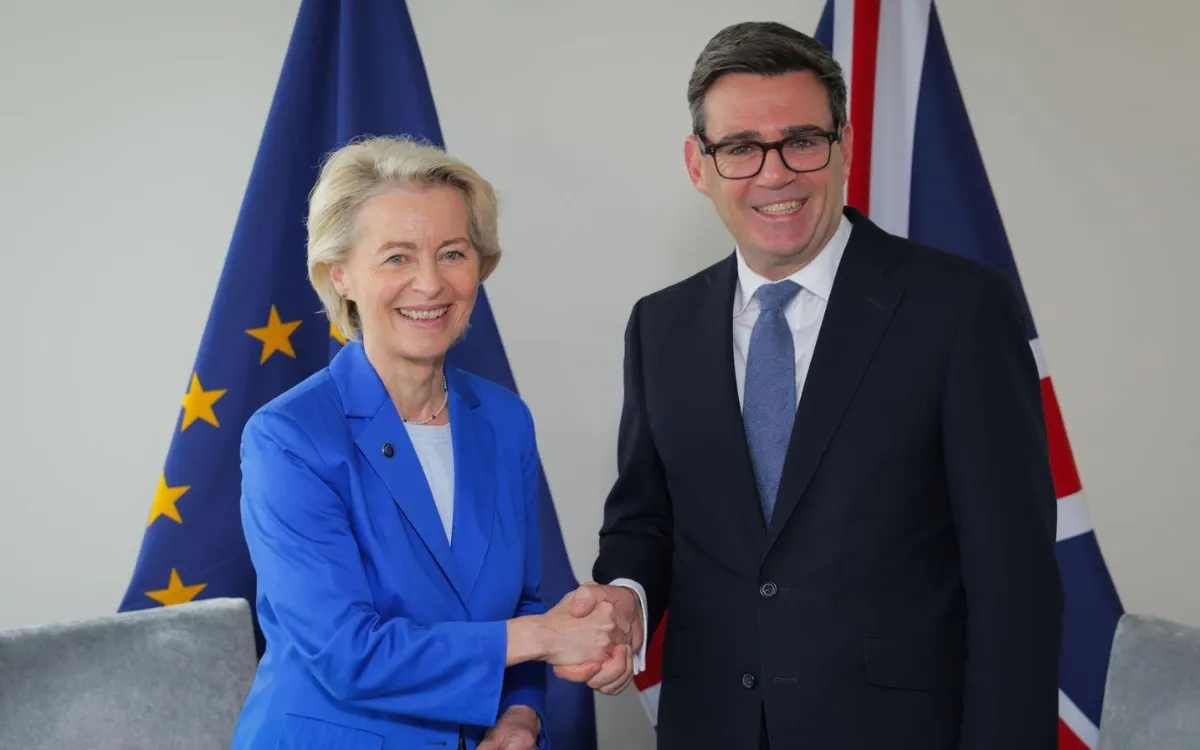
U.K. Prime Minister Andy Burnham said rejoining the European Union (EU) is among the potential options for Britain’s future relationship with the bloc, reopening a politically significant question about the country’s long-term direction after Brexit.
His comments came after he told his ruling Labour Party’s annual conference on Tuesday that he would set out “different options” for future ties with the EU.
“We will not give Britain the clear path we need into the rest of this century until we decide on a long-term relationship with what is still our largest market,” he said in his speech, adding that Brexit had triggered “a decade of low growth which has put us in a weaker position.”
A new National Care Service. Greater public control of water, energy, and housing. A National Commission on Electoral Reform. Strengthening our relationship with Europe. Reforming the education and welfare system.
Today I set out a different path for Britain.
You may disagree… pic.twitter.com/cDCNDixQoV
— Andy Burnham (@andyburnham) September 29, 2026
On Wednesday, Burnham said Britain could consider joining the EU single market or customs union, “or we could go all the way,” referring to potentially rejoining the bloc. “It’s not good enough to leave that question just hanging,” he told British media. During the 2016 EU referendum, which resulted in the UK leaving the bloc, Burnham campaigned to remain and later expressed hope that Britain would rejoin in his lifetime. A planned UK–EU summit, provisionally set for November after being postponed in July, is expected to discuss issues including food and animal safety standards, youth mobility, and linking their emissions-trading systems.
Burnham’s remarks move the debate beyond improving the existing post-Brexit relationship by explicitly placing deeper integration—and potentially EU membership—among the options for Britain’s long-term direction. However, considering membership is far removed from committing to rejoin, and each intermediate step, from a customs union to the single market, would carry its own economic and political implications. The November summit could therefore provide an early indication of how far Burnham intends to move beyond sector-specific agreements toward a broader restructuring of UK–EU relations. Any eventual push toward membership would represent a much larger political undertaking, making the immediate question whether his government can build domestic support for progressively closer integration with Brussels. (AFP+EIR)