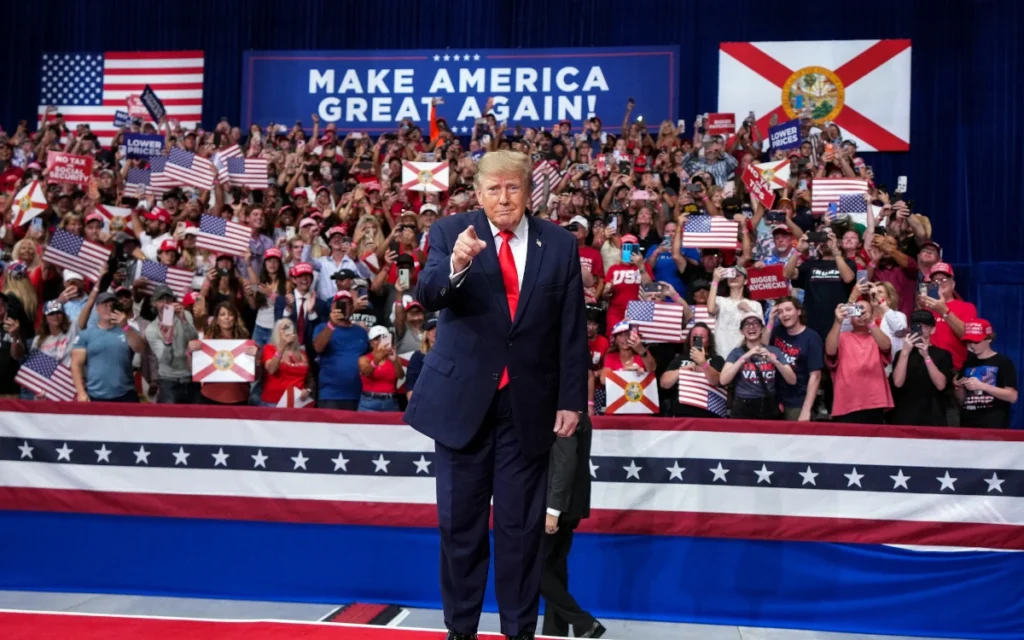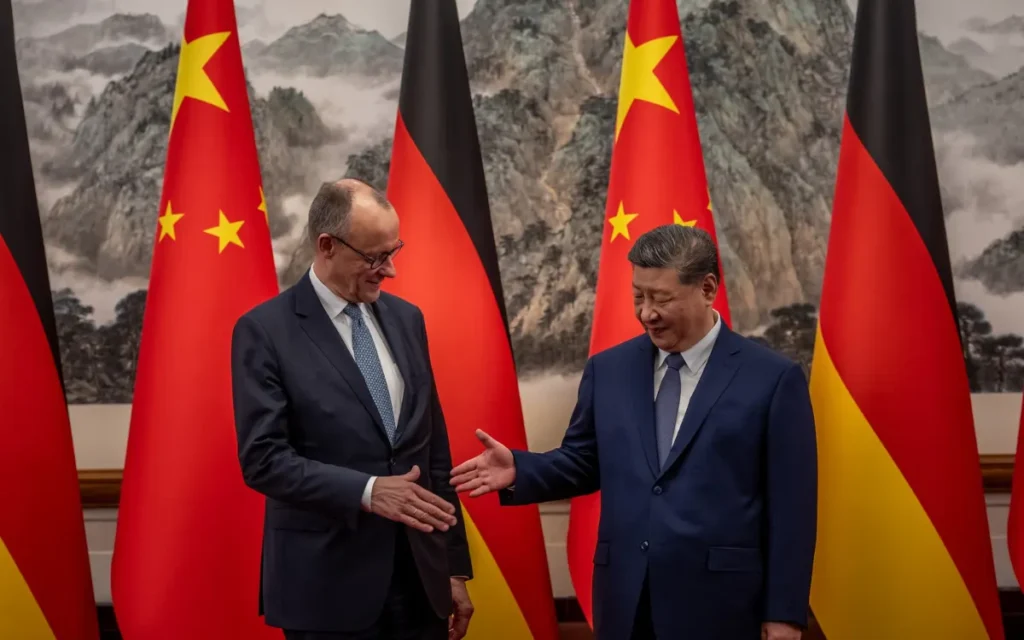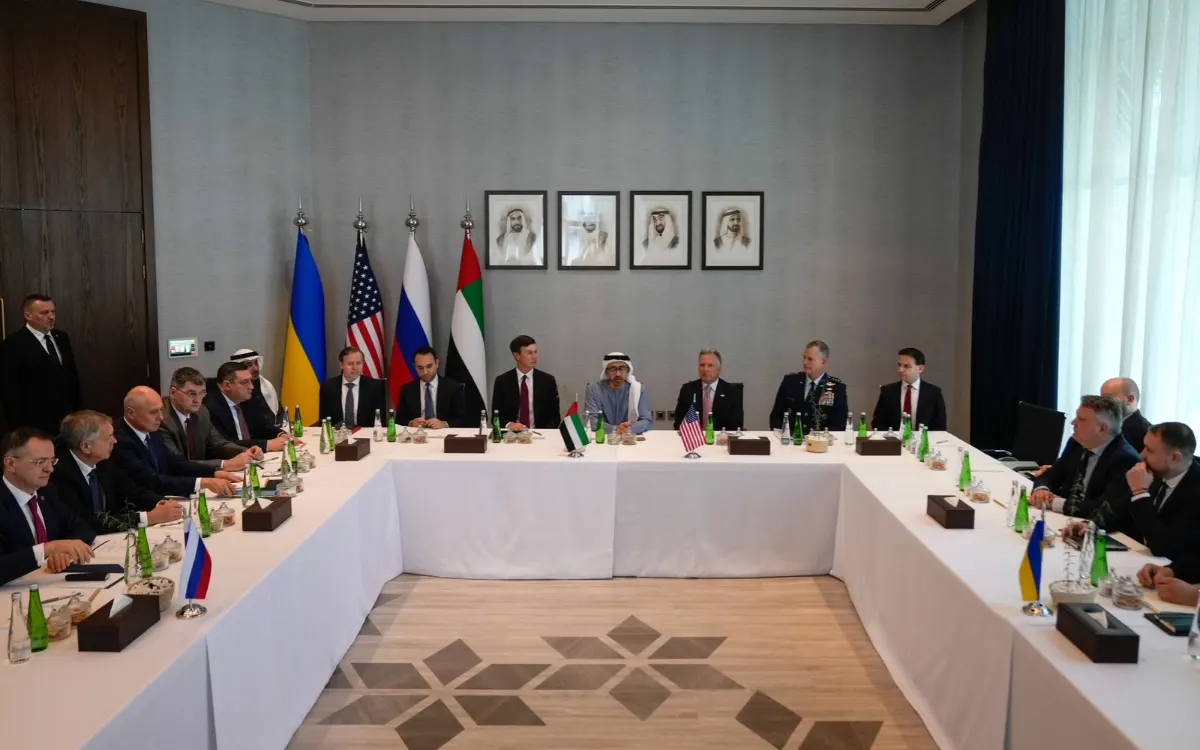
Two trilateral formats are testing whether European security can be settled without Europe. Washington has just mediated a round of talks between Russia and Ukraine in Abu Dhabi, and the American, Chinese, and Russian leaders may meet in Shenzhen on November 18–19. Europe has no direct seat at either.
After the talks ended without a breakthrough on November 11, 2026, Russia’s chief negotiator, Vladimir Medinsky, called for a European security system modeled on Yalta and Potsdam. The reference points to an age-old tool of great-power politics, used by the Soviet Union and the United States during the Cold War: spheres of influence, in which major powers claim a say over the security choices of their neighbors.
Taken together, these developments suggest that the questions shaping postwar Europe are moving to formats Europe does not control. The two trilaterals could signal a return of great-power politics in its classic form, in which the strongest states settle regional questions among themselves and smaller powers are forced to adjust. They could also reset the rank of Europe among the major powers, from a shaper of its own security to a party consulted on terms set by others. At stake is who redraws the European security architecture—the alliances, deployments, and rules that protect the continent.
The two trilaterals could signal a return of great-power politics in its classic form, in which the strongest states settle regional questions among themselves and smaller powers are forced to adjust
Europe Kept Outside in Abu Dhabi
The first test came before the talks began. European Commission President Ursula von der Leyen said the EU would attend, and the Kremlin ruled that out. The fight over who sits in the room is a fight over status. Moscow wants to negotiate European security with Washington as its only equal and leave Europe to accept the results.
After U.S. envoys Jared Kushner and Steve Witkoff met Putin on November 12, Washington said Moscow had agreed to bring Europeans into the next round. EU foreign policy chief Kaja Kallas read this as a sign that the Kremlin now sees Europe as a major player. The invitation may reflect European weight, but it came through an American sponsor, with Russian consent, and into talks whose agenda Moscow helped set.
Europe has also weakened its own case. In Dublin, French President Emmanuel Macron said Europe must first define what it wants. EU leaders have yet to agree on an envoy, whom the Kremlin says Europe must name first. A power that cannot state its aims tends to leave others to set them. While Europe argues over its chair, the agenda itself is changing.
Redrawing the European Security Order
Trump has said Ukraine could emerge with a different shape and that a deal could involve all of Europe. Russian Foreign Minister Sergei Lavrov called the talks on European security a U.S. proposal agreed with Moscow. A Russian delegation source went further, calling the Ukraine settlement subordinate to a new order for the whole continent. Two negotiations are beginning to merge: one over the borders of Ukraine, and one over the security order of Europe. Kallas wants a ceasefire first and talks on European security last, while Washington wants both at once.
For Moscow, the merger offers a second chance. In late 2021, Russia demanded that NATO pull back to its 1997 lines and close its door to Ukraine. Negotiating the security of Europe together with the borders of Ukraine could let Moscow win at the table what it could not secure before the war. On November 12, Putin warned that foreign troops in Ukraine after a peace deal would be legitimate targets. The warning is aimed at the reassurance force that France and Britain have offered. It is the logic of spheres of influence in practice: a veto over who may help defend a neighbor.
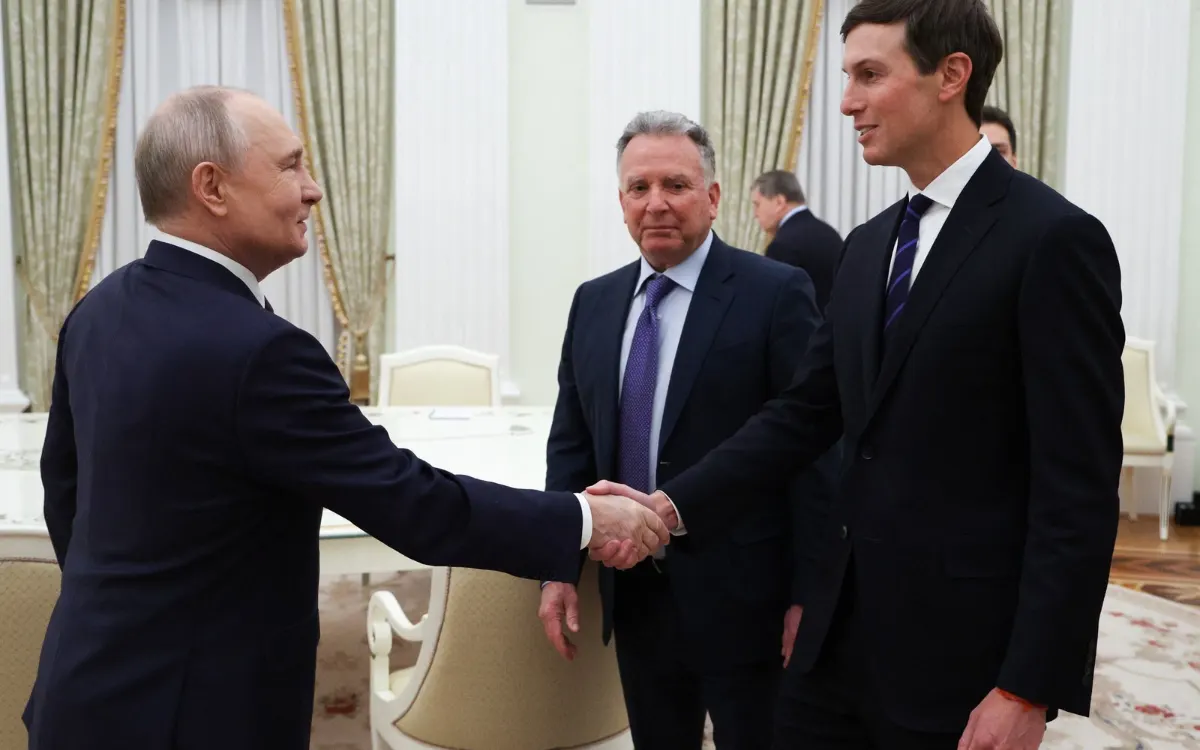
Kremlin aide Yuri Ushakov said NATO could not expand further and hoped Europe would back talks on a new security architecture. Kallas countered that Europe already has one, rooted in the 1975 Helsinki Final Act. Two models now compete: Yalta, where the strongest powers settled the fate of smaller states, and Helsinki, where each state may choose its own alliances. Accepting the Russian starting point would put that freedom up for negotiation, along with Ukraine’s hope of joining NATO. The framework Kushner outlined on November 5 rejects that outcome: NATO stays central, and no state may veto the alliances of another. The test is whether those principles survive a negotiation in which Moscow treats them as the main items to revise.
Two models now compete: Yalta, where the strongest powers settled the fate of smaller states, and Helsinki, where each state may choose its own alliances
Kushner has also said no postwar arrangement will take effect before territory is settled. That order of steps may make the security of Europe depend on concessions Ukraine has not yet made. It also suggests that this security is taking shape mainly between Washington and Moscow, and its next stop may be Shenzhen.
Shenzhen and the Peace Deal
Kyiv holds, and the American mediators appear to agree, that only leaders can settle the territorial question. What Abu Dhabi could not resolve may move up to the presidents, and no European would be among them. Trump has said he wants to discuss the Iran war and denuclearization in Shenzhen. Three outcomes are possible.
In the first, Ukraine reaches the Shenzhen agenda, and three powers shape a settlement without Kyiv or Europe in the room. That looks least likely: according to German President Frank-Walter Steinmeier, Xi ruled out discussing Ukraine, calling it a European conflict. In the second, China keeps Ukraine off the three-way table, and Putin raises it with Trump on the sidelines, as Ushakov has signaled. Either way, Putin would gain a photograph beside the American and Chinese leaders.
The third outcome goes to the central question: whether Washington, Moscow, and Beijing might eventually pursue a wider bargain that links Ukraine and Iran. The U.S.-Iran ceasefire remains fragile, and China’s Middle East envoy visited Tehran in the week Trump spoke of Shenzhen. Washington could seek Russian and Chinese pressure on Tehran, and Moscow could expect concessions over Ukraine in return. There is no clear evidence of such a trade-off, but the overlapping agendas raise questions about whether separate regional negotiations could become linked. For Europe, the danger would be a deal that trades the security of its eastern flank for progress in another region.
China is the cautious corner of this triangle. It wants the prestige of the summit without looking like a partner in dividing the world. By insisting that Europeans belong at the table on Ukraine, Beijing seems to distance itself from any charge that it is helping Moscow redraw Europe. With Trump focused on Iran, Putin on Ukraine, and Xi on neither, the triangle is lopsided. For now, the signals point to the major powers discussing Ukraine and Europe without them, but not yet to a single bargain among the three.
What the Two Trilaterals Mean
For Europe, the two formats could mean a loss of rank, since its economic weight is not matched by diplomatic influence. For transatlantic relations, the picture is mixed: Washington wants European NATO partners at the table, but it has also opened their security to talks with Moscow. For Russia, the formats may turn an unfinished war into a recognized sphere of influence in postwar Europe. For Ukraine, the risk is that its territory becomes a bargaining chip, leaving Kyiv to negotiate the details of terms it did not set. Ukrainian President Volodymyr Zelensky has warned that the talks increasingly concern a new security framework between Europe and Russia.
Europe still holds tools that any settlement would need. Sanctions relief, Russian state assets frozen in Europe, reconstruction funds, and Ukraine’s path into the EU all require European consent. Europe may be kept out of the room, but it could still hold a veto over whether a deal is carried out. That veto depends on unity. German Chancellor Friedrich Merz has tied the next EU budget to all members funding Ukraine, and four say they will not contribute. A Europe divided over who pays for Ukraine will find it harder to claim a say over how the war ends.
A Europe divided over who pays for Ukraine will find it harder to claim a say over how the war ends
What to Watch Next
Three signals will show where this is heading: whether Europe names an envoy Moscow accepts, whether Ukraine reaches the three-way agenda in Shenzhen, and what the next round covers. For Europe, the challenge is twofold: turning a promised seat into real influence, and keeping the continent’s security order from being redrawn into spheres of influence without it.
Half a century ago, Nixon and Kissinger used triangular diplomacy to exploit the rift between Moscow and Beijing. A new triangle may now be taking shape. This time, Moscow and Beijing are partners, and today Europe risks becoming the object of their bargains.