
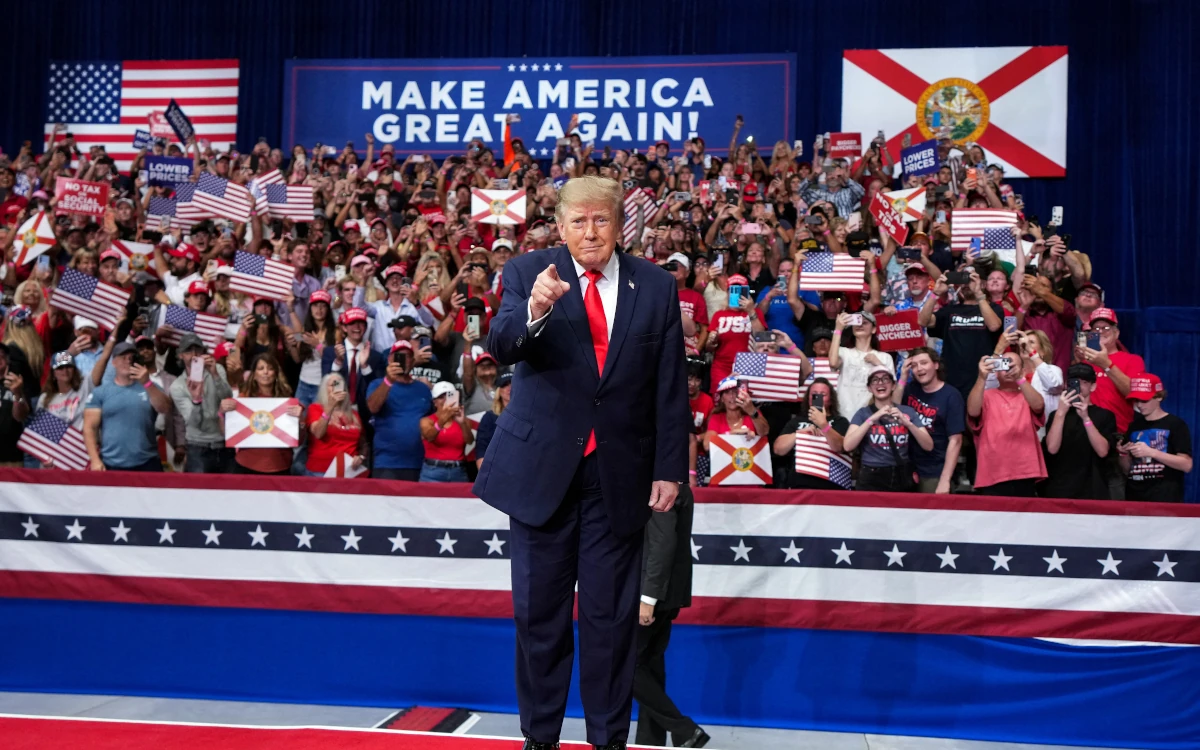
The U.S. midterm elections were more than a Democratic victory, and their outcome cannot be explained simply as a backlash among Republican voters. What happened carries deeper implications for the American presidency, the exercise of presidential power, and its relationship with the political establishment that has dominated Washington for decades.
For all the powers vested in the American president, internal disagreements and competing factions can sometimes prevent major issues from being resolved, allowing them to become political liabilities by the midterm elections.
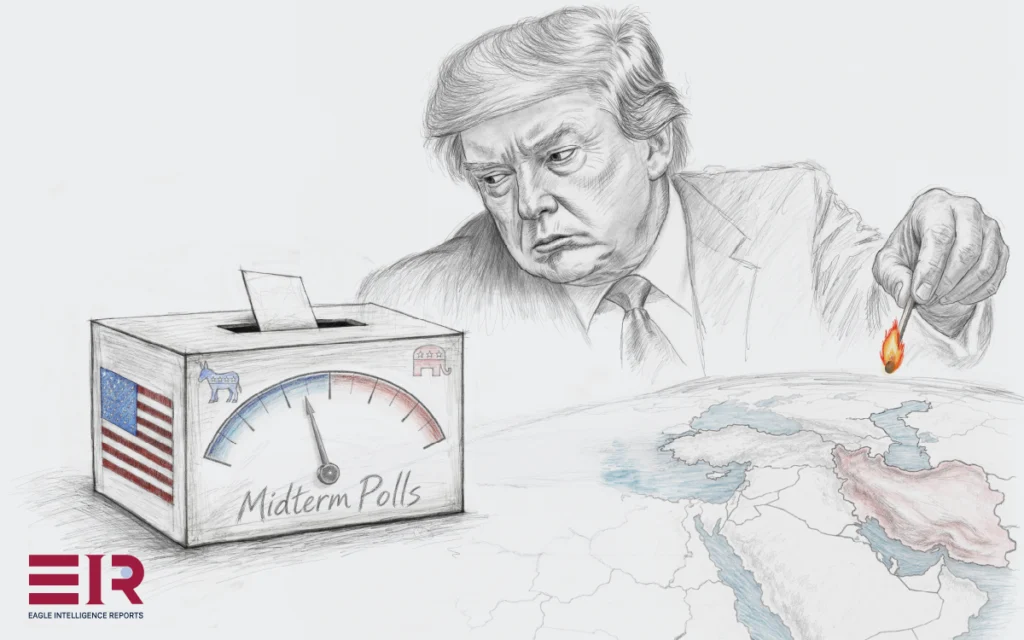
The Republican defeat was not an inevitable consequence of Donald Trump’s decision to go to war with Iran. Rather, it was the result of a missed opportunity to turn American military superiority into a strategic achievement before the midterm elections became the overriding political concern. Had Trump resolved the confrontation within the first six months of the war, by the end of August, he would have had time to refocus on the elections and deprive the Democrats of one of their most effective campaign weapons: the continuing war and its impact on the cost of living.
The Republican defeat was not an inevitable consequence of Donald Trump’s decision to go to war with Iran. Rather, it was the result of a missed opportunity to turn American military superiority into a strategic achievement before the midterm elections
The primary question is not how Democrats won but how Trump lost. He squandered an opportunity to turn one of the most consequential strategic decisions of his presidency into a political achievement that could have strengthened both his own position and that of his party. How did the opponents of Trumpism manage to use the consequences of Trump’s own policies to undermine the very ideas on which his political movement was built?
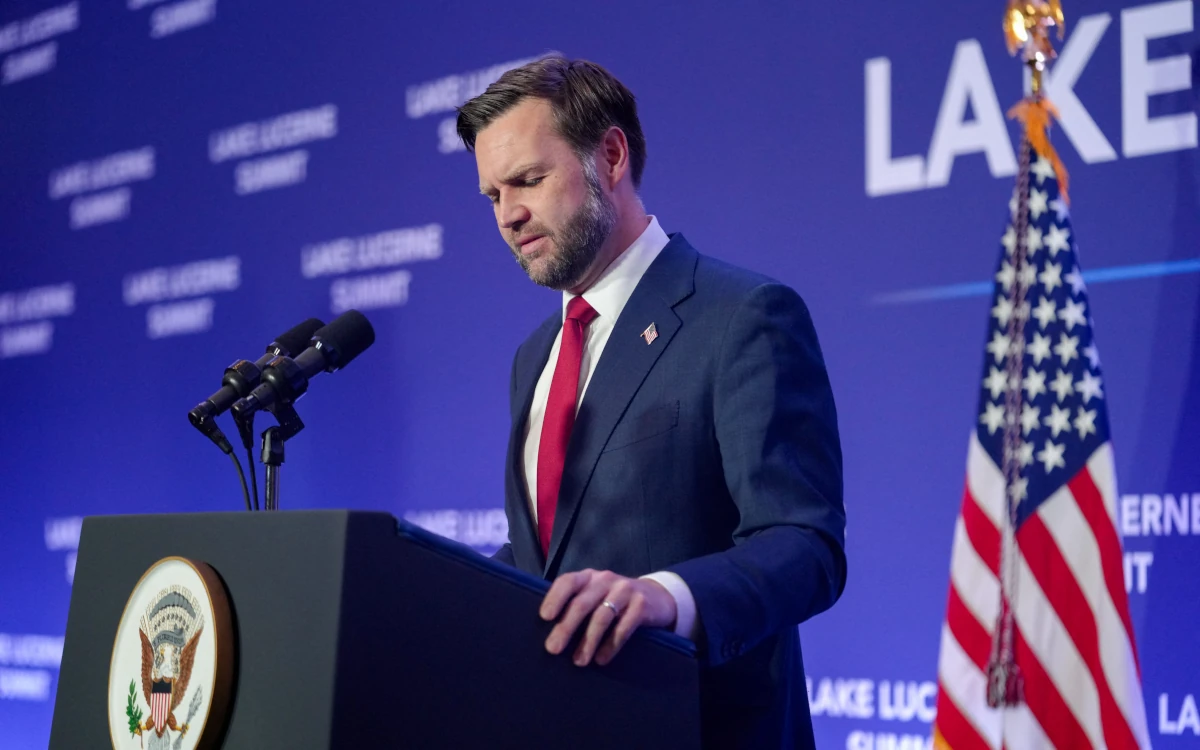
Trump did not need to overthrow the Iranian regime to claim a political victory. He needed to force Tehran to change its strategic behavior and bring the war to an early end. Yet disagreements within his administration over how to deal with Iran were the single most important factor in prolonging the war and deepening its negative consequences. This is particularly the case with the faction led by Vice President JD Vance, which believed meaningful Iranian concessions could be secured through negotiations. The split ultimately produced an incoherent policy, contributing to the Republican defeat, including in decades-long Republican strongholds like Texas.
The restraints imposed by part of Trump’s own administration gave Iran the opportunity to prolong the confrontation and shift its costs onto the American economy. The Democrats exploited those consequences, weakening a political movement that Trump had brought to Washington from outside its traditional establishment. They did it not by defeating Trumpist policies in principle, but by turning the results of those policies against him.
Trumpism Is Bigger Than Trump
Donald Trump did not arrive at the White House as a product of Washington’s traditional political establishment. He came from outside it, riding a wave of accumulated public resentment toward the political elite and a growing feeling among large sections of American society that the institutions of government no longer represented their interests.
Trump did not invent the direct relationship between a president and the people, but he used it to advance a political project that made “America First” the standard by which domestic and foreign policies should be judged.
In Trump’s view, America’s global standing was no longer sufficient justification for international alliances or military commitments. Those commitments had to produce tangible benefits for American interests, particularly economic ones. This is what distinguishes Trumpism. It is not simply a form of electoral populism, but an attempt to redefine the relationship between the presidency, the institutions of government, and the American people, while reordering the priorities of American power around the world.
The struggle against Trump, therefore, was never solely about his individual decisions. It was also about the political model he represented. Democrats were not alone in viewing that model as a challenge to the established workings of the American political system. Some Republicans shared the same concern, as was evident during the presidential campaign that returned Trump to the White House. Despite efforts to demonize his first term, large segments of the American electorate continued to see “America First” as an expression of interests and aspirations they believed the traditional political establishment had neglected for decades.
The struggle against Trump, therefore, was never solely about his individual decisions. It was also about the political model he represented. Democrats were not alone in viewing that model as a challenge to the established workings of the American political system
Trump’s opponents simply needed a sledgehammer to bring the temple crashing down on his head. They had failed to find one in their campaigns against his social policies, his immigration decisions, or his efforts to make foreign policy serve American economic interests. Then came the war with Iran, an ideal opportunity. Although sections of the “America First” constituency supported the decision to go to war, its prolonged duration and mounting consequences turned it into a liability for Trump, giving the Democrats the weapon they needed to strike at the foundations of his political movement.
The Democrats understood the political game. Challenging the principle used to justify the war—preventing Iran from acquiring nuclear weapons—was hardly a promising electoral strategy given the broad agreement on that objective within the American political establishment. But once the consequences reached voters’ wallets and began affecting their cost of living, the equation changed entirely.

Tehran’s Time Trap and Washington’s Role
When the American–Israeli war against Iran began on February 28, 2026, the United States possessed overwhelming military and technological superiority. The initial strikes succeeded in targeting senior figures in Iran’s political and military leadership.
From the beginning of the war, Iran’s strategy appeared designed to draw Trump into a trap of delay and prolonged confrontation, gradually bringing American domestic politics into the calculations of the conflict. This approach echoes the historical example of the Sasanians, who used negotiations and the passage of time to wear down their adversaries. Tehran appears to be applying a similar logic, using time and protracted confrontation as strategic instruments against a militarily superior power.
Tehran understood that the imbalance of military power was in Washington’s favor. Its interests did not lie in achieving a conventional military victory, but in surviving and prolonging the confrontation until the political and economic costs to the United States became more than the administration could politically afford.
Yet the trap Trump fell into was not entirely of Iranian making. A faction within his own administration helped make it possible, playing a central role in the failure to bring the war to an early conclusion and capitalize on the exceptional circumstances following the elimination of Iran’s top leadership. Whatever arguments are made to the contrary, it is reasonable to assume that the Iranian regime experienced a degree of disarray at that moment. Continued military pressure could have prevented it from quickly regaining its balance and raised the cost of prolonging the confrontation, potentially producing an outcome that Trump could have claimed as a victory before the midterms.
Yet the trap Trump fell into was not entirely of Iranian making. A faction within his own administration helped make it possible, playing a central role in the failure to bring the war to an early conclusion and capitalize on the exceptional circumstances following the elimination of Iran’s top leadership
There is a fundamental misunderstanding about what victory in Iran could have meant for Trump. Washington did not need the region to wake up one morning to find that the Iranian state or its political system had disappeared. Quite the opposite. The collapse of the Iranian state and its descent into chaos could pose a far greater strategic threat to regional and global security.
The realistic objective was to convince the Iranian regime that preserving its survival and stability required a change in its strategic behavior and genuine concessions on three major issues: its nuclear program, its missile capabilities, and its conduct toward neighboring countries. Iran did not have to surrender. What was needed was a situation in which reaching an agreement became less costly for the regime than continuing the confrontation.
Naturally, there was no guarantee that such an approach would succeed. Further military escalation also carried the risk of widening the war. But the question worth asking is whether Washington made the fullest possible use of its initial military advantage to secure political gains or allowed that opportunity to erode with time.
This brings us to the central problem in the management of the war. American hesitation cannot be explained solely by external pressures or Democratic opposition. The disagreements within the administration itself must also be considered. The point is not to place all the blame on Vice President JD Vance, or to suggest that every objection to escalation was a strategic mistake. The problem is that when competing approaches within an administration are not resolved through a clear strategy, they can turn from a means of improving decisions into an obstacle that limits the president’s ability to act decisively. This was clearly the case in the Iran operation, underlining the difference between possessing military power and having the political will to use it toward clearly defined objectives within a specific timeframe.
From the Battlefield to the Gas Pump
American voters are not necessarily opposed to the use of military force. But they carry a heavy political memory of long wars that begin with clear objectives and eventually turn into open-ended campaigns of attrition, as happened in Vietnam, Iraq, and Afghanistan.
Trump’s problem was that he entered the war presenting himself as a president capable of making decisive choices yet reached the elections without a clear political outcome proportionate to the military power he had employed. He also failed to shield American citizens from the economic consequences of the confrontation, downplaying concerns about rising costs.
Trump’s problem was that he entered the war presenting himself as a president capable of making decisive choices yet reached the elections without a clear political outcome proportionate to the military power he had employed
When American voters say the cost of living drove them to vote against the Republicans, that does not mean the war was irrelevant. Rising oil and fuel prices were among the factors driving up those costs. Inflation, of course, was not caused by the war alone, and restoring normal oil and gas flows would not have immediately returned prices to prewar levels. But ending the confrontation earlier could have eased pressure on energy markets and given the American economy time to absorb some of the shocks before November.
Had the war ended in September, for example, some positive economic effects might already have begun to emerge before the elections. Had a political settlement been achieved by June, the administration would have had a much wider window to regain the economic and electoral initiative.
The problem, then, was not the war alone. It was its timing, its duration, and the administration’s failure to turn military results into political and economic gains when they still had time to matter.
How Democrats Used Trumpism Against Itself
It would be a mistake to treat the election results as a sweeping public endorsement of the Democratic political project. Voting against an administration’s performance does not necessarily mean embracing the political ideas offered by its opponents.
The Democrats and other opponents of Trumpism found in the prolonged war and rising living costs an opportunity to attack one of the movement’s central promises: that American policy, at home and abroad, should serve the American people first.
Rather than confront the “America First” slogan in a direct ideological contest, they could now ask a question much closer to voters’ everyday concerns: Where is the American interest in a long war that drives up fuel prices and living costs without producing decisive political results? That question speaks not only to Democratic voters, but also to Republicans who supported Trump precisely because they believed he would change the way Washington managed politics, the economy, and international relations.
Trumpism’s opponents were therefore able to exploit the contradiction between the promises on which the movement was built and the results of its exercise of power. The movement’s credibility could be weakened not by defeating its principles in an ideological contest, but by exposing its failure to deliver on them.
Electoral Defeat Does Not Mean the End of Trumpism
It is too early to conclude that the Democrats’ return to control of Congress means the end of Trumpism. The social and political conditions that helped bring Trump to power have not disappeared, nor does resentment toward Washington’s traditional institutions vanish simply because the congressional majority changes hands.
But the election results expose a deeper problem. The political movement that came to power promising to challenge the traditional establishment found itself, once responsible for governing, facing the same test that the elites it had criticized had failed.
At the beginning of the war, the question was whether Iran could withstand American military superiority. After the midterm elections, the question became something different: How did Iran manage to hold out long enough to turn the war into an economic and political burden inside the United States?
Iran succeeded, at least in part, in moving the confrontation away from the battlefield, where American military superiority was overwhelming, and into the realms of time, economics, and domestic politics. Meanwhile, the Democrats found in the war’s political and economic consequences an opportunity to strike at Trumpism through the results of its own policies, rather than through a direct ideological challenge.
The Democrats found in the war’s political and economic consequences an opportunity to strike at Trumpism through the results of its own policies
Three factors came together: Tehran’s ability to manipulate time and draw its adversary into a prolonged confrontation, the presence of an influential faction within the American administration that favored negotiation over decisive action, and the efforts of Trump’s political opponents to turn the consequences into a domestic political liability for the president.
Trump did not need to bring down the Iranian state to claim victory. He needed to turn his military advantage into a political outcome before time itself became a weapon against him.
The problem was not the power Trump possessed, but the opportunity he squandered. And the opponents of Trumpism did not need to defeat the idea in theory when the consequences of putting it into practice had already given them a chance to weaken it through the actions of its own champions.