
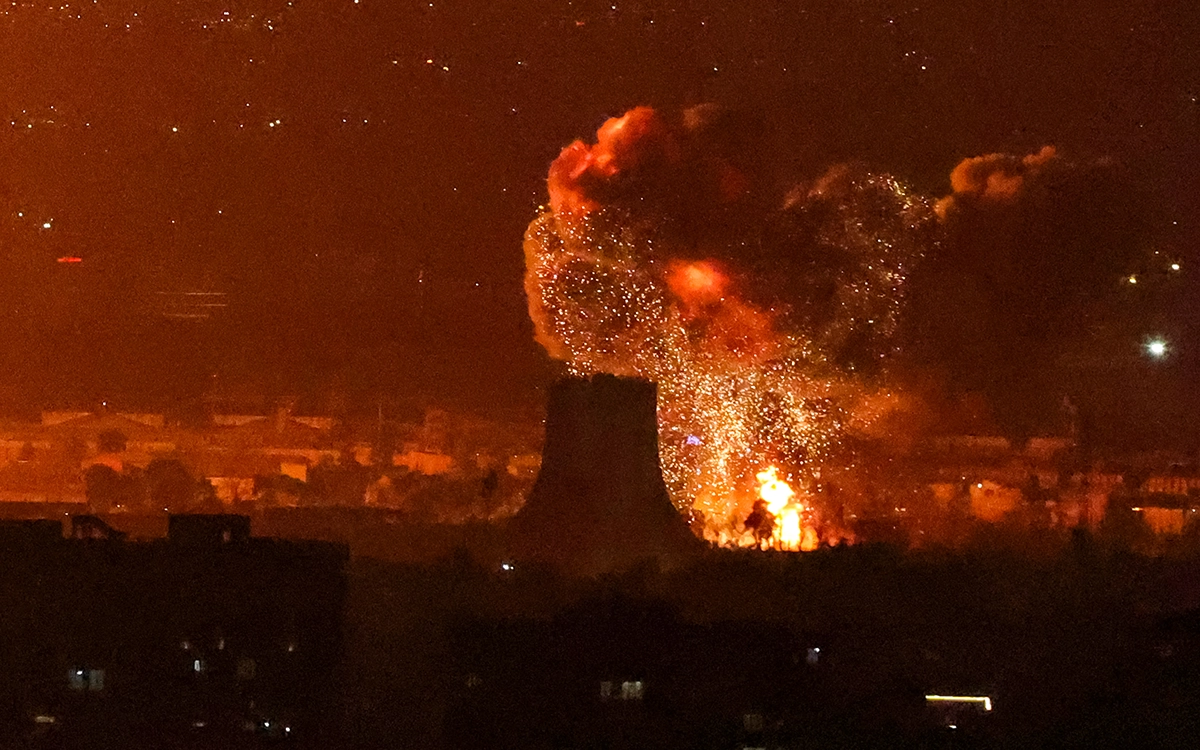
U.S. President Donald Trump threatened to strike Iranian sites within ten minutes, while Iranian Supreme Leader Mojtaba Khamenei warned the United States and Israel against launching new attacks, ordering a military response without geographical restrictions. This escalating exchange reflects the stalled negotiations and growing fears of renewed military confrontation.
Speaking to reporters at his Mar-a-Lago resort in Florida on Saturday, Trump said the United States still needs to deal with one or two sites in Iran despite having taken out much of its military.
“We still have to take care of, I would say, one or two sites, but we can do that in 10 minutes,” he said. “You probably could look at Pickaxe Mountain, and you have to take care of that.” However, Trump did not specify a timeline for any new strikes.
In response, Khamenei, in a statement attributed to him and published on his Telegram channel, asserted that if the enemies launch further military attacks, the Iranian armed forces and the Iranian people will determine when and how to end them—a warning reflecting Tehran’s readiness to broaden its response to any potential attack.
Meanwhile, Iranian National Security Council Secretary Mohsen Rezaei stated that he had read the letter from U.S. Vice President J.D. Vance but had not responded, emphasizing that the Strait of Hormuz would not be reopened until Iran’s conditions were met. He considered the change in tone from the U.S. administration a positive indicator, reflecting “the victory of the Iranian people.”
In Israel, which is coming off fresh elections, Prime Minister Benjamin Netanyahu has spoken of a “historic, one-time opportunity” to topple the Iranian government.
The simultaneous threats of a swift U.S. strike and Iran’s warning of a response without geographical limitations reveal each side’s attempt to redefine the boundaries of deterrence and raise the cost of confrontation. Washington seeks to leverage its military superiority to pressure Tehran, while the latter is betting on expanding the scope of its threats to demonstrate its ability to impose a regional cost for any new attack.
This escalation is becoming increasingly sensitive with the approaching U.S. midterm elections, economic pressures related to energy prices, and the threats concerning the Strait of Hormuz and undersea communications cables. Between the stalled negotiations and the continued saber-rattling, the next phase appears to be a test of the limits of mutual deterrence, and whether the threats will remain a tool for political pressure or transform into a wider military confrontation.