
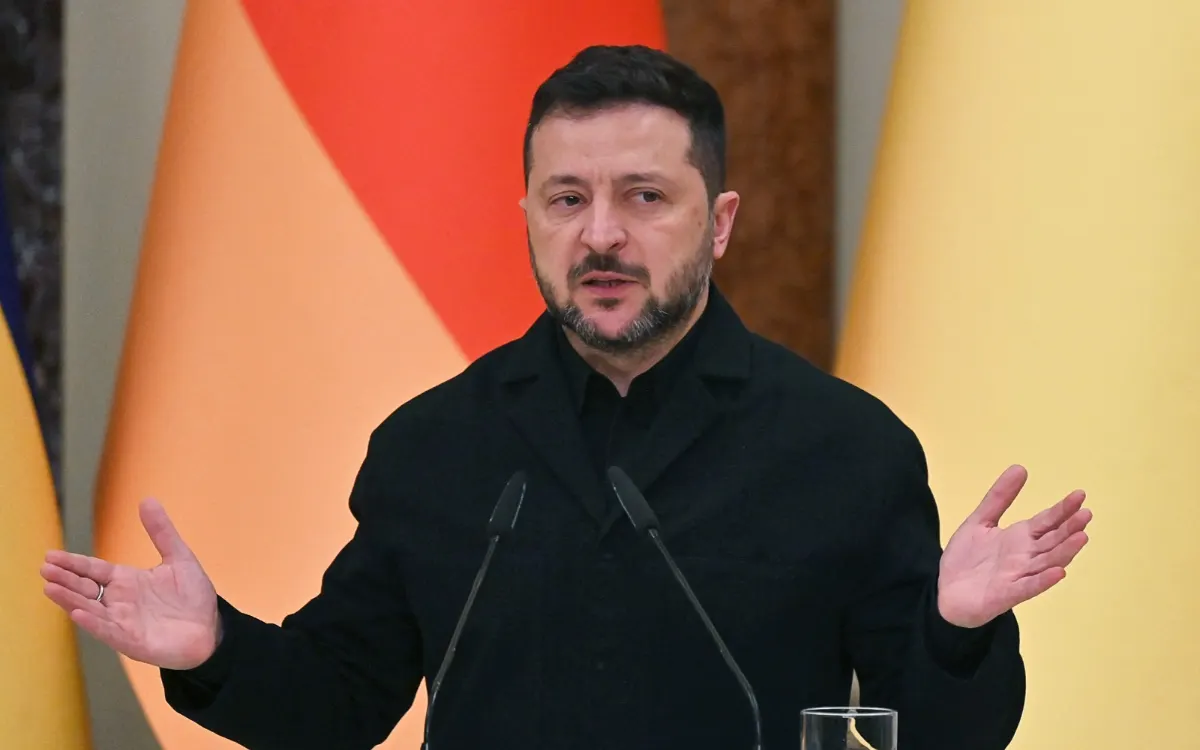
Ukrainian President Volodymyr Zelensky warned Wednesday that a possible summit involving U.S. President Donald Trump, Russian President Vladimir Putin, and Chinese President Xi Jinping could become a platform for dividing geopolitical influence, similar to the arrangements negotiated by major powers after World War II. His concerns reflect fears that decisions affecting Ukraine and Europe’s security could be shaped without Kyiv’s participation.
The warning comes as Trump announced Wednesday that a direct meeting between Putin and Zelensky could be arranged soon, expressing optimism about potential progress toward ending the war. Separately, the Kremlin has indicated that preparations are underway for a possible meeting between Trump, Putin, and Xi on the sidelines of an Asia-Pacific summit next month. Ukraine and Russia are also expected to meet with U.S. envoys in the United Arab Emirates in November, although no date has been confirmed.
Zelensky drew a parallel with the 1945 Yalta Conference, where Soviet, American, and British leaders discussed Europe’s postwar settlement. “We really don’t want this to turn into ‘Yalta 2, 3, 4’, with a redistribution of influence,” he said. The Ukrainian president also warned against granting Moscow another major diplomatic advantage through high-level negotiations.
Russia has long sought an agreement with Washington concerning Europe’s security architecture, particularly NATO’s expansion near Russian territory. Moscow portrays its invasion of Ukraine as a response to perceived NATO threats, an argument rejected by Kyiv and Western governments. Putin has previously resisted direct negotiations with Zelensky. Meanwhile, Kyiv wants the proposed UAE talks to precede any major-power summit and is seeking additional U.S. Patriot air defense missiles, a halt to attacks on energy infrastructure, and a maritime ceasefire to safeguard grain exports. Russia has rejected partial ceasefires before a comprehensive peace agreement.
The parallel diplomatic initiatives highlight competing approaches to ending the war. While direct Putin–Zelensky negotiations could provide a channel for addressing Ukraine’s immediate security concerns, a separate summit involving Washington, Moscow, and Beijing raises broader questions about Europe’s security order and the role of smaller states in decisions affecting their future. (AFP+EIR)