
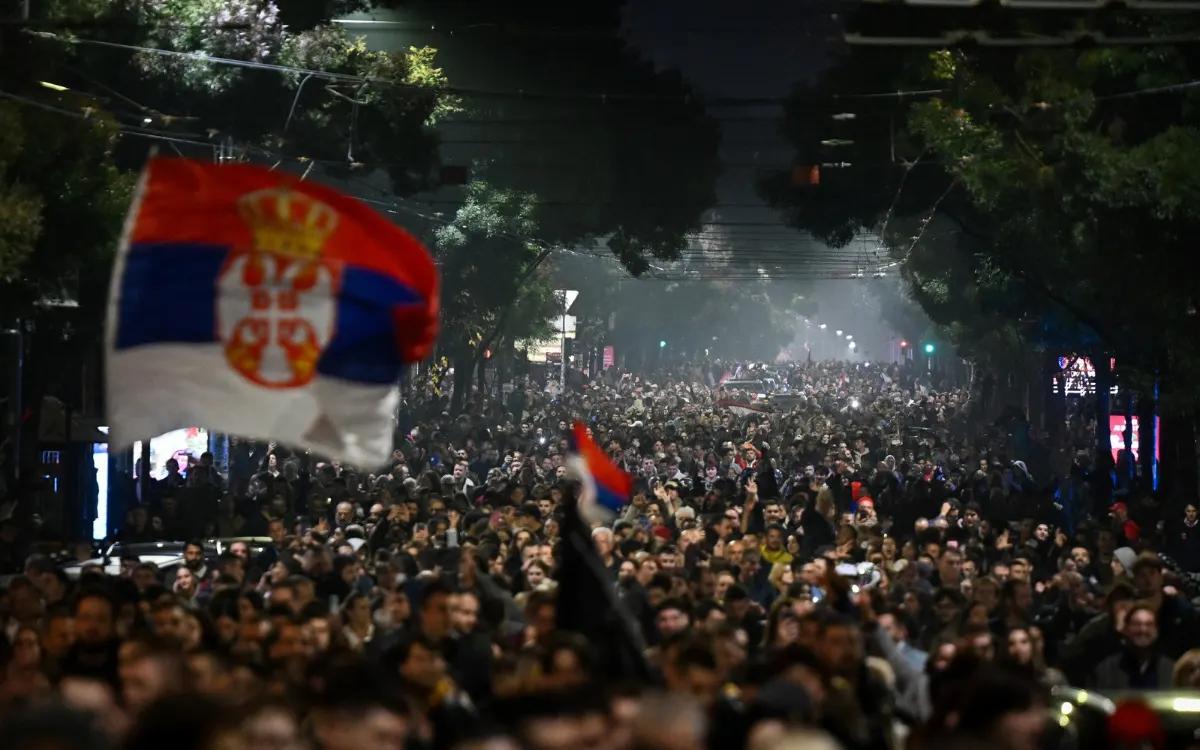
German Chancellor Friedrich Merz has pledged Berlin’s support for Serbia’s European integration following a parliamentary election victory by a student-led movement that defeated the party of longtime leader and former president Aleksandar Vucic. The result has drawn contrasting reactions from Germany, Russia, and Ukraine, highlighting Serbia’s strategic position between its European ambitions and longstanding ties to Moscow.
Merz congratulated the movement on Monday, a day after it defeated Vucic’s right-wing populist party in Sunday’s election. The German leader said Berlin would “actively support Serbia’s European path,” signaling continued German interest in the country’s relationship with the European Union. The Kremlin, meanwhile, expressed hope that Serbia’s incoming political forces would preserve cooperation with Russia.
“With its demand for the rule of law, fighting corruption and fundamental freedoms it has reached the people,” Merz wrote on X. Kremlin spokesman Dmitry Peskov offered a different emphasis, telling reporters: “We would like to express hope… that these new political forces understand that cooperation with Russia is in Serbia’s interests, because it brings benefits to Serbia.”
The election marks a significant political change in a country whose previous leadership sought to balance competing international relationships. Vucic maintained Serbia’s aspirations for EU membership while preserving close relations with Russia, even after Moscow launched its full-scale invasion of Ukraine in 2022. Serbia remained among the few European countries to sustain close ties with the Kremlin, and Vucic traveled to Russia last year for commemorations marking the 80th anniversary of victory in World War II. Ukrainian President Volodymyr Zelensky also welcomed the election result, describing it as a “new chapter in the history of the country and its people.”
For Berlin, the student-led movement’s victory offers an opportunity to encourage closer European alignment through reforms centered on the rule of law, anti-corruption measures, and fundamental freedoms. However, Russia’s response underscores the competing diplomatic expectations facing Serbia’s new political leadership. The election result does not establish whether the incoming leaders will substantially alter the country’s foreign policy, but their approach to relations with Brussels and Moscow could shape Serbia’s next political chapter. (AFP+EIR)