
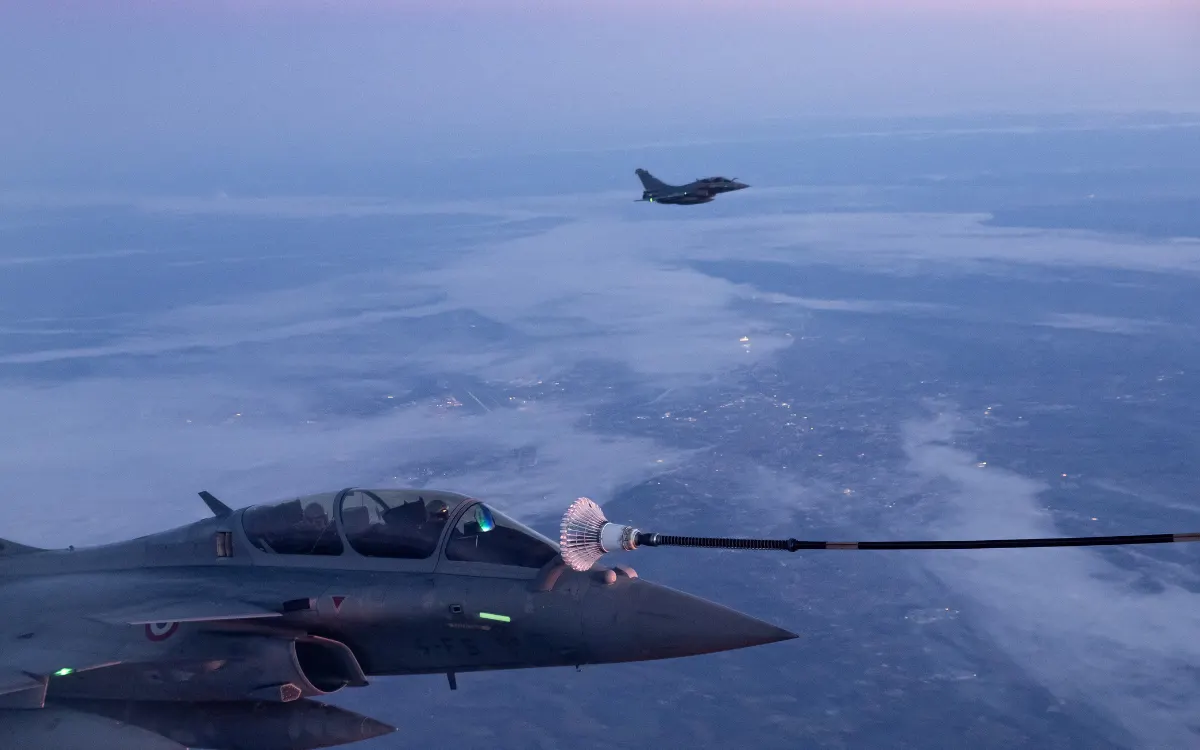
Royal Air Force fighters have joined a French nuclear exercise, the first time British aircraft have taken part in one. The drill puts into practice an agreement London and Paris reached in July 2025, prompted by growing threats to Europe and doubts about the U.S. commitment to European defense. It comes more than four years into Russia’s full-scale war in Ukraine, as relations between Moscow and both capitals remain strained.
France’s armed forces ministry announced on Friday that the exercise, code-named “Rummy,” was held over the Mediterranean on the evening of October 20. Rafale jets took off from a base in northeastern France and simulated a nuclear strike, with British Typhoon fighters flying as escort.
Catherine Vautrin, the French armed forces minister, said that keeping independent nuclear forces does “not preclude coordination.” Wes Streeting, the British defense secretary, said adversaries “should be in no doubt” that the two countries stand together on European security.
On October 1, President Vladimir Putin warned that Russia would use every weapon it has, nuclear arms included, if Kaliningrad were attacked or cut off from the rest of Russia. The Russian exclave on the Baltic Sea sits between NATO members Poland and Lithuania. Putin also said Russia had no intention of attacking any European country.
Apart from Russia, France and Britain are the only European states with nuclear weapons, and each keeps its arsenal under national command. France has about 290 warheads and Britain 225, while Russia and the United States each hold more than 5,000. In March, President Emmanuel Macron announced plans to enlarge the French arsenal. He also offered European partners joint drills and the temporary stationing of French nuclear-capable forces on their soil.
On October 22, London launched “Be Ready,” a three-year campaign urging households to keep three days of water, food that needs no cooking, cash, and a radio. Streeting said the government had no particular threat in mind and wanted people “alert but not alarmed.” Officials list storms, power cuts, and cyberattacks among the risks. The government says France, Ireland, and the Netherlands already use the same three-day benchmark. (AFP+EIR)