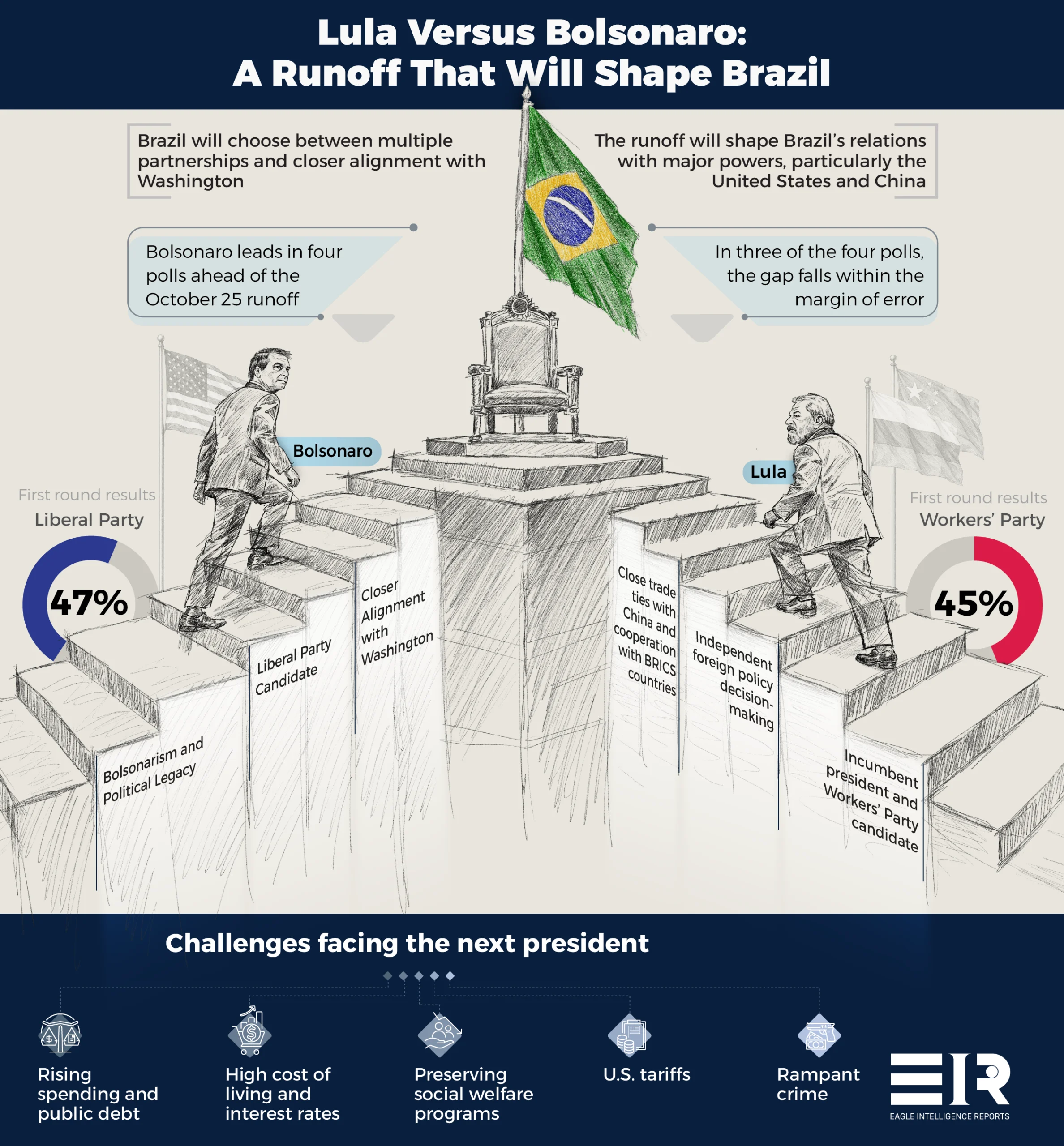

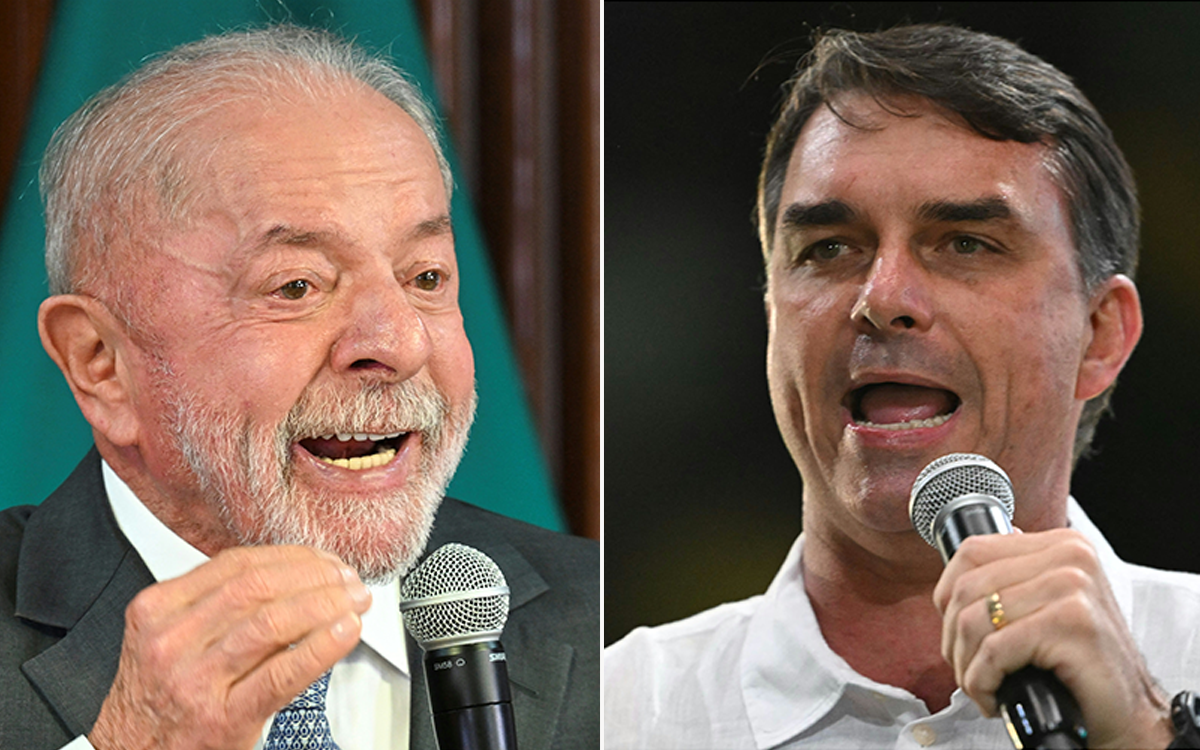
Four opinion polls released on October 21, 2026, showed Brazilian presidential candidate Flávio Bolsonaro ahead of President Luiz Inácio Lula da Silva before the October 25 runoff. His lead in valid votes ranged from 1.1 to six percentage points.
A poll conducted by the Gerp institute between October 19 and 21 showed Bolsonaro receiving 53 percent, compared with 47 percent for Lula. A Futura poll conducted between October 19 and 20 placed Bolsonaro at 51.1 percent against Lula’s 48.9 percent.
A Meio/Ideia poll conducted between October 15 and 19 showed the same 51.1 percent to 48.9 percent split. A Quaest poll conducted between October 17 and 20 put Bolsonaro at 45 percent and Lula at 44 percent, or roughly 50.6 percent to 49.4 percent of valid votes.
Despite Bolsonaro’s numerical lead in all four surveys, the gap in three of them falls within the margin of error.
The runoff is expected to shape Brazil’s economic and political direction, as well as its relations with major international powers, particularly the United States and China.
On foreign policy, Lula remains committed to independent decision-making, close trade relations with China, and stronger cooperation with BRICS countries and the Global South. By contrast, Bolsonaro, the son of former President Jair Bolsonaro, advocates closer alignment with Washington, drawing on his family’s political ties to U.S. President Donald Trump.
This divergence matters because China is Brazil’s largest trading partner and the United States is seeking to strengthen its economic and strategic influence in Latin America.
On the economy, the next president will face cost-of-living pressures, high interest rates, and growing public debt, alongside the need to control spending while preserving social welfare programs. Combating organized crime and strengthening public security, a Bolsonaro priority, also rank among voters’ key concerns. Domestic polarization, the balance of power in Congress, and relations with the judiciary will further complicate the incoming administration’s efforts to pass economic reforms and secure political stability. (EIR)