
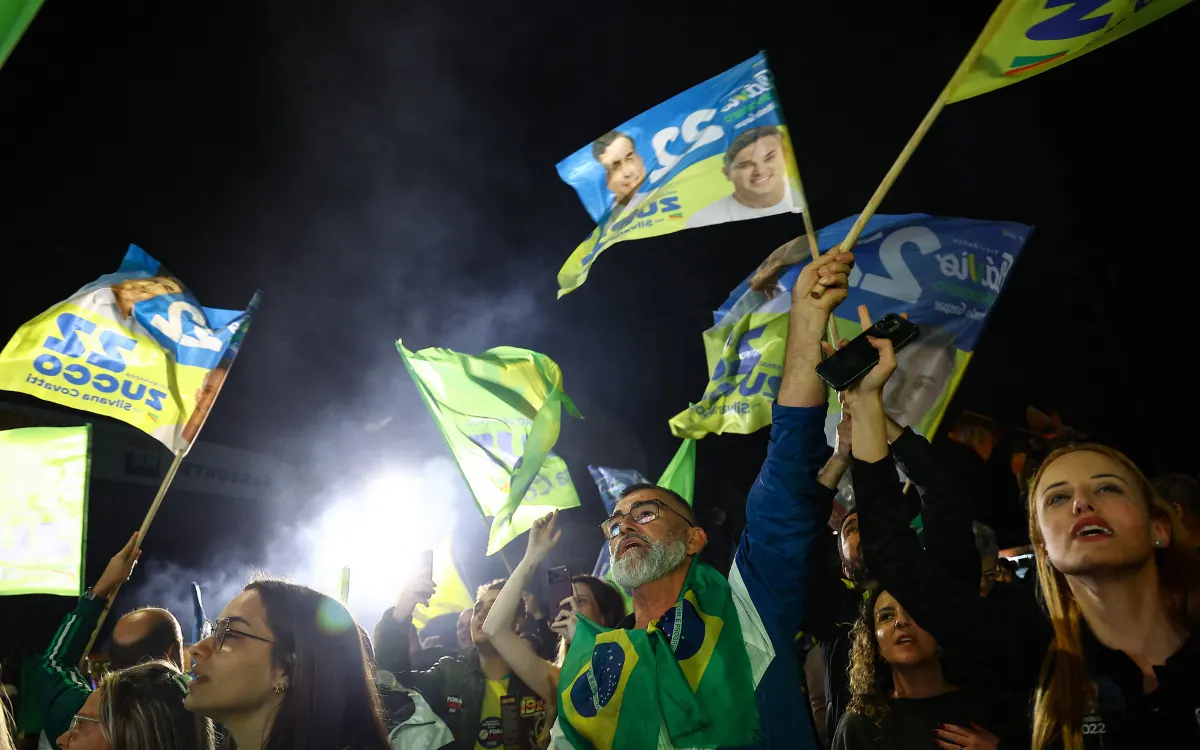
Right-wing Senator Flavio Bolsonaro finished ahead of Brazilian President Luiz Inacio Lula da Silva in the first round of the presidential election, taking 47 percent of the vote against Lula’s 45 percent and forcing a runoff.
The result formed part of a broader advance for the Bolsonaro movement, with the Liberal Party emerging as the largest force in both houses of Congress. Several members of former president Jair Bolsonaro’s family also won congressional races, extending the family’s political presence beyond the presidential contest.
Israeli Prime Minister Benjamin Netanyahu on Monday hailed Bolsonaro’s performance, highlighting the international stakes of the contest. “I look forward to restoring the extraordinary friendship between Israel and Brazil. Best wishes for your great victory, my friend,” Netanyahu said in a statement on X.
Flavio Bolsonaro was chosen by his father to continue the family’s political project after the former president was convicted of coup-plotting and barred from running for office until 2030. Lula, who acknowledged that he had expected to win in the first round, now faces Bolsonaro in the October 25 runoff. The election comes against a backdrop of strained Brazil–Israel relations under Lula, making Netanyahu’s intervention an early indication of how foreign governments could view a change of leadership in Brasilia. A Bolsonaro presidency could move Brazil closer to Israel, while his campaign pledge to seek an amnesty for his father would place immediate attention on relations between the presidency and Congress. Any amnesty would require approval from both houses.
The broader results mean the Bolsonaro movement has already strengthened its institutional position regardless of who wins the presidency. If Lula is re-elected, a more powerful Liberal Party could complicate his ability to advance legislation through a conservative Congress; if Bolsonaro wins, the congressional gains would provide his administration with a stronger political base. The success of several Bolsonaro relatives also demonstrates that the family remains an important force within Brazil’s right despite Jair Bolsonaro’s imprisonment and exclusion from the election. Internationally, Netanyahu’s response points to the potential for the runoff to affect Brazil’s diplomatic orientation, particularly its relationship with Israel. The result will therefore help determine whether Brazil maintains Lula’s current foreign-policy direction or enters a period of renewed alignment with governments that cultivated closer relations with Jair Bolsonaro. (AFP+EIR)