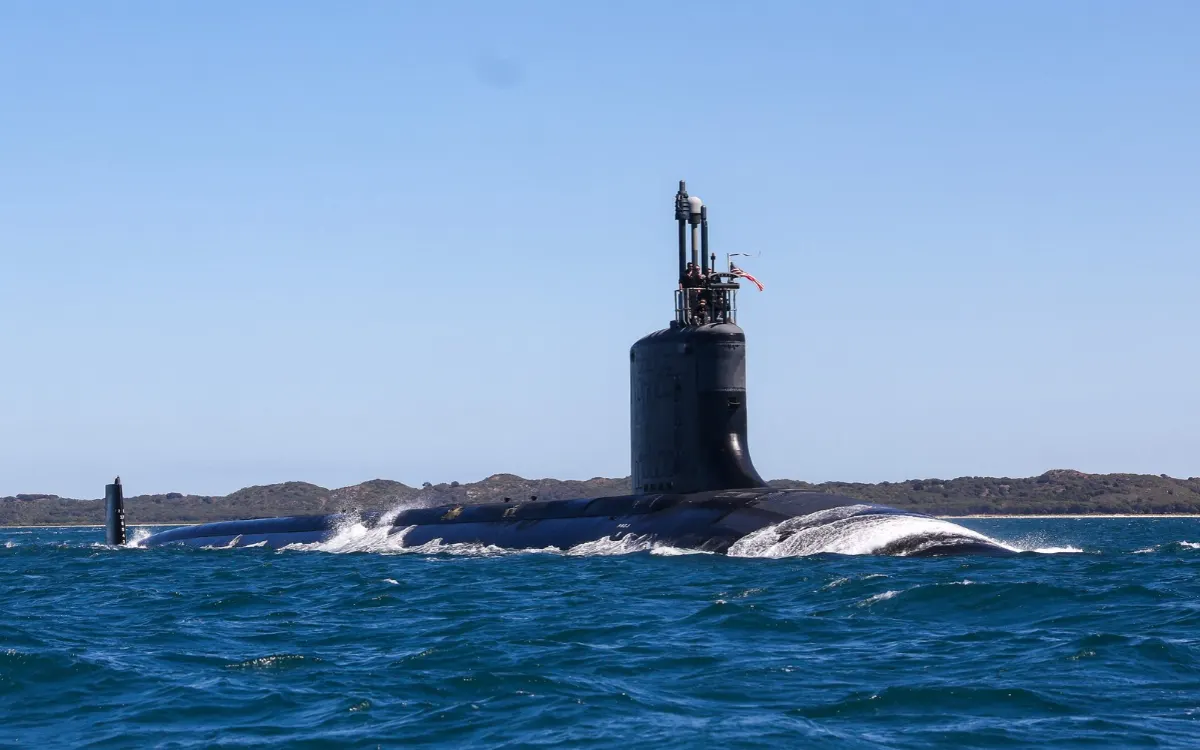
The United States has designated the nuclear-powered attack submarine USS Colorado for deployment to Western Australia in late 2027 under AUKUS, its security partnership with Australia and the United Kingdom. The move will expand the allies’ ability to operate submarines across the Indo-Pacific as they strengthen their military presence amid China’s growing regional capabilities.
The Virginia-class submarine will become the first U.S. vessel assigned to Submarine Rotational Force-West, a planned multinational presence at Australia’s HMAS Stirling naval base near Perth. The arrangement is expected eventually to accommodate as many as four American attack submarines and one British vessel on a rotational basis. USS Colorado carries torpedoes and land-attack missiles.
Australian Defense Minister Richard Marles described the rotating submarine force as the first “really big milestone” under the AUKUS agreement, adding that “it’s on track,” with American personnel already preparing HMAS Stirling for the deployments. In a joint statement, the three governments characterized the submarine’s designation as an important advance in strengthening deterrence across the Pacific.
Established in 2021, AUKUS aims to provide Australia with a fleet of conventionally armed, nuclear-powered submarines while deepening defense cooperation among the three countries. Under the current acquisition plan, Canberra expects to obtain three previously operated American Virginia-class submarines beginning in the 2030s, before introducing Australian-built SSN-AUKUS vessels in the following decade. The decision this year to supply three used submarines instead of two used boats and one new one has drawn criticism in Australia. The U.S. Navy has also established support commands at HMAS Stirling and carried out submarine maintenance there.
The deployment advances a long-term shift in allied naval posture by positioning submarines and maintenance facilities closer to strategically important Indo-Pacific waters. Australia’s own nuclear-powered fleet remains years away, but the arrangement builds the infrastructure and operational experience the three countries need to sustain a coordinated maritime presence. (AFP+EIR)