
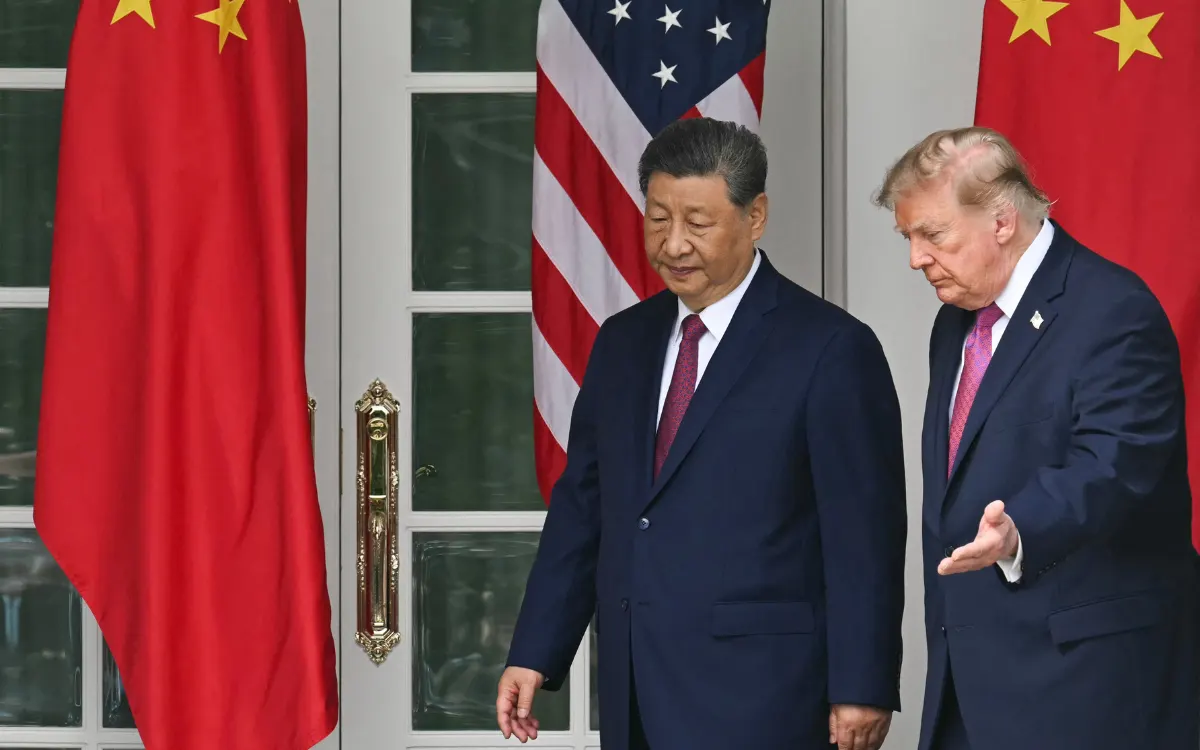
Donald Trump and Xi Jinping may be moving toward a new understanding of how the United States and China manage their rivalry by establishing rules and practicing restraint. But a fundamental question hangs over the emerging great-power bargain: can the two powers agree on the limits of their competition without also shaping other countries’ sovereignty?
When Xi left Washington, his first state visit in more than a decade had produced no breakthrough. The two governments extended a trade truce by two months, established an AI incident channel, and agreed to accelerate work on military crisis communications. More consequential, though, was a small amendment to their shared formula. In Beijing in May, the two leaders had agreed to build a “constructive relationship of strategic stability” based on “fairness and reciprocity.” In Washington, “respect” was added, and Wang Yi promptly defined it as respect specifically for each side’s sovereignty, territorial integrity, social system, and “core interests and major concerns.”
Because the phrase originated in Chinese strategic thinking and was adopted by American diplomats, critics in Washington have read it as a concession to Beijing. But authorship is not the central question. What matters is whether Washington and Beijing are beginning to construct a set of informal rules for a rivalry neither side expects to end any time soon. Neither government has abandoned policies the other regards as threatening. Washington still describes its forward military presence as the foundation of regional order, while Beijing treats Taiwan as a question of territorial integrity and pushes to limit American military support for the island.
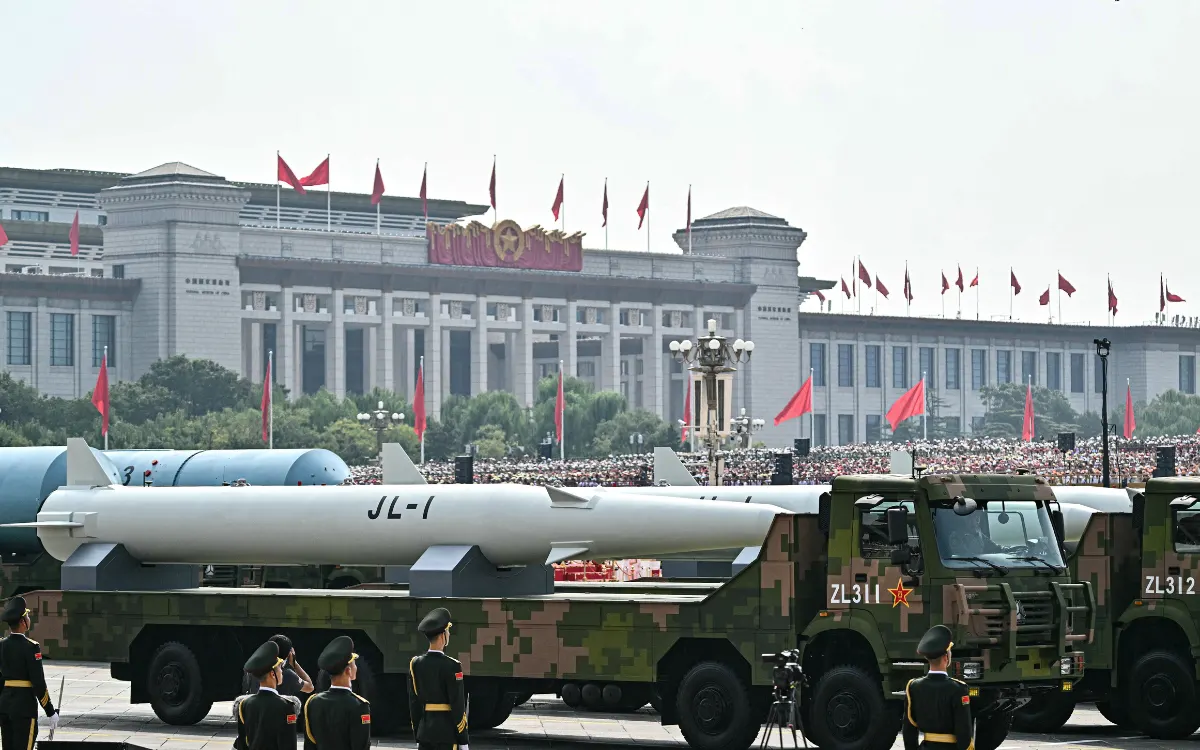
The formula signals neither rapprochement nor Chinese acceptance of an American-led order in Asia. It is better understood as an attempt to make an intensifying rivalry governable by setting limits both sides can read, even where they do not accept them. That raises the question on which the experiment will stand or fall: what each power expects the other to recognize as a legitimate strategic interest, and at what point such recognition shades into conceding a sphere of influence.
The bargain is better understood as an attempt to make an intensifying rivalry governable by setting limits both sides can read, even where they do not accept them
“New Type of Major-Country Relations” Reloaded
Xi’s “new type of major-country relations,” first floated during his visit to Washington as vice president in 2012 and made the centerpiece of his 2013 summit with Barack Obama at Sunnylands, rested on three principles: no conflict or confrontation, mutual respect, including for “core interests,” and win-win cooperation. Washington welcomed the first and distrusted the second, fearing that “mutual respect” would be read as deference to Chinese claims on Taiwan and in the East and South China Sea. Xi’s current definition sounds familiar. Cooperation is to remain the “mainstay,” competition is to stay “within proper limits,” and differences are to be managed.
The setting has, however, changed more than the vocabulary. In 2013, Washington still hoped to accommodate a rising China within an order whose rules it had largely written. By 2026, each side holds instruments that can seriously damage the other. The United States has spent nearly a decade restricting Chinese access to advanced technology, and China showed during the tariff war of 2025 that its grip on rare-earth processing can disrupt American industry. The Busan truce of last October halted that escalation. A formula once meant to reassure a rising power is now being used by two powers that expect their competition to continue, even if Xi, on arriving in Washington, insisted that the two countries should be “partners rather than rivals.”
The phrase is ambiguous in a more specific sense as well. In the American strategic lexicon, “strategic stability” has traditionally referred above all to nuclear stability—a balance of capabilities and doctrines that gives neither side an incentive to strike first. China has so far rejected U.S. calls to enter formal trilateral nuclear arms-control negotiations with Washington and Moscow, arguing that the disparity between their arsenals makes such talks premature. Neither of this year’s summits produced an agreement on nuclear forces. The new formula therefore broadens the term beyond its traditional nuclear meaning: it describes an effort to bound political, military, and economic rivalry without first settling the underlying balance of power.
The new formula therefore broadens the term beyond its traditional nuclear meaning: it describes an effort to bound political, military, and economic rivalry without first settling the underlying balance of power
The American reading is narrower. White House accounts stress fairness, reciprocity, and concrete deliverables. Comparing the two readouts of the Beijing summit for the Council on Foreign Relations, Zongyuan Zoe Liu found that both governments used the same phrase but filled it with different content. Washington presented a list of commercial deliverables, while Beijing presented a framework for the relationship as a whole. For Beijing, the formula concerns status, reciprocal restraint, and the rules under which competition is conducted. For Washington, it is more operational and transactional: a framework for bargaining, preserving leverage, and preventing individual disputes from consuming the broader relationship. Stability does not require a shared vision of order, only enough overlap in expectations to keep routine disputes from turning into tests of resolve.
The institutions chartered at the May 2026 summit in Beijing and put into operation in Washington show how such overlap might be organized. A Board of Trade manages trade in non-sensitive goods, while a Board of Investment provides a channel for investment-related disputes. In Washington, the Board of Trade agreed on recommendations for preferential tariffs covering $30 billion of non-sensitive trade in each direction. The two governments have also formalized a dialogue on advanced AI and opened a channel for AI-related incidents.
Each arrangement separates a field in which competition can be regulated from those in which neither side will compromise, so that consumer trade is handled apart from semiconductor controls, and AI safety apart from the race for AI leadership. The resulting pattern looks less like reconciliation than like a sequence of stress tests. Each side implements a limited commitment, watches whether the other reciprocates and moves on to the next issue while preparing for setbacks. The short leash on the trade truce fits that logic: Washington wanted to preserve leverage over a Beijing that sought predictability. Commercial commitments from May were still incomplete when Xi arrived, and some Chinese suppliers had curtailed rare-earth shipments in the preceding weeks.
Compartmentalization works only as long as a failure in one domain does not spill into the others, which is hardest to prevent where either side believes a fundamental interest is at stake. Given Taiwan’s central role in global semiconductor production, a crisis over the island could quickly expose the limits of this compartmentalization, turning commercial concessions and technology restrictions into instruments of coercion rather than mechanisms for stabilizing the relationship. In such circumstances, even agreements designed to insulate economic relations from strategic competition could become subordinate to military considerations.
Technology is where that condition is hardest to meet. Washington seeks to preserve its advantage in the most sensitive technologies, while Beijing regards broad export controls as an effort to obstruct its development and retains leverage through critical-mineral supply chains. Limited rules may still be possible if both sides can distinguish a narrow national-security perimeter from a general strategy of technological denial. The AI incident channel illustrates the more modest ambition that may be achievable: it constrains neither side’s capabilities but could reduce the risk that their use produces unintended escalation. Economic coercion will be harder to manage because it operates through companies, export licenses, and supply chains rather than identifiable weapons and doctrines.
Economic coercion will be harder to manage because it operates through companies, export licenses, and supply chains rather than identifiable weapons and doctrines
Strategic Interests or Spheres of Influence?
Beijing wants Taiwan treated as the central political question in the relationship, U.S. technology controls confined to a narrow security perimeter, and American alliances prevented from hardening into an integrated anti-China coalition. Washington, meanwhile, is asking China to live with an enduring U.S. military presence, refrain from coercion against Taiwan and U.S. allies, and accept targeted export controls as legitimate security policy.
These are not mirror-image claims. The crucial difference is not simply between competing American and Chinese security interests, but between arrangements that preserve the choices of regional states and those that subordinate such choices to great-power consent. The American alliance network rests on choices made by sovereign states, but it also embeds U.S. military power close to China’s coast. Beijing’s language of “core interests” may begin with security concerns but can develop into a demand for deference by third parties. Strategic stability will therefore depend on whether both sides can distinguish interests they expect the other to consider from decisions they claim the right to control.
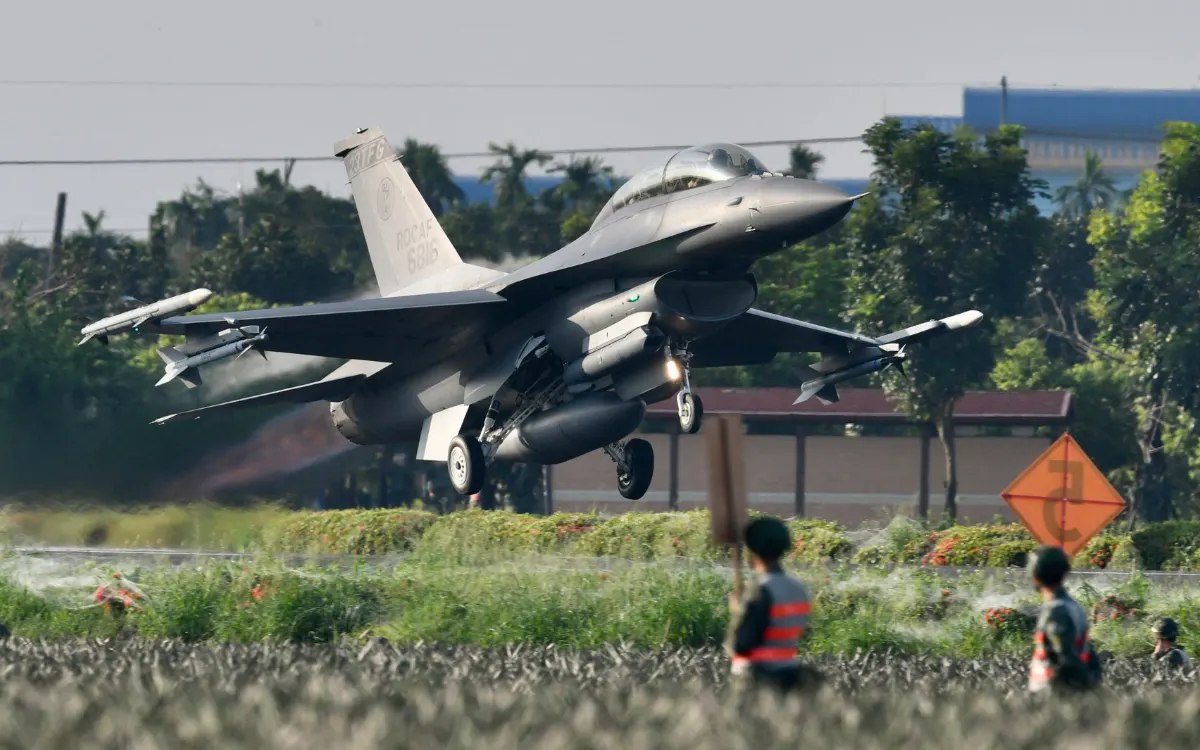
Crisis-management arrangements and reciprocal restraints on military or economic conduct need not compromise third-country sovereignty. The danger arises when such understandings begin to determine what other states are permitted to do. In practice, the distinction could turn on whether Washington consults Beijing before approving arms sales to Taiwan, whether Chinese objections influence American military deployments, or whether regional governments find their security choices constrained by understandings reached without their participation or knowledge.
The Trump administration complicates this distinction. Its December 2025 strategy elevated the Western Hemisphere and explicitly revived the Monroe Doctrine. That does not make American and Chinese claims equivalent. It does make it harder for Washington to reject in principle the idea of privileged regional interests when Beijing invokes it in Asia. The line into a sphere of influence is crossed when a great power’s security interest becomes a claim to determine what neighboring states may do, whom they arm, with whom they ally, and whose forces they host.
The line into a sphere of influence is crossed when a great power’s security interest becomes a claim to determine what neighboring states may do, whom they arm, with whom they ally, and whose forces they host
Taiwan and the Problem of Vetoes
Taiwan shows how quickly that line can blur. In December 2025, the administration approved an $11 billion arms package for the island, the largest ever. A second package worth about $14 billion, including Patriot interceptors and NASAMS air defense missiles, was cleared by Congress in January 2026 and still requires the president’s approval. After his visit to Beijing, Trump said he was holding it “in abeyance,” that the decision “depends on China,” and that it was “a very good negotiating chip.” He also acknowledged discussing arms sales with Xi “in great detail.” A week later, the acting secretary of the Navy offered a second explanation, telling senators that the sale had been paused to conserve munitions for the war against Iran. The two explanations do not exclude each other, but only the first turns an arms sale into an object of negotiation with Beijing. Before the Washington summit, Beijing reportedly went further. According to Reuters, it had asked Washington to halt deliveries of weapons Taiwan had already ordered and was preparing to press its reading of the 1982 communiqué, in which the United States stated an intention to reduce arms sales over time. The Six Assurances of the same year, declassified only in 2020, record that Washington had not agreed to prior consultations with Beijing on arms sales to Taiwan.
One conceivable basis for reciprocal restraint would require Washington not to support a unilateral declaration of Taiwanese independence and Beijing not to alter the status quo through force or coercion. Such an understanding could reduce the risk of war without settling sovereignty. Negotiating the timing or scope of an individual arms sale would not, by itself, grant Beijing a veto. But repeated concessions or an expectation of prior consultation could gradually normalize Chinese influence over decisions that belong to Washington and Taipei. A workable form of strategic stability would therefore have to rest on mutual restraint without mutual vetoes. The pending decision on the $14 billion package will offer an early indication of whether that distinction can hold.
The Price of Bilateral Stability
None of this amounts to a condominium. Competition is intensifying in precisely the fields that will decide relative power: military capabilities, artificial intelligence, semiconductors, critical resources, and industrial capacity. What may be changing is the mechanism through which the competition is conducted. After years in which escalation was followed by improvised de-escalation, the two governments are trying to build channels that persist between crises, from trade boards and AI dialogues to military hotlines and regular leader-level meetings. Such channels can create expectations where they cannot create trust. Their durability, however, will depend on whether both powers continue to see restraint as advantageous, particularly as the military and technological balance evolves over time.
The durability of channels for crisis resolution will depend on whether both powers continue to see restraint as advantageous, particularly as the military and technological balance evolves over time
Whether this marks the end of the Pax Americana is a question the evidence does not yet settle. It does suggest that Washington can no longer assume that the regional limits of American power will be set largely within an order structured under U.S. primacy. Increasingly, those limits themselves are becoming objects of bargaining with a peer competitor.
The next tests are close at hand. China hosts the APEC summit in Shenzhen in November, the United States hosts the G20 later in the year, the trade truce expires in January 2027, and the Taiwan arms package still awaits a decision. Each will show what the two sides mean by “proper limits.” A less immediate but potentially more revealing test will be the succession of the Dalai Lama. He has vested sole authority to recognize his successor in the Gaden Phodrang Trust, while Beijing insists that any reincarnation must be approved under Chinese law. Because the trust and the Tibetan exile institutions are based in India, the dispute could test how far other governments are expected to accommodate Beijing’s definition of its “core interests.” Whether it becomes a matter of U.S.–China bargaining remains uncertain, but the underlying distinction is the same: recognition of a strategic concern is not equivalent to accepting authority over decisions made beyond China’s borders.
The Washington summit also contained a small precedent: a different example of bilateral understandings affecting third countries. Trump and Xi agreed that no country may impose tolls on international waterways, a principle articulated at a time when Iran asserts control over the Strait of Hormuz. Unlike a sphere-of-influence arrangement, the defense of the freedom of navigation invokes a generally applicable international rule. The distinction matters considerably: great-power cooperation need not come at the expense of smaller states, even when it concerns their conduct.
If Washington and Beijing limit their own conduct, keep crisis channels open, and practice reciprocal restraint, they may make a dangerous rivalry more predictable without necessarily curtailing the sovereignty of smaller states. But bilateral calm purchased by giving either power a say over what third countries may do would divide Asia into informal spheres negotiated over the heads of Tokyo, Manila, Seoul, and Taipei.
The density of alliances and economic ties in the region makes such a division unlikely to last, though not unlikely to be attempted. Whether constructive strategic stability ends up managing a rivalry or dividing a continent will depend less on what Washington and Beijing concede to each other than on what they try to concede on behalf of everyone else.
Whether constructive strategic stability ends up managing a rivalry or dividing a continent will depend less on what Washington and Beijing concede to each other than on what they try to concede on behalf of everyone else