
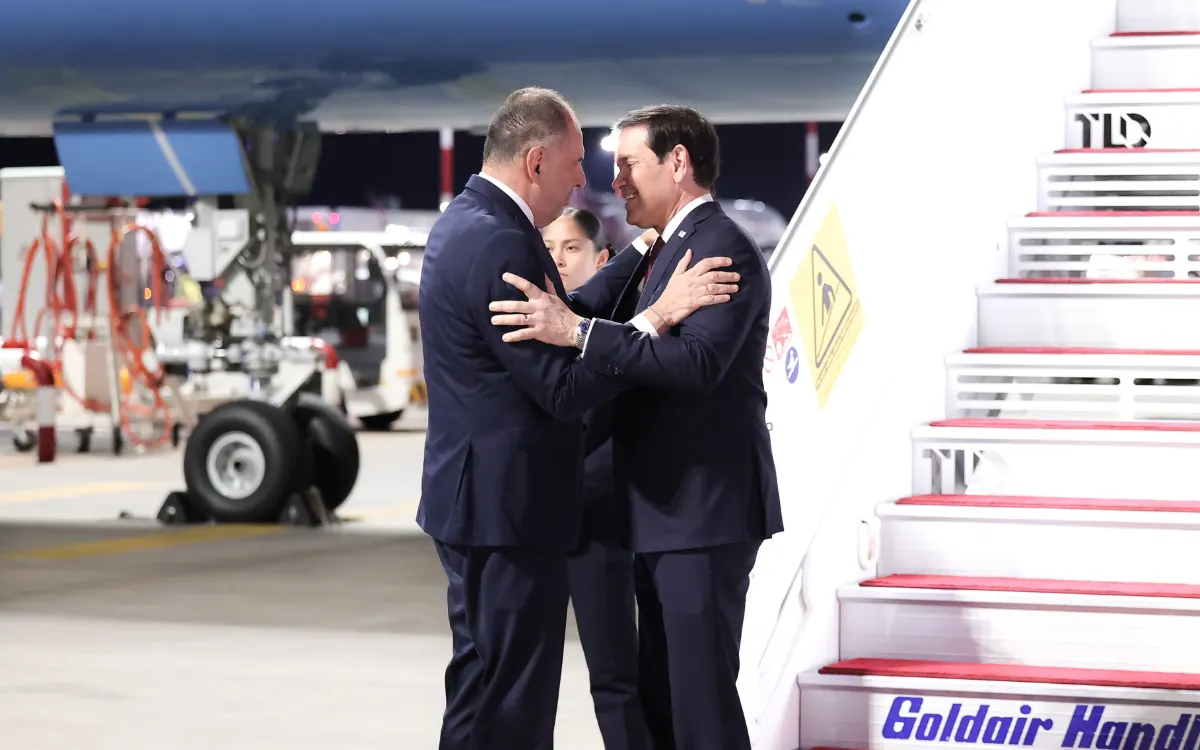
U.S. Secretary of State Marco Rubio is in Greece on Wednesday ahead of a “strategic dialogue” with the NATO member on regional and energy security, the State Department said.
Rubio is set to meet Prime Minister Kyriakos Mitsotakis and Greek Foreign Minister Giorgos Gerapetritis, as the European country positions itself to become a key hub for natural gas transport. Athens has also deepened energy ties with U.S. companies, signing agreements this year with Chevron- and ExxonMobil-led consortiums for hydrocarbon exploration in waters off Greece. A longtime buyer of U.S. weaponry, Greece is also set to acquire 20 F-35 fighter jets, with pilot training due to begin in 2027.
“Greece is a very important US ally. It’s a place that we have not just a military presence but strong economic ties,” Rubio, who is also the U.S. national security advisor, said.
The trip to Athens comes as the Iran and Ukraine wars have exposed the vulnerability of energy supply chains. On Tuesday, Rubio was in Iceland, where he held talks on Arctic and North Atlantic security. The highlight of his Athens visit is expected to be an address from the Pnyx, the meeting place of the assembly in ancient Athenian democracy, where the State Department said he will urge the United States and Europe to reject the idea of Western “decline” and confront an era of great-power competition together. In February, Rubio similarly called on Europe to resist what he described as “civilizational erasure,” while criticizing mass migration and de-industrialization during a speech at the Munich Security Conference. The visit also comes amid scrutiny of U.S. Ambassador to Greece Kimberly Guilfoyle after media reports alleged she had spoken of the United States being able to create “political change” in European countries, prompting Democratic Congressman Gregory Meeks to seek clarification from Rubio. Rubio is due to finish his trip to Europe on Thursday, when he will travel to Lisbon for talks with Portuguese officials focused on defense, economic cooperation, and technology.
Rubio’s tour underscores Washington’s push to strengthen cooperation with NATO allies across Europe’s northern and southeastern flanks. His focus on energy, defense, and Western political cohesion suggests the U.S. increasingly views economic resilience and shared political identity alongside military capabilities as components of its strategy for confronting great-power competition. (AFP+EIR)