
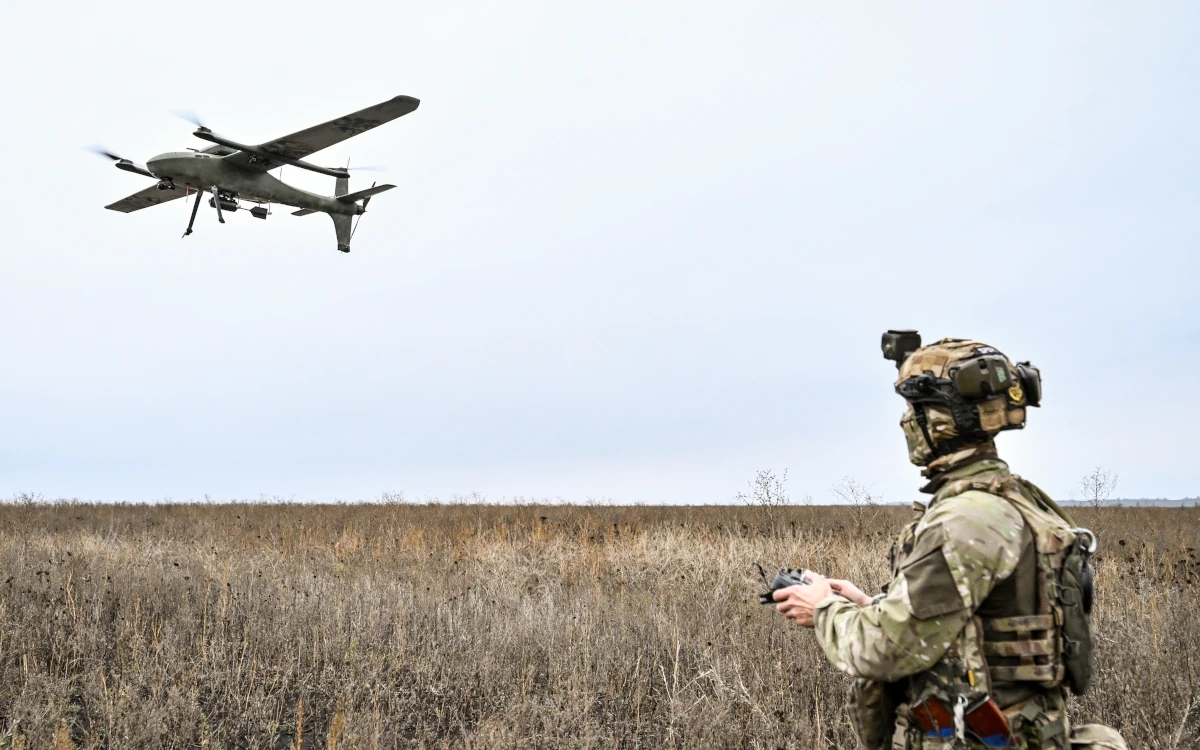
Ukraine, long a recipient of Western military aid, now supplies Europe’s leading powers with something their armies cannot produce at home: firsthand knowledge of modern warfare. Britain, one of Ukraine’s main military backers, has signed up to learn from the army it spent years training. Its August agreement made it the first foreign state admitted to Avengers Labs, an archive of five million labeled combat images that trains Ukraine’s targeting software. Germany, Europe’s largest economy, had already secured Ukrainian battlefield data by April to train its own artificial intelligence. The two deals mark a strategic pivot: NATO’s two biggest defense spenders in Europe will now train their combat software on another country’s war.
The pivot reflects a change in what counts as military power. In 1991, a U.S.-led coalition used satellites, stealth aircraft, and precision-guided bombs to drive Iraq’s army out of Kuwait in six weeks. The victory convinced Western planners that a revolution in military affairs had begun, and that technology would decide future wars. The coalition’s edge rested on a technology gap, since Iraq had nothing comparable. In Ukraine, both sides use satellite links, drones, and precision weapons, so that gap has largely closed. The side that also learns and adapts faster from the fighting gains the edge.
That makes combat experience a strategic game changer, one that money and computing power alone cannot replace. Countries without it bargain for the part that is easiest to share at scale, the data. Whoever controls that data gains geostrategic leverage: the power to decide which governments learn from the war, and on what terms. Ukraine, whose forces have more experience of today’s drone-dominated land warfare than any army in NATO or the EU, holds much of that power.
Whoever controls that data gains geostrategic leverage: the power to decide which governments learn from the war, and on what terms
By buying access to Ukrainian knowledge, European governments are building a strategic dependence on Kyiv through bilateral deals. The dependence also affects deterrence: part of Europe’s ability to discourage an attack now rests on a state that belongs to neither NATO nor the EU. Ukraine’s opponents are learning too: Russia keeps its own combat knowledge off the market, and North Korea gained a share by helping Russia retake its Kursk region from Ukrainian forces. In the race to learn from the war, Ukraine, Russia, and North Korea are gaining battlefield skills that European and American defense budgets cannot buy. Over time, this learning gap could shift the balance of power in Europe, strengthening Russia relative to NATO’s European members and giving Ukraine more weight among European powers.
What European Rearmament Cannot Buy
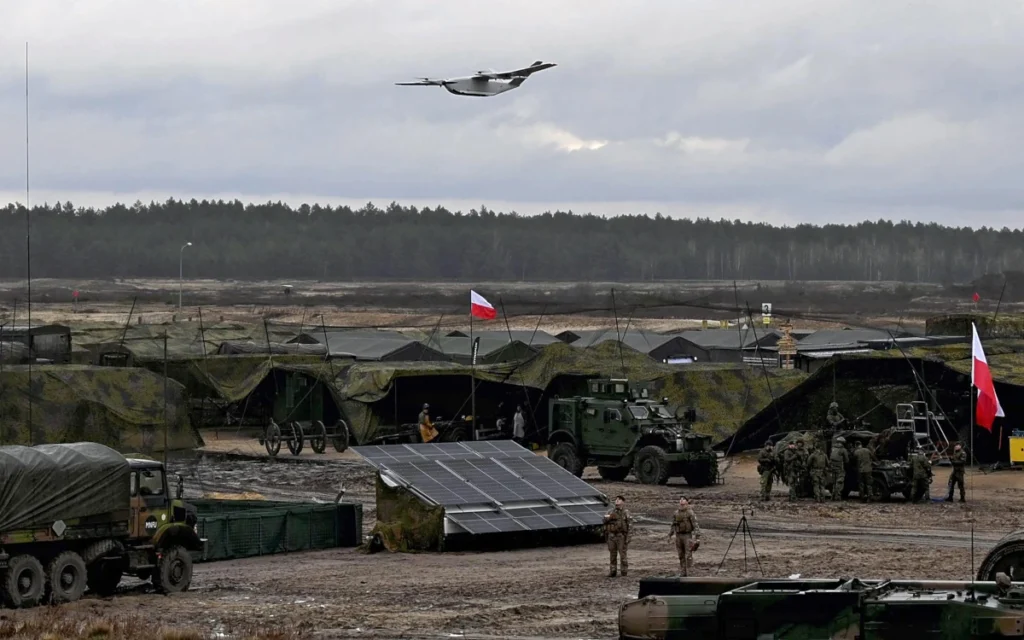
Europe has responded to the war mainly with money: in 2025, NATO’s members pledged to raise defense and security spending to 5 percent of economic output by 2035. That money will buy drones and missiles, but the skill of using them against an enemy that jams signals, hides, and adapts comes mainly from fighting. Ukrainian units have spent four years acquiring it, while European armies have trained only for a drone war they have never fought.
Ukraine’s combat knowledge comes in three forms: soldiers who have done the fighting, tactics rewritten under fire, and data that machines can read. Much of it concerns survival in the kill zone, the belt on both sides of the front where drones spot and strike almost anything that moves. Tactics travel through advisers, manuals, and joint exercises: allied armies now bring in Ukrainian drone operators to play the enemy in their drills. Data travels further, because it can be copied without limit, read by machines, and fed directly into artificial intelligence. That makes it the most scalable form of combat knowledge, and the easiest to trade. It also loses value away from the front: Ukrainian units soon learn when software trained on it fails, while exercises in London or Berlin may never reveal the flaw.
The history of Delta, the software behind Ukraine’s live map of the front, shows that the war, more than the money behind it, made the system work. It began in 2014 as a volunteer project with early NATO support, yet Ukraine’s military resisted it until the full-scale war of 2022 forced commanders to adopt it. A Ukrainian battalion officer said the time from spotting a target to hitting it fell from at least 20 minutes to three to five on parts of the front.
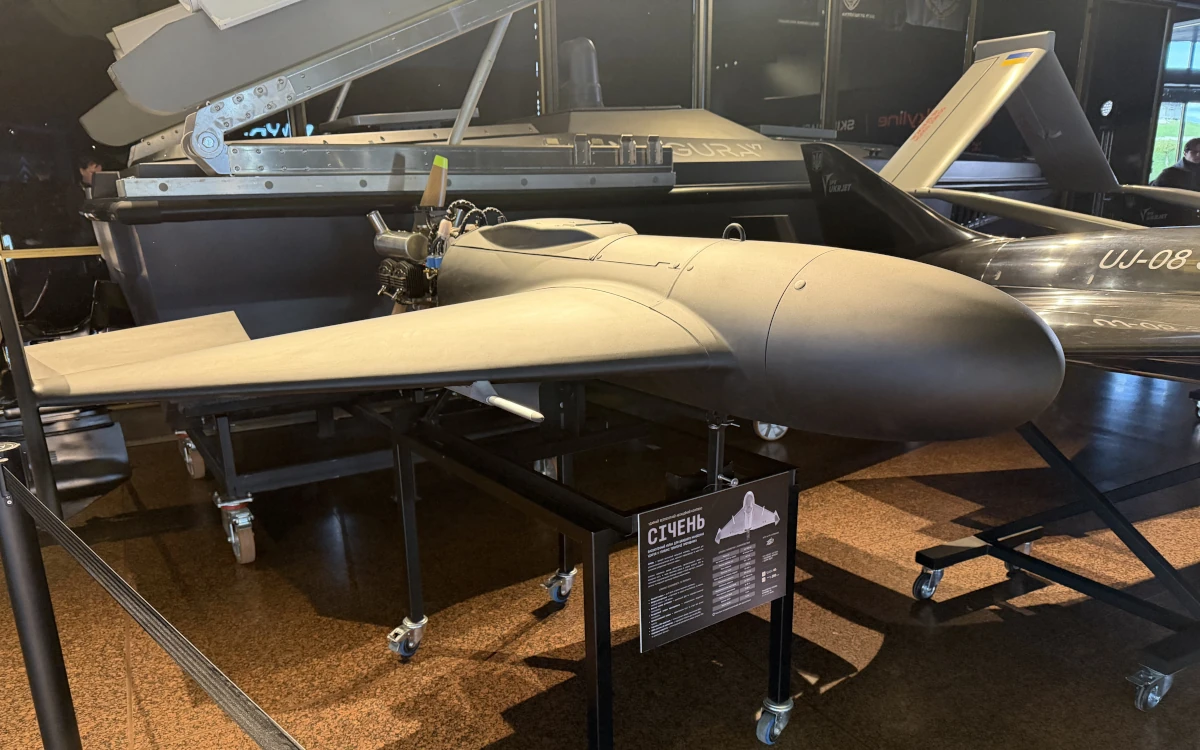
The fighting generates data at a scale no peacetime exercise can match: by some estimates, Ukrainian forces use more than 10,000 drones a day. Ukrainian drone makers often update software weekly and hardware within weeks, based on reports from the front. European and American weapons programs take years to complete the same cycle, which is why buying the data is easier than copying the method.
Combat Data as Geostrategic Leverage
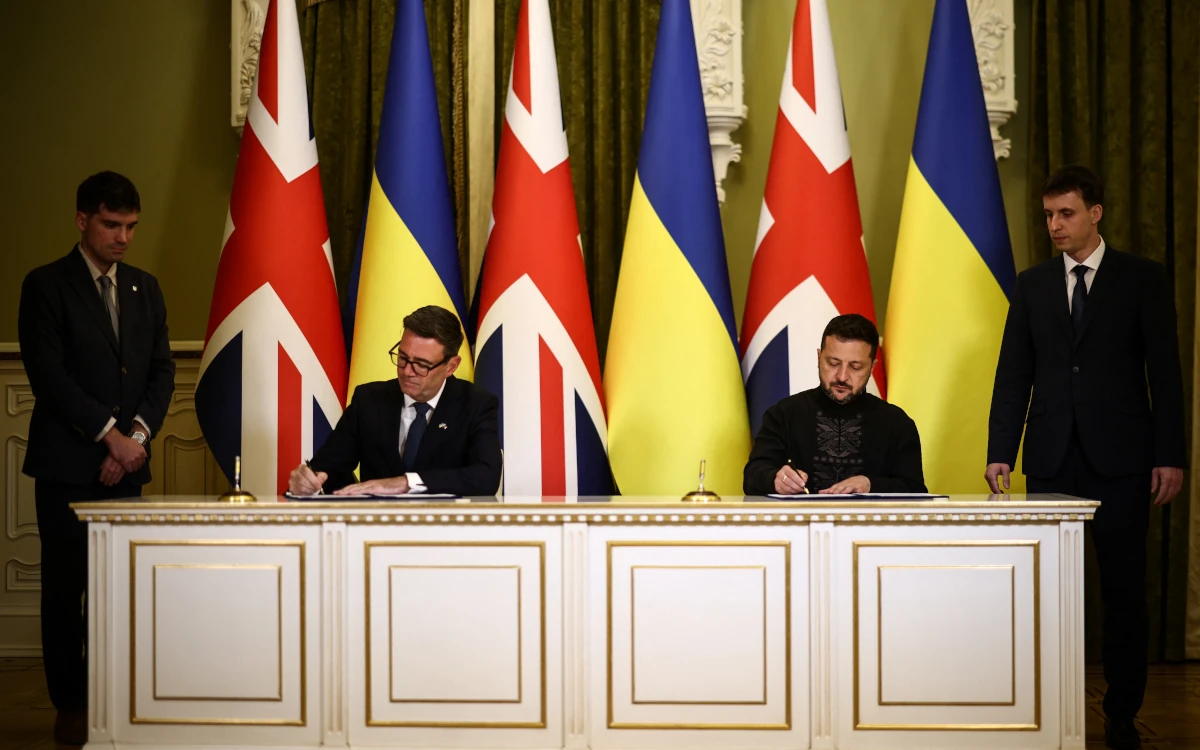
The British agreement of August, a non-binding declaration of intent, shows how combat knowledge turns into leverage. British researchers and companies gain entry to the Avengers archive, and in return Ukraine gains access to British universities and technology firms. The deal gives Ukraine a say over where the knowledge goes next, because the two sides must agree before results from the joint work go to other allies. That clause turns the archive into a diplomatic asset, leverage that aid recipients rarely hold over their donors. Ukrainian officials also screen applicants for links to Russia, treating each new user as a possible channel for espionage.
The archive’s value lies in targeting: Ukraine’s defense ministry says one system trained on it spots about 70 percent of enemy targets, a figure no independent test has confirmed. Such software cannot tell friend from foe. In autonomous strikes, a human therefore first draws a “kill box,” an area where the drone treats any military object as hostile. Four years of recorded combat have lifted the fog of war over where the enemy is, though not over who the enemy is.
In autonomous strikes, a human first draws a “kill box,” an area where the drone treats any military object as hostile. Four years of recorded combat have lifted the fog of war over where the enemy is, though not over who the enemy is
Combat data also goes stale quickly, because every advantage one side gains draws an answer from the other. When Ukraine fielded interceptor drones, Russia answered with jet-powered attack drones too fast for them. This tit-for-tat is why a drone design that works in spring can be obsolete by autumn, and why an archive opened in August is worth less by December. Buyers therefore need access that lasts as long as the fighting does, which turns a single transaction into a continuing relationship.
That relationship gives Kyiv a lever in talks on joining the EU and NATO and in any settlement with Moscow. The lever has limits, since Kyiv’s grip on the knowledge could loosen as officials who built the system leave for private business. In September, Mykhailo Fedorov launched a defense technology firm with Alex Karp, head of the American data company Palantir, as its first investor. Dismissed as defense minister in July, he had been one of the main architects of Ukraine’s drone system. Money cannot produce combat experience, though it can hire the people who hold it.
A Strategic Dependence on Kyiv
Seen from European capitals, the relationship already meets the main tests of a strategic dependence. There is no comparable substitute, because no European army is fighting a large land war. Losing access would become more costly once German and British developers build the data into new weapons. And Kyiv sets the terms of access.
Manpower shortages reinforce the reliance, since European militaries short of soldiers turn to automation, which needs combat data to train on. Estonia, on NATO’s border with Russia, now offers drone piloting lessons to its citizens. Such lessons widen the pool of operators but cannot teach what soldiers in Ukraine learn by surviving the kill zone.
The dependence is real but partial, and Kyiv’s need for European money and arms makes it mutual. It rests so far on two bilateral deals, and combat data is one input among many, next to American intelligence and Europe’s own defense industry. Buying access is a hedge that brings Europe the lessons of the war without the obligations of an alliance with Ukraine.
Buying access is a hedge that brings Europe the lessons of the war without the obligations of an alliance with Ukraine
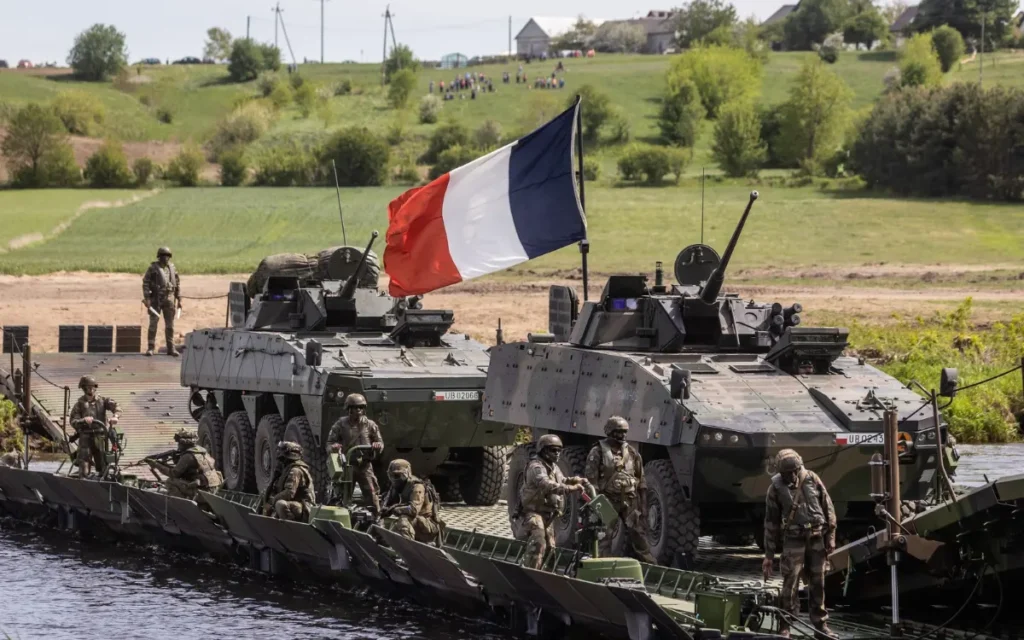
European governments hedge through national deals, even though the EU has pooled money for weapons, including €150 billion in shared defense loans and joint drone production with Ukraine. Britain sealed its own in a single visit to Kyiv, while collective decisions in Brussels take years. Across NATO, the likely price is systems of uneven quality built on the same data, and forces that find it harder to fight together.
Even the United States, which led the revolution in military affairs and outspends every ally, faces the same gap in drone-war experience and cannot offer Europe a substitute. In May, Dan Driscoll, then secretary of the U.S. Army, told senators that Delta links every drone, sensor, and weapon into one network, and that American systems remain fragmented. On September 30, the Pentagon announced plans for a new military command for drones and other autonomous weapons, due by October 2027 if Congress approves. Europe is buying the know-how for an adaptable arsenal from a country at war, while Washington is testing whether exercises can produce it at home.
The Security Provider Outside NATO
The dependence matters most for deterrence. Inside NATO, the United States has usually supplied what other members lacked, from intelligence to air refueling, and Ukraine now does the same for combat knowledge from outside the alliance. Europe’s conventional deterrence, its power to discourage attack without nuclear weapons, rests partly on the survival and consent of a state that no treaty obliges Europe to defend.
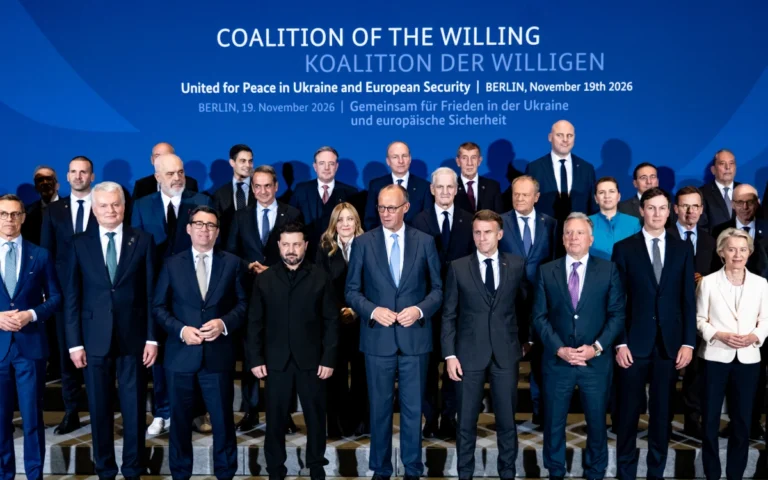
Nordic and Baltic leaders have already given that role a name. On August 23, a day before the British deal, they and Ukraine’s president declared in Kyiv that Ukraine is “a security provider in Europe.” Yet the same declaration said a lasting peace requires legally binding security guarantees, which Ukraine still lacks.
That mismatch ties European security to events in Ukraine. Should Ukraine lose the war, or a future government in Kyiv stop sharing, Europe’s main source of combat knowledge would dry up in the middle of its rearmament. A settlement that ended the fighting would also stop the archive from growing. Ukraine’s survival and the terms on which the war ends bear directly on European security.
What Russia and North Korea Learned
Taken alone, Ukraine’s case might reflect its own innovation and Western aid. Russia and North Korea offer a test, because they learned from the same war with no help from Ukraine’s backers. If their forces improved in similar ways, the likelier cause is the fighting itself.
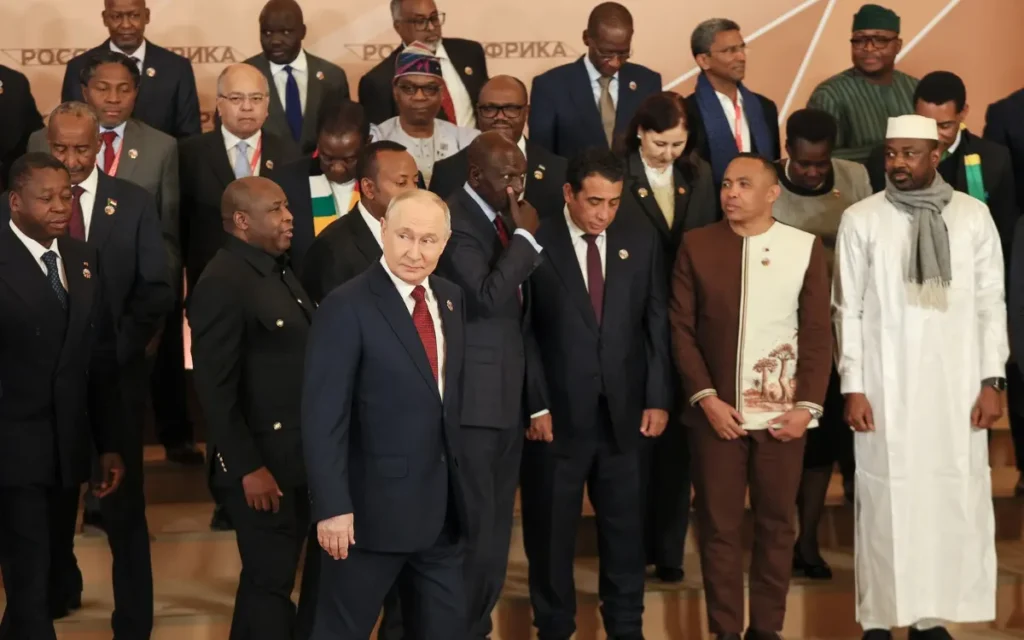
Russia’s forces show the same pattern, having rebuilt much of their way of fighting around drones. They have moved from blanketing areas with artillery fire toward many smaller, precise strikes, and specialized units hunt Ukrainian drone crews, since skilled operators are harder to replace than drones. The Kremlin also treats drone skills as a national resource. Since September, a course on drones has been compulsory at Russian transport universities, and the government wants 1 million drone specialists by 2030. Because Russia keeps its lessons off the market, outsiders can only guess at their scale.
The Russians have moved from blanketing areas with artillery fire toward many smaller, precise strikes, and specialized units hunt Ukrainian drone crews, since skilled operators are harder to replace than drones
North Korea is an even clearer test because, unlike Russia, it has no private technology sector. South Korea’s intelligence service estimated this year that about 11,000 North Korean troops were in Russia’s Kursk region and that some 6,000 had been killed or wounded. In return, it judged, Pyongyang’s forces had gained modern combat tactics and battlefield data. Analysts say its units have since moved from large assaults toward small teams supported by drone-guided artillery, and that lessons from Kursk now shape training at home. That gives Pyongyang drone-war experience that South Korean and American forces on the Korean Peninsula lack.
From Battlefield Edge to Balance of Power
Ukraine, Russia, and North Korea are each likely to leave the war fighting better than before, unlike the European and American governments that paid for Ukraine’s weapons. Ukraine’s experience has done more to prevent losses than to win back territory, helping its forces slow Russian advances against a larger army. Such gains raise military effectiveness, while the balance of power in Europe still rests mainly on economic weight, industry, and alliances, where NATO’s European members hold large advantages over Russia. Over time the learning gap could still matter in two ways. Russia, the main threat in NATO’s planning, is gaining firsthand what European forces can obtain only secondhand, through Kyiv. Ukraine, for its part, gains more weight in European security than its economic size would suggest, because it controls knowledge that larger states need.
Such knowledge reduces the fog of war on the battlefield, yet between capitals it adds uncertainty about who knows what, which makes escalation harder to manage. Moscow cannot easily tell what British forces will draw from the Ukrainian archive, and NATO can only estimate what Pyongyang took home from Kursk. If Moscow or NATO misjudged the other in a crisis, de-escalation would depend on guesses about each other’s strength that neither can check.
The Price of Borrowed Experience
The war has exposed the limits of the revolution in military affairs. Between opponents with similar technology, combat experience or access to the data drawn from it lets a state achieve more in war than its size or budget alone would predict. Europe’s peacetime militarization therefore buys less fighting power than its budgets suggest, and the balance of power could eventually tilt toward Russia and Ukraine.
Control over combat data has become a source of geostrategic leverage, and each new national deal with Kyiv extends Europe’s strategic dependence on a single supplier. The alternatives to it carry costs of their own. Learning through exercises is still untested, even in Washington, and binding Ukraine’s security to Europe’s would bring obligations European capitals have so far avoided.
Europe is betting instead that money will rebuild its military strength before the war wears down the Ukrainian army it now relies on. Allied estimates of when Russia could be ready to challenge NATO run from 2027 to the end of the decade. In August, American intelligence agencies reportedly warned that a limited Russian attack could come as early as this autumn. On either timeline, Europe would meet such a challenge with combat knowledge borrowed from Ukraine.
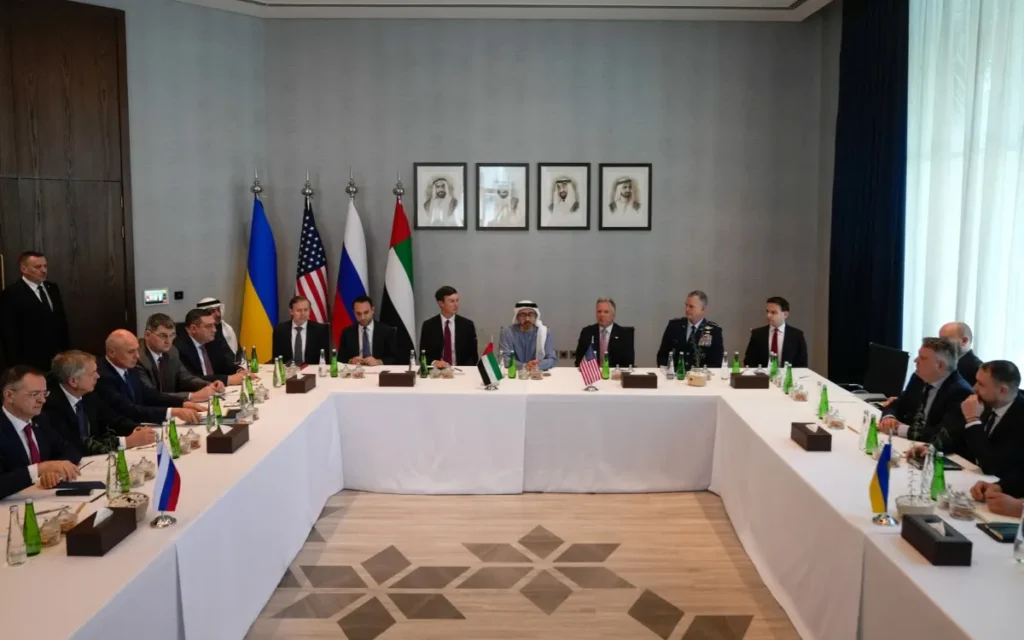
U.S.-brokered talks to end the war resumed in Abu Dhabi in November but produced no breakthrough. Whatever comes of them, the depth of Europe’s dependence will turn on whether combat knowledge stays a national bargain, struck capital by capital, or becomes a collective asset. So far, the national bargain is winning.
Whatever comes of them, the depth of Europe’s dependence will turn on whether combat knowledge stays a national bargain, struck capital by capital, or becomes a collective asset. So far, the national bargain is winning